Holy Basil Benefits (Tulsi): The Adaptogen You Haven’t Tried Yet
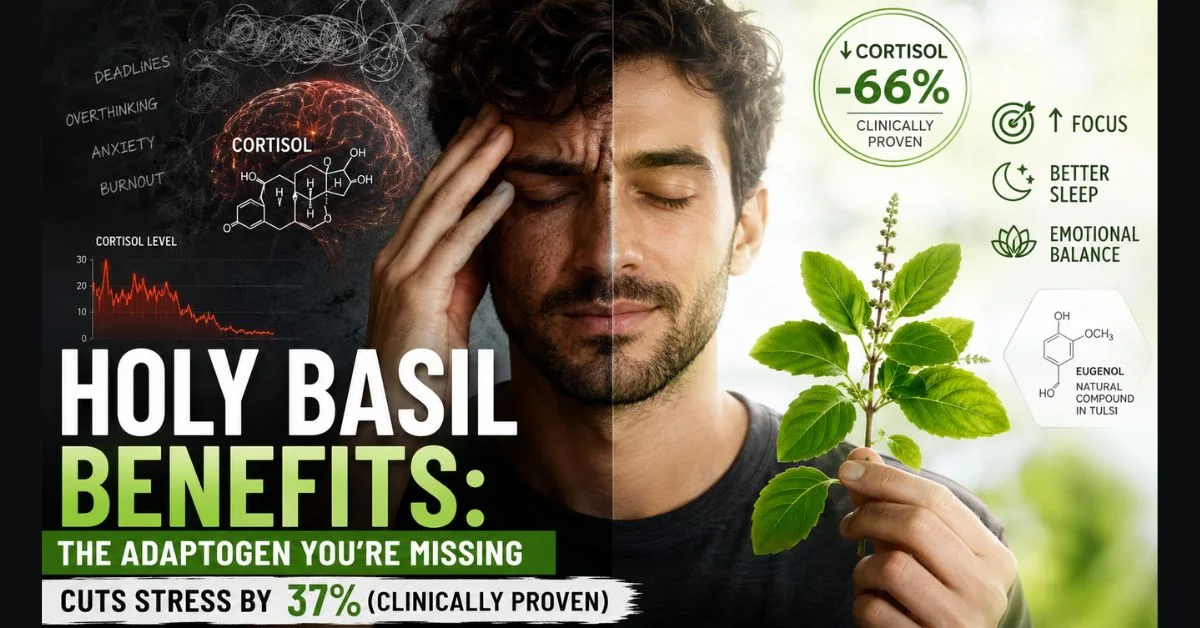
If you’ve been using ashwagandha for stress and wondering what else is out there, holy basil — known as tulsi in Ayurvedic medicine — may be the most overlooked adaptogen on the market. While ashwagandha dominates supplement conversations, tulsi has its own growing body of clinical evidence: a 2022 randomized trial found that 8 weeks of holy basil extract produced a 37% reduction in perceived stress scores and a 48% improvement in insomnia — with measurable drops in hair cortisol levels of nearly 66% compared to placebo.
This guide covers every meaningful benefit holy basil has been clinically tested for, the exact dosages used in those trials, how it compares to ashwagandha, what the active compounds actually do, and how to choose a supplement that isn’t just dried herb powder in a capsule.
💡 Quick Answer: Holy Basil Benefits
Holy basil (Ocimum tenuiflorum) is a clinically studied adaptogen that reduces cortisol, lowers perceived stress, improves memory and focus, supports blood sugar regulation, and enhances sleep quality. Effective doses in clinical trials range from 300–1,200 mg of standardized extract daily, with results typically measurable at 6–8 weeks.
- 📋 Written by Ethan Cole, Nutrition Expert | Meet Ethan →
- ✔ Verified against third-party Certificates of Analysis (COAs), current Amazon listings, and 2025–2026 clinical research
- 📅 Last Updated: May 2026
⚠️ This article does not constitute medical advice. If you manage blood sugar with prescription medication, discuss any supplement changes with your healthcare provider before making them.
⚠️This article contains affiliate links. If you purchase through our links, we may earn a small commission at no extra cost to you. See our Affiliate Disclosure for details.
What Makes Holy Basil Different From Other Adaptogens
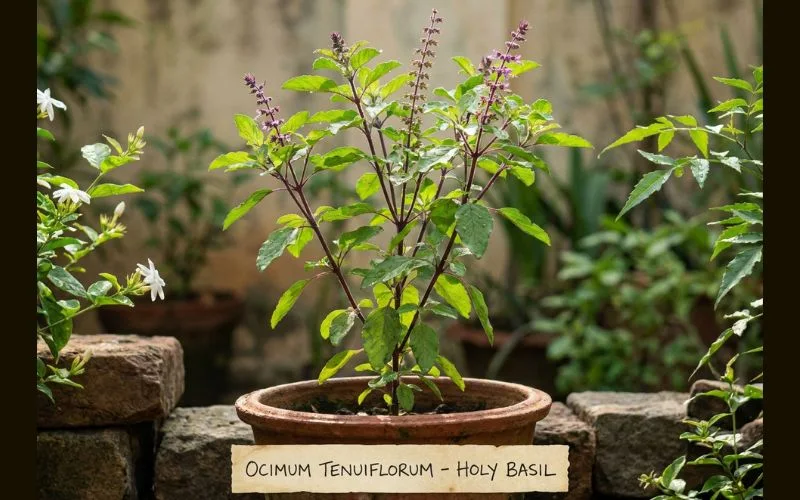
What is holy basil? Ocimum tenuiflorum — also called Ocimum sanctum and widely known as tulsi — is a flowering herb in the mint family, native to the Indian subcontinent and revered in Hindu tradition as a sacred plant for more than 3,000 years. It’s been used continuously in Ayurvedic medicine for stress, respiratory conditions, blood sugar regulation, and cognitive support.
What puts it in a different category from most herbs is its classification as a full-spectrum adaptogen: every part of the plant — leaves, stem, seeds, roots, and essential oil — contributes adaptogenic activity. Most adaptogenic herbs have active compounds concentrated in one part; holy basil works systemically.

Its primary bioactive compounds include:
- Eugenol — anti-inflammatory, analgesic, and shown to modulate HPA axis activity
- Rosmarinic acid — antioxidant, neuroprotective, and anti-anxiety in animal models
- Ursolic acid — anti-inflammatory, shown to lower cortisol response curve
- Ocimumosides A and B — unique to tulsi; anti-stress compounds not found in other adaptogens
- Caryophyllene — also found in cannabis; interacts with CB2 receptors to reduce inflammation and modulate stress response
What makes holy basil’s mechanism worth understanding is that it doesn’t simply sedate you — it works upstream, on the HPA (hypothalamic-pituitary-adrenal) axis, to help your brain and adrenal glands communicate more proportionally under stress. The result is calm without sedation, alertness without anxiety — what researchers describe as a “buffered stress response.”
Holy Basil Benefits Backed by Clinical Research
1. Reduces Cortisol and Perceived Stress
The most robust evidence for holy basil is in stress reduction. A landmark 2022 randomized, double-blind, placebo-controlled trial by Adrian Lopresti and Clinical Research Australia — published in Frontiers in Nutrition — enrolled 100 stressed adults and gave them 250 mg of Holixer™ holy basil extract twice daily for 8 weeks (PMC9524226).
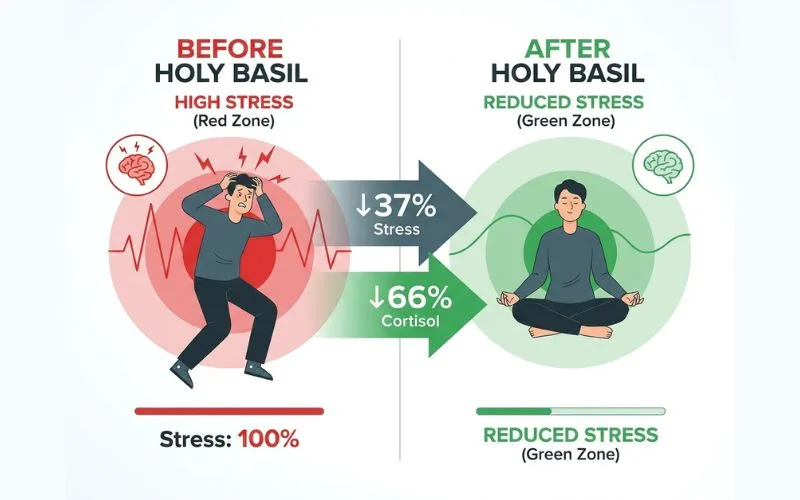
Results were significant:
- Perceived Stress Scale scores dropped 37% in the holy basil group vs. 19% in placebo
- Hair cortisol (a 3-month objective cortisol measure) fell from 789.89 pg/50 mg to 269.68 pg/50 mg in the holy basil group — a 66% reduction
- Salivary cortisol, salivary alpha-amylase, and blood pressure response to acute stress were all lower in the holy basil group during a standardized stress test
An earlier 2012 trial by Saxena et al. gave 150 stressed adults 400 mg of OciBest holy basil extract three times daily (1,200 mg/day) for 6 weeks. Compared to placebo, the holy basil group showed a 39% improvement across a composite score measuring forgetfulness, sexual dysfunction, sleep disturbances, and exhaustion — the classic cluster of chronic stress symptoms.
The mechanism: Holy basil’s bioactive compounds interact directly with the HPA axis, recalibrating the communication between the hypothalamus, pituitary gland, and adrenal glands. Rather than suppressing the stress response, it makes it more proportional — responding when genuinely needed, without prolonged activation.
2. Improves Memory, Focus, and Cognitive Function
Holy basil has been tested specifically for cognitive outcomes — an area where ashwagandha gets most of the attention but tulsi holds up well in its own right.

A double-blind, placebo-controlled crossover trial published in the Journal of Ayurveda and Integrative Medicine (Cohen MM, 2014) found that participants taking holy basil extract showed significant improvements in:
- Speed of memory retrieval
- Short-term memory scores
- Reaction time
- Error rate on cognitive tasks
The proposed mechanism involves eugenol’s neuroprotective activity and the cortisol reduction that follows consistent holy basil use: chronically elevated cortisol is one of the primary drivers of hippocampal damage and memory impairment, so anything that genuinely normalizes cortisol curves over time will show up as cognitive benefit.
This also explains why the cognitive effects of holy basil take longer to measure than its acute stress effects — you’re reversing weeks of cortisol-related neurological stress, not just administering a stimulant.
3. Supports Blood Sugar Regulation
Holy basil’s metabolic effects are backed by both animal studies and human trials. A 2018 meta-analysis of randomized clinical trials found that tulsi supplementation significantly reduced fasting blood glucose, improved lipid profiles (lower LDL cholesterol and triglycerides), and enhanced metabolic function markers in adults with metabolic syndrome and type 2 diabetes.
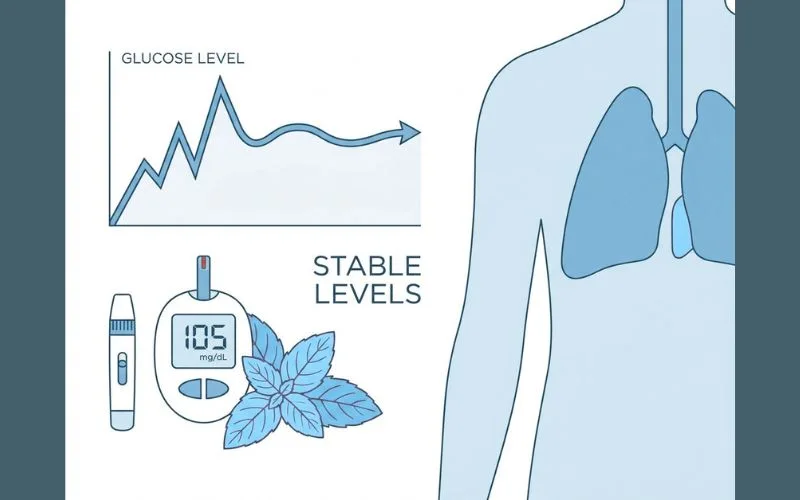
The mechanisms are multi-directional:
- Inhibition of alpha-glucosidase and alpha-amylase enzymes — slows glucose absorption from food
- Improved insulin sensitivity at the cellular level
- Reduced hepatic (liver) glucose production
- Antioxidant activity that reduces oxidative stress in pancreatic beta cells
Important: For anyone on diabetes medication or metformin, holy basil’s blood-sugar-lowering effect creates a real risk of hypoglycemia (blood sugar dropping too low) if both are taken together. This is not theoretical — it’s a documented pharmacological interaction. Discuss with your prescriber before combining.
4. Improves Sleep Quality
The same 2022 Lopresti trial that showed 37% stress reduction also found a 48% improvement in insomnia scores in the holy basil group — one of the more striking secondary outcomes in recent adaptogen research.

This isn’t a direct sedative effect. Holy basil doesn’t work like melatonin or valerian by directly inducing sleep. Instead, it improves sleep through two upstream pathways:
- Cortisol normalization: Elevated nighttime cortisol is one of the primary biological causes of sleep-onset difficulty and early waking. By moderating the cortisol curve during the day, holy basil reduces the nighttime cortisol spillover that keeps the nervous system activated when it should be winding down.
- Anxiolytic effect: Holy basil’s interaction with GABA receptors (mild but documented) reduces baseline nervous system arousal — the racing-thoughts, tight chest, low-level hypervigilance that many chronically stressed people experience at bedtime.
This makes it a particularly logical complement to valerian — which works directly on GABA pathways at night — rather than a replacement for it.
5. Supports Immune Function
A clinical study of healthy volunteers taking holy basil extract showed a significant increase in natural killer (NK) cell activity and T-helper cell levels — both key markers of immune surveillance (measured at 4 weeks). The proposed mechanisms include eugenol’s direct antimicrobial activity, rosmarinic acid’s anti-inflammatory action, and the cortisol-immune connection: chronically elevated cortisol suppresses immune function, so reducing it restores immune capacity through a secondary pathway.
This immune benefit is relevant for high-stress individuals where cortisol-driven immunosuppression is a known risk — not just people with active illness.
6. Cardiovascular Support
Animal studies and limited human research show holy basil may support cardiovascular health through several mechanisms: blood pressure reduction in hypertensive subjects (via cortisol and sympathetic nervous system modulation), antiplatelet aggregation properties that may support healthy circulation, and the metabolic benefits on LDL cholesterol and triglycerides noted above.
This is an area where the human evidence is more preliminary than for stress and cognition — it warrants monitoring but shouldn’t be overstated.
What the Research Shows: Holy Basil Clinical Data
| Study | Participants | Dose | Duration | Key Outcome |
|---|---|---|---|---|
| Lopresti 2022 (PMC9524226) | 100 stressed adults | 500 mg/day (Holixer™) | 8 weeks | 37% ↓ stress; 48% ↓ insomnia; 66% ↓ hair cortisol |
| Saxena 2012 | 150 stressed adults | 1,200 mg/day (OciBest) | 6 weeks | 39% ↑ composite stress symptoms vs placebo |
| Cohen 2014 (JAIM) | Healthy adults, crossover | 300 mg/day | 6 weeks | ↑ memory speed, ↑ short-term recall, ↓ errors |
| Meta-analysis 2018 | Adults with metabolic syndrome | Varied | 8–13 weeks | ↓ fasting glucose, ↓ LDL, ↓ triglycerides |
| Immune study | Healthy volunteers | 300 mg/day | 4 weeks | ↑ NK cells, ↑ T-helper cell activity |
Holy Basil vs. Ashwagandha: Which Adaptogen Do You Actually Need?

This is the comparison most people want but few articles provide. Here’s how they stack up head-to-head:
| Factor | Holy Basil (Tulsi) | Ashwagandha (KSM-66) |
|---|---|---|
| Primary mechanism | HPA axis modulation + cortisol curve | Cortisol suppression + testosterone |
| Best for | Acute stress response, cognitive clarity | Chronic stress, muscle recovery, sleep |
| Cortisol effect | Proportional modulation (buffered response) | Significant reduction (KSM-66: ~28% ↓) |
| Cognitive benefits | Memory speed, focus, reaction time | Brain fog reduction, slower benefit onset |
| Sleep mechanism | Indirect (via cortisol + mild GABA) | Direct (via GABA-A and serotonin) |
| Blood sugar | Moderate evidence (metabolic benefit) | Minimal direct evidence |
| Immune support | Stronger (direct NK cell, T-helper data) | Moderate (via cortisol-immune pathway) |
| Time to results | 4–6 weeks | 4–8 weeks |
| Safe to combine | ✅ Yes — complementary, non-competing | ✅ Yes — different mechanisms |
| Drug interactions | Blood thinners, diabetes meds, thyroid | Sedatives, thyroid medications |
| Daily dose | 300–1,200 mg (extract) | 300–600 mg (KSM-66) |
| Taste (tea) | Peppery, clove-like, pleasant | Bitter, earthy — most prefer capsules |
Bottom line on combining them: Holy basil and ashwagandha work through complementary mechanisms and can be taken together safely. The practical combination for most people: holy basil in the morning (cognitive clarity, stress buffering) + ashwagandha at night (deeper sleep, cortisol recovery). See our ashwagandha for stress relief guide for dosage specifics.
Holy Basil Dosage: What the Trials Actually Used
This is where most articles fail. “Take as directed” isn’t dosage guidance.
| Goal | Effective Dose | Extract Type | Timing |
|---|---|---|---|
| Stress reduction | 500–1,200 mg/day | Holixer™ or OciBest | Split AM/PM |
| Cognitive function | 300–600 mg/day | Standardized extract | Morning |
| Blood sugar support | 400–1,200 mg/day | Leaf extract | With meals |
| Sleep improvement | 500 mg/day | Holixer™ (standardized) | AM + PM |
| General wellness | 300 mg/day | Any standardized extract | Morning |
About extract standardization: Generic “holy basil powder” products often contain anywhere from 5–20% active compounds depending on growing conditions and processing. Standardized extracts like OciBest (standardized to ocimumosides) and Holixer™ (phytochemically standardized, used in the 2022 trial) are what clinical studies actually use — and what you should look for on labels.
Tulsi tea is a legitimate traditional preparation, but the compound concentration per cup is significantly lower than a standardized extract capsule. Tea is fine for daily wellness maintenance; for clinical-level stress or sleep outcomes, use a standardized supplement.
Common Mistakes People Make With Holy Basil
1. Buying generic leaf powder instead of standardized extract A bottle that says “Holy Basil 500mg” without specifying a standardized extract percentage is likely delivering an inconsistent dose of active compounds. Look for extract standardization on the label — OciBest or Holixer™ are the two with clinical trial backing.
2. Expecting sedation Holy basil is not calming in the way a sedative is. People who expect to feel drowsy or noticeably relaxed within an hour often conclude it “doesn’t work.” The correct expectation is a gradual shift over 4–6 weeks: fewer stress spikes, easier mental transitions, less rumination. It’s an adaptogen, not an anxiolytic drug.
3. Taking it only when stressed Adaptogens work best as a daily baseline, not an as-needed intervention. The cortisol normalization that produces measurable results in clinical trials is the result of consistent daily dosing over weeks — not reactive use during stressful periods.
4. Combining with blood thinners without disclosure Eugenol in holy basil has mild anticoagulant properties. At supplement doses, this is clinically relevant if you’re already on warfarin, aspirin therapy, or other anticoagulants. Not theoretical — worth disclosing to your prescriber.
5. Confusing it with Thai or Italian basil Ocimum tenuiflorum (holy basil / tulsi) is a different plant from Ocimum basilicum (the basil you use in cooking). They’re in the same family but have different phytochemical profiles and cannot be substituted. The fresh herb at the grocery store is not a clinical equivalent.
FAQ — Frequently Asked Questions About Holy Basil Benefits
What is holy basil good for?
Holy basil is most clinically supported for stress reduction, cognitive function (memory and focus), sleep improvement via cortisol normalization, blood sugar regulation, and immune support. A 2022 clinical trial found it reduced perceived stress scores by 37% and improved insomnia by 48% over 8 weeks, making stress and sleep its two strongest evidence-backed applications.
How long does it take for holy basil to work?
Most clinical benefits of holy basil become measurable at 6–8 weeks of daily use. Some people notice reduced stress reactivity and better mental clarity within 2–4 weeks. The sleep benefits and cortisol normalization shown in the 2022 Lopresti trial were measured at the 8-week mark — give it at least that long before evaluating.
What is the best form of holy basil to take?
Standardized extract capsules with a specified extract type (OciBest or Holixer™) are the most reliable form for clinical-level benefits. Tulsi tea is a valid traditional preparation for daily wellness maintenance, but the active compound concentration per cup is lower than a standardized capsule dose. Avoid generic “holy basil powder” that doesn’t specify extract standardization.
Is holy basil the same as ashwagandha?
No — they are different plants with different mechanisms. Holy basil (Ocimum tenuiflorum) primarily modulates the HPA axis stress response and supports cognitive clarity. Ashwagandha (Withania somnifera) more directly suppresses cortisol and has stronger evidence for sleep and physical recovery. They can be taken together safely — their mechanisms are complementary rather than overlapping.
Can I take holy basil every day?
Yes. Holy basil is considered safe for daily use at studied doses (300–1,200 mg/day). The clinical trials showing the strongest benefits used it daily for 6–8 weeks. Long-term safety data beyond 3 months is more limited; cycling use (8–12 weeks on, 2–4 weeks off) is a reasonable approach for extended use. Always consult your healthcare provider if you have any underlying conditions or take medications.
Does holy basil lower cortisol?
Yes, with clinical evidence to support it. The 2022 Lopresti trial measured objective cortisol via hair cortisol testing — a 3-month cumulative cortisol marker — and found the holy basil group’s levels dropped from 789.89 pg/50 mg to 269.68 pg/50 mg, a roughly 66% reduction compared to placebo. A separate study found salivary cortisol levels lower during an acute stress test in the holy basil group.
Are there any side effects of holy basil?
Holy basil is generally well-tolerated at clinical doses. Potential side effects at high doses include mild nausea or GI discomfort when taken on an empty stomach. Eugenol’s anticoagulant properties are relevant for people on blood thinners. Holy basil may also lower blood sugar, creating hypoglycemia risk for people on diabetes medication. Pregnant women should avoid therapeutic doses — there is historical Ayurvedic use as a uterine stimulant at high doses.
Can holy basil help with anxiety?
Early clinical evidence is promising. A study by Bhattacharyya et al. tested holy basil extract in adults with generalized anxiety disorder and found significant improvement in GAD symptom scores compared to placebo at 1,200 mg/day. The cortisol reduction, HPA axis modulation, and mild GABA interaction all contribute to an anxiolytic profile — though it’s not a replacement for evidence-based anxiety treatment in clinical presentations.
Is holy basil a blood thinner?
Eugenol, one of holy basil’s primary compounds, has mild anticoagulant properties. At typical supplement doses this is unlikely to cause problems for most healthy adults. However, if you’re on warfarin, aspirin therapy, or other anticoagulants, this interaction is clinically meaningful and should be disclosed to your prescriber before starting supplementation.
How does holy basil compare to rhodiola rosea?
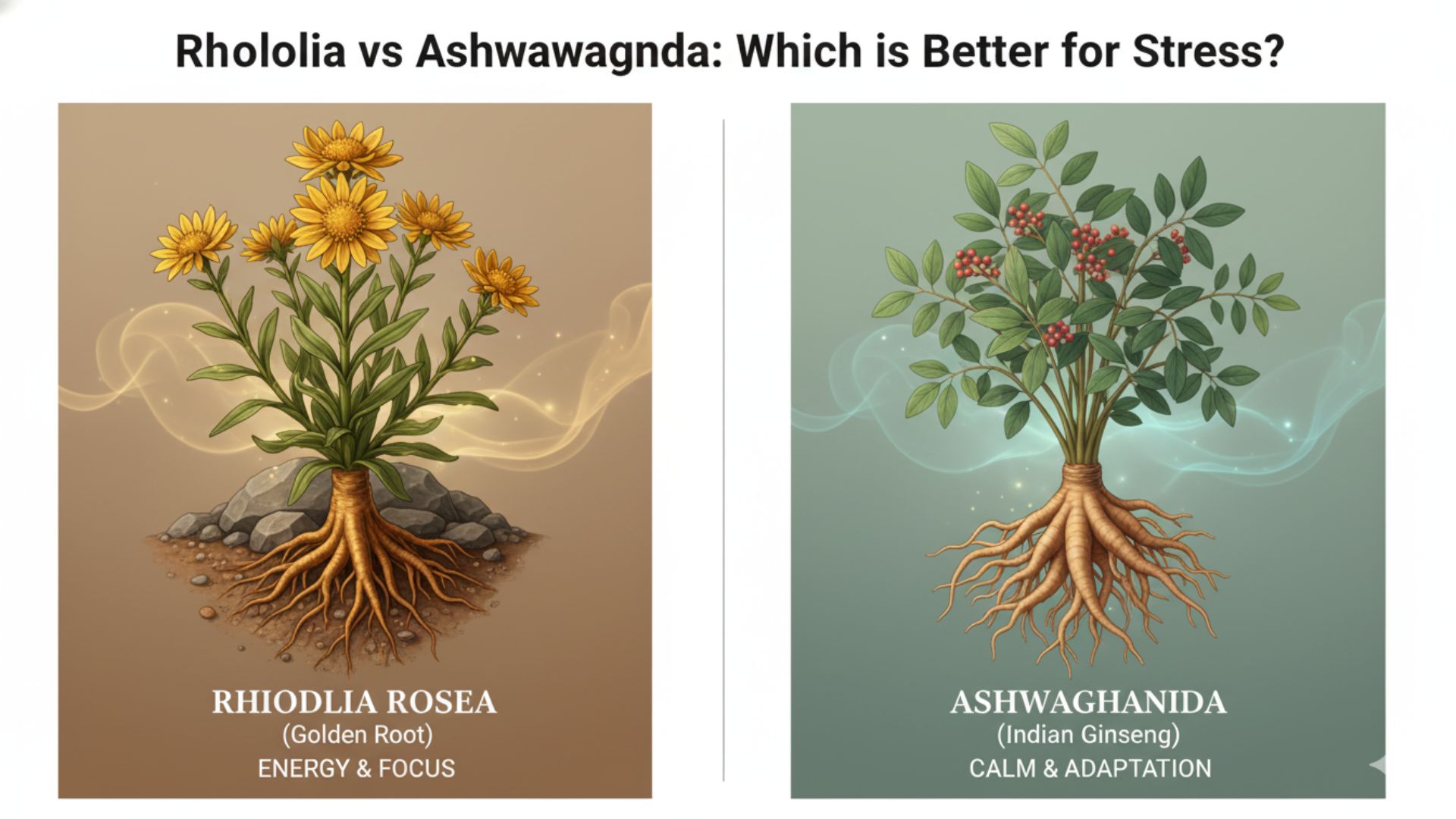
Holy basil and rhodiola both support the stress response but through different mechanisms. Rhodiola rosea works primarily through salidroside and rosavin compounds that modulate serotonin and dopamine; it has stronger evidence for athletic performance and fatigue recovery. Holy basil works more through HPA axis recalibration and cortisol modulation; it has stronger evidence for sleep quality and blood sugar regulation. They can be combined — see our rhodiola vs ashwagandha guide for deeper comparison of the adaptogen family.
How to Build a Daily Holy Basil Protocol
Option A — Stress + Cognitive Clarity Focus
- Morning (with breakfast): 300 mg standardized holy basil extract
- Midday (with lunch): 300 mg standardized holy basil extract
- Total: 600 mg/day
- Result timeline: Cognitive benefits often noted at 4 weeks; stress improvements at 6–8 weeks
Option B — Sleep + Cortisol Normalization Focus
- Morning: 250 mg Holixer™ holy basil extract
- Evening (2 hours before bed): 250 mg Holixer™ + 300 mg valerian root
- Total: 500 mg holy basil/day + valerian for direct sleep support
- Result timeline: Sleep improvements typically noted at 4–6 weeks
Option C — Complete Adaptogen Stack (with ashwagandha)
- Morning: 300 mg holy basil extract (clarity + stress buffer)
- Evening: 300 mg KSM-66 ashwagandha (sleep + cortisol recovery)
- Total: One adaptogen per time of day, complementary mechanisms
- Best for: People dealing with both chronic daytime stress and poor sleep
The Bottom Line on Holy Basil Benefits
Holy basil has earned its place alongside ashwagandha and rhodiola in the evidence- backed adaptogen category — it just hasn’t gotten the same marketing budget. Three clinical trials, a 2022 RCT with objective cortisol measurement, and 3,000 years of Ayurvedic use add up to a meaningful body of evidence for stress, cognition, sleep, and metabolic health.
The key variables that determine whether it works for you: the extract type you buy (standardized vs. generic), the dose you use (300–1,200 mg/day depending on the goal), and the consistency with which you take it (daily, for at least 6 weeks).
Your next step: If stress and cognitive clarity are your primary goals, start with 600 mg/day of a standardized extract split morning and midday. If sleep is the priority, combine 500 mg/day holy basil with evening valerian. If you’re already on ashwagandha, they stack well — different mechanisms, same direction.
⚕️ Medical Disclaimer: This article is for informational purposes only and does not constitute medical advice. Always consult your healthcare provider before starting any supplement regimen, especially if you are on prescription medications or have an existing health condition.
Written by Ethan Cole, Nutrition Expert | HerbzWay | Author Page
=== 🔗 OUTGOING LINKS FROM THIS ARTICLE ===
→ 🔗 Ashwagandha for Stress Relief
→ 🔗 Rhodiola vs Ashwagandha: Which Adaptogen Is Right for You?
→ 🔗 Best Ashwagandha Supplements 2026
→ 🔗 How to Lower Blood Sugar Naturally: 12 Proven Methods Ranked by Effect
→ 🔗 Maca Root For Hormonal Balance