Best Ashwagandha Supplements 2026: Ranked by Withanolide Dose
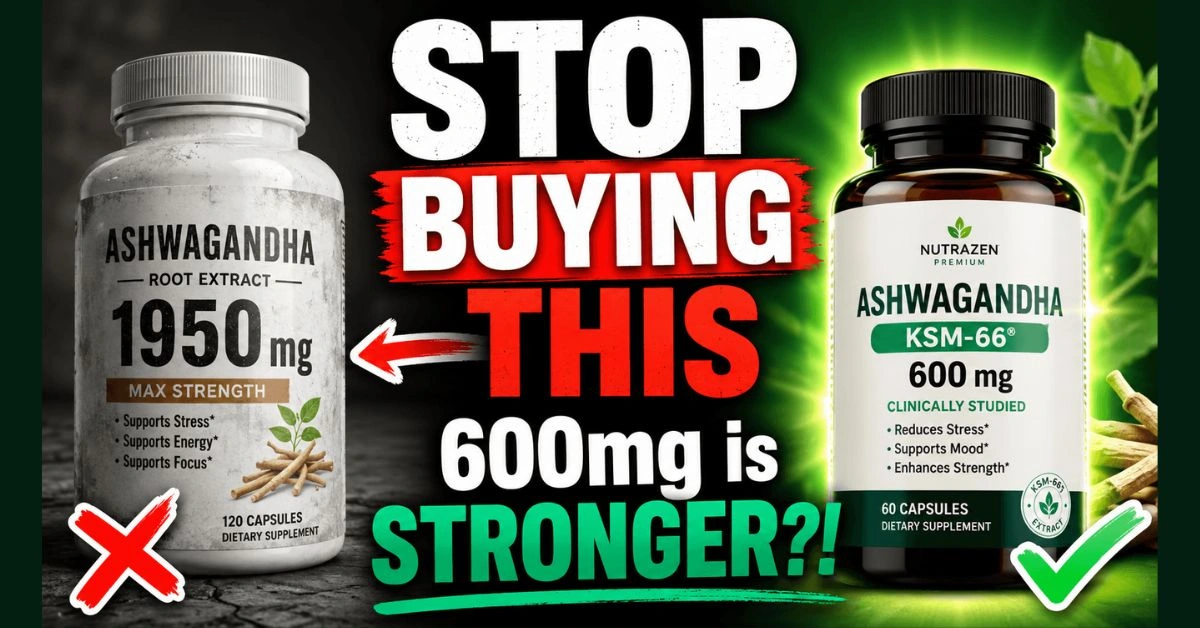
That 1,950 mg bottle on Amazon isn’t stronger than the 600 mg one. It might be ten times weaker. The number on the front of an ashwagandha label tells you almost nothing about what’s actually inside — unless you know what to look for.
💡 Quick Answer: Best Ashwagandha Supplements 2026
The best ashwagandha supplement for stress and cortisol control is Transparent Labs KSM-66 (600 mg, third-party tested, single ingredient, organic). For the best value, Nootropics Depot KSM-66 (300 mg, $0.22/serving) delivers the same extract at half the cost. Both use clinically validated extracts standardized to ≥5% withanolides — the active compounds behind every significant ashwagandha trial.
This guide ranks the top 7 best ashwagandha supplements using a four-point system: extract type, withanolide dose, third-party testing, and price-per-serving. We also explain the withanolide math every buyer should do before purchasing, and a 5-point red flag checklist to filter out products that can’t deliver results. NIH Office of Dietary Supplements — Ashwagandha
📋 Written by Ethan Cole, Nutrition Expert | Meet Ethan →
- ✔ Verified against third-party Certificates of Analysis (COAs), current Amazon listings, and 2025–2026 clinical research
- 📅 Last Updated: May 2026
⚠️ This article contains affiliate links. If you purchase through our links, we may earn a small commission at no extra cost to you. See our Affiliate Disclosure for details.
Why Most Ashwagandha Doesn’t Work {#why-fails}
Over 40 human clinical trials have tested ashwagandha for stress, cortisol reduction, anxiety, sleep, and performance. Those trials consistently show real, measurable results — cortisol reductions of 14–28%, significant anxiety score improvements, meaningful sleep quality gains.
But those trials didn’t use the bottle of “Ashwagandha 1950mg” from a no-name Amazon brand. They used specific, standardized extracts — primarily KSM-66 and Sensoril — at verified doses of active compounds.
Generic ashwagandha root powder typically contains 0.5–2% withanolides, the primary bioactive compounds that produce ashwagandha’s effects. KSM-66 is standardized to ≥5% withanolides. Sensoril to ≥10%. Shoden to ≥35%.
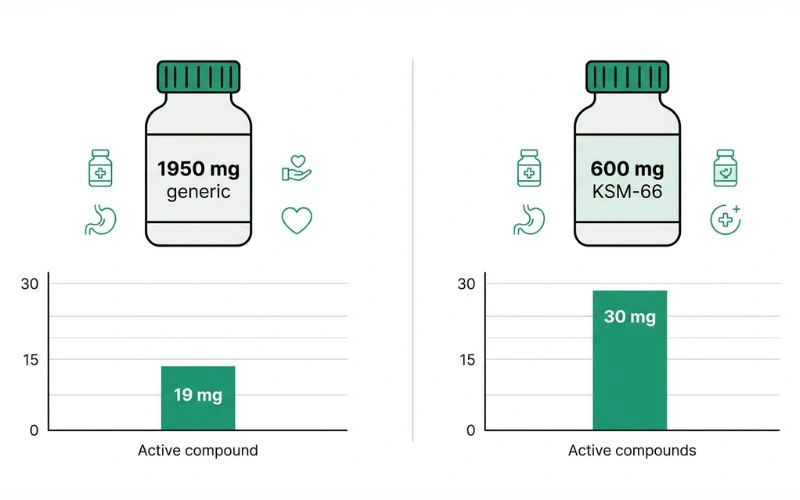
That means a 600 mg capsule of KSM-66 contains roughly 30 mg of withanolides. A 1,950 mg capsule of unstandardized root powder may contain less than 10 mg.
The dosage arms race on supplement labels is largely meaningless. Withanolide content is the only number that predicts whether a product will replicate what the research shows. This guide ranks products on that basis — not on marketing claims or brand reputation.
The Withanolide Math: How to Read Any Label {#math}
Before buying any ashwagandha supplement, do this calculation:
Active withanolide dose = Ashwagandha dose (mg) × Withanolide % (as decimal)
Examples:
| Product | Stated Dose | Withanolide % | Actual Withanolides |
|---|---|---|---|
| KSM-66, 600 mg | 600 mg | 5% (0.05) | 30 mg |
| Sensoril, 250 mg | 250 mg | 10% (0.10) | 25 mg |
| Shoden, 120 mg | 120 mg | 35% (0.35) | 42 mg |
| Generic root powder, 1,950 mg | 1,950 mg | ~1% (0.01) | ~19 mg |
| Generic root powder, 500 mg | 500 mg | ~0.5% (0.005) | ~2.5 mg |
The clinical trials showing stress and cortisol reduction used 25–50 mg of withanolides per day. Most generic products deliver a fraction of that regardless of the milligram count on the label.
If a label doesn’t state a withanolide percentage or a trademarked extract name, you cannot calculate your actual dose. That alone is sufficient reason to choose a different product.
KSM-66 vs Sensoril vs Shoden vs Generic: What’s the Difference? {#extracts}
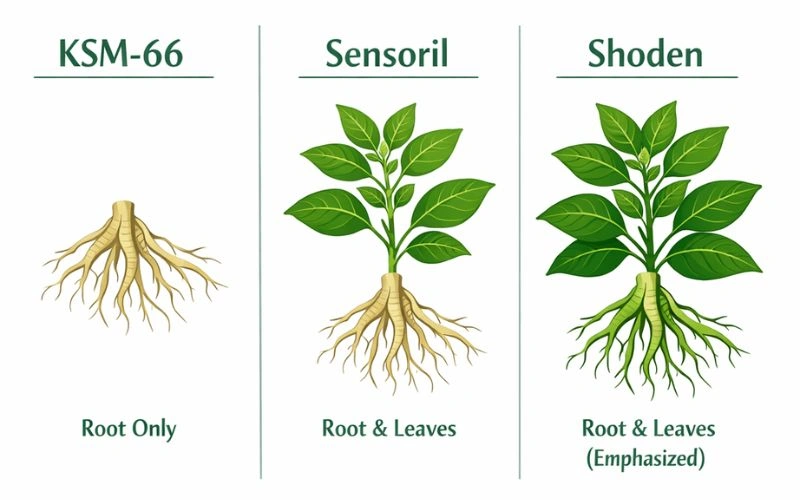
KSM-66 has the strongest overall evidence base — over 24 published human RCTs as of 2026, more than any other ashwagandha extract. It’s the extract used in the most-cited cortisol reduction trial (Chandrasekhar 2012, PMID: 23439798) and the most appropriate choice for stress and anxiety.
Sensoril requires a lower dose to reach effective withanolide levels and may be preferable for people who want a once-daily low-dose regimen. It’s been studied at as low as 125 mg/day with significant results (Auddy 2008).
Shoden is the most potent by withanolide concentration, making it effective at very low doses. Useful for people who are sensitive to ashwagandha or want a budget-friendly high-potency option. Fewer clinical trials than KSM-66, but the existing data is solid.
Generic is the gamble. Without standardization, you don’t know what you’re getting — or whether two bottles from the same brand are even consistent.
Systematic review — all 5 trials with standardized extract showed benefit (Pratte et al., 2014, PMID: 25405876)
| Extract | Source | Withanolide % | Dose Range | Clinical Trials | Best For |
|---|---|---|---|---|---|
| KSM-66 | Root only | ≥5% | 300–600 mg/day | 24+ human RCTs | Stress, anxiety, performance, cognitive function |
| Sensoril | Root + leaf | ≥10% | 125–250 mg/day | 12+ human RCTs | Stress, calm, lower-dose effectiveness |
| Shoden | Root + leaf | ≥35% | 60–240 mg/day | Fewer, but strong | Sleep, relaxation, high potency at low dose |
| Generic extract | Root (usually) | 0.5–2% (unstated) | Varies | None directly | Not recommended for therapeutic use |
| Whole root powder | Root | ~0.1–0.5% | 2,000–5,000 mg | None | Traditional use only, not for clinical goals |
Best Ashwagandha Supplements 2026: Ranked {#rankings}
Ranking criteria:
- Extract type (KSM-66, Sensoril, or Shoden only — no generics considered)
- Clinically relevant withanolide dose (≥25 mg/serving)
- Third-party testing (ISO 17025-accredited preferred; in-house testing = noted)
- Label transparency (withanolide % stated clearly)
- Price-per-serving (at standard daily dose)
🥇 #1 — Transparent Labs KSM-66 Ashwagandha
Best Overall
Why it ranks first: Transparent Labs is one of the few supplement companies that makes its Certificate of Analysis (CoA) publicly accessible for every batch — you can verify what’s in the bottle before buying. The formula is single-ingredient with no fillers, binders, or undisclosed additives. At 600 mg of KSM-66, it delivers the full dose used in the landmark 60-day cortisol reduction trials. The organic certification and rigorous third-party testing protocol distinguish it from competitors that test in-house only.
Best for: People who want the best-documented dose (600 mg KSM-66) with maximum label transparency and clean ingredients.
| Spec | Detail |
|---|---|
| Extract | KSM-66 (organic) |
| Dose per serving | 600 mg |
| Withanolides | 5% = 30 mg per serving |
| Servings | 60 per bottle |
| Third-party tested | ✅ Full CoA public (ISO 17025-accredited) |
| Additives | None — single ingredient |
| Price per serving | ~$0.50 |
| Certifications | Organic, Non-GMO, vegan, gluten-free |
🥈 #2 — Nootropics Depot KSM-66 Ashwagandha (300 mg)
Best Value
Why it ranks second: Nootropics Depot has built a strong reputation for lab-testing every product they sell, sharing results, and refusing to carry products that don’t pass purity and potency verification. At $19.99 for 90 capsules, two capsules daily (the clinical dose) costs roughly $0.44/day — significantly less than most premium KSM-66 products. The tradeoff is that you take two capsules instead of one, which some users find inconvenient.
Best for: Budget-conscious buyers who want verified KSM-66 without paying a premium for branding.
| Spec | Detail |
|---|---|
| Extract | KSM-66 |
| Dose per serving | 300 mg (take 2 for full clinical dose) |
| Withanolides | 5% = 15 mg per capsule / 30 mg at 2 capsules |
| Servings | 90 capsules per bottle |
| Third-party tested | ✅ ISO 17025-accredited external lab |
| Additives | Minimal — rice flour, capsule |
| Price per serving | ~$0.22 per capsule / $0.44 at full dose |
| Reputation | Highly respected in supplement community for testing rigor |
🥉 #3 — Nootropics Depot Shoden Ashwagandha (120 mg)
Best for Sleep + High Potency at Low Dose
Why it ranks third: At 42 mg of withanolides per single 120 mg capsule, Shoden delivers more active compound than a standard 600 mg KSM-66 capsule (30 mg). For people who want maximum potency at minimum dose — or who are sensitive to higher-dose capsules — this is the most efficient option available. Sleep quality improvement data for Shoden is particularly strong. The tradeoff is fewer clinical trials compared to KSM-66 overall.
Best for: People who prefer a smaller capsule, struggle with GI sensitivity to larger doses, or primarily want sleep improvement.
| Spec | Detail |
|---|---|
| Extract | Shoden (root + leaf) |
| Dose per serving | 120 mg |
| Withanolides | 35% = 42 mg per serving |
| Servings | 30 or 90 per bottle |
| Third-party tested | ✅ ISO 17025-accredited external lab |
| Additives | Allergen-free, vegan |
| Price per serving | ~$0.33 at 90-count |
| Note | Highest withanolide dose per capsule of any tested product |
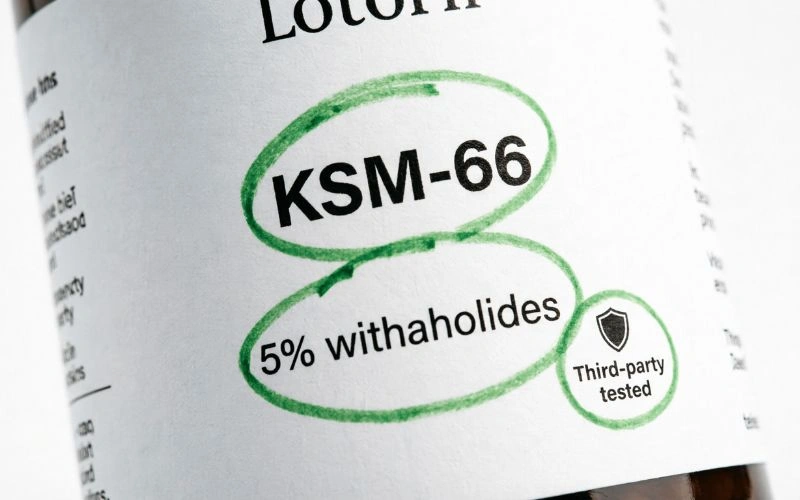
#4 — Jacked Factory KSM-66 Ashwagandha (600 mg)
Best Single-Capsule Convenience
Why it ranks fourth: Full clinical dose in a single capsule at a competitive price point. Jacked Factory’s formulation is clean with no unnecessary additives. It’s widely available on Amazon with strong verified review volume. The third-party testing is present but less transparent than Transparent Labs or Nootropics Depot (CoA not publicly listed on website). Still a solid, reliable choice for the price.
Best for: People who want a full 600 mg KSM-66 dose in one daily capsule at a mid-range price.
| Spec | Detail |
|---|---|
| Extract | KSM-66 |
| Dose per serving | 600 mg (1 capsule) |
| Withanolides | 5% = 30 mg per serving |
| Servings | 90 per bottle |
| Third-party tested | ✅ Third-party tested (NSF not specified) |
| Price per serving | ~$0.33 |
#5 — Physician’s Choice KSM-66 Ashwagandha (1000 mg)
Best for Amazon Prime Buyers
Why it ranks fifth: Physician’s Choice is one of the most widely purchased ashwagandha supplements on Amazon, with strong verified review volume and consistent quality feedback. The addition of BioPerine (black pepper extract) may enhance absorption of fat-soluble compounds. The 1000 mg dose falls slightly below the optimal clinical range (300–600 mg typically studied), but at 25 mg of withanolides per serving it still meets the threshold. Reviewer reports of GI sensitivity and sleep disturbance are slightly more common here than with single-ingredient products — the black pepper may contribute for sensitive individuals.
Best for: Amazon Prime buyers who want organic KSM-66 with enhanced absorption at a mid-range price.
| Spec | Detail |
|---|---|
| Extract | KSM-66 (organic) + black pepper extract |
| Dose per serving | 1000 mg |
| Withanolides | 5% = 25 mg per serving |
| Servings | 60 per bottle |
| Third-party tested | ✅ Third-party tested (NSF-certified facility) |
| Additive note | Contains black pepper (BioPerine) for absorption |
| Price per serving | ~$0.40 |
#6 — Double Wood Supplements KSM-66 (600 mg)
Best Budget Full-Dose Option
Why it ranks sixth: Double Wood delivers the full 600 mg KSM-66 clinical dose at one of the lowest price points among verified-extract products. The main drawback is a two-capsule serving size and slightly less detailed public testing documentation than the top three. For budget-conscious buyers who want the full dose without dropping to 300 mg, it’s a legitimate option.
Best for: Budget buyers who want 600 mg KSM-66 per day and are comfortable with a two-capsule serving.
| Spec | Detail |
|---|---|
| Extract | KSM-66 (organic) |
| Dose per serving | 600 mg (2 capsules = 1 serving) |
| Withanolides | 5% = 30 mg per serving |
| Servings | 60 per bottle (120 capsules) |
| Third-party tested | ✅ Third-party tested |
| Price per serving | ~$0.25 |
#7 — NOW Foods KSM-66 Ashwagandha (300 mg)
Best Widely Available Pharmacy Option
Why it ranks seventh: NOW Foods is a reliable, established supplement brand with a good testing program. KSM-66 at 300 mg per capsule is at the lower end of the clinical dose range, meaning users targeting the 600 mg/day protocol need two capsules. At the pharmacy-chain price point, it’s often the most accessible option for someone buying in person. For the price, it’s a decent entry-level choice.
Best for: People who want to start with a lower dose from a widely available, trustworthy brand.
| Spec | Detail |
|---|---|
| Extract | KSM-66 |
| Dose per serving | 300 mg (1 capsule) |
| Withanolides | 5% = 15 mg per serving |
| Servings | 90 per bottle |
| Third-party tested | ✅ NOW CARES third-party tested |
| Price per serving | ~$0.17 |
| Availability | Widely available in pharmacies, Whole Foods, Amazon |
Best Ashwagandha by Goal {#by-goal}
| Goal | Best Pick | Why |
|---|---|---|
| Stress + cortisol reduction | Transparent Labs KSM-66 (600 mg) | Exact dose from top RCTs; highest transparency |
| Sleep quality | Nootropics Depot Shoden (120 mg) | Shoden has strongest sleep-specific evidence; 42 mg withanolides/serving |
| Budget-conscious | Nootropics Depot KSM-66 (300 mg) | $0.22/capsule; rigorous external testing |
| Anxiety | Jacked Factory KSM-66 (600 mg) or Transparent Labs | Both deliver full dose; both clean formulas |
| Athletic performance | Transparent Labs or Double Wood (600 mg) | VO2max + muscle recovery data tied to 600mg KSM-66 |
| Sensitive stomach | Shoden (120 mg) | Lower volume capsule; same or higher withanolide load |
| Travel / convenience | Physician’s Choice or Jacked Factory | Single-capsule full dose; Amazon availability |
5 Label Red Flags to Avoid {#red-flags}
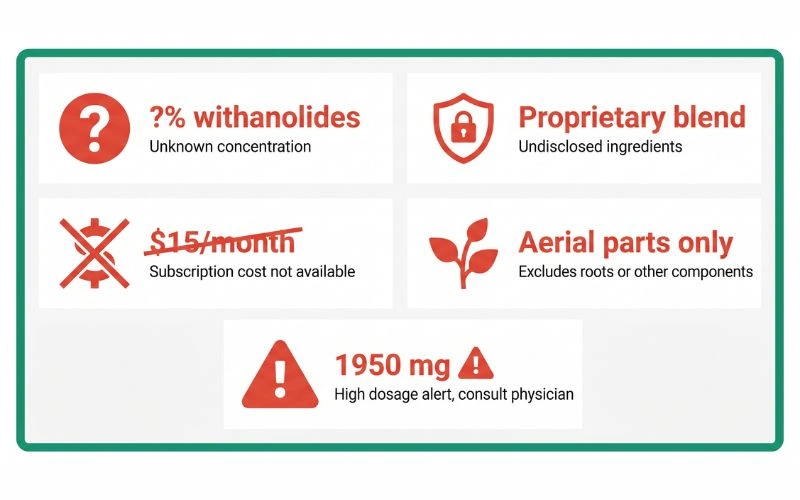
These five markers indicate a product that is unlikely to replicate clinical ashwagandha results. Check each before purchasing.
Red Flag 1: No Withanolide Percentage Stated
If the label says “500 mg ashwagandha root extract” without specifying a withanolide percentage, you cannot calculate your active dose. This is the most common marker of an under-specified, likely low-potency product. Skip it.
Red Flag 2: No Trademarked Extract Name
KSM-66, Sensoril, and Shoden are licensed extracts produced under quality-controlled conditions. If the label doesn’t show one of these names, the manufacturer is not using these extracts. The product may contain raw root powder sold as an “extract” with no standardization.
Red Flag 3: “Proprietary Blend” Hiding Ashwagandha Dose
Some multi-ingredient stress supplements list ashwagandha as part of a proprietary blend without stating how many milligrams are included. If you can’t see the ashwagandha dose, you almost certainly aren’t getting a clinical amount.
Red Flag 4: Price Under $15 for a Month’s Supply
High-quality standardized ashwagandha extracts (KSM-66, Sensoril, Shoden) have documented per-unit costs that make sub-$15 monthly pricing nearly impossible without compromising on extract quality or dose. Pricing under this threshold for a full 30-day supply is a consistent marker of low-grade sourcing.
Red Flag 5: “Ashwagandha Aerial Parts Only”
Some lower-cost products use leaves and stems (aerial parts) rather than root. The withanolide profile and traditional use evidence for ashwagandha is rooted in root extract specifically. Aerial-only products are not equivalent to the extracts studied in clinical trials.
How to Take Ashwagandha for Best Results {#how-to-take}
For full protocol guidance, see our ashwagandha for stress relief guide. A quick summary:
Dose: 300–600 mg/day of KSM-66 (or 125–250 mg Sensoril, or 120–240 mg Shoden)
Timing: With food. Morning, evening, or split AM/PM — consistency matters more than the exact hour for most people. If you’re taking ashwagandha primarily for sleep, evening dosing has an edge.
Duration: Minimum 8 weeks before evaluating effectiveness. The cortisol reduction data comes from 60-day trials. Stopping at 2–4 weeks is the most common reason people don’t see results.
Cycling: Most safety data covers up to 3 months continuous use. After 8–12 weeks, take a 4-week break, then assess. Many people cycle indefinitely on this pattern.
What to pair with it: Ashwagandha pairs well with magnesium glycinate for sleep (complementary mechanisms), and with rhodiola rosea for combined calm-energy support. See our rhodiola vs ashwagandha guide for the stacking protocol.
Who Should Not Take Ashwagandha {#caution}
Ashwagandha is well-tolerated in published trials at standard doses, but several groups require caution or avoidance:
- Pregnant women — may stimulate uterine contractions; avoid throughout pregnancy
- Thyroid conditions — ashwagandha can increase T3 and T4 hormone levels; consult your doctor if you take thyroid medication (Sharma et al., 2018, PMID: 28829155)
- Autoimmune conditions — lupus, rheumatoid arthritis, multiple sclerosis — ashwagandha’s immune-modulating properties may increase immune activity
- Pre-surgery — discontinue at least 2 weeks before any scheduled surgery due to potential interactions with anesthesia and blood pressure medications
- Liver disease — rare case reports of ashwagandha-associated hepatotoxicity exist, predominantly at high doses or with products of uncertain composition (Björnsson et al., 2020, PMID: 31921129); those with existing liver conditions should consult a physician
- Nightshade sensitivity — ashwagandha belongs to the Solanaceae (nightshade) family; individuals with nightshade allergies should use caution
- Children under 18 — safety data in pediatric populations is insufficient; not recommended
⚠️ Medical Disclaimer: This article is for informational purposes only and does not constitute medical advice. Always consult your healthcare provider before starting any supplement, especially if you take prescription medications or have a health condition.
FAQ: Best Ashwagandha Supplement {#faq}
What is the best ashwagandha supplement overall?
Transparent Labs KSM-66 is the best overall choice. It uses the most clinically studied ashwagandha extract (KSM-66, 24+ human RCTs), provides the full 600 mg clinical dose in a single clean capsule, and offers publicly accessible third-party testing Certificates of Analysis. For budget buyers, Nootropics Depot KSM-66 at $0.22 per capsule is the strongest value alternative.
Is KSM-66 the best form of ashwagandha?
KSM-66 has the most clinical trial data of any ashwagandha extract — 24+ published human studies as of 2026 — making it the most evidence-backed choice. Sensoril and Shoden are also legitimate standardized extracts with good data. The important distinction is that ANY of these standardized extracts outperforms generic root powder. The “best form” is whichever standardized extract you’ll take consistently at the right dose.
How much ashwagandha should I take daily?
For KSM-66: 300–600 mg per day. The landmark cortisol reduction trial used 300 mg twice daily (600 mg total). Sensoril is effective at 125–250 mg/day. Shoden delivers sufficient withanolide load at 120–240 mg/day. The specific dose matters less than choosing a standardized extract and taking it consistently with food for at least 8 weeks.
What should I look for on an ashwagandha label?
Look for three things: (1) a trademarked extract name — KSM-66, Sensoril, or Shoden — on the label; (2) a stated withanolide percentage; and (3) a third-party testing disclosure. If the label doesn’t include all three, you’re buying an unstandardized product. Do the withanolide math: dose (mg) × withanolide % = your actual active dose. Aim for 25–42 mg of withanolides per serving.
Are gummy ashwagandha supplements effective?
Gummies can work, but they require careful label evaluation. Some gummy products use verified KSM-66 at adequate doses — Nature Made’s KSM-66 gummies at 300 mg per two-gummy serving is a legitimate option. Many gummies under-dose or use generic extract. Apply the same withanolide math. Additional concern: gummy products often include added sugars and flavoring agents that some users prefer to avoid.
Is ashwagandha safe to take every day?
Yes, within the studied safety window. Clinical trials run up to 90 days with a favorable safety profile at standard doses. Most practitioners recommend cycling: 8–12 weeks on, 4 weeks off. This approach is widely used and aligns with available safety data. Rare adverse events (liver injury) are documented at very high doses or with products of uncertain composition — at standard doses from verified extracts, the risk profile is reassuring.
Does third-party testing matter for ashwagandha?
Yes — significantly. Third-party testing verifies that the extract listed on the label is actually present at the stated concentration, and confirms absence of heavy metals, microbial contamination, and adulterants. ISO 17025-accredited labs are the gold standard. Transparent Labs and Nootropics Depot both use this testing level. For a YMYL health supplement, this distinction matters more than for most consumer products.
Can I take ashwagandha with other supplements?
Ashwagandha is commonly and safely paired with magnesium glycinate (sleep and anxiety), rhodiola rosea (energy + calm stacking protocol), and lion’s mane mushroom (cognitive support). Exercise caution combining ashwagandha with sedative medications, thyroid medications, immunosuppressants, or blood sugar medications. Consult a healthcare provider before combining with any prescription drug.
Why did ashwagandha not work for me before?
The most likely reasons, in order of frequency: (1) the product used generic root powder without standardization, delivering insufficient withanolides; (2) you didn’t take it long enough — the 60-day clinical endpoint is the minimum for full cortisol effects; (3) you took it inconsistently; or (4) ashwagandha isn’t the right adaptogen for your stress type — if your primary symptom is burnout fatigue rather than anxiety, rhodiola may be more appropriate. See our rhodiola vs ashwagandha guide for the distinction.
What is the difference between organic and non-organic ashwagandha?
Organic certification indicates the root was grown without synthetic pesticides or fertilizers. For KSM-66 specifically, the extract undergoes an additional 14-year-developed “Green Chemistry” extraction process that avoids harsh solvents, which is independent of the organic certification. Both organic and non-organic KSM-66 products pass third-party heavy metal testing in reputable brands. Organic is preferable if available at comparable price, but it’s a secondary consideration after extract type and withanolide standardization.
The Bottom Line {#conclusion}
The ashwagandha supplement market is large, noisy, and largely filled with products that cannot replicate what the clinical research shows. The deciding factor is not the milligram count — it’s the extract type and the withanolide dose you’re actually getting per serving.
Before buying any ashwagandha product, do the calculation: look for KSM-66, Sensoril, or Shoden on the label, find the withanolide percentage, multiply. Aim for 25–42 mg of withanolides per day from a third-party tested source.
For most people, Transparent Labs KSM-66 (600 mg) is the strongest choice for documented potency and testing transparency. For the same results at lower cost, Nootropics Depot KSM-66 (300 mg, two daily) is the value option. Either will match the extract and dose used in the trials that changed how researchers think about stress and cortisol management.
Take it consistently with food. Give it 8 weeks. Check the label first.
This article is for informational purposes only and does not constitute medical advice. Always consult your healthcare provider before starting any supplement regimen.
Written by Ethan Cole, Nutrition Expert | Meet Ethan →
=== 🔗 OUTGOING LINKS FROM THIS ARTICLE ===
→ Ashwagandha for Stress Relief: Dosage, Timing & What 12 Studies Show
→ Complete Guide to Adaptogens: Benefits, Types & How to Use (2026)
→ Rhodiola vs Ashwagandha: Which Adaptogen Is Right for You?