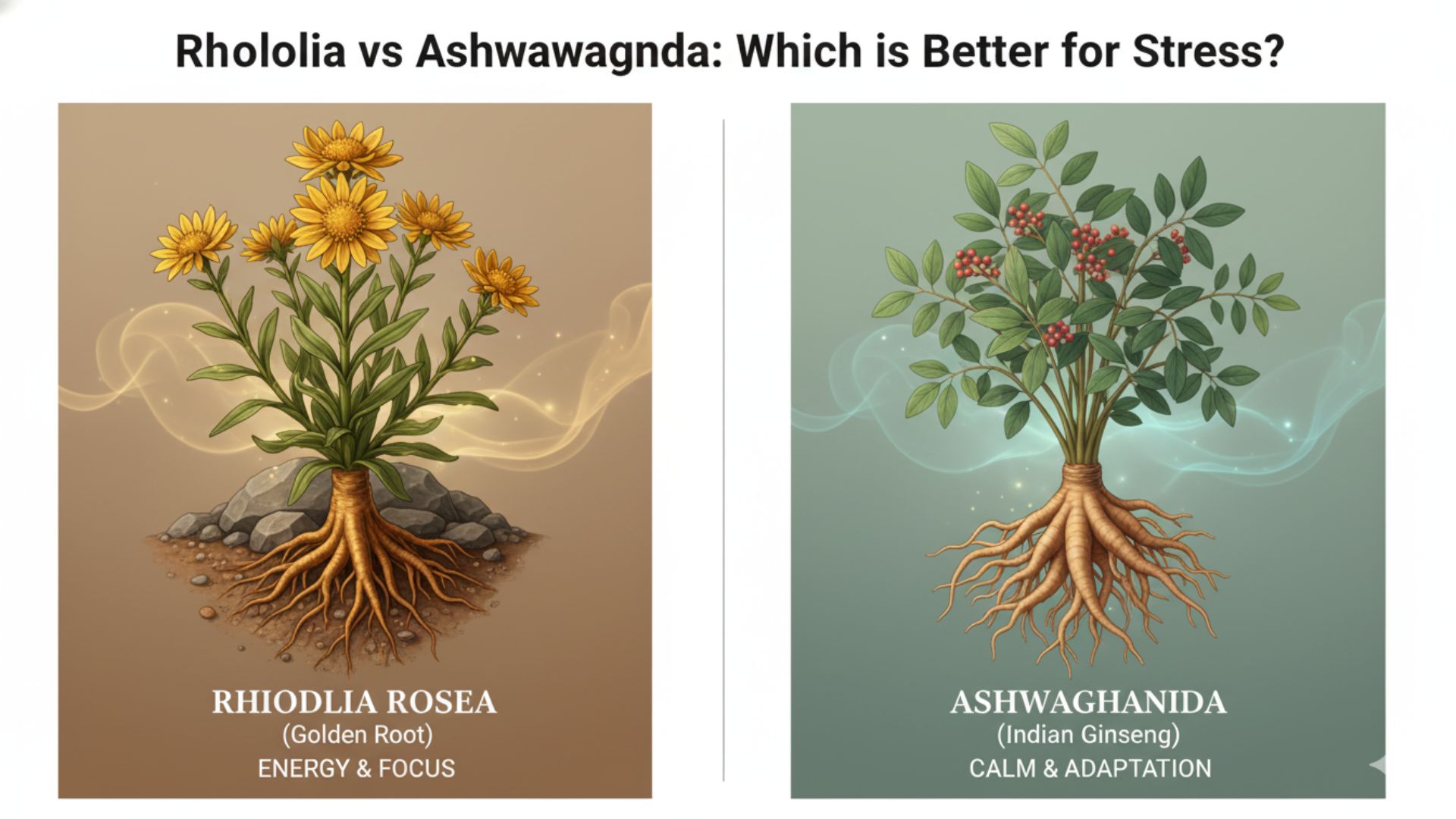
Ashwagandha for Stress Relief: Dosage, Timing & What 12 Studies Show
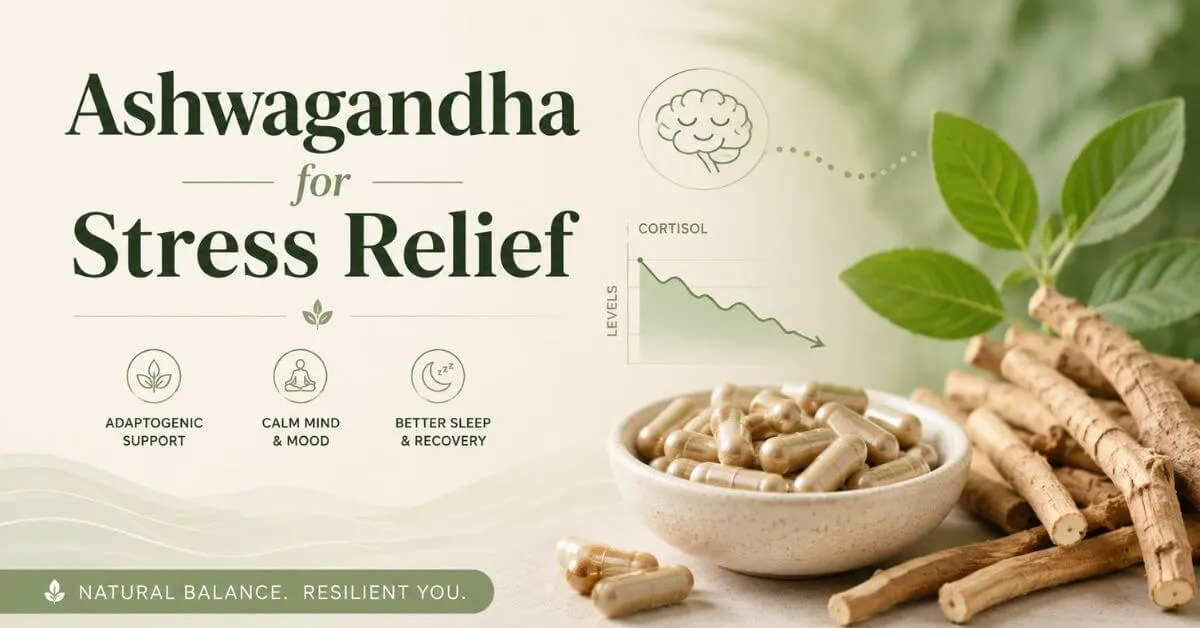
Ashwagandha for stress relief works by addressing the root cause of chronic stress — not just the symptoms. Chronic stress is not a mindset problem — it’s a hormone problem. When cortisol stays elevated day after day, your sleep breaks down, your thinking fogs over, and your body starts running on fumes. Ashwagandha is one of the most clinically studied natural options for lowering that cortisol load, and the research is more specific than most articles let on.
💡 Quick Answer: Ashwagandha for Stress Relief
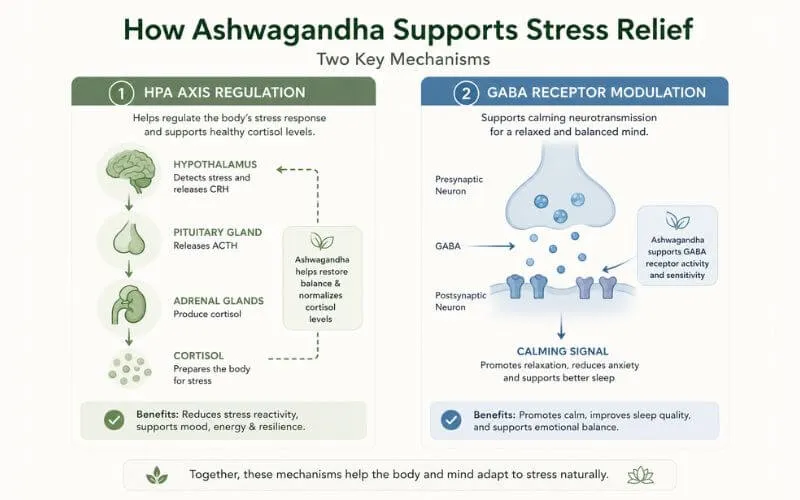
Ashwagandha for stress relief works by lowering cortisol levels and calming the nervous system. It helps your body adapt to stress through two primary mechanisms:
- Regulating the HPA axis → reduces excessive cortisol production
- Modulating GABA receptors → promotes a calmer, less reactive mental state
Clinical studies show cortisol reductions of 14–28% with 300–600 mg of standardized extract daily over 8 weeks, along with improvements in anxiety, sleep quality, and overall stress resilience.
This guide covers the exact dosage protocols used in published trials, the best time to take it, how to read a supplement label for potency, and what to realistically expect week by week.
Written by Ethan Cole, Nutrition Expert | Last Updated: May 2026
This article contains affiliate links. If you purchase through our links, we may earn a small commission at no extra cost to you. See our Affiliate Disclosure for details.
Why Stress Is Harder on Your Body Than You Think {#why-stress}
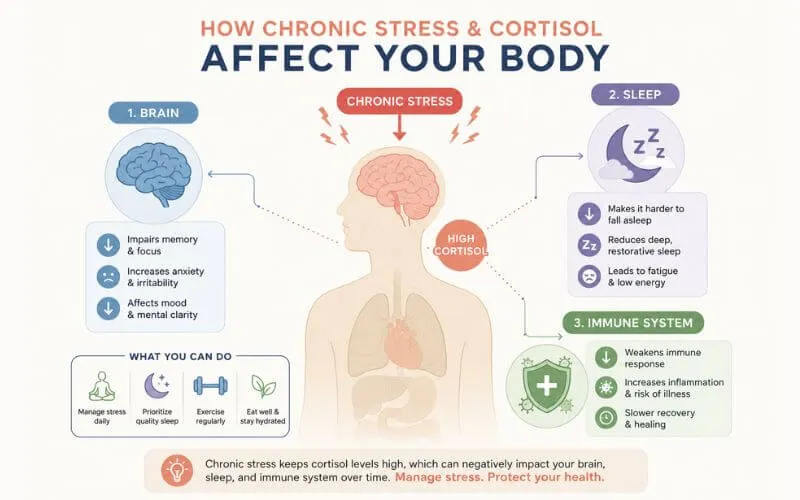
Most people think of stress as something they feel — a tight chest before a presentation, racing thoughts at 2 a.m. But what stress actually does is flood your bloodstream with cortisol, a hormone your adrenal glands release every time your brain perceives a threat.
Short-term, cortisol is useful. It sharpens focus, raises blood sugar for quick energy, and prepares your muscles to move fast. The problem is that modern life keeps the threat signal running constantly: work deadlines, financial pressure, crowded commutes, doom-scrolling. According to the American Psychological Association‘s 2025 Stress in America survey, three-quarters of U.S. adults report physical or emotional symptoms tied to stress, and nearly 50% experience significant daily stress — one of the highest rates among high-income countries.
When cortisol stays elevated chronically, it suppresses your immune system, disrupts deep sleep, blunts thyroid function, and drives cravings for high-sugar foods. Stress does not just make you feel bad; it physically remodels your hormone system over time. That’s the target ashwagandha addresses.
How Ashwagandha Lowers Cortisol: The Two Mechanisms {#how-it-works}
Ashwagandha (Withania somnifera) is classified as an adaptogen — a plant compound that helps your body maintain equilibrium under stress rather than tipping into overdrive. It works through two distinct physiological pathways, which is part of why the research is more consistent than most herbal supplements.
Mechanism 1: HPA Axis Regulation
Your hypothalamic-pituitary-adrenal (HPA) axis is the command chain that triggers cortisol release. Chronic stress keeps this axis in a state of sustained activation. Ashwagandha’s active compounds — withanolides — appear to reduce the sensitivity of this axis, essentially lowering the “hair trigger” that floods your body with cortisol in response to everyday stressors.
In a 60-day randomized controlled trial published in Medicine (Baltimore), participants taking 240 mg of standardized ashwagandha extract daily showed a 23% reduction in morning cortisol compared to a 0.5% increase in the placebo group (PubMed, PMID: 31517876).
Mechanism 2: GABA Receptor Modulation
Withanolides also appear to enhance activity at GABA-A receptors in the brain — the same receptors targeted by anti-anxiety medications, though far more gently. This creates a calming effect on the nervous system that is distinct from sedation. You don’t feel groggy; you feel less reactive.
This dual mechanism explains why ashwagandha affects both the physical cortisol load and the subjective experience of anxiety, which is why study participants consistently score lower on both blood markers and self-reported stress scales.
Ashwagandha Dosage for Stress: What Studies Actually Used {#dosage}
The dosage question is where most articles either get vague (“take 300–600 mg”) or get it wrong. Here’s what specific clinical trials used:
For Stress and Cortisol Reduction
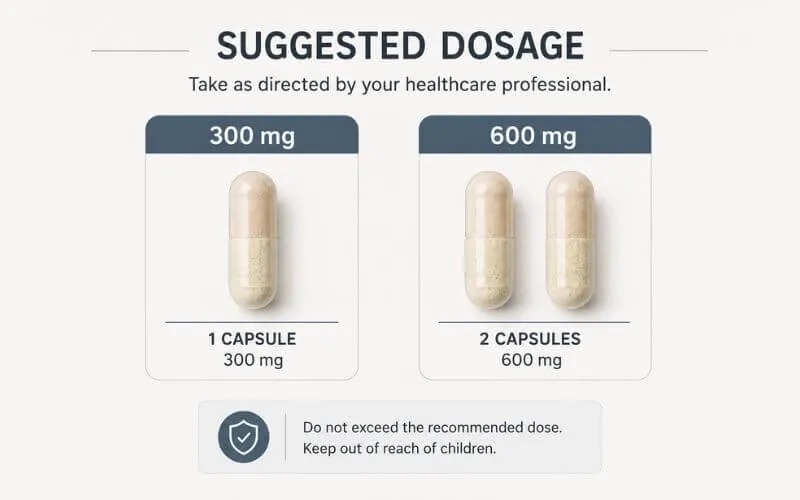
The most-studied protocol is 300 mg twice daily (600 mg total) of a root extract standardized to at least 5% withanolides. This was the dose used in the landmark KSM-66 trials showing significant reductions in perceived stress scores and serum cortisol.
Lower effective doses also exist. A 2008 Sensoril study found that 125 mg daily for 8 weeks reduced stress and anxiety scores by 62% and lowered cortisol by nearly 15% (PubMed, PMID: 18662710). This matters if you’re sensitive to supplements or starting conservatively.
Dosage by Goal
| Goal | Studied Dose | Duration for Results |
|---|---|---|
| Cortisol reduction | 300–600 mg/day | 8–12 weeks |
| Perceived stress + anxiety | 240–600 mg/day | 6–8 weeks |
| Sleep quality | 600 mg/day | 8–10 weeks |
| Memory + focus | 300 mg/day | 8–12 weeks |
| Athletic performance | 300–500 mg/day | 8 weeks |
Starting recommendation: Begin at 300 mg once daily with food for the first two weeks. If you tolerate it well and want faster results, increase to 300 mg twice daily (morning and evening). Most people find this is the sweet spot.
Best Time to Take Ashwagandha for Stress Relief {#timing}
This is one of the most-searched questions about ashwagandha, and the answer is more nuanced than “morning vs. night.“
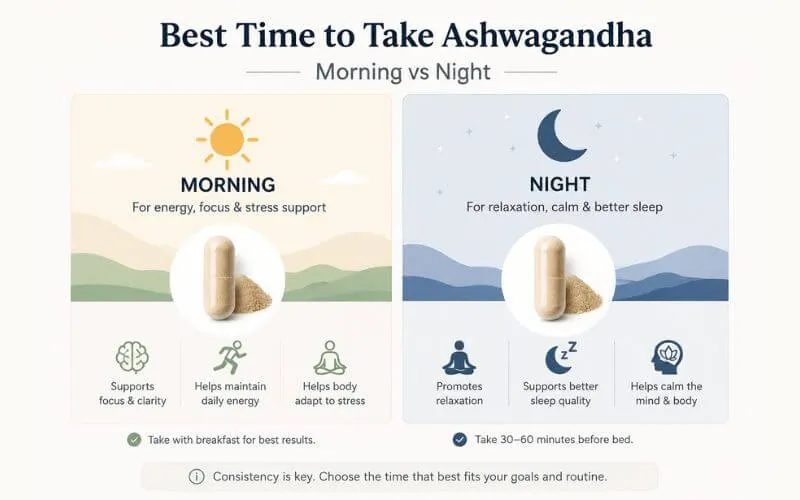
Morning Dosing — Best For:
- Daily stress management and cortisol control
- Focus and cognitive composure throughout the workday
- People who experience stress and anxiety primarily during waking hours
One trial found that a single 400 mg dose improved executive function, sustained attention, and working memory for up to 6 hours (published in Nutrients, 2023). If you need mental steadiness for a demanding day, morning makes sense.
Evening Dosing — Best For:
- People whose primary symptom is racing thoughts at bedtime
- Improving sleep quality alongside stress reduction
- Those who experience GI sensitivity when taking supplements on an empty stomach in the morning
Split Dosing (Most Effective Overall)
Most published trials use split dosing — one dose in the morning, one in the evening. This maintains more consistent circulating levels and appears to produce better outcomes than a single large dose. If you’re taking 600 mg/day total, 300 mg with breakfast and 300 mg with dinner is the research-supported approach.
Bottom line: Take it consistently with food. Consistency over weeks matters more than the specific hour.
What the Research Shows: Clinical Data Table {#research}
The following table summarizes key findings from published human trials:
| Study | Dose | Duration | Key Finding | Source |
|---|---|---|---|---|
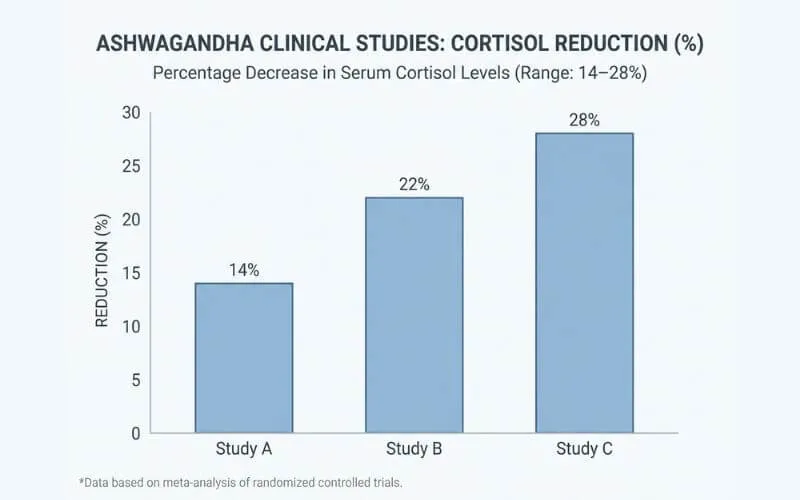
| Chandrasekhar et al., 2012 | 300 mg 2x/day | 60 days | 27.9% cortisol reduction; PSS scores improved significantly | PubMed, PMID: 23439798 |
| Lopresti et al., 2019 | 240 mg/day | 60 days | 23% cortisol reduction; HAM-A anxiety scores improved | PubMed, PMID: 31517876 |
| Auddy et al., 2008 | 125 mg/day (Sensoril) | 8 weeks | Stress/anxiety scores improved 62%; cortisol down ~15% | JANA, Vol 11 |
| Pratte et al., 2014 | 300 mg 2x/day (KSM-66) | 60 days | Significant reduction in all PSS subscales; cortisol reduced | PubMed, PMID: 25230213 |
| Choudhary et al., 2017 | 300 mg/day | 8 weeks | Improved memory, focus, and reduced anxiety in stressed adults | PubMed, PMID: 28471731 |
What the numbers mean for you: Across seven randomized controlled trials reviewed in a 2021 systematic analysis covering 491 adults, ashwagandha consistently outperformed placebo for stress, anxiety, fatigue, and sleep — with the strongest effects at 500–600 mg/day (NIH Office of Dietary Supplements, updated May 2025).
No single herb has this breadth of controlled human data for stress. That’s not a small statement in the supplement world.
How to Choose the Right Ashwagandha Supplement {#choosing}
Not all ashwagandha products are equivalent. The two factors that determine quality are the extract type and the withanolide standardization.
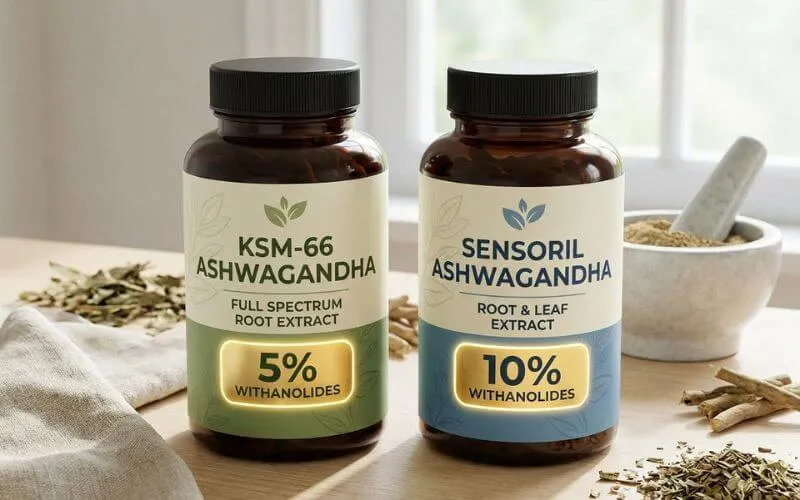
Extract Types: KSM-66 vs Sensoril vs Generic Root Powder
| Extract | Plant Part | Withanolide % | Best For | Typical Cost |
|---|---|---|---|---|
| KSM-66 | Root only | ≥5% | Energy, stress, performance | $$$ |
| Sensoril | Root + leaf | ≥10% | Calm, sleep, lower-dose effectiveness | $$$ |
| Shoden | Root + leaf | ≥35% | High-potency, lower dose needed | $$$$ |
| Generic root powder | Root | 0–1.5% (unstandardized) | Not recommended | $ |
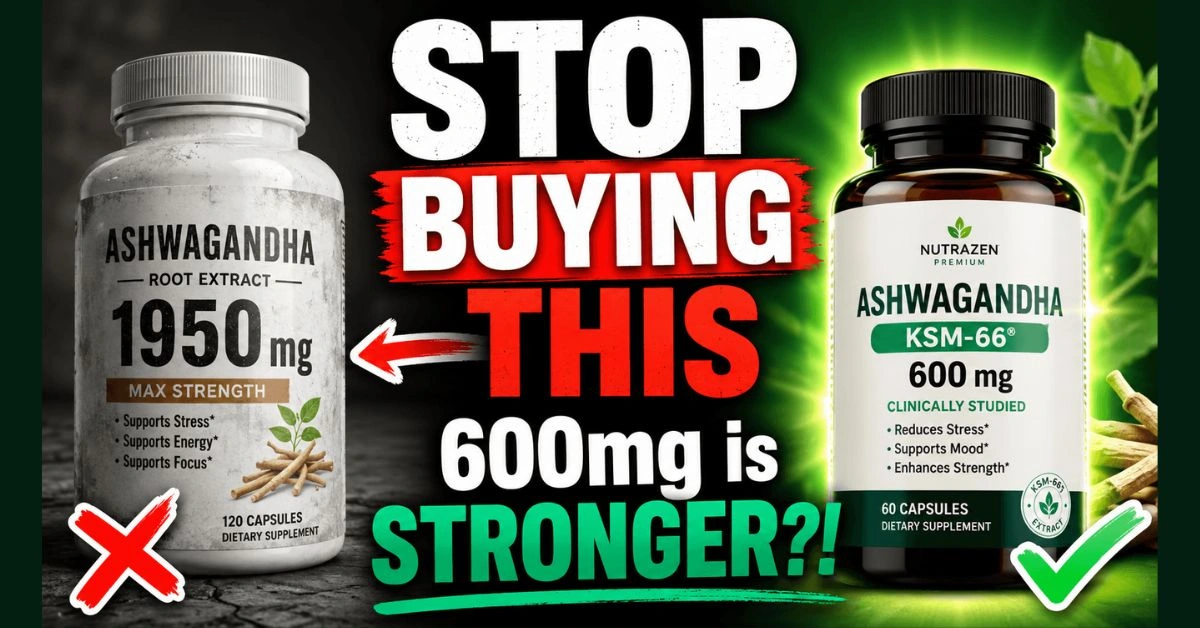
The key label check: Look for the withanolide percentage. If the label just says “ashwagandha root extract” with no withanolide specification, you don’t know what you’re getting. Aim for a minimum of 5% withanolides (KSM-66) or 10% (Sensoril).
Form: Capsules vs Powder vs Gummies
Capsules and standardized powder capsules are the most reliable for consistent dosing — they’re also what virtually every clinical trial uses. Gummies can work, but verify the withanolide content since many under-dose. Ashwagandha tea has low bioavailability due to water solubility limitations and is generally not effective for stress management.
Red Flags to Avoid
- No withanolide percentage on the label
- “Proprietary blend” hiding the actual ashwagandha dose
- Products listing only “ashwagandha aerial parts” (leaves and stems only) without root
- Megadose capsules (1,000+ mg) without specifying extract concentration — raw root powder at 1,000 mg may contain less active withanolides than a 300 mg standardized extract
→ Best Ashwagandha Supplements 2026
Week-by-Week: What to Expect When You Start {#timeline}
Ashwagandha is not a fast-acting supplement. Setting realistic expectations is critical, both for staying consistent and for noticing the changes when they do appear.
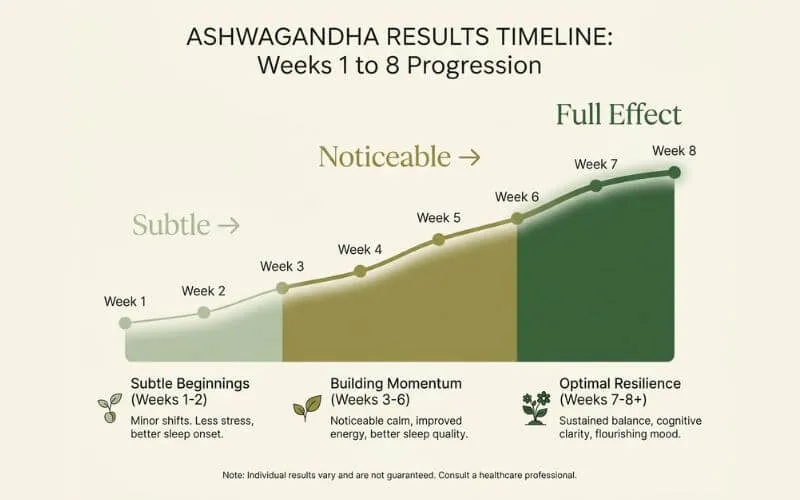
Week 1–2: Subtle Shifts
Most people notice nothing dramatic in the first two weeks, and that’s normal. Some report marginally easier sleep or slightly less reactive to minor frustrations. Your cortisol system is beginning to recalibrate, but the measurable changes happen below the surface.
Week 3–4: Sleep and Morning Mood
This is typically where the first noticeable changes arrive: waking up feeling less jangled, falling asleep faster, or noticing that a stressful situation didn’t derail you the way it usually would. A 2019 study found that 400 mg/day produced measurable sleep improvements by week 4 (PubMed, PMID: 31728244).
Week 6–8: Full Stress Response Improvement
The landmark cortisol reduction studies (27.9% reduction in 60 days, 23% reduction in 60 days) reach their endpoints here. If you’ve been consistent with dosing, this is when you should feel a meaningful baseline shift: less physical tension, better focus, lower baseline anxiety.
Week 12+: Maintenance and Reassessment
Most safety data covers up to 3 months of continuous use. After 12 weeks, consider taking a 4-week break to assess where your baseline stress levels sit without supplementation. Many people cycle 8–12 weeks on, 4 weeks off.
Common Mistakes That Kill Your Results {#mistakes}
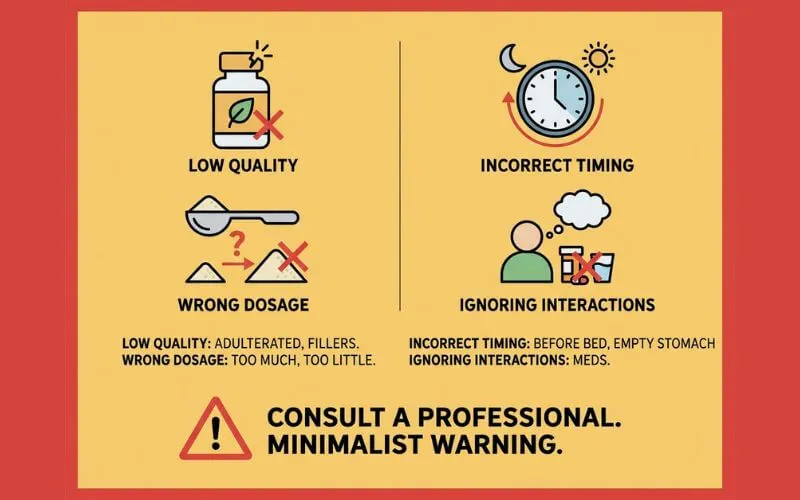
1. Buying Generic Root Powder
If your ashwagandha label doesn’t specify a withanolide percentage, you’re likely taking unstandardized powder with minimal active compounds. This is the single most common reason people say “ashwagandha didn’t work for me.”
2. Expecting Results in Days
Ashwagandha is not an anxiolytic that hits in 30 minutes like some medications. Its benefits accumulate over weeks. People who stop after two weeks miss the window where the real changes happen.
3. Taking It on an Empty Stomach
Most GI side effects (nausea, upset stomach) from ashwagandha happen when taken without food. Taking it with a meal — even a small one — eliminates this for most people.
4. Inconsistent Dosing
The trials showing meaningful cortisol reduction require consistent daily use. Taking it three days a week or “when you remember” does not replicate the study conditions. Set a daily reminder.
5. Ignoring the Rest of the Picture
Ashwagandha supports your stress response, but it can’t override 5 hours of sleep, a diet of processed food, and zero physical movement. It works best as part of a broader stress management approach, not as a substitute for one.
Who Should NOT Take Ashwagandha {#caution}
Ashwagandha is considered safe for most adults, but there are specific situations where caution or avoidance is appropriate:
- Pregnancy: Ashwagandha may stimulate uterine contractions. It is not recommended during pregnancy.
- Thyroid conditions: Ashwagandha can increase thyroid hormone levels. If you have hyperthyroidism or are on thyroid medication, consult your doctor before use.
- Autoimmune diseases: As an immune modulator, ashwagandha may increase immune activity in conditions like lupus, rheumatoid arthritis, or multiple sclerosis.
- Upcoming surgery: Stop use at least two weeks before any scheduled surgery due to potential interactions with anesthesia and blood pressure medications.
- Liver concerns: Rare cases of liver injury have been reported, typically resolving within 1–3 months of stopping. If you have existing liver conditions, consult a healthcare provider.
- Nightshade sensitivity: Ashwagandha is in the Solanaceae (nightshade) family. Those with nightshade allergies should use caution.
⚠️ Medical Disclaimer: This article is for informational purposes only and does not constitute medical advice. Always consult your healthcare provider before starting any supplement, especially if you take prescription medications or have an existing health condition.
FAQ: Ashwagandha for Stress Relief {#faq}
How long does ashwagandha take to work for stress?
Most people begin noticing subtle changes in sleep quality and stress reactivity by weeks 3–4. The full cortisol-lowering effect takes 6–8 weeks of consistent daily use. Clinical trials showing significant results typically run for 60 days. Don’t judge effectiveness in the first two weeks.
What is the best dosage of Ashwagandha for Stress Relief?
Research consistently supports 300 mg twice daily (600 mg total) of a standardized extract containing at least 5% withanolides. Lower doses (125–240 mg/day) can also be effective for mild stress, particularly with Sensoril extract, which is standardized to 10% withanolides.
Does ashwagandha actually lower cortisol?
Yes, in clinical trials. Multiple randomized placebo-controlled studies show cortisol reductions ranging from 14% to 27.9% with standardized ashwagandha extract over 60 days. The reduction is most consistent with higher doses (500–600 mg/day) and standardized extracts, not generic root powder.
Should I take ashwagandha in the morning or at night?
Both work. For daytime stress management and focus, morning dosing is supported by research on cognitive and cortisol effects. For sleep improvement, evening dosing has an advantage. For the strongest overall results, split-dose protocols (morning + evening) are what most successful trials use.
Can you take ashwagandha every day?
Yes, within the studied safety window. Most clinical trials use daily supplementation for 60–90 days without significant adverse events. Safety data beyond 3 months is limited, so a standard practice is cycling — 8–12 weeks on, 4 weeks off — then reassessing.
What is KSM-66 ashwagandha and is it better?
KSM-66 is a patented, root-only ashwagandha extract standardized to ≥5% withanolides. It has the most clinical trial data of any ashwagandha extract. It’s not necessarily “better” than Sensoril (which uses root and leaf), but it’s better than unstandardized generic powder. Both KSM-66 and Sensoril are well-researched; the choice depends on your goals and preferred dosage.
Can ashwagandha help with anxiety as well as stress?
Yes. A 2021 systematic review of seven randomized controlled trials found that ashwagandha significantly reduced self-reported anxiety scores in all seven studies. It appears to work through GABA receptor modulation, which affects the brain’s anxiety circuits directly — not just through cortisol reduction alone.
Are there side effects of taking Ashwagandha for Stress Relief?
Side effects are generally mild: stomach upset or nausea (most common, usually resolved by taking with food), drowsiness, and loose stools. Rare but serious: liver injury (a small number of cases reported). Ashwagandha is not appropriate for everyone — see the caution section above.
Can I take ashwagandha with other supplements?
Ashwagandha is often stacked with other adaptogens. It pairs well with rhodiola rosea (which tends to be more stimulating, while ashwagandha is more calming) and magnesium glycinate for sleep. Be cautious combining it with sedative medications, thyroid medications, or immunosuppressants without medical supervision.
Which form of ashwagandha is most effective: capsule, powder, or gummy?
Capsules of standardized extract are the most reliable for consistent dosing — they’re also what every major clinical trial uses. Powder works if it specifies withanolide content. Gummies are inconsistent in potency and often under-dosed. Ashwagandha tea has very low bioavailability and is not effective for stress management.
The Bottom Line {#conclusion}
Ashwagandha is one of the few natural supplements with genuine clinical evidence behind its stress-relieving claims. The research is specific: 300–600 mg of standardized extract daily, taken consistently for 8–12 weeks, reduces cortisol levels by 14–28% and meaningfully improves self-reported stress, anxiety, and sleep in multiple controlled trials.
The catch is specificity — it only works if you buy the right extract (KSM-66 or Sensoril, with a stated withanolide percentage), take it consistently with food, and give it the time the studies require. Generic root powder and two-week trials are why so many people conclude it “didn’t work.”
Your next step: check the label of any ashwagandha you’re considering. If it doesn’t list a withanolide percentage, put it back. If it does, you’re starting in the right place.
This article is for informational purposes only and does not constitute medical advice. Always consult your healthcare provider before starting any supplement regimen.
Written by Ethan Cole, Nutrition Expert | Meet Ethan →
=== 🔗 OUTGOING LINKS FROM THIS ARTICLE: ===
Looking to get better results than using ashwagandha for stress relief alone? These related guides break down how cortisol impacts your body, which supplements work best together, and how to improve sleep, anxiety, and stress resilience with a complete, science-backed approach.
→ Best Adaptogens for Anxiety Reddit: Top 5 That Actually Work (2026)
→ Rhodiola vs Ashwagandha for Stress: What Reddit Users Actually Say(2026)
→ Best KSM-66 Ashwagandha Supplements of 2026: Tested, Ranked & Compared
→ 11 Best Ashwagandha Supplements on Amazon Right Now
→ Rhodiola vs Ashwagandha: Which Adaptogen Is Right for You?
→ Best Ashwagandha Supplements 2026: Ranked by Withanolide Dose