Rhodiola vs Ashwagandha: Which Adaptogen Is Right for You?
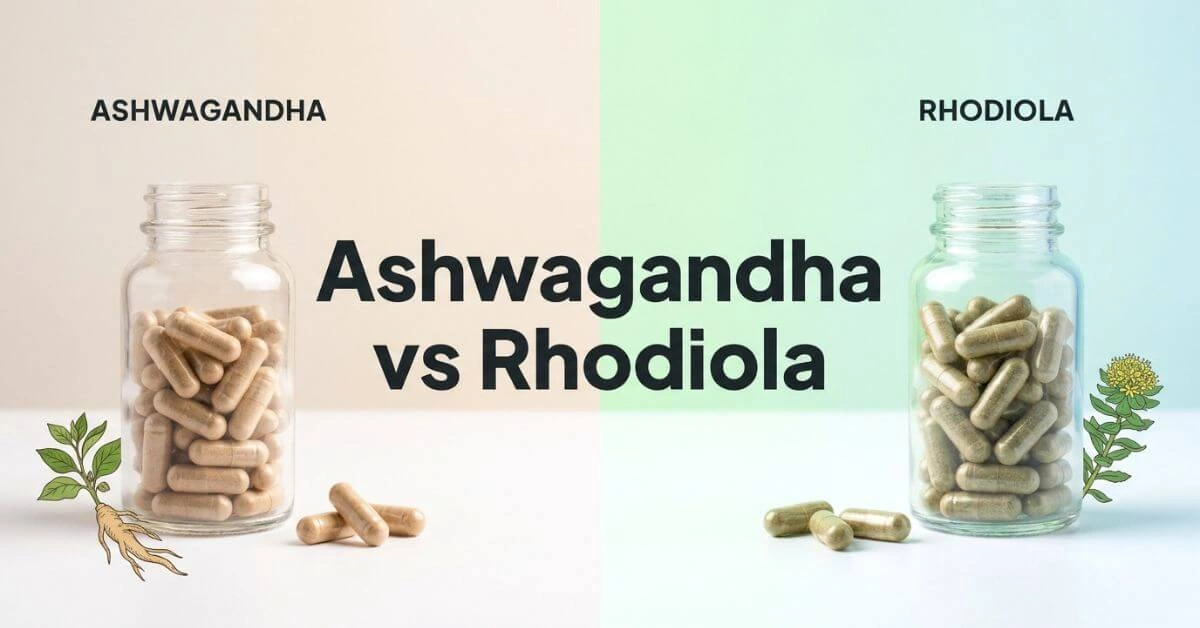
The question isn’t which adaptogen is better. The question is what kind of stress you’re dealing with. Both rhodiola and ashwagandha are backed by controlled clinical trials, but they target stress from completely different angles — one calms a system in overdrive, the other energizes a system that’s been depleted.
💡 Quick Answer: Rhodiola vs Ashwagandha: The Right Choice Depends on One Question
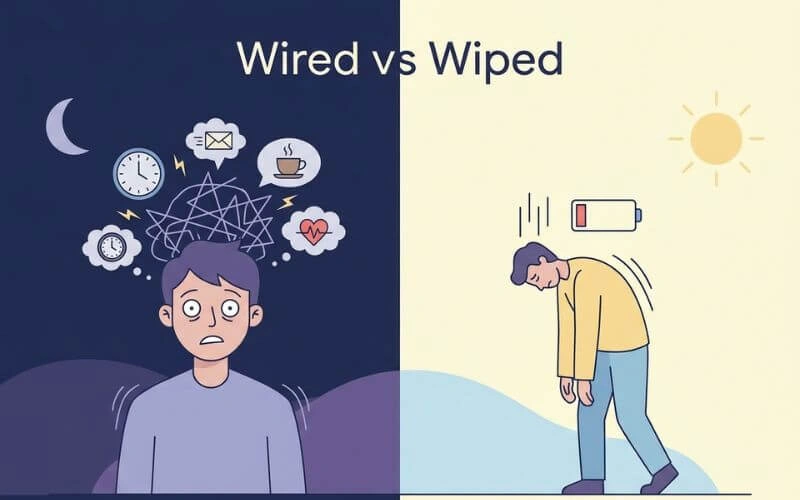
Ashwagandha is the better choice if your stress shows up as anxiety, racing thoughts, poor sleep, or high cortisol. Rhodiola is the better choice if your stress has left you mentally exhausted, foggy, burned out, or flat. The deciding question: Are you wired or are you wiped?
This guide breaks down the clinical evidence for both, gives you the exact dosages used in trials, and helps you choose — or shows you when to use both together.
🧠 Quick Comparison: Rhodiola vs Ashwagandha
Rhodiola vs Ashwagandha — Quick Answer:
- Ashwagandha → Best for anxiety, high cortisol, poor sleep
- Rhodiola → Best for fatigue, burnout, low energy
- Ashwagandha → Calming and cortisol-reducing
- Rhodiola → Energizing and focus-enhancing
- You can take both → Morning (rhodiola) + evening (ashwagandha)
❓ Which Should You Choose?
- Choose ashwagandha if you feel anxious, wired, or can’t sleep
- Choose rhodiola if you feel tired, burned out, or mentally drained
- Use both if you feel anxious AND exhausted at the same time
⏱️ How Fast Do They Work?
- Rhodiola → Works in 3–7 days
- Ashwagandha → Works in 3–4 weeks
- Full effects → 4–8 weeks
Written by Ethan Cole, Nutrition Expert | Last Updated: May 2026
This article contains affiliate links. If you purchase through our links, we may earn a small commission at no extra cost to you. See our Affiliate Disclosure for details.
Two Different Herbs for Two Different Stress Patterns {#two-patterns}
Stress isn’t one thing. For some people it looks like a heart that won’t stop racing, a mind that can’t shut off, and 3 a.m. wakeups that leave them lying there in dread. For others it looks like getting up already exhausted, staring blankly at a screen by 2 p.m., struggling to form sentences by the end of a workday.
The first pattern — anxious, wired, high-cortisol — is what ashwagandha was studied and optimized for. Multiple randomized trials show it reduces serum cortisol by 23–28% over 8 weeks and significantly improves anxiety scores, sleep latency, and nervous system reactivity.
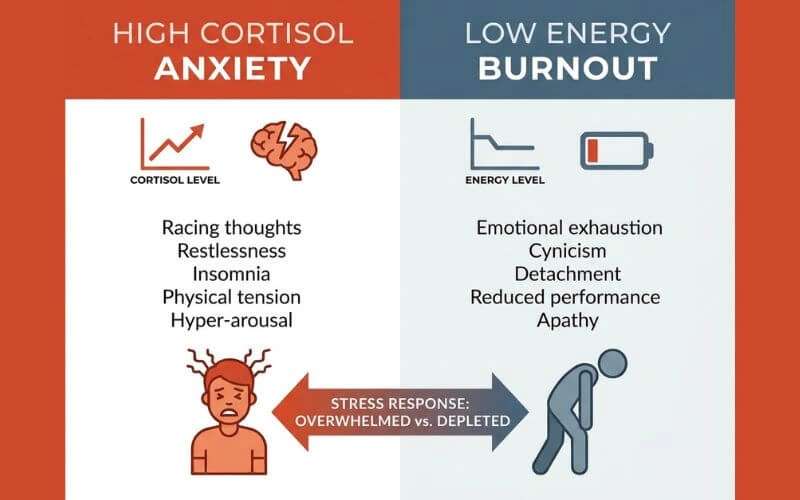
The second pattern — depleted, foggy, burned out — is where rhodiola shines. A review published in Molecules (PMC, 2022) covering multiple human trials found rhodiola consistently improves stress-induced fatigue, mental performance, and burnout scores, with some participants noticing improvements within one week of starting.
Neither herb does both jobs equally well. Choosing the wrong one for your stress pattern — the most common mistake — is why people conclude adaptogens “don’t work.”
How Each Adaptogen Works: The Mechanisms Explained {#mechanisms}
How Ashwagandha Works
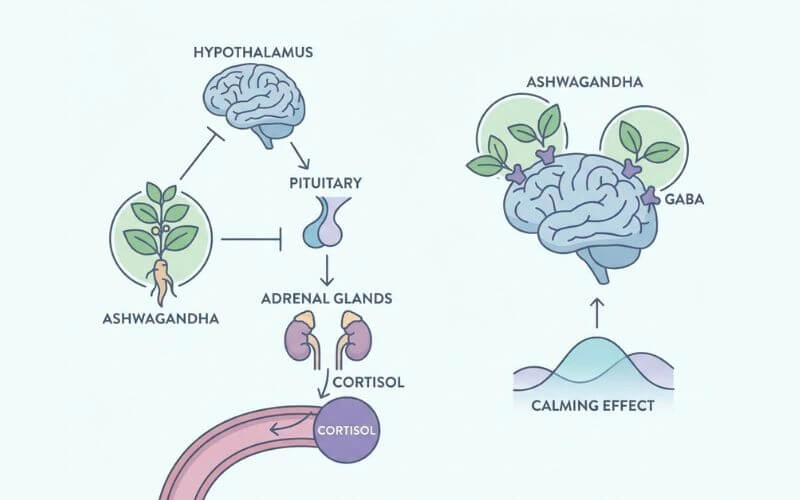
Ashwagandha (Withania somnifera) acts primarily on the HPA (hypothalamic-pituitary-adrenal) axis — the chain of command that produces cortisol in response to stress. Its active compounds, withanolides, reduce the sensitivity of this axis, lowering the hair-trigger that floods your body with cortisol during ordinary daily stressors.
The secondary mechanism is GABA-A receptor modulation. Ashwagandha enhances the activity of the brain’s primary calming neurotransmitter system — the same pathway targeted by prescription anti-anxiety medications, but far more gently. This is why it affects both blood cortisol (measurable) and the subjective experience of anxiety (self-reported) in clinical trials.
Net effect on your body: Calming. Cortisol-reducing. Sleep-supporting. Slightly sedating for some people.
How Rhodiola Works
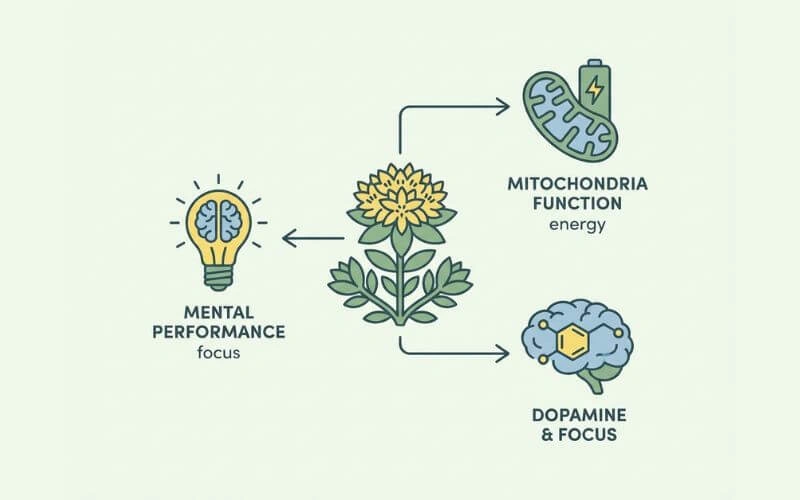
Rhodiola rosea acts primarily on the central nervous system through a different set of bioactive compounds — rosavins and salidrosides. Its mechanisms include enhancing mitochondrial efficiency (how your cells generate energy), influencing serotonin and dopamine availability under stress, and reducing the physical toll of mental exertion by protecting against oxidative damage in the brain.
Rhodiola does not significantly reduce cortisol. Instead, it helps the body maintain mental and physical output despite cortisol being elevated — essentially improving stress tolerance rather than lowering the stress response itself.
Net effect on your body: Energizing. Fatigue-reducing. Focus-sharpening. Activating enough that late-day dosing can disrupt sleep in sensitive individuals.
Rhodiola vs Ashwagandha: Clinical Evidence Compared {#evidence}
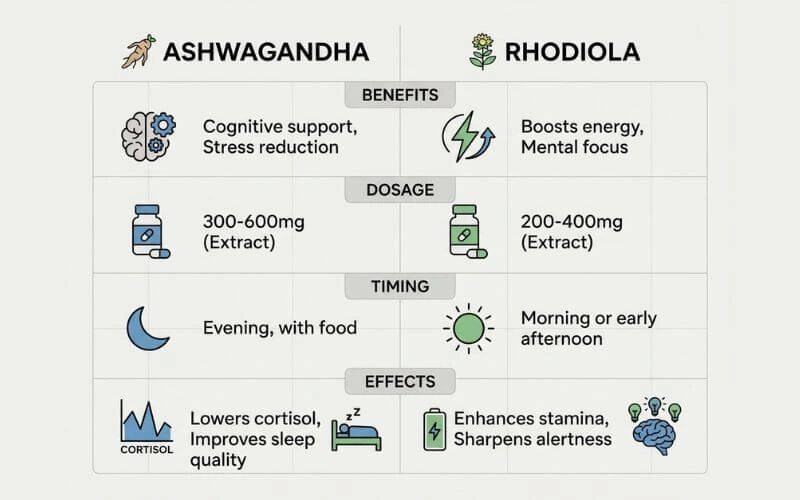
| Factor | Ashwagandha | Rhodiola |
|---|---|---|
| Primary target | Cortisol, HPA axis, GABA | Fatigue, mitochondria, neurotransmitters |
| Best studied for | Anxiety, chronic stress, sleep | Burnout, mental fatigue, performance |
| Cortisol reduction | 23–28% in 60 days (clinical) | Minimal direct effect |
| Fatigue improvement | Moderate (secondary benefit) | Strong — primary clinical endpoint |
| Speed of action | 3–4 weeks minimum | Days to 1–2 weeks |
| Optimal dose | 300–600 mg/day (KSM-66) | 200–400 mg/day (SHR-5 or 3% rosavins) |
| Clinical trial duration | 60–90 days | 28–84 days |
| Sleep improvement | Strong (direct, well-studied) | Moderate (indirect via fatigue) |
| Cognitive performance | Moderate | Strong — multiple RCT data |
| Best time to take | Morning or split AM/PM | Morning only (stimulating) |
Key research highlights:
Ashwagandha: A 60-day randomized controlled trial (Chandrasekhar et al., 2012) with 64 stressed adults found 300 mg KSM-66 twice daily reduced PSS (Perceived Stress Scale) scores by 44% and serum cortisol by 27.9% vs. placebo (PubMed, PMID: 23439798).
Rhodiola: A double-blind RCT (Olsson et al., 2009) found 576 mg/day of SHR-5 rhodiola extract for 28 days significantly reduced burnout scores, improved attention and mental performance, and reduced cortisol awakening response vs. placebo in adults with stress-related fatigue (PubMed, PMID: 19016404). Participants reported noticeable changes within one week.
Comparison head-to-head: A 2024 review by Nektium published in the European Journal of Medicinal Plants, analyzing over 70 trials across both adaptogens, concluded: Rhodiola rosea is best classified as a “tonic vitalizing” adaptogen (restores depleted function), while ashwagandha is better classified as an “anxiolytic calming” adaptogen (reduces excessive reactivity). They serve different stress phenotypes.
Choosing the Right One: The Symptom Decision Framework {#choosing}
Answer these five questions honestly. Most people land clearly in one column.
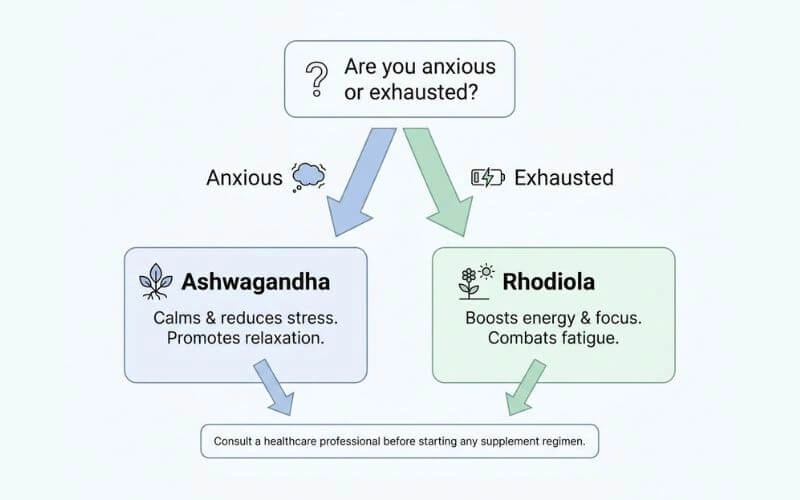
| Symptom | Ashwagandha → | Rhodiola → |
|---|---|---|
| My main stress symptom | Anxiety, worry, restlessness | Exhaustion, flatness, no motivation |
| My sleep pattern | Hard to fall asleep / stay asleep | Fall asleep fine but wake up drained |
| My energy level | High-strung, wired, but exhausted | Low baseline — flat all day |
| My stress type | Chronic background anxiety | Acute performance pressure / burnout |
| How long I’ve been stressed | Months to years (chronic) | Weeks to months (burnout pattern) |
The One-Question Shortcut
“Is your stress making you anxious, or is it making you exhausted?”
- Anxious (wired, racing thoughts, high cortisol) → Start with ashwagandha
- Exhausted (burned out, foggy, low energy, flat) → Start with rhodiola
- Both equally → Consider stacking (see next section)
This single question correctly routes most people. The mistake is treating adaptogens as interchangeable “stress herbs” when their mechanisms, effects, and ideal stress profiles are meaningfully different.
Dosage Guide for Both Adaptogens – Rhodiola vs Ashwagandha {#dosage}
Ashwagandha Dosage
The most-studied effective dose is 300 mg twice daily (600 mg total) of a root extract standardized to at least 5% withanolides (look for KSM-66 or Sensoril on the label).
- Starting dose: 300 mg once daily with food for 2 weeks
- Full protocol dose: 300 mg morning + 300 mg evening
- Minimum effective trial period: 8 weeks
- When to take: With food; morning or split AM/PM
Rhodiola Dosage
Effective doses in published trials range from 200–576 mg/day of standardized extract. Look for extracts standardized to 3% rosavins and 1% salidroside — these are the compounds responsible for efficacy. Safety and dosing context for rhodiola, NIH Office of Dietary Supplements
- Starting dose: 200 mg once daily, morning, on an empty stomach (or with light food)
- Standard dose: 200–400 mg/day
- Important: Take rhodiola in the morning — its activating effects can disturb sleep if taken after 2 p.m.
- Minimum effective trial period: 4 weeks (effects often noticeable in 1–2 weeks)
Dosage Comparison Table Rhodiola vs Ashwagandha
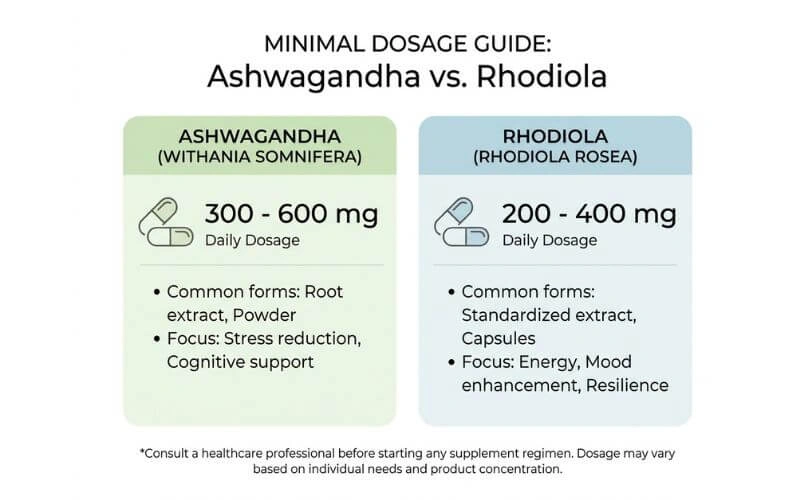
| Ashwagandha | Rhodiola | |
|---|---|---|
| Starting dose | 300 mg/day | 200 mg/day |
| Full dose | 300 mg 2x/day | 200–400 mg/day |
| Standardization | ≥5% withanolides (KSM-66) | 3% rosavins + 1% salidroside |
| With or without food | Always with food | Light food or empty stomach |
| Timing | AM or split AM/PM | Morning ONLY |
| Onset of effect | 3–4 weeks | Days to 1–2 weeks |
| Full effect | 6–8 weeks | 4–6 weeks |
| Cycling | 8–12 weeks on, 4 weeks off | 8–12 weeks on, 4 weeks off |
Can You Take Rhodiola and Ashwagandha Together? {#stacking}
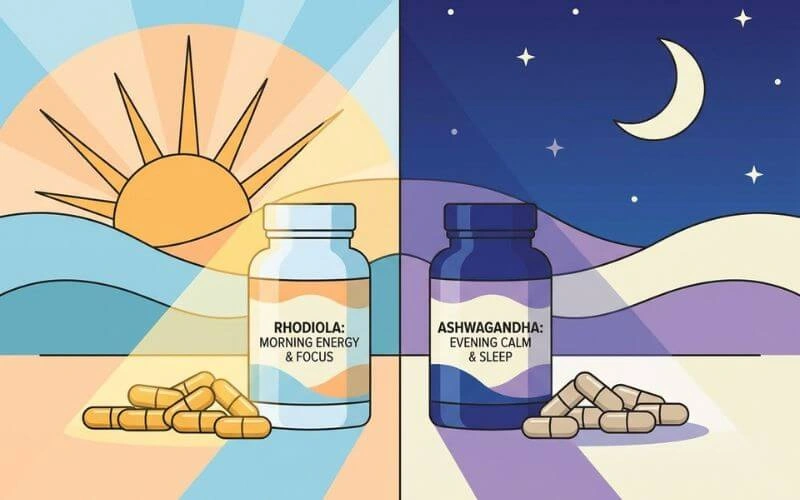
Yes — and for many people, this combination makes more sense than choosing one. Because they work through completely different pathways, they don’t compete. They complement.
The logic: ashwagandha lowers your cortisol reactivity and anxiety baseline. Rhodiola restores your mental energy and cognitive resilience. Together, they address both the “too wound up” and the “too depleted” dimensions of chronic stress — which, in reality, often coexist.
Who Benefits Most from Stacking
- People whose stress shows up as both anxiety and fatigue simultaneously
- Anyone in a high-demand job who needs to perform mentally while managing background anxiety
- People recovering from burnout who have both low energy and disrupted sleep
Stacking Protocol (Timed Dosing)
Getting the timing right is critical because rhodiola is activating and ashwagandha is calming:
| Time | Supplement | Dose | Why |
|---|---|---|---|
| Morning (with breakfast) | Rhodiola | 200–300 mg | Energy and cognitive clarity for the day |
| Evening (with dinner) | Ashwagandha | 300–600 mg | Cortisol reduction, anxiety relief, sleep support |
Taking rhodiola in the evening or ashwagandha in the morning only both work fine, but this split-dose approach matches each herb’s effect profile to the time of day it’s most useful.
Important: Start One at a Time
Don’t start both on the same day. Begin with whichever herb addresses your primary symptom for 2–3 weeks. Once you know how your body responds to it alone, add the second herb. This lets you isolate any side effects and understand what each is contributing.
Common Mistakes When Choosing Between Them {#mistakes}
| Based on | Common Mistake | Fix |
|---|---|---|
| Rhodiola | Taking rhodiola at night | Take it before 2 PM only |
| Ashwagandha | Expecting instant results from ashwagandha | Give it at least 6–8 weeks |
1. Picking Based on “Stress” Without Qualifying the Type
“Both help with stress” is technically true and practically useless. Anxious-wired stress and burned-out-depleted stress require different interventions. Picking ashwagandha for burnout fatigue or rhodiola for anxiety often produces disappointing results — not because the herbs don’t work, but because they were matched to the wrong problem.
2. Taking Rhodiola in the Afternoon or Evening
Rhodiola’s activating effect on the central nervous system can cause sleep difficulty, restlessness, or a “wired” feeling when taken too late in the day. Multiple clinical trials specifically note morning administration. This is one of the most common reasons people report rhodiola “gave them anxiety” — it was a timing issue, not a herb issue.
3. Buying Unstandardized Extracts
Generic “rhodiola root powder” without specifying rosavin and salidroside content, or generic “ashwagandha” without stating withanolide percentage, are not equivalent to the extracts used in clinical trials. The difference in active compound concentration can be 5–10x. Always check the standardization on the label.
4. Not Giving Ashwagandha Enough Time
Rhodiola’s effects can appear within days. Ashwagandha often takes 3–4 weeks before any noticeable shift, and full cortisol-lowering effects develop over 60 days. People switch to rhodiola after two weeks of ashwagandha and conclude it “didn’t work” — when the therapeutic window hadn’t even opened.
5. Using Both Without a Baseline
If you start both herbs simultaneously and feel better (or worse), you won’t know which one is responsible. This makes dose adjustments and troubleshooting impossible. Sequence matters.
Who Should Avoid Each Herb {#caution}
| The best | the condition |
|---|---|
| Rhodiola | Anxiety |
| Rhodiola | Sleep problems |
| Ashwagandha | Burnout |
| Ashwagandha | Productivity |
Ashwagandha — Avoid or Use Caution If:
- Pregnant — may stimulate uterine contractions
- Thyroid conditions — can raise thyroid hormone levels; use caution with thyroid medication
- Autoimmune disease — may increase immune activity (lupus, RA, MS)
- Nightshade allergy — ashwagandha is in the Solanaceae family
- Pre-surgery — stop 2 weeks before scheduled surgery
Rhodiola — Avoid or Use Caution If:
- Bipolar disorder — stimulating effect may trigger manic episodes
- Anxiety disorders primarily — rhodiola’s activating properties may worsen anxiety for some individuals
- Taking antidepressants (SSRIs or MAOIs) — potential serotonergic interaction; consult your doctor
- High blood pressure — some evidence of mild blood pressure elevation at higher doses
- Pregnant or breastfeeding — insufficient safety data
⚠️ Medical Disclaimer: This article is for informational purposes only and does not constitute medical advice. Always consult your healthcare provider before starting any supplement, especially if you take prescription medications or have an existing health condition.
🧬 What Science Says:
- Ashwagandha reduces cortisol up to ~28%
- Rhodiola improves fatigue in as little as 1 week
- Both are clinically validated adaptogens
FAQ: Rhodiola vs Ashwagandha {#faq}
Which is better for anxiety — rhodiola or ashwagandha?
Ashwagandha is the stronger choice for anxiety. Multiple randomized trials show it reduces anxiety scores (HAM-A, Beck Anxiety Inventory) significantly via cortisol reduction and GABA-A receptor modulation. Rhodiola has mild anti-anxiety effects but is primarily studied for fatigue — it can actually worsen anxiety in some people due to its stimulating properties.
Which is better for energy and fatigue?
Rhodiola is the clear choice for fatigue and energy. Its primary clinical endpoints in published trials are burnout reduction, mental performance under stress, and physical endurance. Ashwagandha can help with fatigue as a secondary effect (by improving sleep quality and reducing cortisol drain), but it’s not primarily an energy herb.
How quickly does each adaptogen work?
Rhodiola works faster — many people notice improvements in mental energy and focus within 3–7 days. Ashwagandha is slower; expect 3–4 weeks before noticeable stress and anxiety improvements, with full cortisol-lowering effects developing over 60 days. This timing difference is one reason choosing the right herb for your situation matters so much.
Can you take rhodiola and ashwagandha at the same time?
Yes — they work through different mechanisms and don’t compete. The recommended approach is split dosing: rhodiola in the morning for energy and cognition, ashwagandha in the evening for cortisol control and sleep. Start each herb separately (2–3 weeks apart) before combining, so you can assess each one’s effect individually.
Which adaptogen is better for sleep?
Ashwagandha is significantly better for sleep. A 2019 randomized trial (PubMed, PMID: 31728244) found 600 mg/day ashwagandha improved sleep onset time, sleep quality, and morning alertness. Rhodiola has no meaningful direct sleep benefit and may worsen sleep quality if taken too late in the day.
Is rhodiola or ashwagandha better for burnout?
For classic burnout — characterized by exhaustion, detachment, and reduced performance — rhodiola is the first-line choice. A multicenter clinical trial with 117 burnout patients found rhodiola extract (400 mg/day) produced significant improvement in burnout scores within the first week (PubMed, PMID: 28367055). For burnout that presents with anxiety, insomnia, and high cortisol, adding ashwagandha makes sense.
What’s the difference between KSM-66 ashwagandha and regular rhodiola?
These are standardized extracts from different plants with different active compounds. KSM-66 is a trademarked ashwagandha root extract standardized to ≥5% withanolides. High-quality rhodiola extracts are standardized to 3% rosavins and 1% salidroside. The standardization percentage is what ensures you’re getting the active compounds studied in clinical trials — not just ground plant material.
Which has fewer side effects — rhodiola or ashwagandha?
Both are well-tolerated in clinical trials. Ashwagandha’s most common side effects are mild GI upset and drowsiness (both dose-dependent). Rare serious adverse events include liver injury. Rhodiola’s common side effects are dizziness, dry mouth, and sleep disruption (especially if taken late). Rhodiola has fewer reported serious adverse events in the literature, but individual response varies.
Should I take rhodiola or ashwagandha for working out?
For athletic performance and workout endurance, rhodiola has more specific evidence. Studies show improved endurance capacity, reduced perceived exertion, and faster recovery with rhodiola supplementation. Ashwagandha also has performance data — a 2015 KSM-66 trial showed improved VO2 max and muscle recovery — so both are legitimate, but rhodiola’s data for physical performance is more extensive.
How long should I take each adaptogen before deciding if it works?
For rhodiola: give it 4 weeks minimum, ideally 8 weeks. Many effects appear in week one, but full benefit takes longer. For ashwagandha: give it 8 weeks minimum. The 60-day trial window is where most clinical improvements are measured. Stopping either herb before this window and concluding it “didn’t work” is the single most common error.
The Bottom Line About Rhodiola vs Ashwagandha {#conclusion}
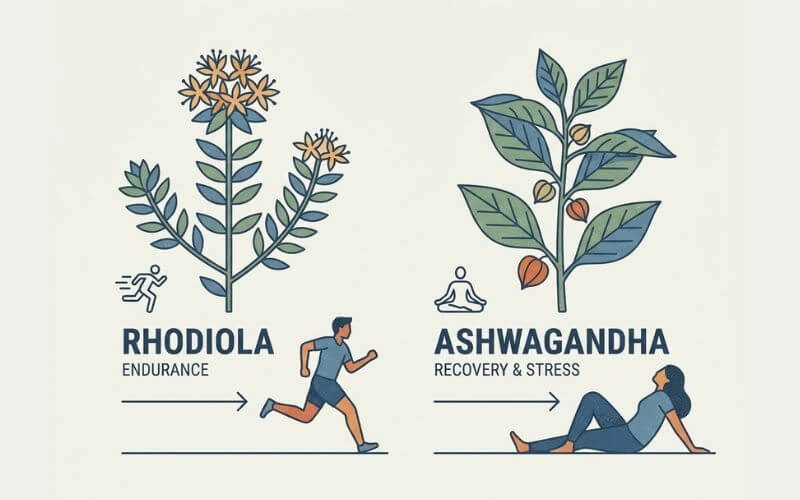
Rhodiola and ashwagandha are both legitimate, well-researched adaptogens — but they’re not interchangeable. Ashwagandha is a cortisol and anxiety herb. Rhodiola is a fatigue and mental performance herb. The right choice depends entirely on which type of stress dominates your life right now.
If you’re wired and anxious, can’t sleep, and have been running on stress hormones for months — start with ashwagandha (300–600 mg/day KSM-66, minimum 8 weeks). If you’re burned out, mentally flat, and dragging yourself through the day — start with rhodiola (200–400 mg/day standardized extract, morning only). If you’re dealing with both patterns, a split-dose stack — rhodiola in the morning, ashwagandha in the evening — is well-supported and widely used.
Start with one. Know what it does for you. Build from there.
This article is for informational purposes only and does not constitute medical advice. Always consult your healthcare provider before starting any supplement regimen.
Written by Ethan Cole, Nutrition Expert | Meet Ethan →
=== 🔗 OUTGOING LINKS FROM THIS ARTICLE ===
→ Ashwagandha for stress relief
→ Complete Guide to Adaptogens: Benefits, Types & How to Use (2026)
→ Best Ashwagandha Supplements 2026: Ranked by Withanolide Dose