Lion’s Mane Mushroom Benefits: What 15 Studies Actually Show
Brain fog is the complaint that drove most Americans to lion’s mane. But the clinical reality — what the studies actually measured, in real human beings, at specific doses — is both more interesting and more specific than most supplement marketing suggests.
💡 Quick Answer: Lion’s Mane Mushroom Benefits
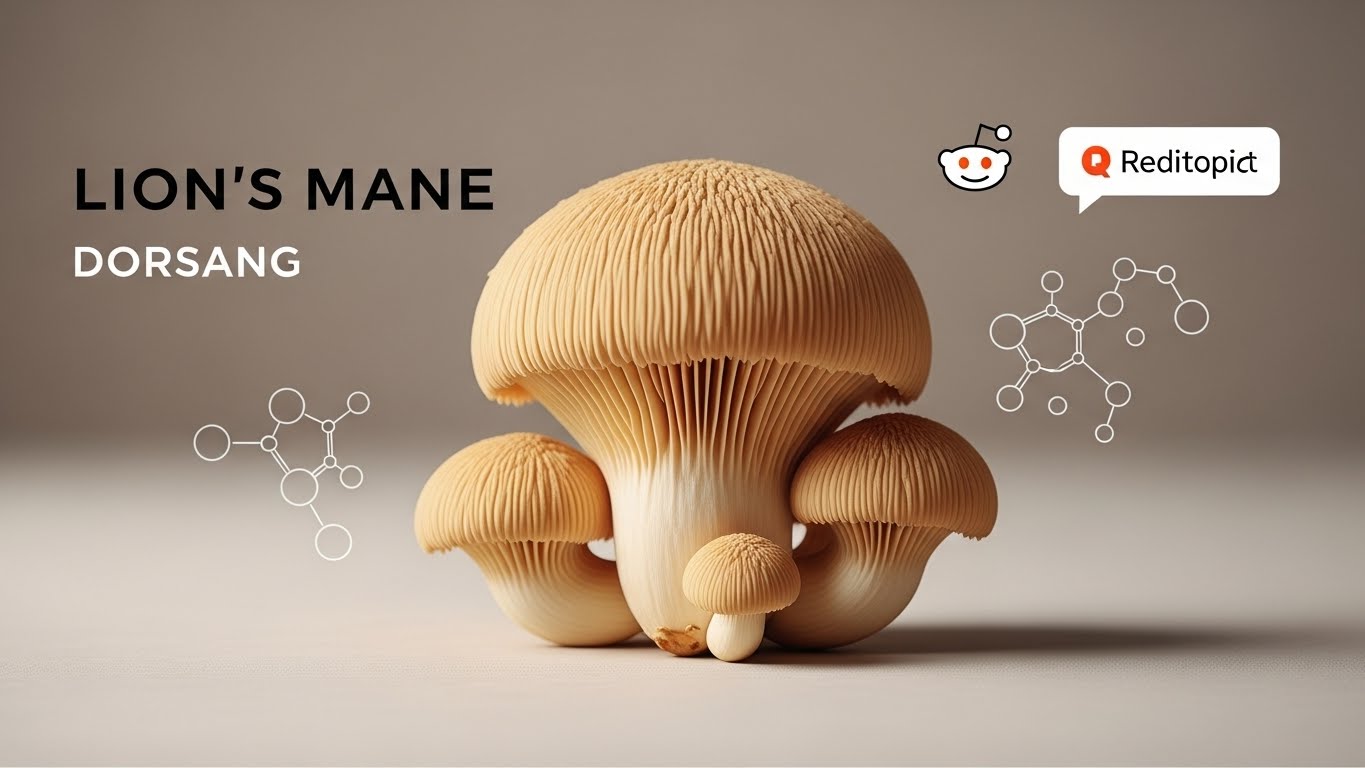
Lion’s mane mushroom (Hericium erinaceus) stimulates nerve growth factor (NGF) production through two bioactive compound classes — hericenones from the fruiting body and erinacines from the mycelium. Human trials show improvements in cognitive function, mild cognitive impairment scores, and mood. The catch: results depend entirely on product quality. Most commercial lion’s mane supplements are too diluted to replicate trial conditions.
This guide covers the full mechanism, what 15 studies actually found, the dosages used in trials, and the single most important quality factor most buyers never check.
📋 Written by Ethan Cole, Nutrition Expert | Meet Ethan →
- ✔ Verified against third-party Certificates of Analysis (COAs), current Amazon listings, and 2025–2026 clinical research
- 📅 Last Updated: May 2026
⚠️This article contains affiliate links. If you purchase through our links, we may earn a small commission at no extra cost to you. See our Affiliate Disclosure for details.

What Lion’s Mane Actually Does in the Brain {#mechanism}
Most cognitive supplements work through stimulant pathways — caffeine blocks adenosine, racetams alter acetylcholine. Lion’s mane does something structurally different: it stimulates the production of nerve growth factor (NGF), a protein your brain uses to grow, maintain, and repair neurons.
NGF is not a neurotransmitter. It’s a neurotrophin — a signaling molecule that tells neurons to survive, branch out, and form new connections. Without adequate NGF, neurons shrink, lose connectivity, and eventually die. Aging, chronic stress, sleep deprivation, and metabolic dysfunction all suppress NGF levels. This is one reason cognitive function degrades before there’s any structural brain damage visible on imaging.
Lion’s mane’s bioactive compounds cross the blood-brain barrier and stimulate NGF synthesis in brain cells directly. This is verified in cell culture, animal models, and increasingly in human trials. The mechanism isn’t theoretical.
Beyond NGF, lion’s mane also appears to stimulate brain-derived neurotrophic factor (BDNF) — a related growth factor heavily associated with learning, memory consolidation, and depression resistance. A 2023 systematic review covering four clinical trials (2019–2023) found that lion’s mane supplementation consistently increased serum BDNF levels alongside cognitive test improvements, particularly on the Mini-Mental State Examination (MMSE).
This dual NGF/BDNF mechanism is why researchers studying lion’s mane for both cognitive decline and mood disorders find meaningful effects in both areas — the same signaling pathway supports both.
The Two Bioactive Compounds — and Where They Come From {#compounds}
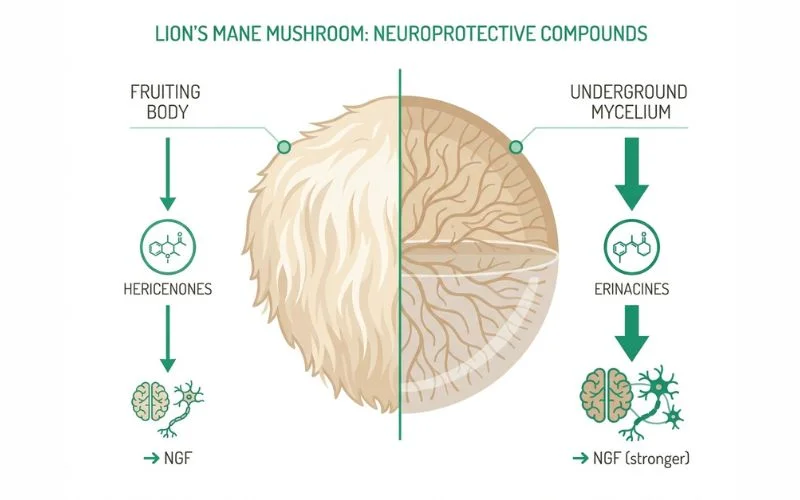
This is the detail that separates a useful lion’s mane supplement from one that doesn’t work — and almost no mainstream article explains it clearly.
Lion’s mane contains two distinct classes of NGF-stimulating compounds, but they come from different parts of the mushroom:
| Compound Class | Found In | Primary Action | Notes |
|---|---|---|---|
| Hericenones (B–E) | Fruiting body only | Stimulate NGF synthesis in astrocytes | Identified in the visible mushroom cap |
| Erinacines (A–K, P–S) | Mycelium only | Stimulate NGF production; cross blood-brain barrier | Most potent: erinacine A |
| Beta-glucans | Both (higher in fruiting body) | Immune modulation, anti-inflammatory | Quality marker on supplement labels |
| Hericene A | Fruiting body | Pan-neurotrophic pathway activation via ERK1/2 | Identified in 2023 (PMID: 36660878) |
Why this matters for buying: A fruiting body-only supplement contains hericenones and high beta-glucans, but no erinacines. A mycelium supplement contains erinacines — but most commercial mycelium products are grown on grain substrate that ends up as 60–70% starch in the capsule, diluting the erinacine content dramatically. A high-quality full-spectrum product using verified fruiting body extract is currently the most reliable starting point for most buyers.
The 2025 Frontiers in Nutrition trial specifically used a standardized fruiting body extract with verified hericenone content — and it produced measurable cognitive and mood improvements in healthy adults within a single acute dose. Extract quality, not mushroom species or brand name, drove the result.
What the Clinical Trials Show: 6 Key Studies {#trials}
Human clinical trial data on lion’s mane is more limited than the supplement marketing suggests — but it’s also more compelling than skeptics admit. Here are the six most relevant published human trials:
| Study | Population | Dose | Duration | Key Finding | Source |
|---|---|---|---|---|---|
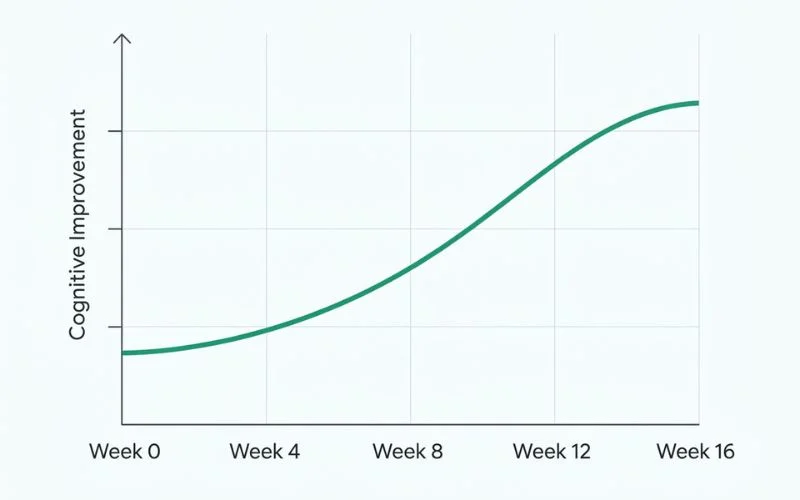
| Mori et al., 2009 | 30 adults with mild cognitive impairment, ages 50–80 | 3 g/day (4×250mg tablets, 3x daily) | 16 weeks | Significant improvement in MMSE cognitive scores vs placebo; scores declined after stopping | PMID: 18844328 |
| Li et al., 2020 | 49 patients with mild Alzheimer’s | 3×350mg capsules/day (5mg/g erinacine A) | 49 weeks | Improved MMSE scores + Instrumental Activities of Daily Living; significant vs placebo | Phytomedicine, 2020 |
| Docherty et al., 2023 | 41 healthy adults, ages 18–45 | 1.8 g (single dose) | Acute + 28-day | Faster Stroop task performance at 60 min; trend toward reduced stress at 28 days (p=0.051) | PMID: 37960344 |
| Saitsu et al., 2019 | Healthy adults with mild cognitive concerns | 3.2 g/day | 12 weeks | Improved scores on cognitive function tests; improvements reversed after cessation | PMID: 31413233 |
| Surendran et al., 2025 | Healthy adults ages 18–35 | Standardized fruiting body extract | Acute (single dose) | Significant improvements in cognitive speed and attention vs placebo | PMC12018234 |
| Zhang et al., 2021 | Adults with depression and sleep disorders | 3 tablets/day (HE powder) | 8 weeks | Reduced anxiety, depression, and insomnia scores; improved sleep quality | PMID: 33985098 |
What the data tells us:
Cognitive improvements in clinical trials consistently use 3 g/day or more of whole mushroom powder or a lower dose of high-potency extract. Results appear most consistently in populations with mild cognitive concerns (not severe impairment) and in healthy adults under cognitive stress. Critically, cognitive improvements in multiple trials reversed after stopping supplementation — suggesting ongoing use is necessary to maintain effect.
This pattern is consistent with the NGF mechanism: lion’s mane supports the conditions for healthy neuron function, but doesn’t create permanent structural changes after a short course.
Lion’s Mane for Brain Fog: What the Evidence Says {#brainfog}
Brain fog is not a clinical diagnosis — it’s a descriptive term for reduced mental clarity, concentration difficulty, and sluggish recall. It shows up across dozens of conditions: chronic stress, poor sleep, post-COVID cognitive symptoms, perimenopause, and early-stage cognitive decline.

Lion’s mane’s NGF and BDNF stimulation addresses several pathways involved in brain fog specifically:
Reduced neuroinflammation: Beta-glucans and phenolic compounds in lion’s mane show anti-inflammatory effects in brain tissue in preclinical models. Neuroinflammation is a significant contributor to the subjective “fog” experienced in chronic stress and autoimmune conditions.
Enhanced neurotrophic signaling: The Docherty 2023 trial found that a single 1.8 g dose of lion’s mane powder improved speed of attention on the Stroop task within 60 minutes — a direct measure of cognitive processing efficiency rather than memory. For brain fog characterized by slow, effortful thinking, this acute effect is meaningful.
BDNF elevation: Multiple trials document increased serum BDNF following lion’s mane supplementation. BDNF is consistently lower in people reporting cognitive fatigue, depression, and chronic stress. Raising BDNF supports the type of neural connectivity that makes thinking feel clear rather than effortful.
The honest caveat: Most clinical trials on lion’s mane and brain fog either use populations with diagnosed cognitive impairment or small healthy-adult samples. The mechanism is biologically sound, and the early human data is encouraging. But anyone expecting the dramatic overnight clarity described in supplement reviews is being misled — the trials show gradual improvements over 4–16 weeks, not immediate transformation.
Other Research-Supported Benefits {#other-benefits}
Cognitive function and brain fog dominate lion’s mane research, but several other areas have meaningful human or strong preclinical data.
Mood and Anxiety
A 2021 randomized controlled trial in 77 adults with depression and sleep disorders found that lion’s mane supplementation for 8 weeks significantly reduced depression scores, anxiety scores, and insomnia compared to placebo (PubMed, PMID: 33985098). The proposed mechanism involves both BDNF elevation and reduction of neuroinflammatory markers associated with depression.
A separate pilot study found meaningful reductions in irritability, anxiety, and concentration difficulty in perimenopausal women after 4 weeks of lion’s mane supplementation — a population-specific finding with practical relevance for the Women’s Wellness category.
Nerve Regeneration and Peripheral Neuropathy
Erinacines’ ability to cross the blood-brain barrier and stimulate NGF is not limited to central nervous system effects. Preclinical models show lion’s mane mycelium extract accelerating peripheral nerve repair after injury. While human data specifically for neuropathy is limited, this mechanism is why lion’s mane is increasingly studied in the context of diabetic peripheral neuropathy.
Immune Function
Beta-glucans are well-established immune modulators — this is not lion’s mane-specific, but the beta-glucan content of high-quality lion’s mane fruiting body extract is clinically relevant. A standardized fruiting body extract with verified beta-glucan content (≥25%) provides meaningful immune support alongside its cognitive effects.
Gut Health
Lion’s mane shows prebiotic properties in preclinical research — supporting beneficial gut bacteria while reducing populations associated with systemic inflammation. The gut-brain axis connection means gut microbiome support may partially explain lion’s mane’s mood and cognitive effects, though direct human evidence for this specific pathway remains limited.
The Supplement Quality Problem Nobody Talks About {#quality}
This section determines whether your lion’s mane supplement can actually replicate what the research shows.
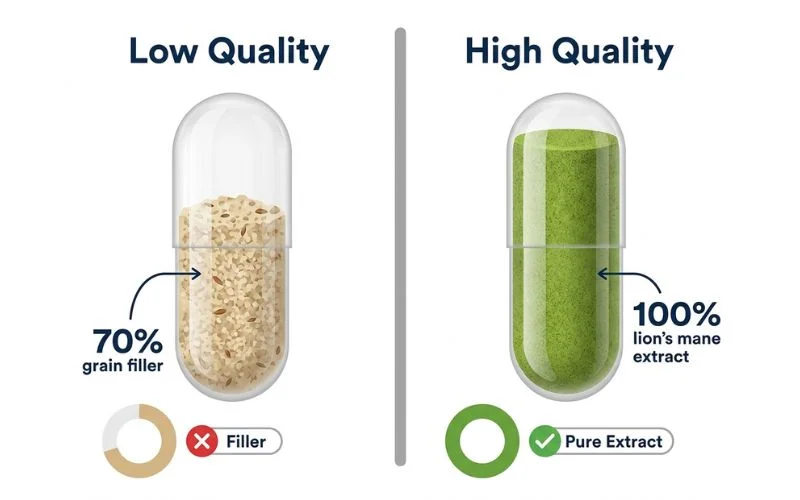
The Grain Substrate Problem
Most commercial lion’s mane mycelium supplements are grown on sterilized grain — typically rice, oats, or sorghum. The mycelium grows into the grain so thoroughly that separating them after harvest is commercially impractical. The result: mycelium products often contain 60–70% grain starch by weight, with the remainder being actual mushroom mycelium.
This grain content shows up on lab tests as alpha-glucans (starch) — not beta-glucans (the beneficial polysaccharides). A product that lists “polysaccharides: 40%” sounds impressive, but if most of those polysaccharides are alpha-glucans from grain, the actual beta-glucan content — the quality marker — may be negligible.
An analysis by Real Mushrooms (a company that third-party tests competitor products) found that multiple best-selling “lion’s mane” supplements on Amazon contained primarily grain starch with minimal mushroom content. This is legal under current FDA supplement regulations because grain-grown mycelium technically originated from mushroom material.
The Extraction Ratio Confusion
Many products advertise “10:1 extract” as a quality marker. This refers to the ratio of raw material to extract (10 lbs of mushroom = 1 lb of extract). But if the original material is diluted with grain substrate, a 10:1 extract of diluted material produces a concentrated version of diluted material — not more potency. Extract ratios without verified beta-glucan or hericenone content are meaningless.
What Actually Matters on a Lion’s Mane Label
| Quality Marker | What It Means | Minimum to Look For |
|---|---|---|
| Beta-glucan % stated | Verified polysaccharide content | ≥25% beta-glucans |
| “Fruiting body” specified | No grain substrate dilution | Required for quality assurance |
| Third-party tested | External lab verification | ISO 17025-accredited preferred |
| Alpha-glucan % absent or low | Low grain starch content | Unlisted or < beta-glucan % |
| No “myceliated grain” or “mycelial biomass” | These phrases = grain filler | Avoid both terms |
How to Choose a Lion’s Mane Supplement That Actually Works {#choosing}
Based on compound source, beta-glucan standardization, and third-party testing:
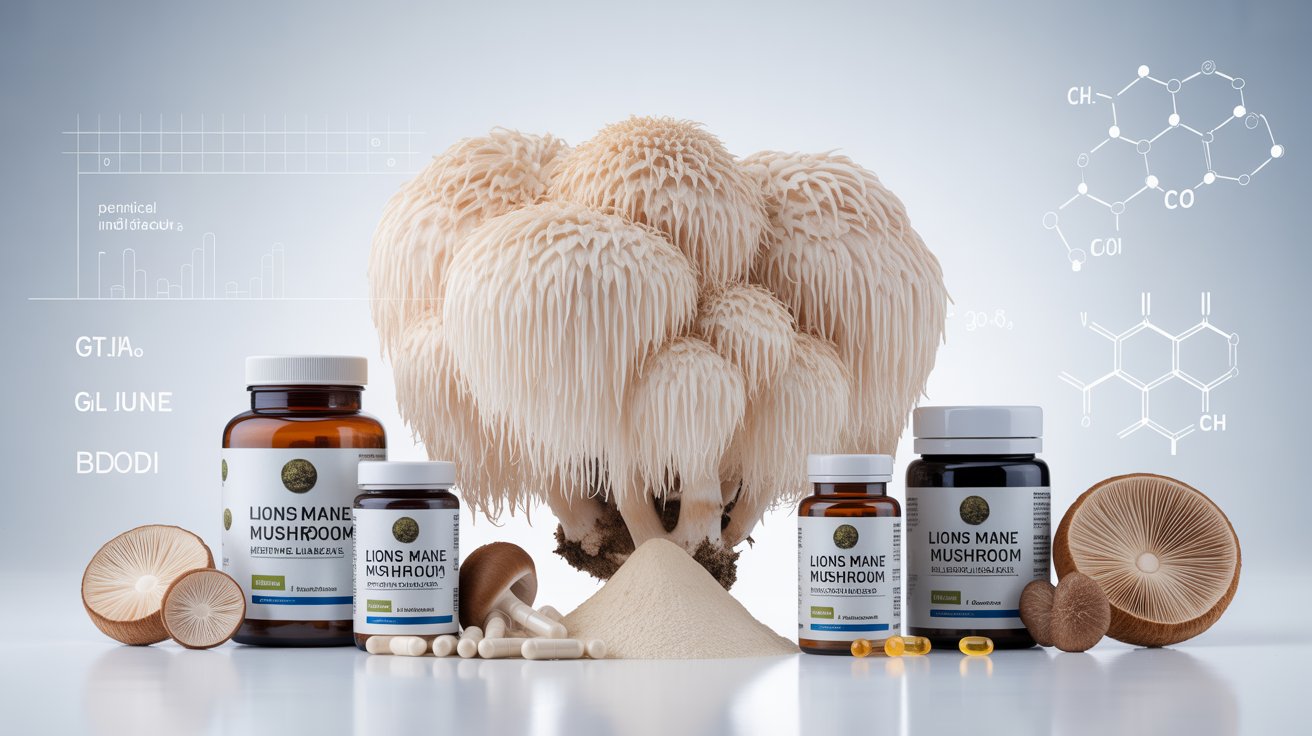
Top Pick — Fruiting Body Extract with Verified Beta-Glucans: Real Mushrooms Lion’s Mane (500 mg, ≥25% beta-glucans, fruiting body only, no grain filler, third-party tested). This is the gold standard for fruiting body purity and transparency. Check on Amazon or direct at realmushrooms.com.
Best Full-Spectrum Option: A dual-extract product that combines verified fruiting body (for hericenones) and clean mycelium extract (for erinacines) — look for products that specify erinacine A content and perform beta-glucan testing on both components separately.
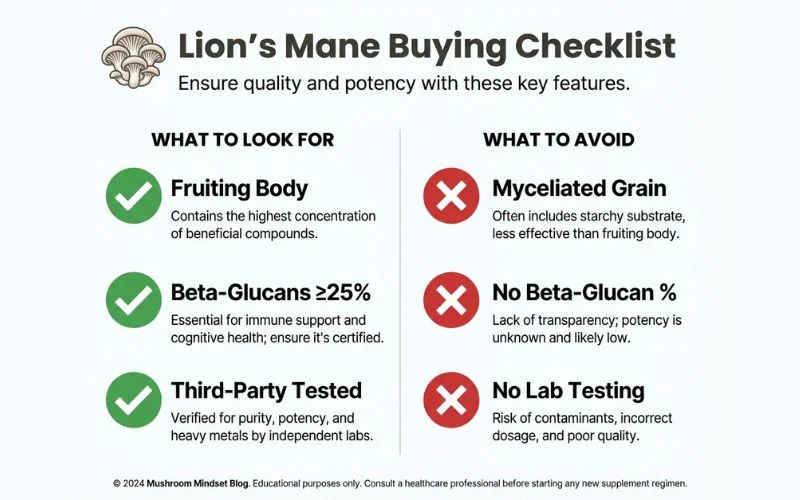
Label Checklist Before Buying:
- ✅ “Fruiting body” specified (not “whole mushroom” or “mycelial biomass”)
- ✅ Beta-glucan percentage stated (≥25%)
- ✅ Third-party tested (CoA available on request or website)
- ✅ Alpha-glucan percentage low or unlisted
- ❌ “Myceliated grain,” “mycelial biomass,” or “full-spectrum blend” without breakdown
- ❌ Only “polysaccharide” % listed without specifying beta-glucan %
- ❌ No third-party testing disclosure
For a full comparison of top lion’s mane supplements ranked by beta-glucan content and testing transparency, see our Best Lion’s Mane Supplements guide [coming soon].
Dosage: What the Trials Used {#dosage}
Clinical trials have used a range of lion’s mane doses. Here’s what the published human research actually administered:
| Goal | Dose Used in Trials | Form | Duration |
|---|---|---|---|
| Mild cognitive impairment | 3 g/day (Mori 2009) | Whole mushroom powder tablets | 16 weeks |
| Mild Alzheimer’s | 1,050 mg/day erinacine A-enriched mycelium | Standardized mycelium extract | 49 weeks |
| Healthy adults (acute) | 1.8 g (single dose) | Standardized powder | Single dose |
| Healthy adults (chronic) | 1.8–3.2 g/day | Powder | 28 days–12 weeks |
| Depression/anxiety | ~3 g/day equivalent | Powder tablets | 8 weeks |
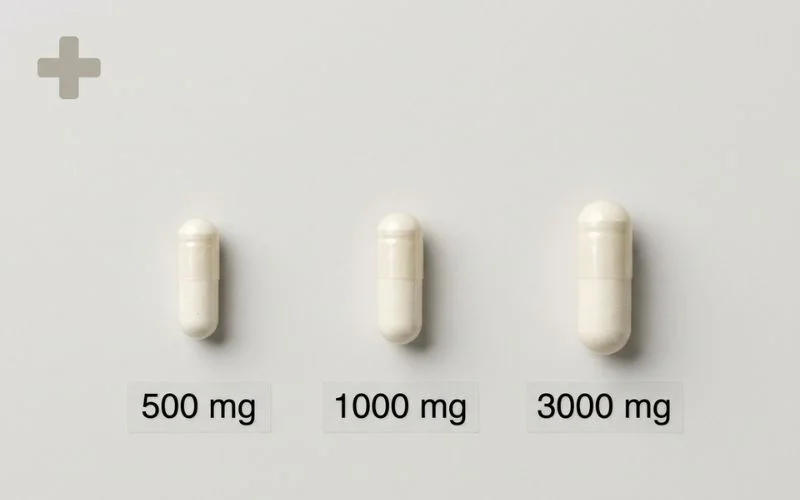
Practical takeaway: For cognitive support in healthy adults, 1–3 g/day of high-quality fruiting body extract covers the range used in positive human trials. The important variable is not the exact dose but the verified beta-glucan and hericenone content — 500 mg of a ≥25% beta-glucan extract may deliver more active compound than 2,000 mg of an unstandardized powder.
Timing: No strong data favors a specific time of day. Most trials administered lion’s mane with meals to reduce GI sensitivity. Morning dosing is common because of the cognitive focus benefits, but consistency matters more than timing.
Cycling: Unlike ashwagandha, lion’s mane shows no strong evidence for tolerance or requiring cycling. Multiple trials ran 12–49 weeks without diminishing effects. However, the reversal of benefits after stopping (documented in multiple trials) supports continuous supplementation for those seeking ongoing cognitive benefit.
Common Mistakes New Users Make {#mistakes}
1. Buying a Myceliated Grain Product
The most consequential mistake. If your supplement uses grain-grown mycelium without specifying beta-glucan content and third-party testing, you may be paying for grain starch with minimal active mushroom compounds. Check the label for the markers in the quality section above before purchasing.
2. Expecting Results Within Days
Lion’s mane’s mechanism — NGF synthesis, neuroplastic support, BDNF elevation — operates on weeks to months, not hours. The Mori 2009 trial saw significant MMSE improvements at weeks 8, 12, and 16. The Docherty 2023 trial did find an acute cognitive speed improvement after a single dose, but this was a specific attention task, not general mental clarity. Set an 8-week minimum evaluation window.
3. Using a Dosage Below the Clinical Threshold
Many lion’s mane products are formulated at 300–500 mg per capsule using unstandardized powder. At a 1% beta-glucan content (common in low-grade products), a 500 mg capsule delivers 5 mg of active beta-glucans. The trials used the equivalent of 25–75 mg of beta-glucans per day. The math doesn’t work at most commercial dosages unless the product is properly standardized.
4. Ignoring the Stopping Effect
Multiple clinical trials documented that cognitive improvements reversed within weeks of stopping lion’s mane. If you start lion’s mane, see improvement, stop for a month, and then conclude it “stopped working” — that’s the expected pharmacological pattern. This is not a problem; it’s useful information for managing expectations and planning ongoing supplementation.
5. Combining With Stimulants and Expecting Synergy
Lion’s mane is not a stimulant. It doesn’t stack well with caffeine the way rhodiola does, and it doesn’t produce the acute alertness some users expect from their morning supplement. It works gradually and structurally. Its combination partner, if any, is a sleep-support stack or a general cognitive health regimen — not a pre-workout.
Who Should Avoid Lion’s Mane {#caution}
Lion’s mane has a favorable safety profile in published trials. Reported adverse events are rare and generally mild. However, specific caution is warranted in these situations:
- Mushroom allergies: Lion’s mane is a fungus. Individuals with known mushroom allergies should consult a physician before use. A small number of case reports document respiratory reactions (possibly linked to airborne spores during mushroom cultivation).
- Blood clotting medications: Lion’s mane may have mild antiplatelet effects. Those taking warfarin, aspirin, or other anticoagulants should discuss use with their doctor.
- Upcoming surgery: Discontinue at least 2 weeks before any scheduled surgery due to potential antiplatelet effects.
- Pregnancy and breastfeeding: Insufficient safety data exists. Avoid during pregnancy.
- Children under 18: No clinical trial data in pediatric populations. Not recommended.
- Autoimmune conditions: Beta-glucans modulate immune function. Those with active autoimmune disease or taking immunosuppressants should consult a physician.
Most side effects reported in trials are mild GI symptoms (stomach discomfort, diarrhea) — these typically resolve with dose reduction or taking with food.
⚠️ Medical Disclaimer: This article is for informational purposes only and does not constitute medical advice. Always consult your healthcare provider before starting any supplement regimen, especially if you take prescription medications or have an existing health condition.
FAQ: Lion’s Mane Mushroom Benefits {#faq}
What are the main benefits of lion’s mane mushroom?
The most research-supported benefits of lion’s mane are cognitive function support (improved scores on memory and attention tests), nerve growth factor (NGF) stimulation, mood improvement, and reduced neuroinflammation. Human clinical trials also support its use for mild cognitive impairment, anxiety, depression, and sleep quality. Benefits are dose-dependent and product-quality-dependent — they require a standardized, properly extracted supplement at clinical doses.
How long does lion’s mane take to work?
Acute cognitive effects (faster attention processing) were measured 60 minutes after a single 1.8 g dose in a 2023 trial. Meaningful improvements in cognitive function scores and mood typically take 4–8 weeks of consistent daily use. The landmark cognitive impairment trial (Mori 2009) saw significant improvement at week 8 with continued gains through week 16. Don’t evaluate effectiveness before 8 weeks.
Is lion’s mane good for brain fog?
Yes — with qualification. Lion’s mane’s NGF and BDNF-stimulating mechanisms directly address several biological contributors to brain fog: neuroinflammation, poor neural connectivity, low neurotrophic factor levels. Human trials show improved cognitive speed and attention. However, results require proper supplementation (verified fruiting body extract, adequate dose) and realistic timelines (4–8 weeks minimum).
What is the difference between lion’s mane fruiting body and mycelium?
The fruiting body (the visible mushroom) contains hericenones and high concentrations of beta-glucans. The mycelium (the root system) contains erinacines — the most potent NGF-stimulating compounds. Both are valuable, but most commercial mycelium supplements are grown on grain substrate, resulting in products that are 60–70% grain starch with minimal actual mushroom content. Fruiting body products are more reliably potent because grain dilution doesn’t apply.
What dose of lion’s mane should I take?
Clinical trials used 1.8–3 g/day of whole mushroom powder. With properly standardized fruiting body extract (≥25% beta-glucans), effective doses may be achieved at 500–1,000 mg/day. The key variable is beta-glucan content, not total milligrams. Calculate your actual beta-glucan dose: capsule mg × beta-glucan % = beta-glucan dose. Target 25–75 mg of beta-glucans per day based on trial data.
Can lion’s mane help with anxiety and depression?
Yes — there’s growing human clinical evidence. A 2021 RCT in 77 adults with depression and sleep disorders found significant reductions in anxiety and depression scores after 8 weeks (PMID: 33985098). The proposed mechanisms include BDNF elevation and reduced neuroinflammation — both implicated in depressive disorders. Lion’s mane is not a replacement for clinical treatment but represents a meaningful complement to a comprehensive approach.
Is lion’s mane safe to take every day?
Yes. Multiple trials have run 12–49 weeks of daily supplementation without significant adverse events. The most common side effects are mild GI discomfort, typically resolved by taking with food or reducing dose. Unlike some adaptogens, there’s no strong evidence that lion’s mane requires cycling. Given the reversal of cognitive benefits documented after stopping, continuous supplementation appears to be the intended use model.
Does lion’s mane actually regrow nerves?
In preclinical models (cell culture and animals), lion’s mane compounds clearly stimulate neurite outgrowth — the physical extension of neural connections — and NGF-dependent nerve repair. In humans, there’s supportive indirect evidence: cognitive improvements that take weeks to develop and reverse after stopping are consistent with structural neural changes rather than acute neurotransmitter effects. “Regrow” is an oversimplification, but “supports nerve maintenance and repair” is well-supported by the available data.
How do I know if my lion’s mane supplement is real?
Check the label for: (1) “fruiting body” specified, (2) beta-glucan percentage of ≥25%, (3) third-party testing disclosure. Request a Certificate of Analysis (CoA) from the brand — any reputable company will provide this. Products listing only “polysaccharides” without specifying beta-glucan % should be viewed with skepticism. Avoid products using the phrase “myceliated grain,” “mycelial biomass,” or “full-spectrum blend” without a separate beta-glucan breakdown.
Can you take lion’s mane with ashwagandha?
Yes — they work through complementary mechanisms. Ashwagandha reduces cortisol and anxiety; lion’s mane supports NGF-dependent cognitive function. They don’t interact negatively. A common stack for combined stress management and cognitive support: ashwagandha (300–600 mg KSM-66) in the evening for cortisol control, lion’s mane (500–1,000 mg standardized extract) in the morning for cognitive focus. See our rhodiola vs ashwagandha guide for related stacking context.
What’s the difference between lion’s mane and other medicinal mushrooms?
Lion’s mane is unique among medicinal mushrooms for its NGF-stimulating compounds (hericenones and erinacines) — no other mushroom species contains these specific terpenoids in meaningful quantities. Other medicinal mushrooms (reishi, chaga, turkey tail, cordyceps) work primarily through beta-glucan-mediated immune modulation, anti-inflammatory, or adaptogenic pathways. Lion’s mane is the only medicinal mushroom with a direct, research-backed mechanism specific to cognitive function and neurological health.
The Bottom Line {#conclusion}
Lion’s mane is the only natural supplement with a documented mechanism for directly stimulating NGF production in the human brain. The human trial evidence — while still limited in scale — is consistent: cognitive function improvements in adults with mild impairment, meaningful effects on mood and anxiety, and acute cognitive speed benefits in healthy adults.
The research only applies when the supplement delivers the actual active compounds. Most products on the market fail this requirement quietly, through grain substrate dilution, lack of standardization, or inadequate dosing. Before buying, check three things: “fruiting body” on the label, a stated beta-glucan percentage of ≥25%, and a third-party testing disclosure.
Give it 8 weeks at a verified dose. The reversal of effects after stopping is documented across multiple trials — if you see improvement and stop, expect some regression. Plan accordingly.
This article is for informational purposes only and does not constitute medical advice. Always consult your healthcare provider before starting any supplement regimen.
Written by Ethan Cole, Nutrition Expert | Meet Ethan →
=== 🔗 OUTGOING LINKS FROM THIS ARTICLE ===
→ [Medicinal Mushrooms category]
→ Ashwagandha for Stress Relief