Reishi Mushroom for Sleep: Does It Actually Work?
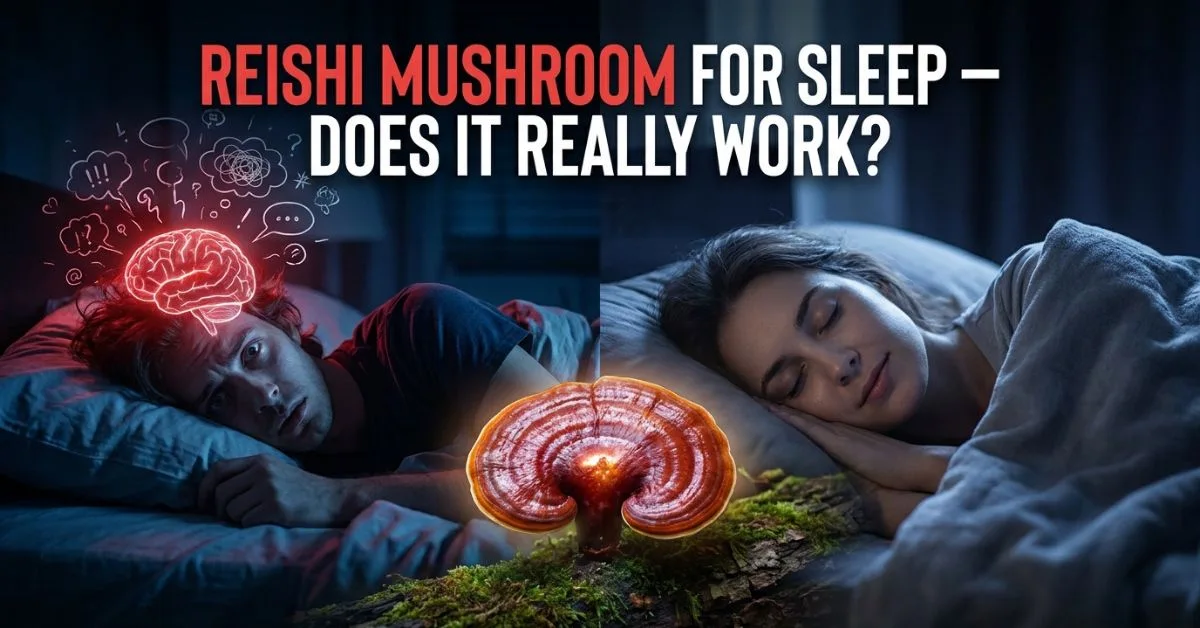
Forty percent of American adults report insufficient sleep, and most sleep supplements either sedate you like a mild drug, flood you with melatonin your body doesn’t need, or simply don’t work. Reishi mushroom (Ganoderma lucidum) is different — it works through the same pathways your brain naturally uses to regulate sleep onset and sleep depth, without next-day grogginess or dependency risk.
💡 Quick Answer: Reishi Mushroom for Sleep improve
Reishi mushroom improves sleep through two mechanisms: ganoderic acids (triterpenoids) modulate GABA-A receptors to reduce pre-sleep anxiety, and polysaccharide compounds promote natural adenosine accumulation to build sleep pressure. A 2024 human RCT found significant improvements in anxiety, vitality, and well-being with 1,000 mg/day. It works best for stress-driven poor sleep, not primary circadian disruption.
This guide covers the full mechanism, what human clinical trials show, how reishi compares to ashwagandha and magnesium glycinate for sleep, the dosage used in trials, and the quality marker (triterpenoid content) that determines whether a supplement can actually deliver these effects.
📋 Written by Ethan Cole, Nutrition Expert | Meet Ethan →
- ✔ Verified against third-party Certificates of Analysis (COAs), current Amazon listings, and 2025–2026 clinical research
- 📅 Last Updated: May 2026
⚠️This article contains affiliate links. If you purchase through our links, we may earn a small commission at no extra cost to you. See our Affiliate Disclosure for details.
Why Sleep Is Harder Than Just “Winding Down” {#why-sleep}
Poor sleep is rarely one thing. For some people it’s a cortisol problem — the stress hormone that should drop in the evening stays elevated, keeping the brain in a state of alert that makes falling asleep feel like fighting your own biology. For others it’s structural — the brain’s natural adenosine pressure (the tiredness signal that builds throughout the day) isn’t accumulating properly due to inflammation, gut dysbiosis, or disrupted circadian rhythm. For others still, it’s a mechanical muscle tension and anxiety loop that prevents the body from genuinely relaxing even when exhaustion is present.
According to the Centers for Disease Control and Prevention, more than 1 in 3 American adults regularly get less than the recommended 7 hours of sleep per night, and approximately 70 million Americans have a chronic sleep disorder. Chronic poor sleep is associated with significantly elevated risk of cardiovascular disease, type 2 diabetes, depression, and cognitive decline — making it one of the most consequential health problems that’s still largely addressed with short-term pharmaceutical solutions rather than root-cause interventions.
Reishi mushroom has been used in Traditional Chinese Medicine for sleep and anxiety for over 2,000 years. The modern research has identified the specific mechanisms that explain why — and under what conditions — it works.
How Reishi Affects Sleep: The Two Mechanisms {#mechanisms}
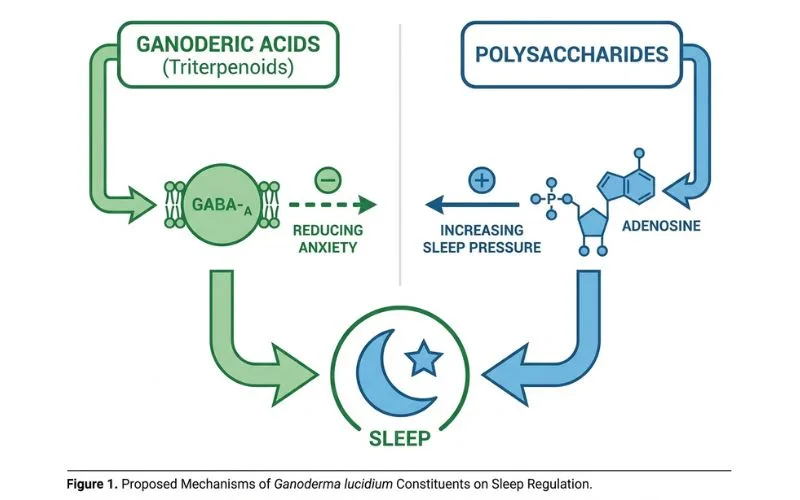
Mechanism 1: Triterpenoid-Mediated GABA-A Modulation
Reishi’s most pharmacologically active compounds for sleep are its triterpenoids — specifically ganoderic acids A, B, C, and D. These compounds have been shown to modulate GABA-A receptors in the brain, the same receptor system targeted by benzodiazepines and sleep medications like zolpidem — but with a critically different profile.
Where prescription GABA-A agonists produce full receptor activation (causing sedation, dependence risk, and next-day impairment), ganoderic acids appear to act as partial modulators — enhancing GABAergic tone enough to reduce pre-sleep anxiety and racing thoughts without forcing sedation. This distinction explains why people taking reishi typically report a gradual shift into relaxed readiness for sleep rather than the “knocked out” feeling associated with pharmaceutical options.
A 2023 network pharmacology study by Chinese Academy of Sciences researchers identified that reishi’s triterpenes interact with 34 distinct genes involved in sleep regulation — a broader molecular footprint than any single pharmaceutical sleep agent. The specific genes include those governing GABAergic signaling, circadian rhythm entrainment, and neuroinflammatory pathways.
Mechanism 2: Adenosine and Sleep Pressure
Your brain regulates sleep drive through adenosine accumulation — a molecule that builds up throughout your waking hours and creates the progressive pressure you feel as tiredness. Reishi polysaccharides appear to support this natural adenosine pathway rather than replacing it with an exogenous hormone (as melatonin does).
Preclinical research shows that Ganoderma lucidum extract promotes sleep through gut microbiota-dependent serotonin and adenosine pathway modulation (Scientific Reports, 2021). The gut-brain axis connection here is relevant: reishi’s beta-glucan prebiotic effects on the gut microbiome appear to indirectly support the production of sleep-promoting metabolites, including serotonin precursors that the brain converts to melatonin during the natural sleep cycle.
Combined effect: Reishi addresses both the anxiety that prevents sleep onset (GABA mechanism) and the physiological sleep pressure that sustains sleep depth (adenosine mechanism). This dual action is why it’s positioned differently from any single-mechanism sleep supplement.
What Clinical Trials Show About Reishi and Sleep {#trials}
Human clinical data on reishi for sleep specifically is still limited — most trials measure sleep as a secondary outcome within a broader stress or quality-of-life study. However, the existing data is directionally consistent:
| Study | Population | Dose | Duration | Key Finding | Source |
|---|---|---|---|---|---|
| Mitra et al., 2024 | 78 female college students under stress | 1,000 mg/day whole mushroom extract | 30 days | Significant improvement in anxiety, depression, vitality, and positive well-being vs. placebo | PMID: 39241163 |
| Tang et al., 2005 | 132 adults with neurasthenia (fatigue + insomnia cluster) | 5,400 mg/day Ganopoly (polysaccharide extract) | 8 weeks | Significant reduction in fatigue, sleep disturbance, and anxiety scores vs. placebo | PMID: 15857210 |
| Hisamuddin et al., 2026 | 50 adults in randomized trial | Mushroom blend including reishi | 8 weeks | Significant improvements in stress, fatigue, and sleep scores | PMC12808922 |
| Cui et al., 2012 | Cancer patients with fatigue and insomnia | Standardized Ganoderma extract | 12 weeks | Improved sleep quality, reduced fatigue, and improved overall quality of life | J Clin Oncol |
What the data tells us: Reishi’s sleep effects in humans are most consistent in populations experiencing stress-driven sleep disruption — not in people with primary sleep disorders like sleep apnea or restless leg syndrome. The mechanism makes this predictable: if your poor sleep is driven by anxiety, elevated cortisol, or stress-related neuroinflammation, reishi’s GABA and adenosine pathways address the upstream cause. If your sleep problem is structural, mechanical, or circadian, reishi alone will likely underdeliver.
The 2024 Mitra trial is the most recent, well-designed human RCT and it used a whole mushroom extract at the approachable dose of 1,000 mg/day — producing significant improvements in the anxiety and vitality scores most predictive of sleep quality.
Reishi vs. Ashwagandha vs. Magnesium for Sleep {#comparison}
These three are the most evidence-based natural sleep supplements available, and all three work — but through different mechanisms that make them suited to different sleep problems.
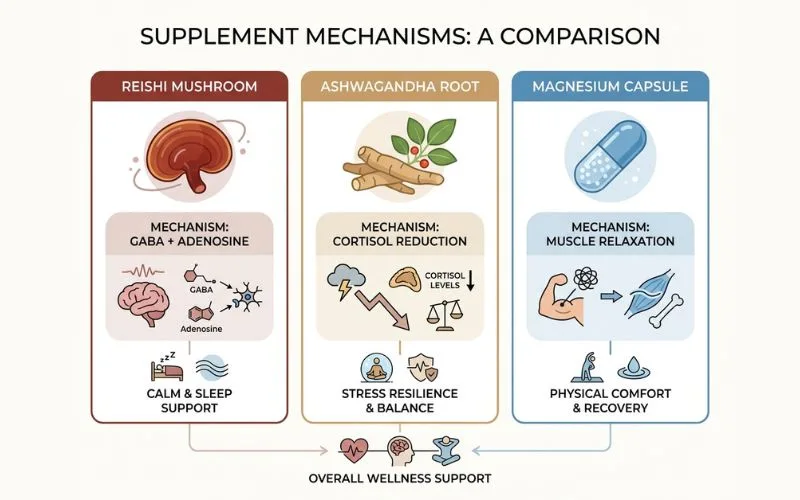
| Factor | Reishi Mushroom | Ashwagandha (KSM-66) | Magnesium Glycinate |
|---|---|---|---|
| Primary mechanism | GABA modulation + adenosine support | Cortisol reduction (HPA axis) | NMDA receptor modulation + muscle relaxation |
| Best for | Stress-driven insomnia, racing mind, inflammation-related poor sleep | Cortisol-elevated anxiety + sleep-onset difficulty | Muscle tension, restless body, general nervous system downregulation |
| Sleep outcome | Deeper sleep, reduced nighttime waking | Faster sleep onset, longer sleep | Reduced sleep latency, fewer wakings, better deep sleep |
| Speed of action | 2–4 weeks (gradual) | 3–4 weeks | 1–2 weeks (some acute effect) |
| Human trial evidence | Moderate — consistent direction, limited scale | Strong — multiple large RCTs | Strong — large well-controlled trials |
| Next-day effects | None — no grogginess | None at standard dose | None — gentle |
| Dependency risk | None documented | None documented | None |
| Effective dose | 1,000–1,500 mg/day (extract) | 300–600 mg KSM-66 | 200–400 mg elemental magnesium |
| Timing | 1–2 hrs before bed | With dinner or before bed | With dinner or before bed |
| Stacks well with | Ashwagandha + magnesium | Reishi + magnesium | Reishi + ashwagandha |
The key insight: These three supplements are genuinely complementary, not competitive. Reishi addresses GABA-mediated anxiety and adenosine sleep pressure. Ashwagandha addresses cortisol-driven sleep disruption. Magnesium addresses the physical nervous system and muscle tension component. Many people experiencing poor sleep have elements of all three problems — which is why combination approaches are increasingly common in clinical practice.
For a deeper comparison of ashwagandha’s sleep mechanism specifically, see our ashwagandha for stress relief guide.
Which Sleep Problem Does Reishi Actually Solve? {#sleep-type}
Matching a sleep supplement to your sleep problem is the step most people skip. Use this framework:
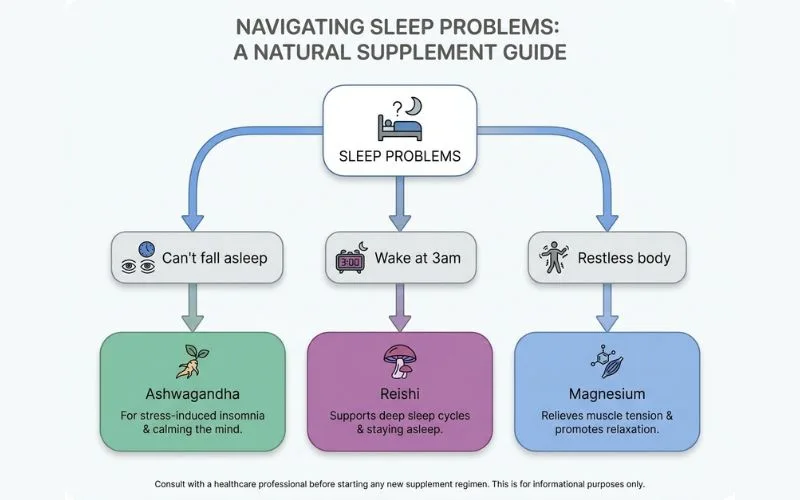
| Your Sleep Pattern | Most Likely Cause | Best Primary Supplement |
|---|---|---|
| Can’t shut off racing thoughts at bedtime | Elevated evening cortisol, anxiety | Ashwagandha → add Reishi |
| Fall asleep but wake at 2–4 a.m. unable to return | Cortisol spike, blood sugar instability, or neuroinflammation | Reishi → add Magnesium |
| Body feels tense/restless even when tired | Magnesium deficiency, nervous system overstimulation | Magnesium Glycinate → add Reishi |
| Generally exhausted but can’t reach deep/restorative sleep | Adenosine pathway disruption, gut-brain axis | Reishi (primary) |
| Stress-driven poor sleep — hard to wind down | GABA deficiency, high cortisol | Reishi + Ashwagandha stack |
| Shift work, travel, jet lag | Circadian disruption | Melatonin (short-term) — not reishi’s strength |
The One-Question Shortcut for Reishi vs. Ashwagandha
“Is your sleep problem primarily anxiety at bedtime — or restless/fragmented sleep once you’re under?”
- Anxiety at bedtime, can’t fall asleep → Start with ashwagandha (cortisol reduction + GABA), add reishi for deeper sleep
- Fall asleep but wake fragmented → Start with reishi (adenosine + neuroinflammation), add magnesium for physical relaxation
- Both → The three-way stack (see Stacking section below)
Reishi is particularly well-suited to the 2–4 a.m. waking pattern that many stressed adults experience — a cortisol rebound that disrupts sleep architecture in the second half of the night. The adenosine-supporting and neuroinflammation-reducing properties of reishi address this specific pattern more directly than melatonin (which primarily affects sleep onset, not sleep architecture).
Reishi Supplement Quality: The Triterpenoid Problem {#quality}
Just as beta-glucan content determines whether a lion’s mane supplement works (see our lion’s mane mushroom benefits guide), triterpenoid content is the critical quality marker for reishi sleep supplements.
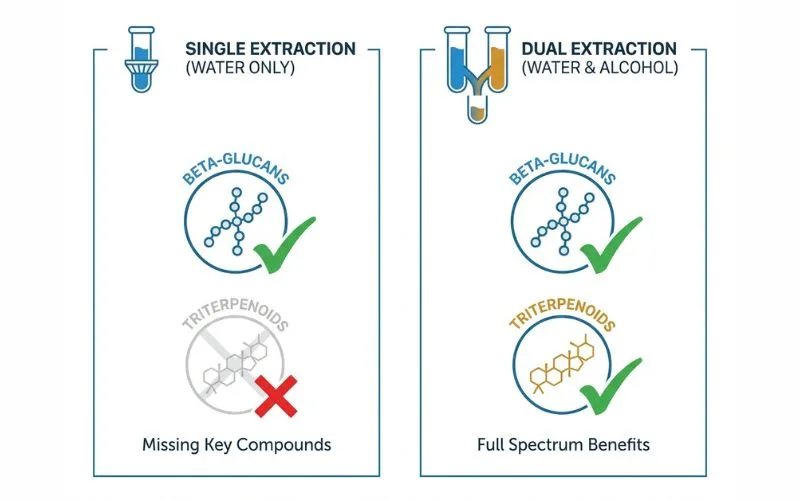
Why this matters:
Reishi’s sleep effects are primarily driven by its ganoderic acid triterpenoids — not just its polysaccharides. A reishi product standardized only for polysaccharide or beta-glucan content may be an excellent immune supplement but will deliver significantly less sleep-relevant activity than a product with verified triterpenoid content.
The Two-Extract Problem
Reishi requires dual extraction to capture both compound classes:
| Extraction Method | What It Captures | Missing |
|---|---|---|
| Hot water extraction only | Beta-glucans, polysaccharides (immune) | Triterpenoids (sleep, GABA) |
| Alcohol extraction only | Triterpenoids (sleep) | Beta-glucans (immune) |
| Dual extraction (water + alcohol) | Both | Nothing critical |
A single-extraction reishi product that only lists “polysaccharides” has likely captured only the water-soluble compounds. For sleep specifically, you need the alcohol-soluble triterpenoids. This is why the extraction method on the label matters as much as the dose.
Label Checklist for Reishi Sleep Supplements
- ✅ “Dual extract” or “water and alcohol extracted” specified
- ✅ Triterpenoid percentage stated (≥4% ganoderic acids preferred)
- ✅ Beta-glucan percentage stated (≥20%)
- ✅ “Fruiting body” specified (same grain substrate problem as lion’s mane applies to mycelium products)
- ✅ Third-party tested — CoA available
- ❌ “Reishi mushroom powder” only (no extraction specified)
- ❌ Only “polysaccharides %” listed without triterpenoid %
- ❌ No extraction method disclosed
Dosage and Timing for Sleep {#dosage}
What Human Trials Used
| Trial | Dose | Form | Timing in Study |
|---|---|---|---|
| Mitra et al., 2024 | 1,000 mg/day | Whole mushroom extract | Daily |
| Tang et al., 2005 | 5,400 mg/day | Polysaccharide extract (Ganopoly) | Divided doses |
| Hisamuddin et al., 2026 | Mushroom blend (reishi included) | Standardized blend | Evening |
Practical dosage for sleep:
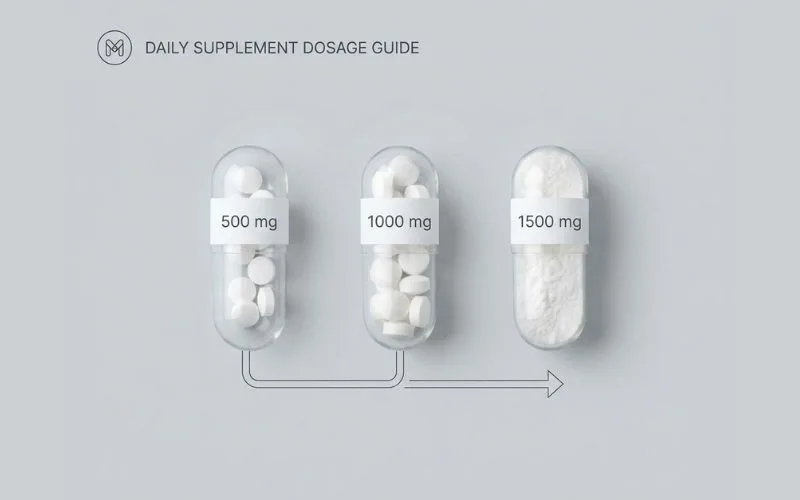
- Starting dose: 500–750 mg of dual-extract reishi (fruiting body), taken 1–2 hours before bed
- Standard therapeutic dose: 1,000–1,500 mg/day of dual-extract
- High-dose protocols: Studies using up to 5,400 mg used polysaccharide-only extracts; with a full dual-extract standardized for triterpenoids, 1,000–1,500 mg covers the active compound range
Key timing note: Reishi is not immediately sedating. Unlike melatonin (which you feel within 30–60 minutes) or pharmaceutical sleep aids, reishi works cumulatively over days and weeks. Take it consistently at the same time each evening rather than just on nights you struggle.
Duration of Use
Unlike ashwagandha (which has a 90-day cycling recommendation), reishi has no strong evidence for tolerance or diminishing effects with long-term use. Traditional Chinese Medicine practitioners prescribe it as a daily tonic. The Tang 2005 trial ran 8 weeks; the Mitra 2024 trial ran 30 days — both showed improvement without attenuation. Consistent long-term use appears appropriate.
How to Stack Reishi for Better Results {#stacking}
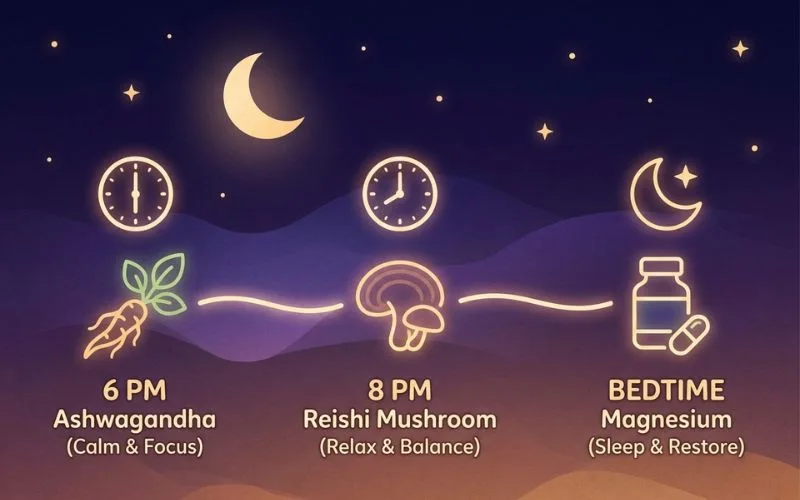
Reishi’s GABA and adenosine mechanisms complement rather than overlap with both ashwagandha’s cortisol pathway and magnesium’s NMDA receptor modulation. The three-way stack is evidence-supported and widely used in integrative sleep medicine.
The Complete Sleep Stack (for Stress-Driven Poor Sleep)
| Time | Supplement | Dose | Purpose |
|---|---|---|---|
| With dinner (6–8 PM) | Ashwagandha (KSM-66) | 300–600 mg | Reduce evening cortisol; address anxiety root cause |
| 1–2 hours before bed | Reishi (dual extract) | 1,000 mg | GABA modulation; adenosine sleep pressure support |
| Before bed | Magnesium glycinate | 200–400 mg | Muscle relaxation; NMDA downregulation; physical sleep readiness |
This three-supplement protocol addresses stress-driven insomnia through three independent pathways simultaneously. Clinical integrative practitioners commonly recommend this combination for adults with chronic stress-related sleep disruption.
If adding all three at once feels like too much: Start with the one that matches your primary symptom (use the sleep-type framework above), use it alone for 2–3 weeks, then add a second. This allows you to isolate each supplement’s contribution and adjust doses intelligently.
Note on rhodiola: If you take rhodiola rosea for daytime energy (see our rhodiola vs ashwagandha guide), take it only in the morning — its activating properties conflict with the evening stack above.
Side Effects and Who Should Avoid Reishi {#caution}
Reishi has a well-documented safety profile across multiple clinical trials. Most adverse events are mild and transient.
Common side effects (usually resolve within 1–2 weeks):
- Digestive upset, loose stools, or nausea — take with food to minimize
- Dry mouth
- Mild dizziness in the first few days — reduce dose temporarily
Who should use caution or avoid:
- Blood-thinning medications (warfarin, aspirin, clopidogrel): Reishi has antiplatelet properties. Consult your doctor before combining.
- Upcoming surgery: Discontinue at least 2 weeks prior due to antiplatelet and potential blood pressure effects.
- Blood pressure medications: Reishi may lower blood pressure; combining with antihypertensives requires monitoring.
- Diabetes medications: Reishi polysaccharides may have blood glucose-lowering effects; those on insulin or oral hypoglycemics should monitor glucose.
- Immunosuppressants: Reishi is an immune modulator; potential interactions with cyclosporine and similar drugs.
- Pregnancy and breastfeeding: Insufficient safety data; avoid during pregnancy.
- Autoimmune conditions: Beta-glucan immune-stimulating properties may be contraindicated in active autoimmune flares; consult a physician.
Hepatotoxicity note: Rare case reports of liver injury have been associated with reishi powder preparations (distinct from extract). The research on standardized dual-extract products does not show liver enzyme abnormalities in controlled trials. However, individuals with pre-existing liver conditions should consult a physician and prefer verified extracted products over raw powders.
⚠️ Medical Disclaimer: This article is for informational purposes only and does not constitute medical advice. Always consult your healthcare provider before starting any supplement, especially if you take prescription medications or have a health condition.
FAQ: Reishi Mushroom for Sleep {#faq}
Does reishi mushroom actually help you sleep?
Yes — with specificity. Reishi improves sleep primarily for stress-driven poor sleep through two mechanisms: triterpenoid modulation of GABA-A receptors (reducing pre-sleep anxiety) and polysaccharide support of the adenosine sleep-pressure pathway. A 2024 randomized controlled trial (PMID: 39241163) showed significant improvements in anxiety, vitality, and well-being in stressed adults taking 1,000 mg/day for 30 days. Results are strongest for people whose sleep problems are anxiety- or stress-related, not for primary circadian disorders or sleep apnea.
How long does reishi take to work for sleep?
Most people notice gradual improvements over 2–4 weeks of consistent use. Reishi is not an acute sedative — it works cumulatively rather than on a single-dose basis. Taking it consistently 1–2 hours before bed for at least 3 weeks provides a fair evaluation window. If you experience no change after 4 weeks at 1,000 mg of a verified dual-extract product, consider whether your sleep problem is primarily stress-driven (reishi’s strength) or structurally different.
What is the best reishi supplement for sleep?
Look for a dual-extract (water + alcohol) reishi product made from the fruiting body, with triterpenoid percentage stated (≥4% ganoderic acids) and beta-glucan percentage stated (≥20%). Third-party tested products from companies like Real Mushrooms, Nootropics Depot, and Host Defense provide the most reliable standardization. Avoid single-extraction reishi products and those that only list “polysaccharides” without specifying triterpenoid content — these likely lack the ganoderic acids responsible for sleep benefits.
What’s the right reishi dosage for sleep?
The 2024 human RCT used 1,000 mg/day of whole mushroom extract. Clinical guidelines from Traditional Chinese Medicine and integrative practitioners typically recommend 1,000–1,500 mg/day of dual-extracted reishi for sleep support. Start at 500–750 mg for the first week to assess tolerance, then increase to 1,000 mg. Take it 1–2 hours before bed with or without food.
Is reishi better than melatonin for sleep?
They address different sleep problems. Melatonin is most effective for circadian disruption — jet lag, shift work, difficulty falling asleep due to late light exposure. Reishi is more appropriate for stress-driven insomnia, chronic poor sleep quality, and fragmented sleep with nighttime waking. Melatonin has a faster onset (30–60 minutes) but doesn’t address root causes. Reishi builds over weeks but may produce more sustainable improvements for stress-related sleep dysfunction. They can be used together short-term for jet lag or schedule disruptions.
Can I take reishi with ashwagandha and magnesium for sleep?
Yes — this three-way stack is evidence-supported and commonly used in integrative sleep medicine. The recommended protocol: ashwagandha (300–600 mg KSM-66) with dinner for cortisol control; reishi (1,000 mg dual extract) 1–2 hours before bed for GABA and adenosine support; magnesium glycinate (200–400 mg) before bed for physical relaxation. All three work through independent mechanisms with no negative interaction documented. Start them sequentially (one at a time over 2–3 weeks each) to understand each supplement’s individual contribution.
Does reishi cause next-day grogginess?
No — this is one of reishi’s practical advantages over pharmaceutical sleep aids and high-dose melatonin. Its mechanism doesn’t force sedation; it supports the brain’s natural relaxation and sleep-pressure pathways. Users consistently report waking without the “hangover” associated with sleep medications. At very high doses (above 3,000 mg/day), some users report mild daytime drowsiness — this is dose-dependent and resolves with dose reduction.
Is reishi mushroom for sleep safe for long-term use?
Yes, based on available data. Traditional Chinese Medicine has used reishi as a daily tonic for centuries. Human clinical trials have run 8–12 weeks without liver enzyme abnormalities or serious adverse events in healthy populations. Unlike melatonin, there’s no evidence of receptor desensitization or suppression of endogenous melatonin production. The primary precaution for long-term use is in individuals with bleeding disorders, liver conditions, or those on blood-thinning or blood-pressure medications.
What is the difference between reishi spores and reishi extract?
Reishi spores (cracked-shell spore powder) are sometimes marketed as the highest-potency reishi product and do contain concentrated triterpenoids and sterols. However, spore products are much more expensive and the clinical research base is smaller than for fruiting body extracts. Fruiting body dual-extract remains the most well-researched form for sleep and anxiety effects. Spore products are not necessary for the sleep benefits described in this article.
Can reishi mushroom help with anxiety and stress as well as sleep?
Yes — the same mechanisms that improve sleep also directly address anxiety. The GABA-A modulation by ganoderic acids produces a calming effect during waking hours as well as at night, and the neuroinflammation-reducing properties of reishi polysaccharides are relevant to both anxiety and sleep. The 2024 Mitra RCT measured anxiety and depression scores as primary outcomes (not sleep directly) and found significant improvement — the sleep benefits appear to follow from the anxiety reduction. For anxiety specifically combined with sleep issues, the reishi + ashwagandha stack addresses complementary pathways most effectively.
The Bottom Line {#conclusion}
Reishi mushroom is the most mechanistically complete natural sleep supplement available for stress-driven poor sleep. Its triterpenoids modulate GABA-A receptors to reduce pre-sleep anxiety; its polysaccharides support adenosine accumulation and gut-brain axis serotonin pathways that drive natural sleep pressure. The 2024 human RCT and a growing body of clinical evidence support its use at 1,000 mg/day of a verified dual-extract product.
The catch — which applies to all mushroom supplements — is extract quality. Single-extraction reishi products lacking verified triterpenoid content can’t deliver the sleep-specific benefits. Check for “dual extract,” a triterpenoid percentage (≥4%), and a beta-glucan percentage (≥20%) before buying.
For stress-driven sleep disruption, the three-way stack — ashwagandha at dinner, reishi before bed, magnesium glycinate at bedtime — addresses cortisol, GABA, adenosine, and physical nervous system relaxation through independent, complementary pathways. It’s the most comprehensive natural approach to sleep that existing evidence supports.
This article is for informational purposes only and does not constitute medical advice. Always consult your healthcare provider before starting any supplement regimen.
Written by Ethan Cole, Nutrition Expert | Meet Ethan →
=== 🔗 OUTGOING LINKS FROM THIS ARTICLE ===
→ Medicinal Mushrooms category
→ Ashwagandha for Stress Relief: Dosage, Timing & What 12 Studies Show
→ Rhodiola vs Ashwagandha: Which Adaptogen Is Right for You?
→ Lion’s Mane Mushroom Benefits: What 15 Studies Actually Show