Natural 7 Herbs for Menopause Relief: That Actually Work
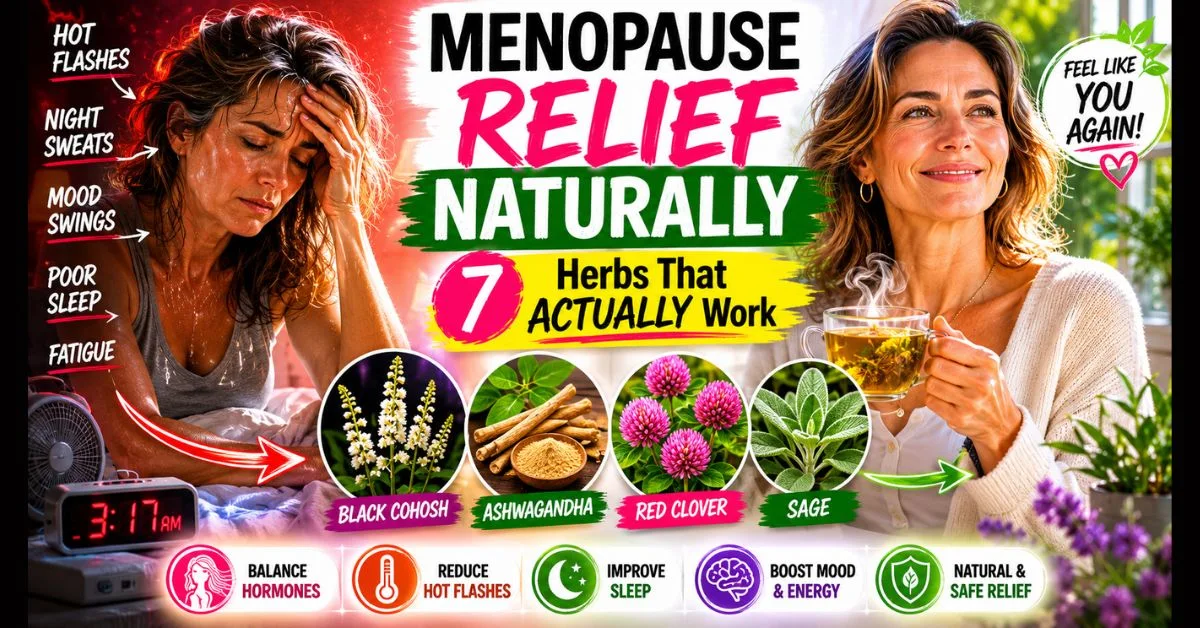
About 75% of American women experience hot flashes during menopause — and for nearly a third of them, those symptoms last more than seven years. If you’re dealing with disrupted sleep, mood swings, night sweats, or brain fog, you’re not looking for sympathy. You’re looking for something that works.
The good news: several plant-based compounds have meaningful evidence behind them for easing the most common menopause symptoms. Not all herbs are equal, and the research is more nuanced than supplement labels suggest — so this guide cuts through the noise and tells you exactly what each herb does, at what dose, and what the evidence actually shows.
💡 Quick Answer:
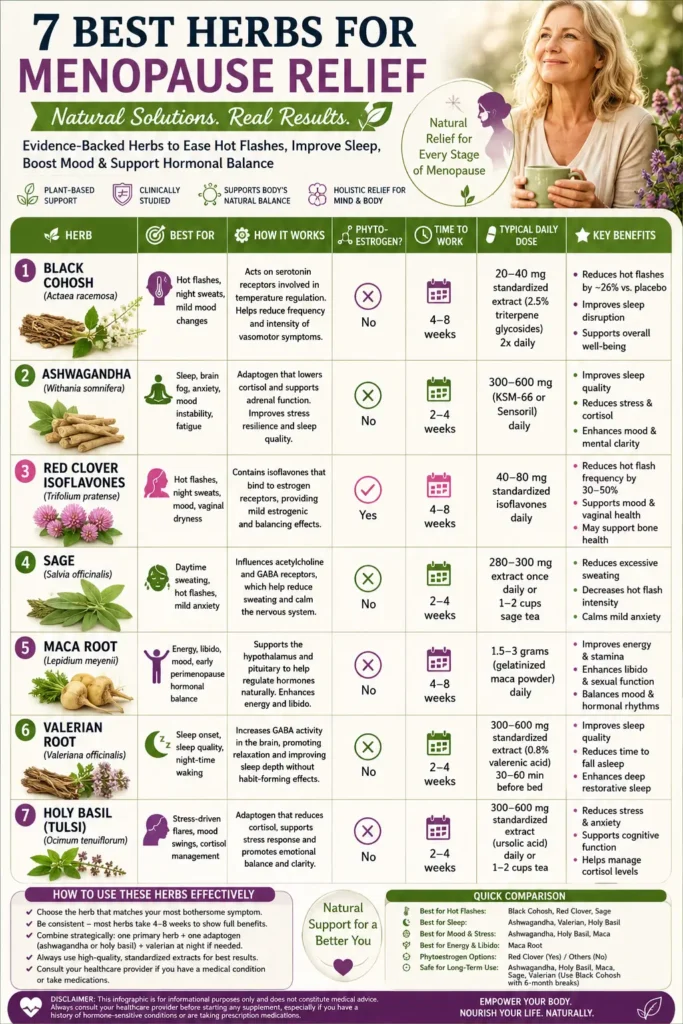
The most evidence-backed herbs for menopause relief are black cohosh (for hot flashes), ashwagandha (for cortisol and sleep), and red clover isoflavones (for night sweats and mood). Sage, maca, valerian, and holy basil round out a complete natural protocol depending on your dominant symptoms.
- 📋 Written by Ethan Cole, Nutrition Expert | Meet Ethan →
- ✔ Verified against third-party Certificates of Analysis (COAs), current Amazon listings, and 2025–2026 clinical research
- 📅 Last Updated: May 2026
⚠️ This article does not constitute medical advice. If you manage blood sugar with prescription medication, discuss any supplement changes with your healthcare provider before making them.
⚠️This article contains affiliate links. If you purchase through our links, we may earn a small commission at no extra cost to you. See our Affiliate Disclosure for details.
Why Menopause Symptoms Are Harder to Manage Than Anyone Tells You

Menopause isn’t a single event — it’s a hormonal shift that can stretch across a decade. Perimenopause (the transition phase) typically begins in a woman’s mid-to-late 40s, and the hormonal fluctuations during this time can be more disruptive than menopause itself.
Estrogen and progesterone don’t just regulate reproduction. They influence thermoregulation (hence hot flashes), sleep architecture, serotonin activity (hence mood), and bone density. When they drop, the ripple effects are broad.
Hormone replacement therapy (HRT) works for many women, but not everyone is a candidate — and many women simply prefer to exhaust natural options first. That’s where herbal support, used strategically, fills a real gap.
The herbs below don’t “replace” hormones. What they do — through different mechanisms — is reduce symptom severity, support the adrenal and nervous systems that bear the brunt of hormonal change, and in some cases act on estrogen receptors in a mild, modulating way.
The 7 Best Herbs for Menopause Relief
1. Black Cohosh — The Most Studied Herb for Hot Flashes
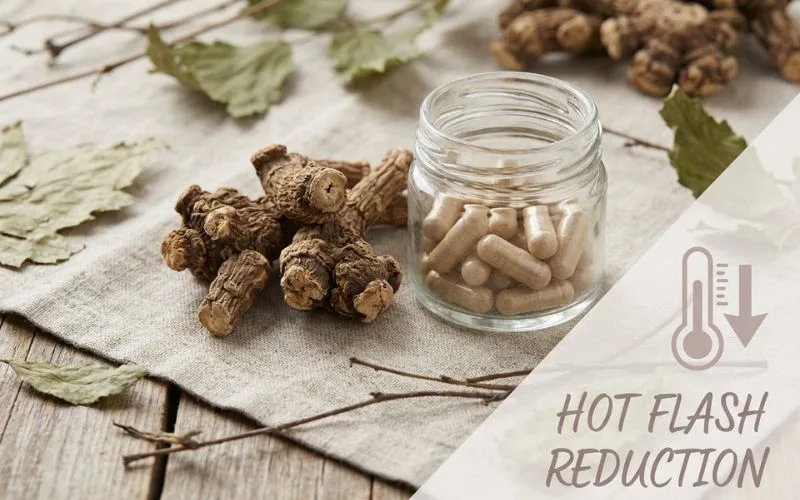
Black cohosh (Actaea racemosa) is the most clinically researched herb for menopause in the Western world. It doesn’t contain phytoestrogens — instead, it appears to act on serotonin receptors involved in temperature regulation, which is why it specifically targets hot flashes and night sweats rather than all estrogen-related symptoms.
What the research shows: A meta-analysis of 16 randomized controlled trials found black cohosh reduced hot flash frequency by approximately 26% compared to placebo (Menopause, 2010, PubMed PMID: 20216279). A separate German multicenter trial using the standardized extract (Remifemin) showed significant improvement in the Menopause Rating Scale score over 24 weeks.
Dosage: 20–40 mg of standardized extract (2.5% triterpene glycosides), twice daily. Results typically appear within 4–8 weeks.
Important note: Black cohosh is not recommended for women with a history of hormone-sensitive cancers. While current evidence does not show it stimulates estrogen receptors, consult your doctor before use. Rare cases of liver toxicity have been reported with very high doses — always stay within the studied range.
Best for: Hot flashes, night sweats, mild mood changes
2. Ashwagandha — For Cortisol, Sleep & Brain Fog
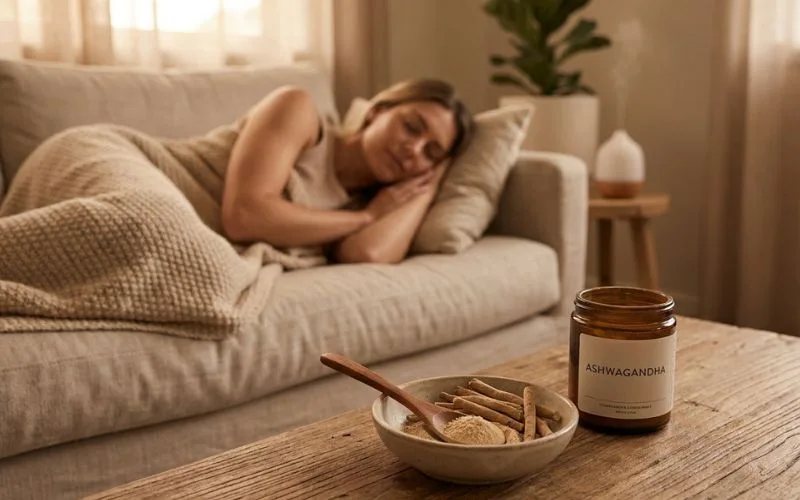
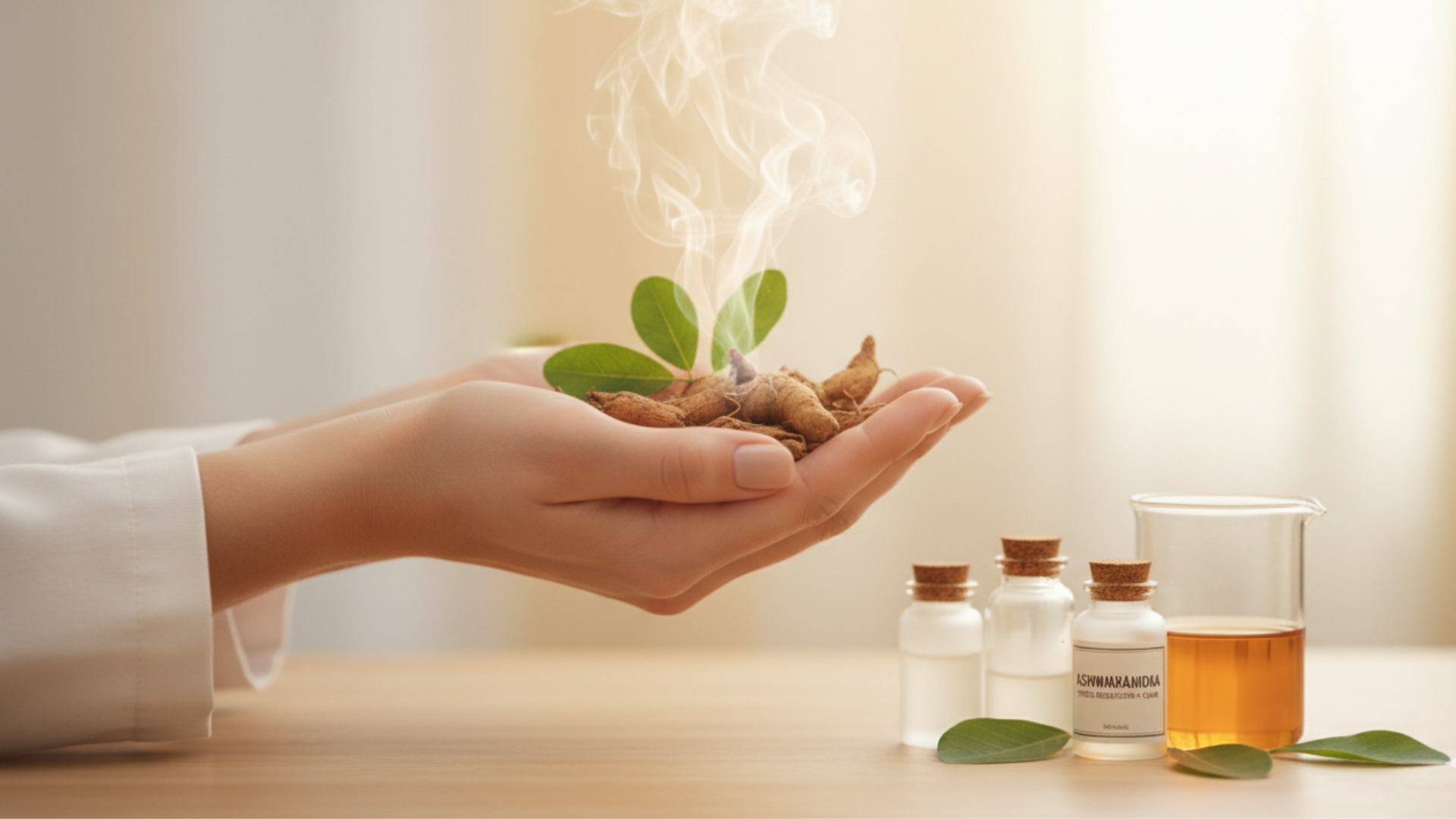
Ashwagandha (Withania somnifera) is most commonly discussed as a stress adaptogen, but it has specific relevance to menopause that’s often overlooked: during perimenopause, adrenal glands take on more of the hormone-production workload as ovarian function declines. High cortisol from chronic stress directly worsens hot flash frequency, sleep disruption, and weight gain.
A 2021 double-blind, placebo-controlled trial published in the Journal of Obstetrics and Gynaecology Research found that 300 mg of KSM-66 ashwagandha root extract twice daily significantly reduced menopausal symptom scores, including hot flashes, sleep problems, and mood disturbance, after 8 weeks (PubMed PMID: 33829573).
Dosage: 300–600 mg of KSM-66 or Sensoril ashwagandha daily. Can be split AM/PM or taken as a single dose before bed to support sleep.
Best for: Sleep disruption, brain fog, anxiety, mood instability, fatigue
3. Red Clover Isoflavones — A Natural Phytoestrogen Option
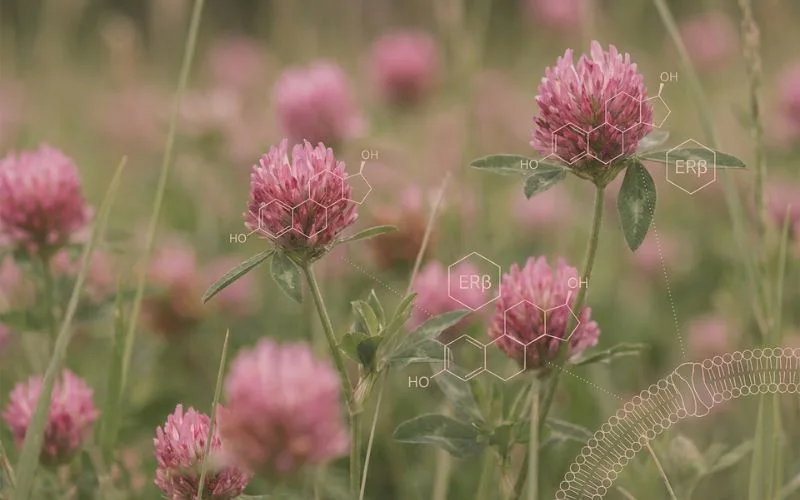
Red clover (Trifolium pratense) is rich in isoflavones — binanocaine, formononetin, daidzein, and genistein — that bind weakly to estrogen receptors in a selective, modulating way. For women in early perimenopause whose estrogen is fluctuating (not absent), this can help smooth the ride.
Multiple clinical trials have shown red clover isoflavone supplementation reduces hot flash frequency by 30–50% in women with moderate-to-severe symptoms. A 2007 review in Maturitas of 17 trials found the 80 mg/day dose consistently outperformed placebo for vasomotor symptoms (hot flashes and night sweats).
Dosage: 40–80 mg of standardized isoflavones daily, taken with food.
Caution: As with all phytoestrogens, women with a history of estrogen-sensitive breast cancer or endometriosis should discuss use with their doctor first. The evidence on safety is reassuring for healthy women, but this isn’t a conversation to skip.
Best for: Hot flashes, night sweats, mood, and mild vaginal dryness
4. Sage — An Underrated Ally for Sweating
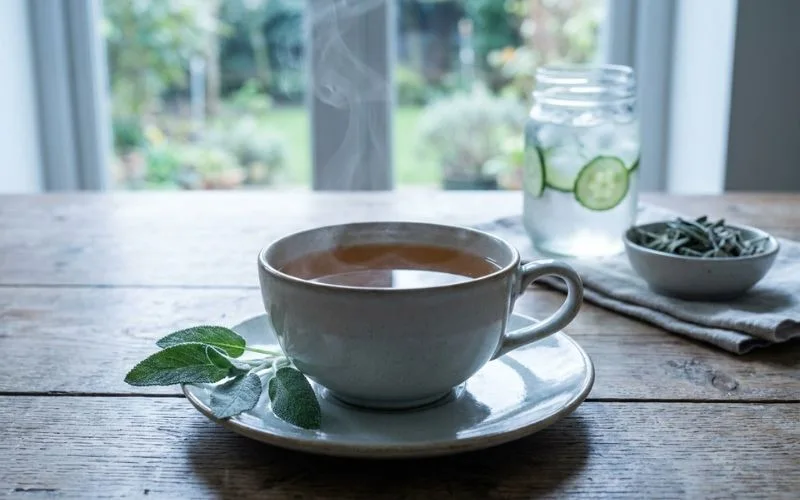
Common sage (Salvia officinalis) has been used in European herbal medicine for hyperhidrosis (excessive sweating) for centuries, and modern research is beginning to back this up specifically for menopause.
A 2011 Swiss clinical trial published in Advances in Therapy found that a fresh sage preparation taken daily reduced the number of intense hot flashes by 64% over 8 weeks — with progressive improvement across the study period. The proposed mechanism involves sage’s binding to acetylcholine and GABA receptors, which influence sweat gland activity and anxiety.
Dosage: 280–300 mg of dried sage leaf extract once daily, or 1–2 cups of strong sage tea daily. The tea form is convenient but less standardized.
Best for: Daytime hot flashes, excessive sweating, mild anxiety
5. Maca Root — Energy, Libido & Hormonal Balance
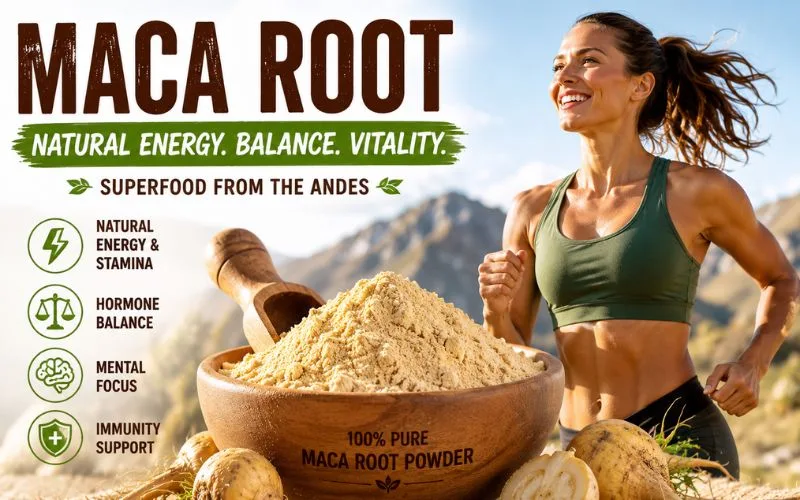
Maca (Lepidium meyenii) is unique among menopause herbs because it doesn’t contain phytoestrogens or directly influence hormone levels — instead, it works upstream, on the hypothalamus and pituitary gland, to support the body’s own hormonal regulation.
A double-blind trial from the University of British Columbia found that perimenopausal women taking 2 grams of maca daily for 4 months showed significant improvements in estrogen and FSH levels, reduced symptoms across multiple menopause scales, and better sexual function (Menopause, 2006, PubMed PMID: 16735483).
For women in early perimenopause — when hormones are fluctuating rather than depleted — maca may offer a particularly good fit because of this regulatory rather than replacement approach.
Dosage: 1.5–3 grams of gelatinized maca powder daily. Gelatinized maca is pre-cooked and easier to digest than raw powder. Can be added to smoothies.
Best for: Libido, energy, mood, early perimenopause hormonal irregularity
6. Valerian Root — For Menopause-Related Sleep Problems
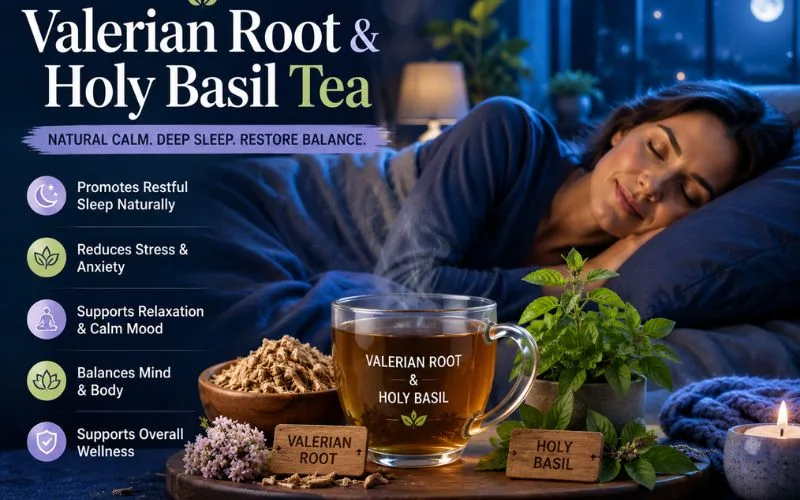
Sleep disruption is one of the most reported — and least talked about — menopause symptoms. It’s not just hot flashes waking women at night. Changes in progesterone (which has sedative properties) directly reduce deep, restorative sleep.
Valerian (Valeriana officinalis) works by increasing GABA activity in the brain, producing a calming effect without the dependence risk of pharmaceutical sleep aids. A randomized trial in Menopause (2011, PubMed PMID: 21775910) found that 530 mg of valerian extract taken twice daily for 4 weeks significantly improved sleep quality scores in postmenopausal women compared to placebo — 30% of the valerian group reported good sleep quality vs. 4% in the placebo group.
Dosage: 300–600 mg of standardized extract (0.8% valerenic acid) 30–60 minutes before bed. Valerian is not sedating in the way a sleep aid is — it reduces sleep latency (the time it takes to fall asleep) and improves sleep depth over time.
Best for: Difficulty falling asleep, night-time waking, anxiety-related insomnia
7. Holy Basil (Tulsi) — The Stress-Resilience Adaptogen
Holy basil (Ocimum tenuiflorum), known as Tulsi in Ayurvedic medicine, is an adaptogen that directly targets the cortisol-stress response — the same pathway that makes menopause symptoms worse under psychological stress.
Studies on holy basil extract (including a double-blind trial published in the Journal of Ayurveda and Integrative Medicine, 2012) show reductions in cortisol, improvements in cognitive function, and reductions in self-reported anxiety and stress. While research directly on menopausal populations is more limited than for the herbs above, its mechanism maps closely to the adrenal-hormonal stress cycle that drives many menopause complaints.
Dosage: 300–600 mg of standardized holy basil extract daily, or 1–2 cups of tulsi tea. Look for extracts standardized to ursolic acid.
Best for: Stress-driven symptom flares, emotional mood swings, cortisol management
What the Research Shows: Menopause Symptom Burden by the Numbers
Understanding the scale of menopausal symptoms helps put these herbal interventions in context.
| Metric | Data Point | Source |
|---|---|---|
| Women experiencing hot flashes | ~75% of American women | NIH Office of Women’s Health, 2023 |
| Average hot flash duration | 7.4 years (median) | SWAN Study, JAMA Internal Medicine, 2015 |
| Women using HRT in the US | ~6% of menopausal women | Menopause Society Survey, 2022 |
| Women seeking non-HRT options | 68% prefer natural options first | North American Menopause Society, 2021 |
| Black cohosh hot flash reduction | ~26% vs. placebo in meta-analysis | PubMed PMID: 20216279 |
| Valerian sleep quality improvement | 30% good sleep vs. 4% placebo | PubMed PMID: 21775910 |
Common Mistakes Women Make With Menopause Herbs
1. Expecting results overnight Most herbal adaptogens and phytoestrogens require 4–8 weeks of consistent use to produce measurable changes. Taking a supplement for 10 days and declaring it ineffective is one of the most common reasons women miss real benefits.
2. Skipping standardization “Black cohosh” on a label means almost nothing if the product isn’t standardized to triterpene glycoside content. Always buy supplements that specify the standardized extract percentage. Cheap, non-standardized products have inconsistent potency.
3. Using multiple phytoestrogen sources at once Stacking red clover, black cohosh, and soy isoflavones simultaneously isn’t more effective — it may actually overshoot estrogen receptor activity in ways that aren’t well studied. Choose one phytoestrogen-class herb and complement it with adaptogens (ashwagandha, holy basil, maca) rather than doubling up on the same mechanism.
4. Ignoring drug interactions Several menopause herbs interact with medications. Valerian potentiates sedatives. Black cohosh may interact with tamoxifen. Maca affects thyroid medication absorption. If you’re on any prescription medication, bring your supplement list to your doctor.
5. Treating herbs as a substitute for a care conversation These herbs can meaningfully reduce symptom burden, but moderate-to-severe menopause symptoms warrant a conversation with a gynecologist or integrative medicine doctor. Herbs work best as part of a broader protocol — not as an avoidance strategy.
Herb Comparison: Which One Is Right for Your Dominant Symptom?
| Herb | Best Symptom Target | Phytoestrogen? | Time to Work | Daily Dose |
|---|---|---|---|---|
| Black Cohosh | Hot flashes, night sweats | No | 4–8 weeks | 20–40 mg 2x/day |
| Ashwagandha | Sleep, brain fog, anxiety | No | 2–4 weeks | 300–600 mg |
| Red Clover | Hot flashes, mood, vaginal dryness | Yes | 4–8 weeks | 40–80 mg isoflavones |
| Sage | Daytime sweating, hot flashes | No | 2–4 weeks | 280–300 mg |
| Maca | Energy, libido, hormonal balance | No | 4–8 weeks | 1.5–3 g powder |
| Valerian | Sleep onset, sleep quality | No | 2–4 weeks | 300–600 mg at night |
| Holy Basil | Stress-triggered flares, mood | No | 2–4 weeks | 300–600 mg |
FAQ — Frequently Asked Questions About Herbs for Menopause Relief
What is the most effective herb for menopause hot flashes?
Black cohosh has the most clinical evidence specifically for hot flashes among all herbal options. Multiple randomized controlled trials show it reduces hot flash frequency by about 26% compared to placebo. For women who want a phytoestrogen option, red clover isoflavones at 80 mg/day show similar or slightly higher reduction rates in several trials.
Can I take menopause herbs if I’m also on hormone replacement therapy (HRT)?
Some herbs — particularly those with phytoestrogen activity like red clover — should not be combined with HRT without medical guidance, as the effects may compound in unpredictable ways. Adaptogens like ashwagandha and holy basil are generally compatible with HRT, but always disclose all supplements to your prescribing doctor.
How long does it take for menopause herbs to work?
Most herbs require consistent daily use for 4–8 weeks before noticeable effects. Some women report improvement in sleep and anxiety with ashwagandha or valerian within 2 weeks. Hot flash reduction with black cohosh or red clover typically becomes apparent around week 4. Don’t judge effectiveness before 6 weeks of consistent use.
Are menopause herbs safe for women with a history of breast cancer?
Women with a history of hormone-sensitive breast cancer should approach all phytoestrogen herbs (red clover, soy isoflavones) with caution and medical approval. Black cohosh is generally considered safer in this population — it is not estrogenic — but this remains an area of ongoing research. Non-estrogenic adaptogens like ashwagandha, holy basil, maca, and valerian have no known contraindications for breast cancer history, but medical consultation is still advisable.
Can I use multiple menopause herbs at the same time?
Yes, but strategically. The most practical combination is one primary symptom-targeting herb (black cohosh or red clover for hot flashes) plus one adaptogen (ashwagandha or holy basil for stress/sleep) plus valerian at night if sleep is a major issue. Avoid stacking multiple phytoestrogen herbs simultaneously.
What’s the difference between perimenopause and menopause?
Perimenopause is the transitional phase leading up to menopause, typically beginning in the mid-40s, during which hormone levels fluctuate unpredictably. Menopause is defined as 12 consecutive months without a menstrual period. Postmenopause is everything after. Herbs like maca are particularly well-suited to perimenopause; black cohosh and red clover are effective across both phases.
Do menopause herbs affect bone density?
Some phytoestrogen-rich herbs like red clover isoflavones have shown modest bone- protective effects in postmenopausal women, as estrogen plays a role in bone maintenance. A 2007 review in Phytomedicine found red clover isoflavones at 40–80 mg daily showed a trend toward reduced bone loss. However, for women with significant osteoporosis risk, herbs are not a substitute for evidence-based bone treatments.
Is black cohosh safe for long-term use?
Most clinical trials on black cohosh have lasted 6–12 months. Long-term safety beyond 6 months is less studied, and the German Commission E — which formally approved black cohosh — suggests a 6-month maximum without physician oversight. Cycling use (6 months on, 1–2 months off) is a reasonable approach for long-term management.
Can menopause herbs help with weight gain?
Menopause-related weight gain is primarily driven by metabolic changes and declining estrogen. No herb directly reverses this. However, ashwagandha and holy basil, by reducing cortisol, may reduce cortisol-driven abdominal fat accumulation. Maca may support energy and exercise motivation. Herbs are supportive, not primary tools, for weight management.
Are there herbs to avoid during menopause?
High-dose licorice root (not deglycyrrhizinated) can raise blood pressure — concerning since cardiovascular risk increases post-menopause. Wild yam cream, despite marketing claims, does not convert to progesterone in the human body and has no evidence for menopause relief. Kava, while effective for anxiety, carries hepatotoxicity risk with long-term use.
The Bottom Line on Herbs for Menopause Relief
Menopause is not a disease — but that doesn’t make its symptoms any less disruptive. The seven herbs covered here each address different aspects of the menopause experience: black cohosh and red clover for the vasomotor symptoms (hot flashes and sweating), ashwagandha and holy basil for the stress-adrenal connection, maca for hormonal regulation and libido, sage for sweating, and valerian for sleep.
Start with the herb that targets your most disruptive symptom. Give it 6–8 weeks before evaluating. And keep the conversation going with your healthcare provider — natural doesn’t mean unsupervised, especially in a YMYL health context like this one.
Your next step: If sleep is your primary complaint, start with valerian (300 mg before bed) plus ashwagandha (300 mg morning). If hot flashes dominate, black cohosh is the most evidence-backed starting point. Stack from there.
⚕️ Medical Disclaimer: This article is for informational purposes only and does not constitute medical advice. Always consult your healthcare provider before starting any supplement regimen, especially if you have a history of hormone-sensitive conditions or are currently taking prescription medications.
Written by Ethan Cole, Nutrition Expert | Author Bio
=== 🔗 OUTGOING LINKS FROM THIS ARTICLE ===
→ 🔗 Ashwagandha for Stress Relief: Dosage, Timing & What 12 Studies Show