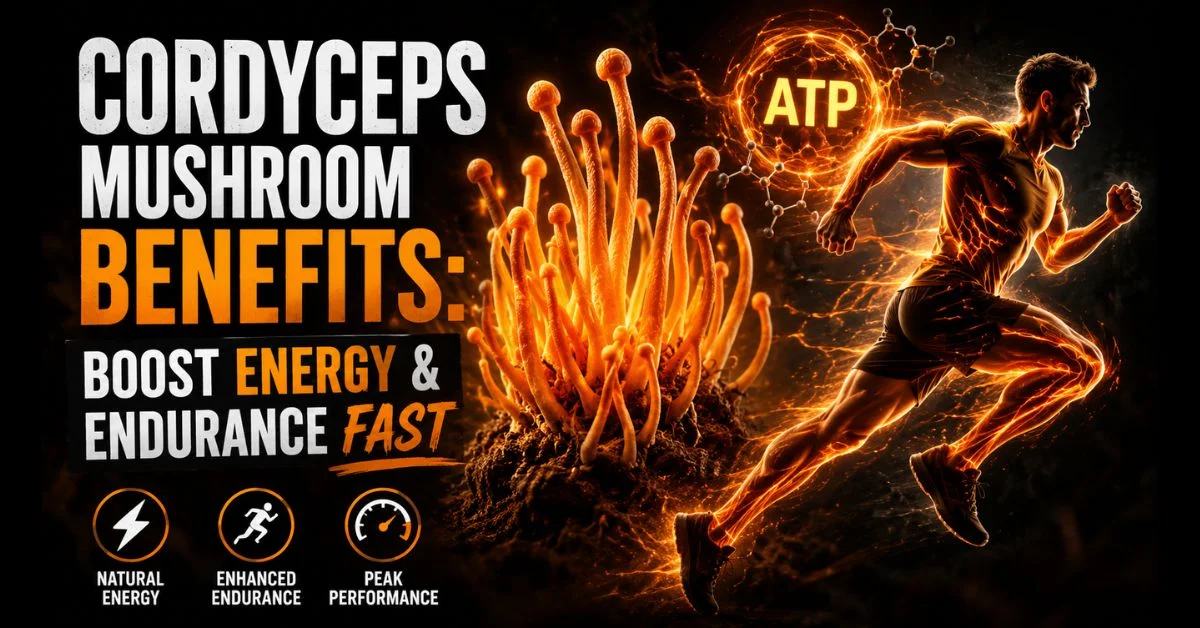
Cordyceps Mushroom benefits: Energy, Endurance & Dosage Guide
Three different products at your health food store all say “Cordyceps” on the label. One is a pharmaceutical-grade CS-4 extract — the form used in VO2max clinical trials. One is a Cordyceps militaris fruiting body with high cordycepin content. And one is mycelium grown on grain substrate that’s 60–70% oat starch. All three say “Cordyceps.” None of them are equivalent.
💡 Quick Answer: Cordyceps Mushroom benefits
Cordyceps mushroom improves energy and endurance primarily through two mechanisms: cordycepin and adenosine compounds that enhance ATP production at the cellular level, and improved oxygen utilization efficiency. A 6-week randomized trial using CS-4 at 3 g/day showed a statistically significant 7–11% improvement in VO2max. A 3-week trial using Cordyceps militaris blend showed +4.8 ml/kg/min VO2max improvement and +69.8 seconds time to exhaustion. Which cordyceps you buy determines which of these results is possible.
This guide covers the two species in plain English, the clinical trial data for energy and endurance, what cordyceps does beyond performance, how it compares to rhodiola for energy support, and the buying criteria that separate effective supplements from overpriced grain powder.
📋 Written by Ethan Cole, Nutrition Expert | Meet Ethan →
- ✔ Verified against third-party Certificates of Analysis (COAs), current Amazon listings, and 2025–2026 clinical research
- 📅 Last Updated: May 2026
⚠️This article contains affiliate links. If you purchase through our links, we may earn a small commission at no extra cost to you. See our Affiliate Disclosure for details.
The Cordyceps Species Problem: What You’re Actually Buying {#species}
This is the section every cordyceps article should start with — and almost none does.
“Cordyceps” is not one thing. It’s a genus containing hundreds of species, of which two are relevant to the supplement market:
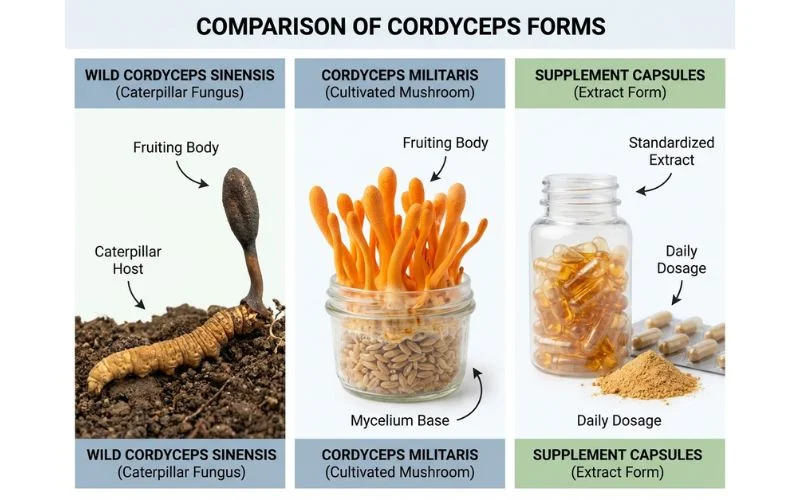
Wild Cordyceps sinensis (The Legend You’re Not Getting)
The original cordyceps used in Traditional Chinese Medicine is Ophiocordyceps sinensis — a parasitic fungus that grows from the mummified caterpillar larvae of ghost moths at elevations above 3,500 meters in the Tibetan Plateau and Himalayan mountains. It has been prized in Chinese medicine for over 1,500 years for energy, virility, and longevity.
Wild Cordyceps sinensis currently costs $10,000–$20,000 per kilogram. It is not in any commercial supplement capsule at any price point. The product labeled “Cordyceps sinensis” in your supplement store is not wild Tibetan cordyceps.
CS-4: The Clinical Trial Standard
CS-4 is a cultivated mycelium strain of Cordyceps sinensis — technically now reclassified as Paecilomyces hepiali or Samsoniella hepiali — grown through liquid fermentation on controlled substrates. It produces a consistent, standardized extract that is commercially scalable.
CS-4 is the form used in virtually all human clinical trials measuring VO2max, aerobic capacity, and fatigue reduction. The landmark Chinese RCT (Chen et al., 2010), the 6-week elderly trial, and most of the kidney and COPD clinical research used CS-4 at 3 g/day. It has the most human clinical evidence of any cordyceps form.
Cordyceps militaris: The High-Cordycepin Alternative
Cordyceps militaris is a different species entirely — bright orange, commercially cultivatable on grain substrates, and naturally high in cordycepin, the primary bioactive compound in cordyceps. It’s the species growing in popularity in the premium supplement market.
Key differences:
| Factor | CS-4 (sinensis mycelium) | Cordyceps militaris |
|---|---|---|
| Human trial evidence | Most extensive (VO2max, COPD, kidney) | Growing (5 RCTs, 2017–2024) |
| Cordycepin content | Lower | Higher — naturally concentrated |
| Adenosine content | Moderate | High |
| Beta-glucan content | Variable | High in fruiting body extract |
| Grain substrate risk | Low (liquid fermentation) | HIGH if myceliated grain |
| Best for | Endurance, oxygen utilization | Cordycepin-driven energy, anti-viral |
| Availability | Widely available | Increasingly available |
The bottom line: CS-4 has more clinical evidence. Cordyceps militaris fruiting body has higher cordycepin content and is the better choice when buying extract. The worst product is Cordyceps militaris mycelium on grain substrate — it has neither the clinical validation of CS-4 nor the cordycepin concentration of quality militaris fruiting body.
How Cordyceps Affects Energy: The ATP Mechanism {#mechanism}
Cordyceps improves energy and endurance through a mechanism that distinguishes it from stimulants like caffeine: it works at the cellular energy production level, not through adrenal activation.
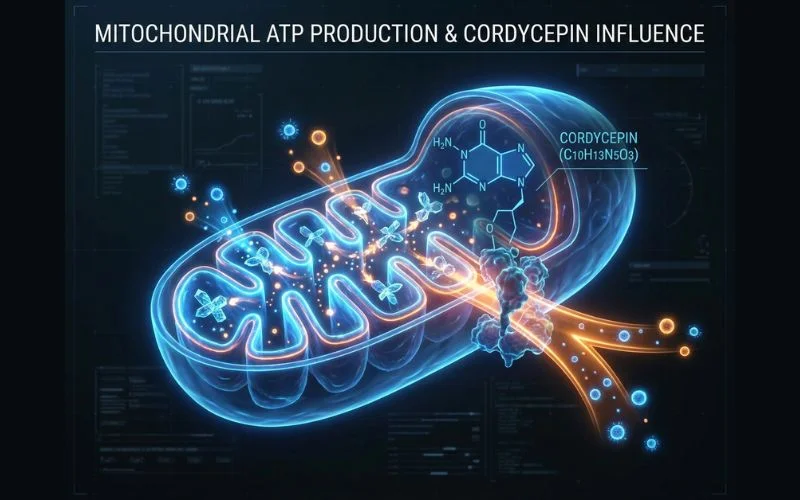
Primary Mechanism: Cordycepin and ATP Synthesis
Cordycepin (3-deoxyadenosine) is structurally similar to adenosine — the molecular building block of ATP (adenosine triphosphate), the primary energy currency of every cell in your body. Research suggests cordycepin enhances cellular ATP production efficiency by improving the availability of adenosine precursors for mitochondrial energy synthesis.
The result is more ATP generated from the same oxygen supply — which translates directly to improved endurance capacity, delayed fatigue onset, and faster recovery between high-intensity efforts.
Secondary Mechanism: Oxygen Utilization Efficiency
Multiple human trials show that cordyceps supplementation improves VO2max — the maximum rate at which your body can use oxygen during exercise. This is the gold standard measure of aerobic fitness, and improving it without training is rare with natural supplements.
The mechanism involves enhanced oxygen delivery and utilization at the muscle tissue level. A 2024 review in Food & Function (RSC Publishing) found that pre-exercise cordyceps supplementation significantly accelerated CD34+ stem cell recruitment to skeletal muscle after high-intensity exercise — supporting the hypothesis that cordyceps enhances not just energy during exercise but the tissue repair and adaptation processes that follow it.
What This Means Practically
Cordyceps is not a stimulant. You won’t feel a caffeine-like buzz within an hour. What you’ll notice over 3–6 weeks of consistent use is:
- Reduced perceived exertion at the same exercise intensity
- Longer time before hitting your aerobic threshold
- Faster recovery between sets or intervals
- Improved endurance in sustained aerobic activities
This is a genuinely different mechanism from adaptogens like rhodiola (which reduces fatigue perception) or caffeine (which blocks adenosine fatigue signaling). Cordyceps works earlier in the energy production chain.
Clinical Trial Data: VO2max and Endurance Results {#trials}
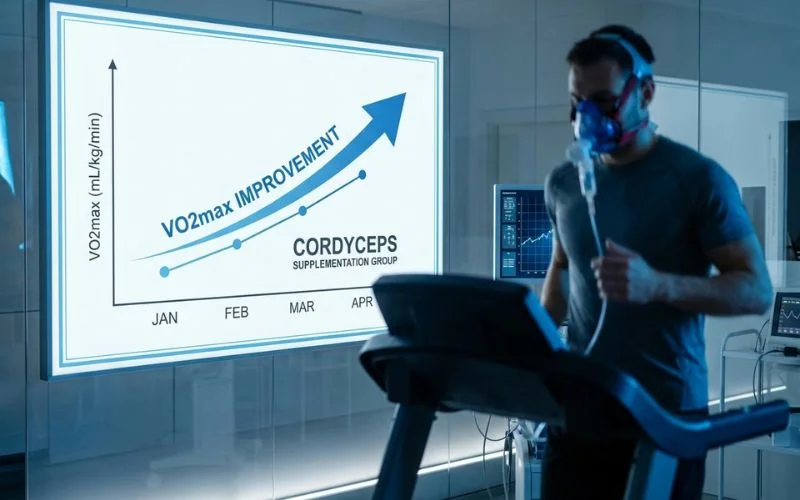
Here is the structured summary of published human trials on cordyceps for performance and energy:
| Study | Species/Form | Subjects | Dose | Duration | Key Finding | Source |
|---|---|---|---|---|---|---|
| Chen et al., 2010 | CS-4 mycelium extract | 37 healthy elderly adults | 3 g/day | 6 weeks | VO2max: +7–11% (1.88 → 2.00 L/min, P=0.050); anaerobic threshold significantly improved | Chin J Integr Med |
| Hirsch et al., 2017 | Cordyceps militaris blend (4g/day) | 28 healthy adults (avg 23 yrs) | 4 g/day | 1–3 weeks | Week 3: VO2max +4.8 ml/kg/min (P=0.042); TTE +69.8 s; VT +0.7 L/min | PMC5236007 |
| Food & Function, 2024 | Cordyceps sinensis (1g, pre-exercise) | 14 young adults | 1 g pre-exercise | Crossover | Significantly accelerated CD34+ muscle stem cell recruitment post-HIIT vs. placebo | RSC D3FO03770C |
| Narrative review, 2025 | C. militaris (various) | 321 participants | 1–12 g/day | 1–16 weeks | 5 RCTs: consistent VO2max, TTE, and power output improvements; strongest at 3+ weeks | ResearchGate 2025 |
Reading the data honestly:
The VO2max improvements are real and statistically significant. They are also modest — +4.8 ml/kg/min and +7–11% VO2max improvement represents meaningful gains for non-elite athletes and older adults, but won’t transform a recreational runner into an elite one. The research is most consistent for adults over 40 and those with lower baseline aerobic fitness — for elite athletes, the effects appear smaller and less consistent.
The 3-week threshold is important: the Hirsch 2017 trial found no significant improvement at 1 week, but significant improvement at 3 weeks. Consistency over at least 3 weeks is required to see the performance effects.
Beyond Performance: Other Research-Supported Benefits {#other-benefits}
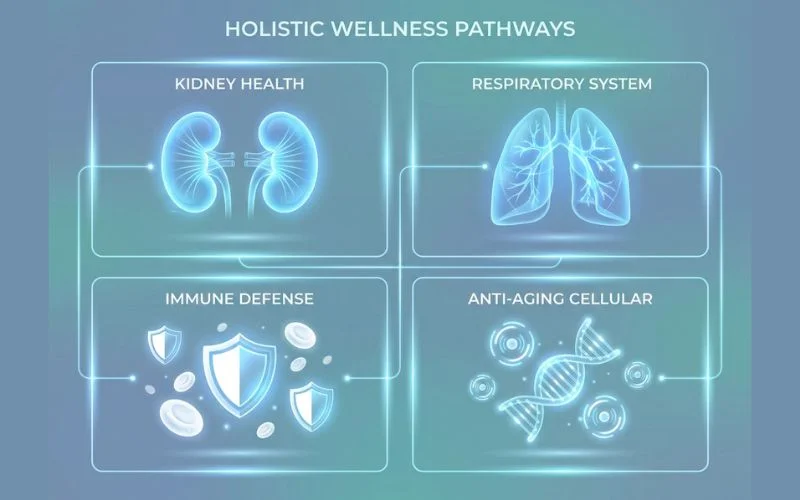
Kidney Protection (COPD and CKD Data)
This is cordyceps’ most overlooked clinical application in Western markets. CS-4 has been studied extensively in Chinese clinical trials for:
Chronic Kidney Disease (CKD): Multiple Chinese RCTs and a meta-analysis show CS-4 at 3–5 g/day slows the rate of eGFR (kidney function) decline in CKD stages 3–4 and reduces proteinuria. The proposed mechanism involves reduced oxidative stress in kidney tubular cells and anti-inflammatory effects on nephron tissue.
COPD and Lung Function: A 2003 review of CS-4 trials in COPD patients found significant improvements in FEV1 (forced expiratory volume) of approximately 8–12%, reduced exacerbation frequency, and improved exercise tolerance. This is the most clinically supported application after athletic performance.
Immune Modulation
Cordyceps polysaccharides activate similar TLR-mediated immune pathways as turkey tail and reishi beta-glucans. Preclinical research shows enhanced NK cell activity and macrophage activation. While the immune data is less robust than turkey tail’s PSK evidence, it supports cordyceps as part of a comprehensive immune maintenance stack.
Anti-Aging and Antioxidant Effects
Cordycepin’s structural similarity to adenosine gives it mild antioxidant properties via cellular redox pathway support. Animal models suggest lifespan extension effects — the same mechanism that made wild Cordyceps sinensis prized for longevity in TCM. Human evidence is limited but consistent with the preclinical data.
Testosterone and Libido
Multiple animal studies and a small number of human trials suggest cordyceps may support testosterone biosynthesis at the adrenal and gonadal level. A Chinese RCT found improved libido and sexual function scores in older men taking CS-4 for 40 days. This is the traditional use that drove cordyceps’ reputation in Tibetan medicine — though the evidence in younger, healthy adults is limited.
Cordyceps vs. Rhodiola for Energy: Which Is Right for You? {#comparison}
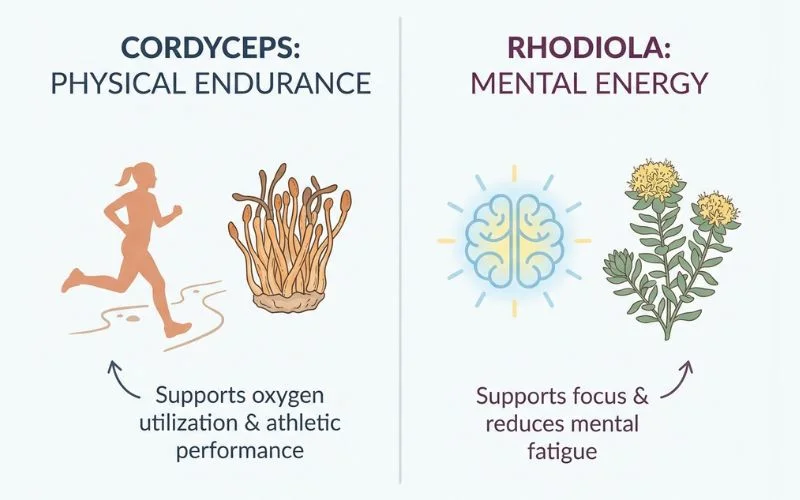
Cordyceps and rhodiola are the two most evidence-based natural options for energy and performance support. They work through completely different mechanisms — making this comparison the most practical buying decision for most users.
| Factor | Cordyceps | Rhodiola Rosea |
|---|---|---|
| Primary mechanism | ATP synthesis enhancement + VO2max | Fatigue perception reduction + neurotransmitter resilience |
| Best for | Physical endurance, aerobic capacity, oxygen efficiency | Mental energy, stress-driven exhaustion, burnout |
| Type of energy | Physical — exercise performance, stamina | Mental — cognitive endurance, motivation, stress |
| Speed of action | 3–6 weeks (cumulative) | Days to 1–2 weeks |
| Human trial evidence | Strong for VO2max and TTE | Strong for fatigue, burnout, cognitive performance |
| Cortisol effects | Minimal direct effect | Mild cortisol-awakening response reduction |
| Timing | Pre-workout or morning | Morning only (activating) |
| Stacks well with | Turkey tail + lion’s mane + ashwagandha | Ashwagandha (calm + energy balance) |
| Dose | 1,000–3,000 mg/day | 200–400 mg/day |
| Cycling needed | No strong evidence | 8–12 weeks on, 4 weeks off recommended |
The one-question shortcut:
“Is your fatigue primarily physical — during exercise or activity — or mental — at your desk, under stress, mid-afternoon?”
- Physical fatigue, reduced endurance, breathing harder → Cordyceps
- Mental fog, burnout, cognitive exhaustion, stress-driven fatigue → Rhodiola
- Both simultaneously → Stack cordyceps (morning pre-workout) + rhodiola (morning with breakfast)
For a detailed rhodiola comparison including dosage and stacking, see our Rhodiola vs Ashwagandha guide.
The Grain Substrate Problem in Cordyceps Supplements {#quality}
The same quality problem affecting lion’s mane and turkey tail applies directly to cordyceps — and may be even more prevalent given how much the cordyceps category has grown in pre-workout supplements.
Many commercial cordyceps supplements — particularly those labeled “Cordyceps militaris” at low price points — grow the mycelium on grain substrate (oats, rice, barley). The mycelium grows into the grain so thoroughly that the final product may be 60–70% grain starch (alpha-glucans) with minimal actual cordyceps compounds.
A 2016 Journal of Dietary Supplements analysis of commercial cordyceps products found that multiple best-selling products contained negligible cordycepin content — the primary active compound. The “Cordyceps” on the label was biologically present, but the active compounds were not at useful concentrations.
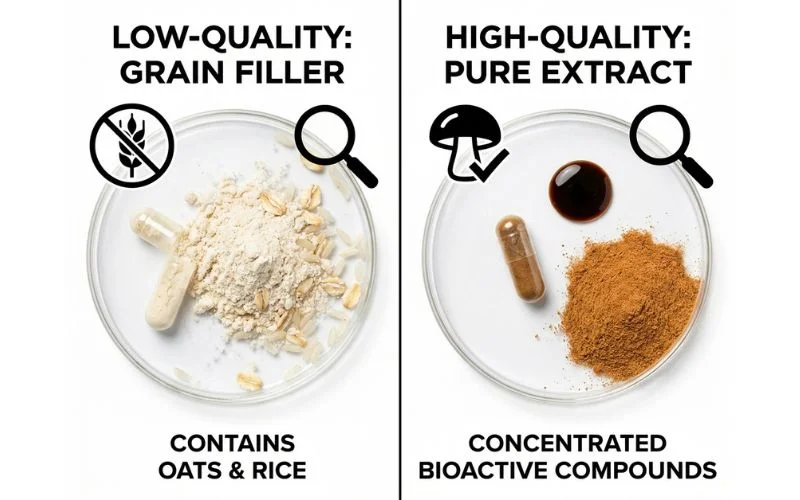
The specific cordyceps quality markers to check:
| Quality Marker | What It Means | Target Level |
|---|---|---|
| Cordycepin % stated | Primary bioactive compound | Look for any stated % (even 0.3%) |
| Beta-glucan % | Immune-active polysaccharides | ≥20% from fruiting body |
| “Fruiting body” specified (militaris) | No grain substrate dilution | Required for militaris products |
| CS-4 or strain specified | Verified cultivated sinensis strain | CS-4 is most clinically validated |
| Third-party tested | External lab CoA verification | ISO 17025-accredited preferred |
| Alpha-glucan % absent or low | Low grain starch content | Should be lower than beta-glucan % |
What “10:1 Extract” Means on Cordyceps Labels
Many cordyceps products advertise a “10:1 extract ratio.” As with chaga and lion’s mane, this ratio is only meaningful if the source material was potent to begin with. A 10:1 extract of grain-diluted mycelium produces a concentrated version of grain starch — not more cordyceps. Ignore extract ratios without verified cordycepin or beta-glucan content.
How to Choose a Quality Cordyceps Supplement {#choosing}
For Athletic Performance (Primary Goal)
Best choice: CS-4 extract or Cordyceps militaris fruiting body extract
CS-4 has the most direct human trial evidence for VO2max improvement. Cordyceps militaris fruiting body has higher natural cordycepin content, which the newer trial data (2017–2024) supports for performance.
Top picks:
Real Mushrooms Cordyceps-M — Cordyceps militaris fruiting body, verified cordycepin content, beta-glucan ≥25%, third-party tested, no grain filler. Best overall for performance.
Nootropics Depot Cordyceps (CS-4 or militaris) — Both forms available, ISO 17025-tested, transparent labeling. Best for buyers who want verified potency at mid-range price.
Avoid: Products labeled “Cordyceps sinensis” without specifying CS-4 strain; any Cordyceps militaris product without fruiting body specification and cordycepin/beta-glucan testing.
Label Checklist
- ✅ “CS-4” strain specified, OR “Cordyceps militaris fruiting body” specified
- ✅ Cordycepin % or beta-glucan % stated
- ✅ Third-party tested (CoA available)
- ✅ Extraction method disclosed
- ❌ “Cordyceps sinensis” without strain specification
- ❌ “Myceliated grain” or grain substrate mentioned
- ❌ Only “polysaccharides %” without specifying beta-glucan or cordycepin
Dosage Guide: What the Trials Used {#dosage}
| Goal | Dose | Species | Duration |
|---|---|---|---|
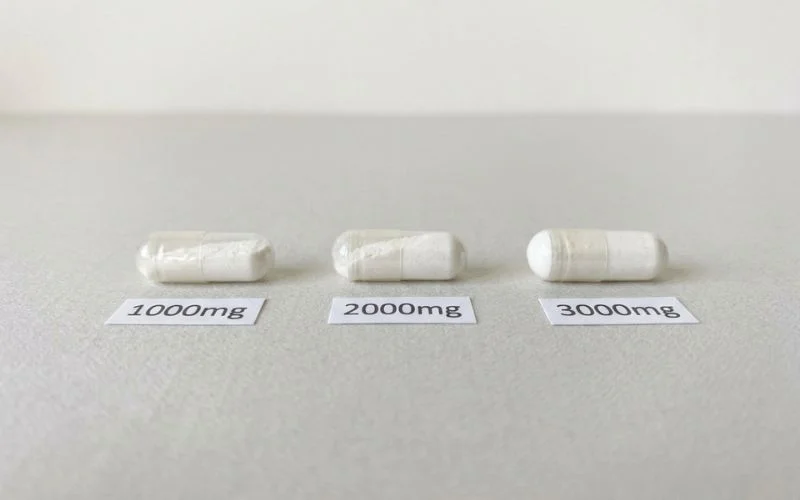
| VO2max / endurance | 3,000 mg/day | CS-4 (Chen 2010) | 6 weeks |
| High-intensity performance | 4,000 mg/day blend | Cordyceps militaris (Hirsch 2017) | 3 weeks |
| Kidney protection (CKD) | 3,000–5,000 mg/day | CS-4 | 3–6 months (physician-supervised) |
| COPD / lung function | 3,000 mg/day | CS-4 | 6–12 weeks |
| General energy maintenance | 1,000–2,000 mg/day | Either (quality extract) | Ongoing |
Practical starting protocol:
- Week 1–2: 1,000 mg/day with breakfast (tolerance assessment)
- Week 3+: Increase to 2,000–3,000 mg/day
- Pre-workout use: Take 30–60 minutes before exercise; most research on acute performance used pre-exercise administration
- For endurance goals: 3 weeks minimum before assessing effect; full benefit at 6 weeks
Timing note: Unlike rhodiola (morning only, activating) or reishi (evening preferred), cordyceps timing is flexible. Pre-workout timing is the most evidence-supported for performance. For non-athletes, morning with breakfast works well for sustained daily energy support.
Cycling: No strong evidence requires cordyceps cycling. The clinical trials ran continuously for 6–12 weeks without tolerance issues. Ongoing daily use at maintenance doses is appropriate.
Side Effects and Who Should Avoid Cordyceps {#caution}
Cordyceps has a favorable safety profile across multiple clinical trials, including long-term use in CKD and COPD patients. Most adverse events are mild and gastrointestinal.
Common side effects:
- Mild digestive upset — nausea, loose stools (usually dose-dependent and transient)
- Dry mouth
- Mild dizziness (rare, typically resolves in first week)
Who should use caution or consult a physician:
- Autoimmune conditions: Cordyceps’ immune-modulating beta-glucans may interfere with immunosuppressant therapy
- Blood-thinning medications: Possible mild antiplatelet effects; caution with warfarin, aspirin, clopidogrel
- Diabetes medications: Cordyceps polysaccharides may have mild blood glucose-lowering effects; monitor blood sugar with insulin or oral hypoglycemics
- Hormone-sensitive conditions: Some research suggests testosterone pathway activity; people with hormone-sensitive cancers should discuss with their oncologist
- Kidney disease (advanced CKD): While CS-4 has positive kidney protection data at therapeutic doses, people with advanced CKD should use this only under physician supervision due to polysaccharide metabolism
- Pregnancy and breastfeeding: Insufficient safety data; avoid
- Children under 18: No pediatric clinical trial data
Allergy note: Cordyceps is a fungus. Individuals with severe mold or fungal allergies should consult a physician before use.
⚠️ Medical Disclaimer: This article is for informational purposes only and does not constitute medical advice. Always consult your healthcare provider before starting any supplement, especially if you have kidney disease, take blood thinners, or have an existing health condition.
FAQ: Cordyceps Mushroom Benefits {#faq}
What does cordyceps mushroom do for energy?
Cordyceps improves cellular energy production through two mechanisms: cordycepin (structurally similar to adenosine) enhances ATP synthesis efficiency in mitochondria, and multiple human trials show significant improvements in VO2max — the body’s maximum oxygen utilization rate. Unlike caffeine, which blocks fatigue signaling, cordyceps works at the actual cellular energy production level. Effects build over 3–6 weeks of consistent use; it is not an acute stimulant.
Does cordyceps really improve athletic performance?
Yes — in human clinical trials. A 6-week RCT using CS-4 at 3 g/day showed statistically significant VO2max improvement in elderly adults (7–11% increase, P=0.050). A 3-week trial using Cordyceps militaris blend at 4 g/day found +4.8 ml/kg/min VO2max improvement (P=0.042) and +69.8 seconds time to exhaustion in healthy young adults. Effects are strongest in non-elite athletes and adults over 40; data in elite athletes is mixed.
What is the difference between CS-4 and Cordyceps militaris?
CS-4 is a cultivated mycelium strain of Cordyceps sinensis — the species used in virtually all human VO2max and kidney clinical trials. Cordyceps militaris is a different species with naturally higher cordycepin content and growing clinical evidence. CS-4 has more total human trial data; Cordyceps militaris fruiting body has higher active compound concentrations per milligram. Both can be effective — the worst option is Cordyceps militaris mycelium grown on grain substrate, which may be primarily starch with minimal active compounds.
How long does cordyceps take to work for energy?
Most human trials show no significant performance improvement at 1 week, but significant effects by week 3 (Cordyceps militaris) or week 6 (CS-4). For non-performance energy (general daily vitality), some people notice subtle effects in the first 1–2 weeks. Give it a full 3-week minimum before evaluating, and 6 weeks for full assessment.
What is the best cordyceps supplement for energy?
For athletic performance: Cordyceps militaris fruiting body extract (Real Mushrooms Cordyceps-M, verified cordycepin and beta-glucan content, third-party tested) or CS-4 (Nootropics Depot, verified). Check the label for fruiting body specification, cordycepin or beta-glucan percentage, and third-party testing. Avoid grain-grown mycelium products without verified compound testing.
Is cordyceps better than caffeine for energy?
Cordyceps and caffeine address completely different energy mechanisms and aren’t directly comparable. Caffeine blocks adenosine receptors to reduce fatigue perception — it works in 30–60 minutes but builds tolerance with daily use. Cordyceps enhances ATP production at the cellular level — it builds over weeks and doesn’t build tolerance. They can be used together: cordyceps for sustained underlying energy capacity, caffeine for acute focus and performance acuteness on training days.
Can I take cordyceps with ashwagandha or rhodiola?
Yes — all three work through independent mechanisms with no documented negative interactions. A practical stack: rhodiola for morning mental energy and stress resilience, cordyceps for pre-workout cellular energy support, ashwagandha in the evening for cortisol control and recovery. For more on the rhodiola-ashwagandha combination, see our Rhodiola vs Ashwagandha guide.
Does the cordyceps in mushroom coffee actually work?
Mushroom coffee blends typically use 100–500 mg of cordyceps per serving — below the 3,000–4,000 mg doses used in performance trials. For VO2max and endurance goals, mushroom coffee doses are too low. For general daily energy and antioxidant support, they provide some benefit but not full clinical effect. If performance is your goal, a dedicated cordyceps capsule at full dose is more appropriate than relying on mushroom coffee.
Is cordyceps safe for kidneys?
Paradoxically, yes — CS-4 at therapeutic doses has shown kidney-protective effects in multiple Chinese RCTs for CKD stages 3–4, slowing eGFR decline and reducing proteinuria. Unlike chaga (which has documented kidney risk from oxalate accumulation), cordyceps is associated with kidney protection at the doses studied. However, people with advanced kidney disease should use therapeutic doses only under physician supervision.
What should I look for on a cordyceps supplement label?
Four things: (1) CS-4 strain specified OR “Cordyceps militaris fruiting body” specified — not just “Cordyceps sinensis”; (2) cordycepin percentage OR beta-glucan percentage stated; (3) third-party testing disclosure with CoA available; (4) no “myceliated grain” or grain substrate mention. Ignore extract ratios (10:1, 20:1) without verified compound content — they are marketing numbers without context.
The Bottom Line {#conclusion}
Cordyceps is one of the few natural supplements with human clinical trial data specifically for VO2max improvement and endurance capacity — a claim most sports nutrition ingredients can’t make. The mechanism is genuinely different from stimulants: it works at the cellular ATP production level, not by masking fatigue signals.
The catch is that most commercial cordyceps products are not what the clinical trials studied. Wild Cordyceps sinensis is not in any supplement capsule. CS-4 (the studied mycelium strain) is legitimate and well-evidenced. Cordyceps militaris fruiting body has higher cordycepin content and growing trial support. Cordyceps militaris mycelium on grain substrate — the most common low-cost product — may deliver negligible active compounds regardless of the milligram count.
Check the label: CS-4 strain or militaris fruiting body specified, cordycepin or beta-glucan percentage stated, third-party tested. At 2,000–3,000 mg/day consistently for 3–6 weeks, the VO2max and endurance data is there if you buy the right product.
This article is for informational purposes only and does not constitute medical advice. Always consult your healthcare provider before starting any supplement regimen.
Written by Ethan Cole, Nutrition Expert | Meet Ethan →
=== 🔗 OUTGOING LINKS FROM THIS ARTICLE ===
→ 🔗 Turkey Tail Mushroom Benefits & Best Supplements Reviewed
→ 🔗 Chaga Mushroom Benefits, Side Effects & Best Supplements 2026
→ 🔗 Reishi Mushroom for Sleep: Does It Actually Work?
→ 🔗 Lion’s Mane Mushroom Benefits: What 15 Studies Actually Show
→ 🔗 Ashwagandha for Stress Relief: Dosage, Timing & What 12 Studies Show
→ 🔗 Medicinal Mushrooms category