Chaga Mushroom Benefits, Side Effects & Best Supplements 2026
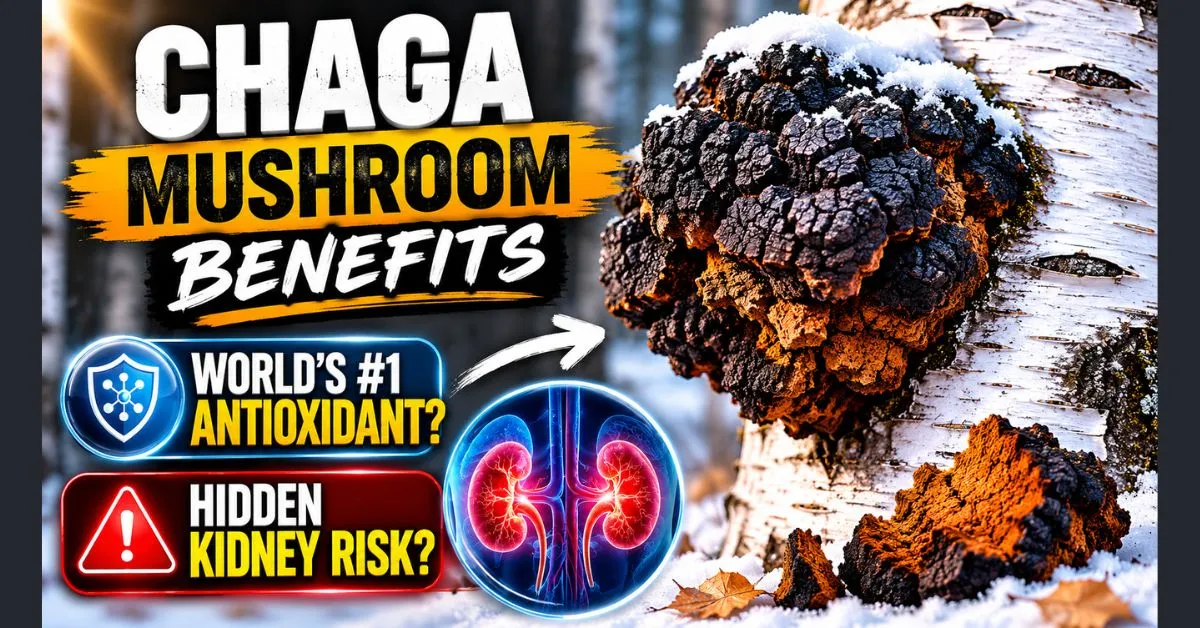
Chaga has the highest recorded antioxidant ORAC score of any natural substance tested — 146,700 µmol TE per 100 grams, compared to roughly 3,200 for blueberries. But that number comes with two caveats that your supplement seller probably hasn’t mentioned: unprocessed chaga is nearly indigestible by humans, and chaga’s oxalate content is high enough that multiple published case reports have linked long-term high-dose use to end-stage kidney disease.
💡 Quick Answer: Chaga Mushroom Benefits
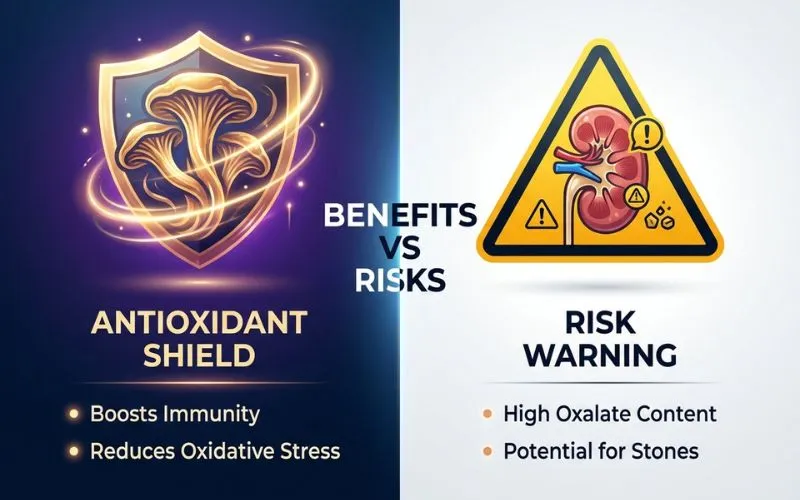
Chaga mushroom (Inonotus obliquus) offers genuinely potent antioxidant, anti-inflammatory, and immune-modulating activity through beta-glucans, betulinic acid, melanin, and polyphenols. Benefits are supported by strong preclinical data and growing clinical evidence. However, chaga contains the highest oxalate concentration of any commonly used supplement — a documented kidney risk at high doses that requires specific precautions for anyone with kidney concerns, a history of oxalate stones, or Crohn’s disease.
This article covers what chaga actually contains, what the research shows (and what it doesn’t), the oxalate risk in clinical detail, how chaga compares to lion’s mane and reishi, what to look for in a supplement, and who should avoid it entirely.
📋 Written by Ethan Cole, Nutrition Expert | Meet Ethan →
- ✔ Verified against third-party Certificates of Analysis (COAs), current Amazon listings, and 2025–2026 clinical research
- 📅 Last Updated: May 2026
⚠️This article contains affiliate links. If you purchase through our links, we may earn a small commission at no extra cost to you. See our Affiliate Disclosure for details.
What Is Chaga and Where Does It Come From? {#what-is-chaga}
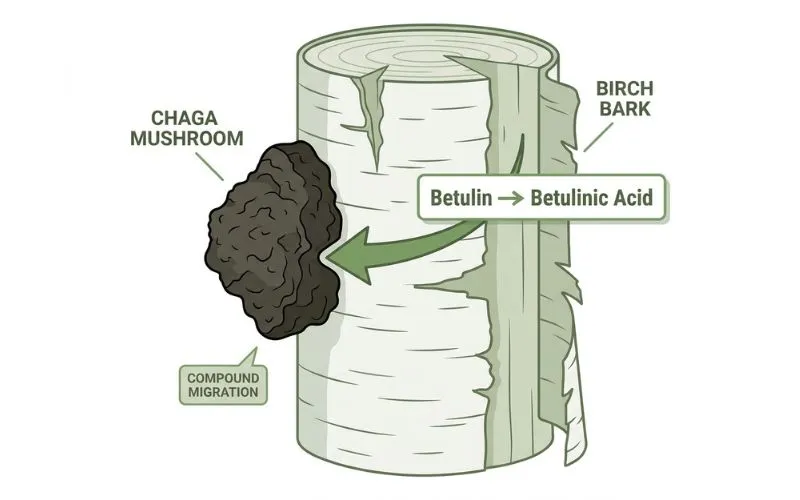
Chaga (Inonotus obliquus) is technically not a mushroom in the traditional sense — it’s a sterile fungal conk, a parasitic growth that develops on birch trees in cold climates across Russia, Siberia, Scandinavia, Canada, and parts of the northern United States. It grows slowly over decades, absorbing compounds directly from its birch host — including betulin and betulinic acid from birch bark, which are central to chaga’s documented anti-inflammatory and antitumor properties in preclinical research.
This birch-tree origin is not a marketing detail. It’s a quality marker. Chaga grown on other tree species or cultivated on artificial substrate lacks betulinic acid entirely. When evaluating any chaga supplement, the first quality question is whether the chaga was wild-harvested from birch trees or produced on a grain or wood pulp substrate. Only birch-sourced chaga contains the full compound profile associated with its research benefits.
Chaga has been used in Russian and Eastern European folk medicine for centuries — primarily as a tea brewed from chunks of the dried conk. Its introduction to the American supplement market is recent, and the product range now spans teas, powders, capsules, tinctures, and coffee blends. The extraction method used matters enormously for potency, which we’ll address in the buying guide section.
What Chaga Actually Contains {#compounds}
Chaga’s compound profile is unusually complex compared to other medicinal mushrooms. Its bioactive components come from multiple chemical classes:
| Compound Class | Key Examples | Primary Research Activity |
|---|---|---|
| Beta-glucans | (1→3)(1→6)-β-D-glucans | Immune modulation, TLR2/TLR4 activation. PMC11336990 — 2024 PMC review, Inonotus obliquus |
| Triterpenoids | Inotodiol, betulinic acid, betulin | Anti-inflammatory, antioxidant, antitumor (preclinical) |
| Melanin complex | Melanin-glucan complex | Antioxidant, genoprotective, UV protection |
| Polyphenols/Phenolics | Hispidin, caffeic acid, protocatechuic acid | Antioxidant, anti-inflammatory |
| Sterols | Ergosterol, lanosterol | Anti-inflammatory, potential antifungal |
| Oxalic acid | Calcium oxalate crystals | Safety concern — kidney risk at high doses |
| SOD (enzyme) | Superoxide dismutase | Cellular antioxidant defense |
| Polysaccharides | Complex carbohydrates | Immune regulation, prebiotic activity |
The betulinic acid is uniquely sourced from the birch tree bark that chaga grows on. No other commonly used mushroom contains betulinic acid in meaningful amounts. This compound has been the subject of extensive preclinical cancer research for its ability to induce apoptosis in tumor cells — though this research has not yet translated to human clinical trials.
The melanin content is responsible for chaga’s distinctive black exterior and its exceptional antioxidant ORAC score. Chaga contains the highest known natural concentration of melanin among all edible and medicinal fungi, and this melanin-glucan complex is the primary driver of free radical scavenging activity.
Chaga Mushroom Benefits: What the Research Shows {#benefits}
Antioxidant Activity
The most consistently documented and replicated finding across chaga research is its antioxidant capacity. A 2024 systematic review published in Heliyon (PMID: 39170453), covering multiple independent research groups, identified chaga’s antioxidant activity as its most replicated property — exceeding other medicinal fungi including reishi and lion’s mane. The specific polyphenol compounds hispidin and related analogs have been characterized at the molecular level for their free radical neutralization pathways.
The honest context: The majority of antioxidant studies on chaga are in vitro (cell models) or animal models. Whether the ORAC score translates to equivalent antioxidant protection in humans consuming a supplement is mechanistically supported but not yet confirmed through human clinical trials specifically measuring oxidative stress biomarkers before and after supplementation.
Immune Modulation
Chaga’s beta-glucans activate immune pattern recognition receptors (TLR2 and TLR4) on macrophages and dendritic cells — the same fundamental mechanism shared with lion’s mane and reishi. Research suggests chaga supplementation can increase natural killer (NK) cell activity by approximately 30%, supporting the body’s immune surveillance function. Beta-glucan content in chaga is approximately 8.57%, confirmed in a 2024 Canadian research review published in Frontiers in Pharmacology.
A 2023 randomized clinical trial testing beta-glucan-rich mushroom extract in healthy adults found increased peripheral blood lymphocyte counts and improved immune cell activity with no adverse effects on liver or kidney function markers. While this trial was not chaga-specific, the mechanism is compound-class-driven and directly applicable.
Anti-Inflammatory Effects
Chaga triterpenoids and polyphenols inhibit NF-κB — a central transcription factor that drives chronic inflammation across numerous disease pathways. Hispidin, one of chaga’s distinctive polyphenol compounds, has demonstrated COX-2 inhibition in cell models, a mechanism shared with anti-inflammatory medications. These are preclinical findings, but the mechanism is established and the compound specificity is strong.
Blood Sugar Regulation
Multiple animal studies demonstrate that chaga polysaccharides reduce fasting blood glucose levels and improve insulin sensitivity in diabetic models. The proposed mechanism involves inhibition of alpha-glucosidase, the enzyme that breaks down carbohydrates into glucose in the gut — the same pathway targeted by the diabetes medication acarbose. Human clinical data for this specific application is not yet published, but the mechanistic consistency across multiple animal study groups is notable.
Gut Health
Chaga contains prebiotic polysaccharides that support beneficial gut microbiota populations in preclinical research. The gut health effects are a secondary finding in most studies rather than a primary research focus — but they complement chaga’s immune and inflammatory properties through the gut-immune axis.
The ORAC Score: Impressive, With a Caveat {#orac}
Chaga’s recorded ORAC value of 146,700 µmol TE/100g is frequently cited as evidence of extraordinary antioxidant potency. It does outperform acai berries (~102,700), blueberries (~9,600), turmeric (~100,000), and most other commonly cited antioxidant foods. This is a real and significant difference.
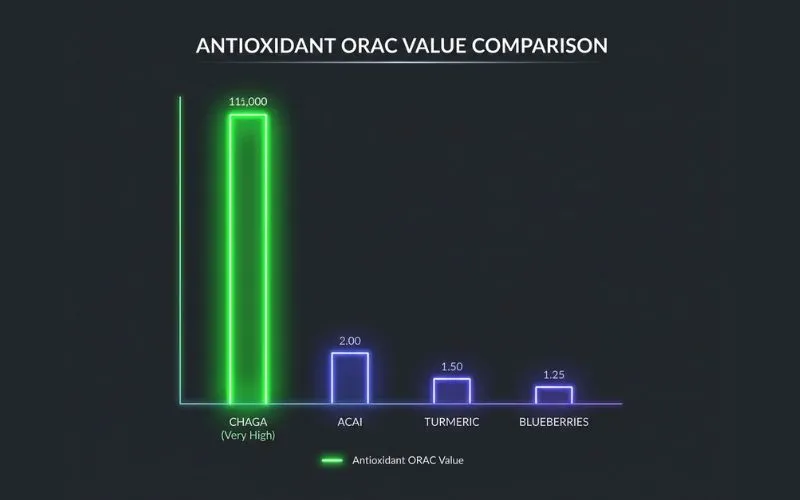
However, two caveats matter enormously for supplement buyers:
Caveat 1: Raw chaga is nearly indigestible. The bioactive compounds in chaga are trapped behind chitin cell walls that human digestive enzymes cannot break down. Unprocessed chaga chunks, unextracted powder, and poorly processed capsules may provide virtually no bioavailable antioxidants regardless of the theoretical ORAC score. The bioavailability of chaga’s antioxidants depends entirely on proper hot-water extraction, which dissolves the polysaccharides and beta-glucans, combined with alcohol extraction to capture the fat-soluble triterpenoids.
Caveat 2: ORAC values vary by 25-fold between products. Reported ORAC values for chaga products range from 5,200 to 146,700 depending on sourcing (wild birch vs. cultivated), extraction method, and concentration. The 146,700 figure applies specifically to properly processed wild Siberian chaga extract — not to all chaga products on the market. Without a verified Certificate of Analysis showing polyphenol and beta-glucan content, the ORAC comparison is marketing, not guarantee.
Bottom line: Chaga’s antioxidant potential is real and exceptional. But it’s only accessible through a properly extracted product from birch-sourced chaga — not from raw powder or poorly processed supplements.
The Oxalate Risk: What Every Chaga User Needs to Know {#oxalate}
This section covers information that most chaga sellers omit entirely. It belongs in every chaga article because the clinical consequences are serious.
What Is Oxalate Nephropathy?
Oxalate is a naturally occurring compound found in many foods. In healthy individuals with adequate hydration and kidney function, dietary oxalate is filtered and excreted without accumulation. In certain conditions — high dietary oxalate intake, pre-existing kidney disease, inflammatory bowel conditions, or genetic predisposition — oxalate can form calcium oxalate crystals that deposit in kidney tubules, causing progressive kidney damage called oxalate nephropathy.
Chaga’s Oxalate Content
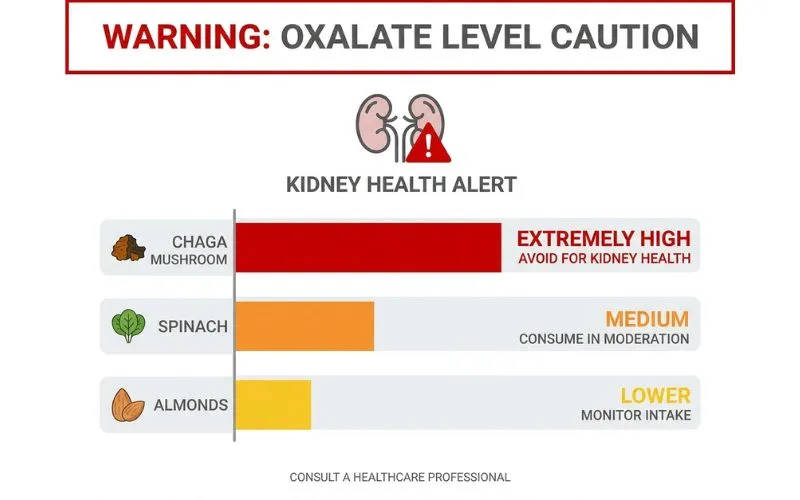
Chaga is not just a high-oxalate food. It contains exceptionally high oxalate concentrations — measured at 14.2 grams per 100 grams of dried mushroom in the first published case report (Kikuchi et al., 2014, PubMed PMID: 23149251).
To put this in context: spinach, the most commonly cited high-oxalate food, contains approximately 600–800 mg of oxalate per 100 grams. Chaga’s oxalate content is roughly 17–24 times higher than spinach by weight.
Published Case Reports of Kidney Failure
Three published case reports in peer-reviewed nephrology journals document chaga-induced oxalate nephropathy leading to end-stage renal disease and permanent kidney damage requiring dialysis:
| Case | Patient | Dose | Duration | Outcome | Source |
|---|---|---|---|---|---|
| Kikuchi 2014 | 72-year-old Japanese woman, liver cancer | 4–5 tsp/day chaga powder | 6 months | Oxalate nephropathy, hemodialysis | PMID: 23149251 |
| Lee et al., 2020 | 49-year-old Korean man, atopic dermatitis | High daily dose | 4–5 years | ESRD, permanent hemodialysis | PMID: 32419395 |
| Kim et al., 2022 | 69-year-old man | 10–15 g/day + 500 mg vitamin C | Not specified | Acute oxalate nephropathy, steroid treatment required | PMID: 35451393 |
A 2026 rat model study (PMID: 41555803) published in PubMed specifically tested chaga-induced kidney injury at doses extrapolated from clinical case report levels, confirming dose-dependent kidney damage through oxalate crystal deposition, oxidative stress, and tubular apoptosis.
Who Is Most at Risk
The risk is not equal across all users. The cases above occurred primarily in individuals consuming high daily doses (10–15g/day) for months to years. Most supplement products use 1,000–3,000 mg/day doses — significantly lower. However, the following populations face elevated risk at any dose level:
- Anyone with a history of calcium oxalate kidney stones
- People with Crohn’s disease, colitis, or malabsorption conditions (increases oxalate absorption)
- Individuals with chronic kidney disease or reduced kidney function
- Anyone simultaneously taking high-dose vitamin C (ascorbic acid converts to oxalate metabolically — the 2022 case involved 500 mg vitamin C alongside chaga)
- People using chaga daily for extended periods at high doses
The Safe Use Protocol
For healthy individuals without kidney concerns:
- Keep doses within the studied supplement range — 1,000–3,000 mg/day of properly extracted chaga (not 10–15g/day of raw powder)
- Stay hydrated — adequate daily water intake is the primary mitigation for oxalate accumulation
- Avoid simultaneous high-dose vitamin C — especially above 500 mg/day alongside chaga
- Do not use chaga as a primary cancer treatment — the cases above occurred in people using chaga at high doses to treat serious illnesses, not as a general wellness supplement
- Cycle use — avoid continuous multi-year daily high-dose supplementation without breaks
This risk is real and documented. It should be discussed with your healthcare provider if you have any kidney history, digestive conditions, or are considering long-term daily use.
Chaga vs. Lion’s Mane vs. Reishi: Which Is Right for You? {#comparison}
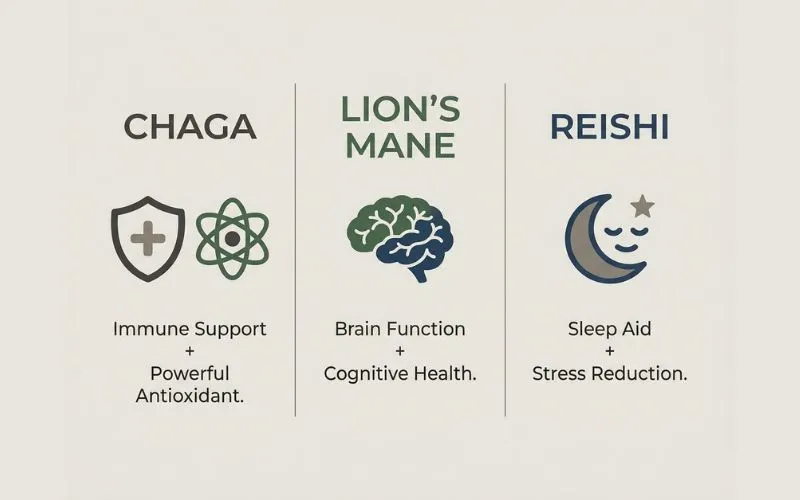
Each medicinal mushroom in the HerbzWay lineup has a distinct primary application. Here’s a direct comparison to help you choose:
| Factor | Chaga | Lion’s Mane | Reishi |
|---|---|---|---|
| Primary strength | Antioxidant + immune | Cognitive function + NGF | Sleep + anti-anxiety |
| Best used for | Immune support, inflammation, oxidative stress | Brain fog, memory, nerve health | Stress-driven insomnia, anxiety |
| Key compounds | Beta-glucans, betulinic acid, melanin | Hericenones, erinacines | Ganoderic acids, beta-glucans |
| Human trial evidence | Moderate (mostly in vitro + animal) | Moderate (growing human RCT base) | Moderate (consistent human data) |
| Primary safety concern | Oxalate nephropathy (high dose) | Very well tolerated | Antiplatelet (blood thinners) |
| Works best for who | Active individuals, immunity-focused | Adults with cognitive concerns | Poor sleepers, stressed adults |
| Extraction required | ✅ Hot water + alcohol (dual) | ✅ Hot water (fruiting body) | ✅ Hot water + alcohol (dual) |
| Stacks well with | Reishi + lion’s mane | Ashwagandha + chaga | Ashwagandha + magnesium |
Choosing guidance:
- For immune and antioxidant support → Chaga (if no kidney history)
- For cognitive function and brain fog → Lion’s mane
- For sleep and stress relief → Reishi
- For comprehensive daily wellness stack → All three, with attention to chaga dosing
How to Choose a Quality Chaga Supplement {#choosing}
The Three Non-Negotiables
1. Birch-sourced wild chaga (not cultivated) Chaga grown on grain, wood pulp, or artificial substrate lacks betulinic acid — the compound absorbed from birch bark and central to most of chaga’s distinctive properties. Look for “wild-harvested” and “birch” on the label. If neither appears, assume it’s cultivated and lacks the full compound profile.
2. Dual extraction (hot water + alcohol) Hot water extraction alone captures beta-glucans and water-soluble polyphenols but misses the fat-soluble triterpenoids (betulinic acid, inotodiol). Alcohol extraction is required to capture these. “Dual extract” on the label is the quality signal. A product that lists only “polysaccharides” without triterpenoid content has likely been hot-water extracted only.
3. Beta-glucan percentage stated (not just polysaccharides) As with lion’s mane, polysaccharide counts include both alpha-glucans (starch, if grain filler is present) and beta-glucans (active immune compounds). A product that states beta-glucan percentage specifically (aim for ≥20–25%) demonstrates testing rigor. “Polysaccharides” alone without specifying beta-glucan content is insufficient.
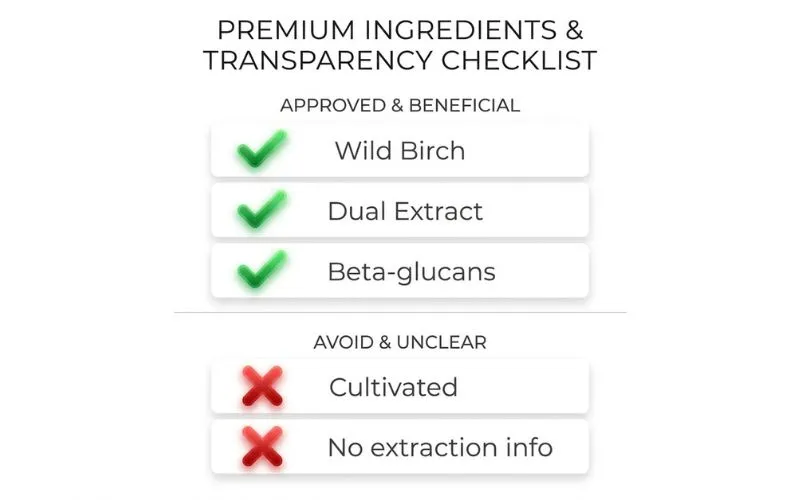
Label Checklist
- ✅ “Wild-harvested birch chaga” specified
- ✅ Dual extract (water + alcohol) disclosed
- ✅ Beta-glucan % stated (≥20%)
- ✅ Third-party tested (CoA available)
- ❌ “Cultivated” or no sourcing information
- ❌ Only “polysaccharides %” without beta-glucan breakdown
- ❌ No extraction method stated
Reputable Brands for Chaga
Real Mushrooms Chaga Extract — wild birch-sourced, dual extract, verified beta-glucan content (≥20%), publicly available third-party testing. The benchmark for quality transparency in the chaga category.
Nootropics Depot Chaga Extract — consistently third-party tested, beta-glucan stated, good value. Widely regarded as reliable in the supplement research community.
Avoid: Amazon “Chaga 10:1 Extract” products from unfamiliar brands without stated sourcing, extraction method, or beta-glucan testing. The price differential between $15 and $40 chaga products is almost entirely accounted for by sourcing (cultivated vs. wild birch) and extraction rigor.
Dosage and How to Use Chaga {#dosage}
Supplement Dosage
Research and clinical guidance converge on a safe and effective range:
| Form | Dose | Notes |
|---|---|---|
| Dual-extract capsule/powder | 1,000–2,000 mg/day | Most reliable; matches studied doses |
| Chaga tea (hot water brewed) | 1–2 cups/day from 2–5g chunks | Lower potency; hot water only; no triterpenoids |
| Tincture (alcohol extract) | Per product labeling | Captures triterpenoids; lacks some beta-glucans |
Important: Keep daily supplemental chaga within 1,000–2,000 mg/day from extracted products. This is far below the 10–15g/day raw powder doses documented in kidney injury cases. Raw powder capsules count differently — 2,000 mg of raw powder provides far less active compound than 1,000 mg of a properly standardized extract.
Timing
No strong evidence favors a specific time of day for chaga. It is not stimulating and does not cause drowsiness. Most users take it with morning coffee or meals for consistency. The traditional Russian preparation is as a tea sipped throughout the day — this approach provides continuous low-level antioxidant and immune support rather than a concentrated single dose.
Cycling
Unlike the adaptogens, there’s no strong tolerance or cycling data for chaga specifically. Given the oxalate accumulation concern, a sensible precaution for heavy users is to avoid continuous multi-year daily use without breaks. Standard wellness cycling of 8–12 weeks on, 4 weeks off is a reasonable precaution even for healthy individuals.
Who Should Not Take Chaga {#caution}
The following groups should avoid chaga or consult a physician before use:
- History of calcium oxalate kidney stones — the oxalate content is the primary documented risk; prior oxalate stone formation is the clearest contraindication
- Chronic kidney disease — reduced kidney function increases risk of oxalate accumulation at any dose
- Inflammatory bowel disease (Crohn’s, ulcerative colitis) — intestinal malabsorption significantly increases oxalate absorption from dietary sources
- Blood-thinning medications (warfarin, clopidogrel, aspirin) — chaga has antiplatelet and possible anticoagulant activity; combination may increase bleeding risk
- Diabetes medications — chaga’s blood glucose-lowering effects may cause additive hypoglycemia with insulin or oral hypoglycemics
- Immunosuppressant medications — chaga’s immune-stimulating beta-glucans may interfere with immunosuppression in transplant patients or autoimmune treatment
- Upcoming surgery — discontinue at least 2 weeks before any scheduled surgery
- Pregnancy and breastfeeding — insufficient safety data
- Anyone taking high-dose vitamin C (500 mg+/day) — vitamin C metabolizes to oxalate; combining with high-oxalate chaga amplifies kidney risk
→ NIH National Center for Complementary and Integrative Health
⚠️ Medical Disclaimer: This article is for informational purposes only and does not constitute medical advice. Always consult your healthcare provider before starting any supplement, especially if you have kidney disease, take blood thinners, or have a history of kidney stones.
FAQ: Chaga Mushroom Benefits {#faq}
What are the main benefits of chaga mushroom?
Chaga’s most research-supported benefits are antioxidant activity (exceptional polyphenol and melanin content), immune modulation (beta-glucan activation of macrophages and NK cells), anti-inflammatory effects (NF-κB and COX-2 inhibition through triterpenoids), and potential blood sugar regulation (alpha-glucosidase inhibition in preclinical models). Most data comes from in vitro and animal studies; clinical human evidence is growing but limited compared to some other medicinal mushrooms.
Is chaga mushroom safe?
For most healthy adults at standard supplement doses (1,000–2,000 mg/day of dual-extract), chaga appears well tolerated. The documented safety concern is oxalate nephropathy — serious kidney damage from oxalate crystal accumulation. Three published case reports link long-term high-dose chaga use (10–15g/day) to end-stage kidney disease. At typical supplement doses with adequate hydration, this risk is substantially lower — but individuals with kidney disease, oxalate stone history, or IBD should avoid chaga or consult a physician first.
Does chaga really have the highest antioxidant value of any food?
Chaga has one of the highest recorded ORAC values — 146,700 µmol TE/100g, which significantly exceeds most commonly cited antioxidant foods including acai, blueberries, and turmeric. However, two important caveats apply: (1) unprocessed chaga has near-zero bioavailability because human digestive enzymes can’t break down chitin cell walls without extraction; and (2) ORAC values vary by up to 25-fold between products depending on sourcing and extraction method. Only properly dual-extracted wild birch chaga achieves the top-end values cited in the literature.
Can chaga cause kidney damage?
Yes — at high doses, particularly with raw powder rather than standardized extract. Three published PubMed case reports document chaga-induced oxalate nephropathy, including cases of end-stage kidney disease requiring permanent dialysis. Chaga’s oxalate content (14.2g/100g) is approximately 17–24 times higher than spinach by weight. At typical supplement doses (1,000–2,000 mg/day) with adequate hydration, this risk exists but is substantially lower. The risk is highest in people with pre-existing kidney disease, oxalate stone history, IBD, or those combining chaga with high-dose vitamin C.
What is the difference between chaga and other medicinal mushrooms?
Chaga is uniquely positioned as an antioxidant and immune mushroom due to its melanin content, betulinic acid (absorbed from birch trees), and exceptional polyphenol concentration. Unlike lion’s mane (which stimulates NGF for cognitive function) or reishi (which modulates GABA for sleep and anxiety), chaga’s primary clinical value is oxidative stress protection and immune activation. It also has a distinctive safety consideration (oxalate) not shared by other medicinal mushrooms. See our full comparison table in the article above.
How much chaga should I take per day?
Based on research and clinical guidelines, 1,000–2,000 mg/day of a properly dual-extracted chaga product from wild birch is the appropriate range for general wellness use. Traditional tea preparations use 2–5g of chunks daily, but the hot-water-only extraction from tea captures beta-glucans but not triterpenoids. Avoid raw powder doses above 3–4g/day and do not take high-dose raw powder (10g+) for extended periods regardless of health status.
Is chaga tea as effective as chaga capsules?
Chaga tea (hot water brewed from chunks or powder) effectively captures water-soluble beta-glucans and polyphenols — the immune and some antioxidant compounds. It does not capture fat-soluble triterpenoids (betulinic acid, inotodiol) that require alcohol extraction. For full-spectrum benefits, a dual-extract capsule or tincture provides more complete compound coverage. Tea is appropriate for general daily antioxidant and gut health support; capsules provide broader immune and anti-inflammatory activity.
Does chaga mushroom interact with medications?
Yes — several documented interactions require attention. Chaga may enhance the effect of blood-thinning medications (warfarin, aspirin, clopidogrel) due to antiplatelet properties. Its blood sugar-lowering activity may cause additive hypoglycemia with diabetes medications. Immune-stimulating beta-glucans may interfere with immunosuppressant medications. Chaga should be discontinued at least 2 weeks before any scheduled surgery. Discuss chaga supplementation with your doctor if you take any prescription medications.
What should I look for when buying chaga?
Four things: (1) wild-harvested birch sourcing — not cultivated; (2) dual extraction specified (hot water + alcohol); (3) beta-glucan percentage stated (not just polysaccharides) — aim for ≥20%; (4) third-party testing disclosure with CoA available. Products from Real Mushrooms and Nootropics Depot meet all four criteria consistently. Avoid products without sourcing disclosure, extraction method, or that only list raw milligram weight without extract standardization.
Can I take chaga with other mushroom supplements?
Yes — chaga, lion’s mane, and reishi work through complementary mechanisms and can be stacked. Chaga provides antioxidant and immune support; lion’s mane provides NGF and cognitive support; reishi provides GABA modulation and sleep quality. There are no documented negative interactions between these mushrooms. The practical consideration is managing total daily oxalate intake if chaga is included — keep to verified extract doses and avoid stacking with other high-oxalate supplements simultaneously.
The Bottom Line {#conclusion}
Chaga is a genuinely remarkable natural substance — the highest recorded antioxidant capacity of any measured food, well-documented immune and anti-inflammatory mechanisms, and a growing base of preclinical evidence for blood sugar and cancer-adjacent properties. Its birch-derived betulinic acid is unique among medicinal mushrooms and among the most researched natural compounds in oncology preclinical literature.
The catch is twofold. First, it only works with proper extraction — hot water and alcohol combined — from wild birch-sourced material. Unextracted powder is largely indigestible. Second, the oxalate content is the highest of any commonly used supplement, and published case reports confirm it can cause permanent kidney damage at high doses over extended periods. This is a real risk that most sellers don’t discuss, and it deserves serious attention for specific populations.
For healthy adults using verified dual-extract products at standard doses — with good hydration and no kidney history — the risk-to-benefit calculation is favorable. For anyone with kidney concerns, oxalate stone history, IBD, or who takes blood thinners, a physician conversation is required before starting.
Check the label. Know where it came from. Know how it was extracted. Stay hydrated.
This article is for informational purposes only and does not constitute medical advice. Always consult your healthcare provider before starting any supplement regimen.
Written by Ethan Cole, Nutrition Expert | Meet Ethan →
=== 🔗 OUTGOING LINKS FROM THIS ARTICLE ===
→ 🔗 Medicinal Mushrooms category
→ 🔗 Lion’s Mane Mushroom Benefits: What 15 Studies Actually Show
→ 🔗 Reishi Mushroom for Sleep: Does It Actually Work?
→ 🔗 Turkey Tail Mushroom Benefits & Best Supplements Reviewed