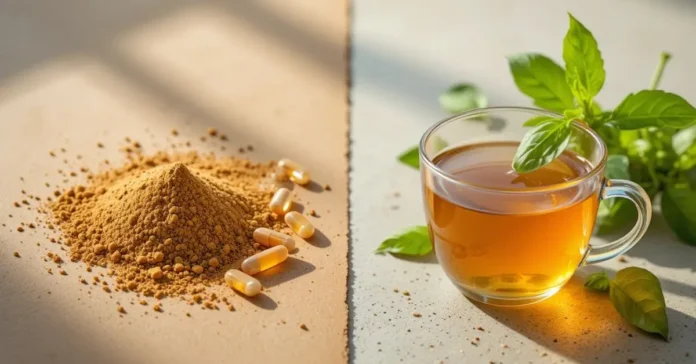
You’re standing in the supplement aisle, staring at two bottles: Holy Basil (Tulsi) and Ashwagandha. Both promise stress relief. Both are adaptogens. Both have thousands of years of traditional use behind them.
But which one do you actually need?
One friend swears by ashwagandha for her anxiety and sleep. Another keeps tulsi tea on her desk at work and says it keeps her calm but focused. Google gives you conflicting information. Reddit debates rage on about which is “better.”
Here’s the truth: they’re not interchangeable. They work differently, feel different, and serve different purposes. Choosing the wrong one means wasting money on something that won’t help your specific situation.
Let me break down exactly how these two ancient herbs differ—and help you figure out which one (or both) you actually need.
🛒 Affiliate Disclosure: This article contains affiliate links. We may earn a commission when you purchase through our links at no extra cost to you. Full disclosure
⚠️ Medical Disclaimer: Educational information only, not medical advice. Consult your healthcare provider before starting supplements. Full disclaimer
📊 TL;DR – Holy Basil vs Ashwagandha Quick Comparison
ASHWAGANDHA ("The King")
━━━━━━━━━━━━━━━━━━━━━━━━━━━━━━━━━
Primary Effect: Calming, Sedating
Best For: Anxiety, insomnia, chronic stress
Energy Level: ↓ Reduces (relaxing)
Timing: EVENING
Feeling: Deep calm, "off" switch
Success Rate: ⭐⭐⭐⭐⭐ (9/10 for anxiety)

HOLY BASIL / TULSI ("The Queen")
━━━━━━━━━━━━━━━━━━━━━━━━━━━━━━━━━
Primary Effect: Balancing, Uplifting
Best For: Daytime stress, mental clarity
Energy Level: ↔ Neutral to ↑ Slight lift
Timing: MORNING/ANYTIME
Feeling: Calm alertness, balanced
Success Rate: ⭐⭐⭐⭐ (7.5/10 for stress)

THE KEY DIFFERENCE:
━━━━━━━━━━━━━━━━━━━━━━━━━━━━━━━━━
Ashwagandha = Your "OFF" button (turns you down)
Holy Basil = Your "BALANCE" button (keeps you centered)

Ashwagandha → Night-time calm, deep relaxation
Holy Basil → Day-time zen, focused peace

CAN YOU TAKE BOTH?
━━━━━━━━━━━━━━━━━━━━━━━━━━━━━━━━━
YES! Many people stack them:
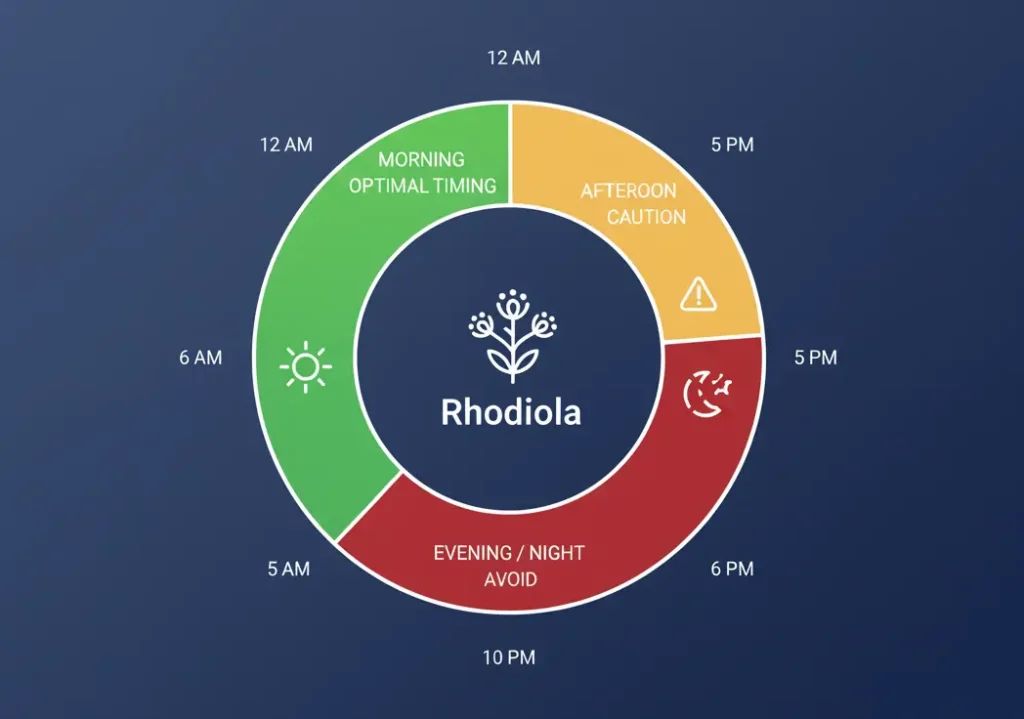
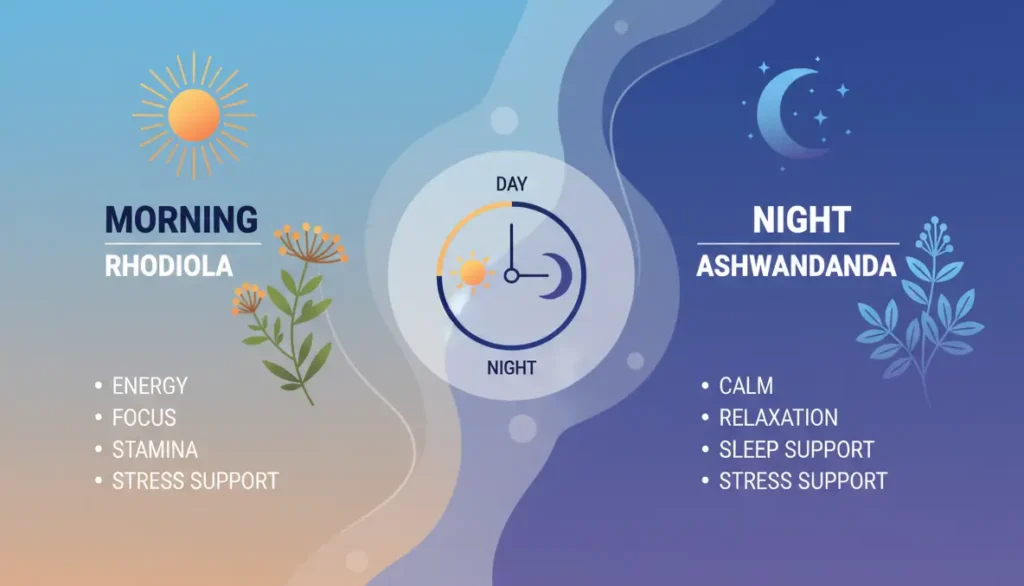
Morning: Holy Basil (calm focus for the day)
Evening: Ashwagandha (deep rest at night)
Bottom line: If you need to turn your nervous system OFF (anxiety, insomnia), choose ashwagandha. If you need to stay ON but balanced (stress, focus), choose holy basil.
Now let’s dive deeper.
The Fundamental Difference: Sedating vs Balancing

This is THE most important thing to understand.
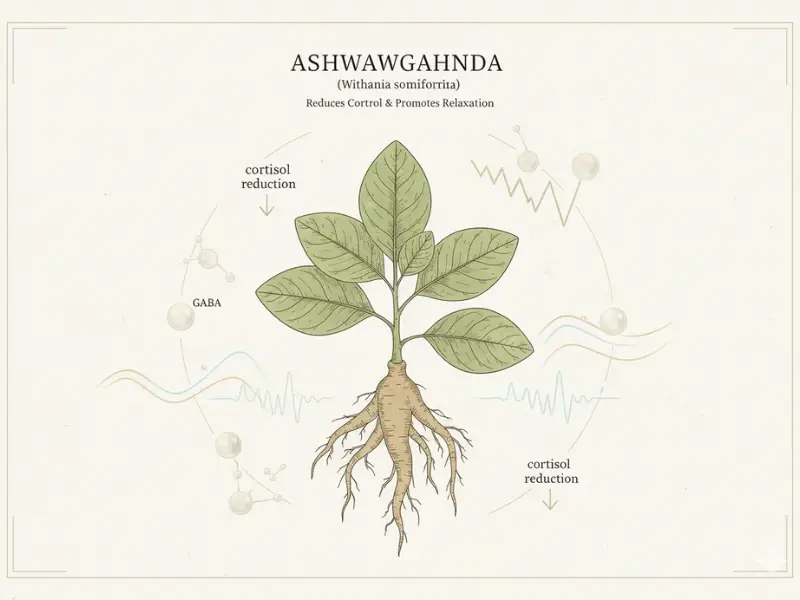
Ashwagandha: The Sedating Adaptogen
What it does to your nervous system:
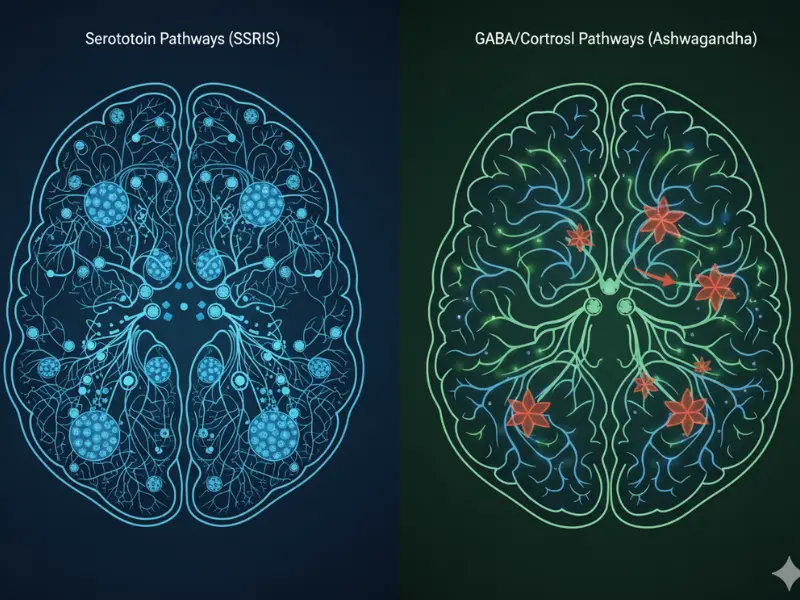
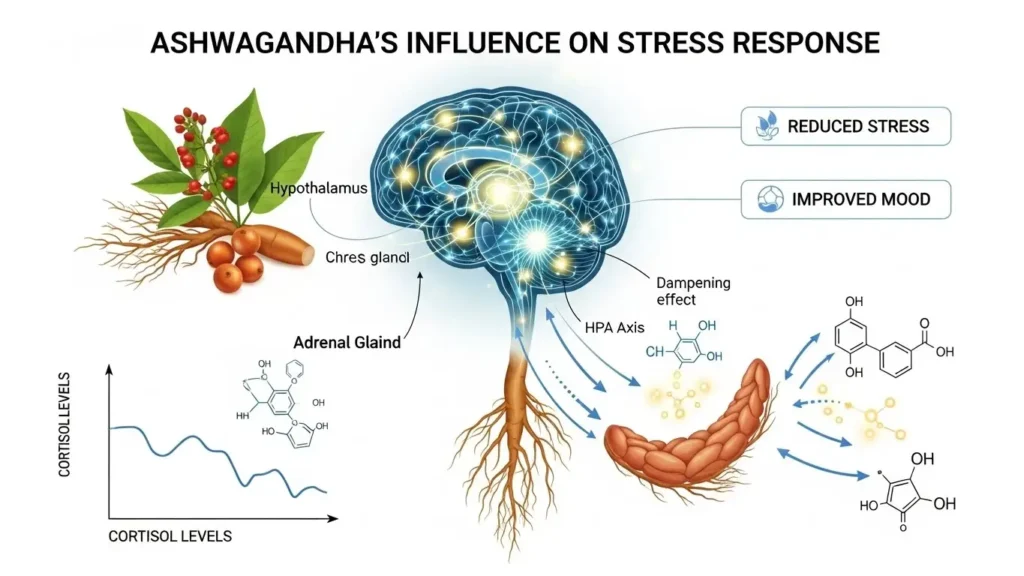
- Activates GABAergic pathways (like mild benzodiazepines)
- Significantly reduces cortisol (28% in studies)
- Slows down your “fight or flight” response
- Promotes deep relaxation and sleep
How it FEELS: “Like someone turned down the volume on my anxiety. My nervous system can finally relax.”
“It’s my OFF switch. After taking it, I can actually wind down at night.”
Best use case: When your nervous system is OVERACTIVE—racing thoughts, can’t relax, insomnia, panic.
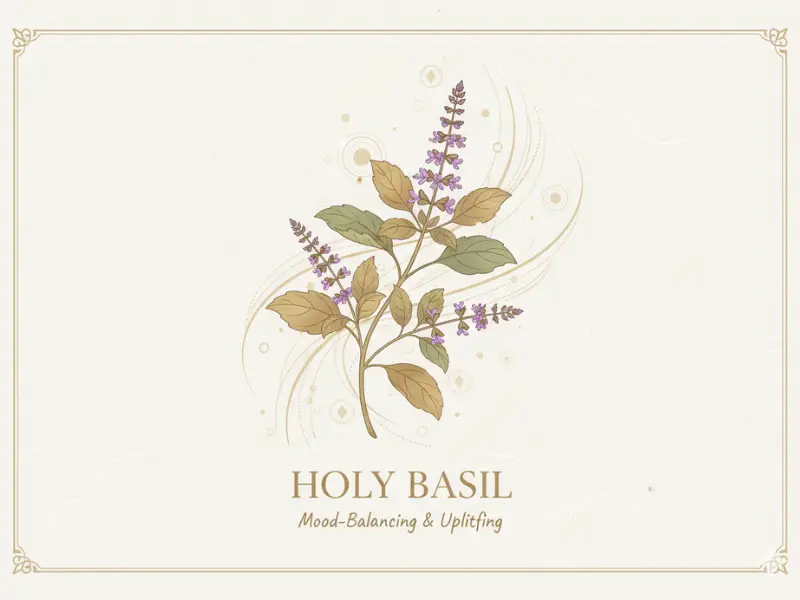
Holy Basil: The Balancing Adaptogen
What it does to your nervous system:
- Modulates stress without sedation
- Normalizes cortisol (raises if low, lowers if high)
- Maintains alertness while reducing stress
- Uplifting to mood and energy
How it FEELS: “Calm but awake. Like meditation in a cup. I’m centered but still focused.”
“It doesn’t knock me out like ashwagandha. I’m relaxed but productive.”
Best use case: When you need to manage stress but STAY FUNCTIONAL—work stress, mental clarity, daytime calm.
The Reddit Reality Check
From r/Nootropics: “Ashwagandha made me too tired during the day. Switched to holy basil—perfect. Calm without the zombie feeling.”
“I take both: holy basil in my morning tea, ashwagandha at night before bed. They work together beautifully.”
From r/Anxiety: “Holy basil didn’t touch my severe anxiety. Ashwagandha actually works for me—I can sleep now.”
“Ashwagandha was too sedating. Holy basil gives me the stress relief I need without affecting my energy.”
Head-to-Head Comparison: What Each Does Best
Let’s compare them across the dimensions that matter.
For Anxiety
Ashwagandha: ⭐⭐⭐⭐⭐ (9/10)
- Best for: Generalized anxiety disorder, social anxiety, panic
- Mechanism: Strong GABAergic effects, major cortisol reduction
- Research: 60+ studies, proven effective
- Feeling: Deep calm, “turns off” anxiety
- Dosage: 300-600mg evening
Reddit: “Ashwagandha is THE adaptogen for anxiety. Nothing else comes close.”
Holy Basil: ⭐⭐⭐⭐ (7/10)
- Best for: Mild-moderate anxiety, worried mind, stress-induced anxiety
- Mechanism: Gentle cortisol modulation, mood support
- Research: 10+ studies, effective but milder
- Feeling: Peaceful but alert, mental calm
- Dosage: 300-600mg morning/daytime
Reddit: “Holy basil helps my anxious thoughts without making me drowsy. Good for work anxiety.”
Winner for Anxiety: Ashwagandha (more powerful)
For Sleep & Insomnia
Ashwagandha: ⭐⭐⭐⭐⭐ (9/10)
- Sleep onset: Helps you fall asleep faster
- Sleep quality: Deeper, more restorative
- Mechanism: Sedating, promotes sleep directly
- Best timing: 2-3 hours before bed
Reddit: “Ashwagandha at night = best sleep of my life. Wake up actually rested.”
Holy Basil: ⭐⭐⭐ (6/10)
- Sleep onset: Indirectly (by reducing stress)
- Sleep quality: Modest improvement
- Mechanism: Reduces stress that interferes with sleep
- Caution: Can be too alerting if taken at night
Reddit: “Holy basil helps me sleep by managing my stress during the day. But I don’t take it at night—keeps me awake.”
Winner for Sleep: Ashwagandha (clear winner)
For Energy & Fatigue
Ashwagandha: ⭐⭐ (4/10)
- Effect: Can be TOO sedating
- Best for: Recovery from exhaustion (long-term)
- Drawback: May worsen daytime fatigue
- Use case: Burnout recovery, not acute energy
Reddit: “Ashwagandha in the morning made me a zombie. Had to switch to evenings only.”
Holy Basil: ⭐⭐⭐⭐ (8/10)
- Effect: Balanced energy, not stimulating
- Best for: Sustained energy without jitters
- Benefit: Combats stress-related fatigue
- Use case: Daily energy support
Reddit: “Holy basil gives me calm energy. Not like caffeine, more sustainable.”
Winner for Energy: Holy Basil (keeps you functional)
For Mental Clarity & Focus

Ashwagandha: ⭐⭐⭐ (6/10)
- Effect: Can cause brain fog in some
- Best for: Anxiety-related brain fog (by reducing anxiety)
- Drawback: Sedation may reduce sharpness
- Long-term: Neuroprotective benefits
Reddit: “Ashwagandha calms my anxious brain but doesn’t sharpen focus. That’s not its job.”
Holy Basil: ⭐⭐⭐⭐ (8/10)
- Effect: Enhances mental clarity
- Best for: Focus, concentration, cognitive performance under stress
- Benefit: Alert but calm
- Use case: Work, study, mental tasks
Reddit: “Holy basil is my study herb. Keeps me focused without the anxiety that usually comes with deadlines.”
Winner for Focus: Holy Basil (cognitive enhancement)
For Stress Management
Ashwagandha: ⭐⭐⭐⭐⭐ (9/10)
- Best for: Chronic, overwhelming stress
- Effect: Lowers baseline stress significantly
- Mechanism: Powerful HPA axis regulation
- Timeline: 2-4 weeks for full benefits
Reddit: “When life is crushing me, ashwagandha is what I reach for. Deep stress relief.”
Holy Basil: ⭐⭐⭐⭐ (8/10)
- Best for: Daily, ongoing stress
- Effect: Helps you cope better in the moment
- Mechanism: Adaptogenic resilience
- Timeline: 4-6 weeks for full benefits
Reddit: “Holy basil doesn’t eliminate stress, but it helps me handle it without freaking out.”
Winner for Stress: Tie (depends on type—chronic vs daily)
For Mood & Depression
Ashwagandha: ⭐⭐⭐⭐ (7.5/10)
- Best for: Anxiety + depression combo
- Effect: Calming, may help mood indirectly
- Caution: Some report feeling “flat”
- Use with: SSRIs (under doctor supervision)
Reddit: “Ashwagandha helps my anxious depression. Calms the anxiety which improves my mood.”
Holy Basil: ⭐⭐⭐⭐ (7.5/10)
- Best for: Mild depression, low motivation
- Effect: Uplifting, mood-enhancing
- Benefit: Doesn’t cause flatness
- Use case: Depression with fatigue
Reddit: “Holy basil lifts my mood gently. I feel more hopeful and motivated.”
Winner for Mood: Tie (both help differently)
Side-by-Side: At-a-Glance Comparison
| Feature | Ashwagandha | Holy Basil |
|---|---|---|
| Primary Effect | Calming, Sedating | Balancing, Uplifting |
| Best Time | Evening | Morning/Anytime |
| For Anxiety | ⭐⭐⭐⭐⭐ Excellent | ⭐⭐⭐⭐ Good |
| For Sleep | ⭐⭐⭐⭐⭐ Excellent | ⭐⭐⭐ Modest |
| For Energy | ⭐⭐ Can worsen | ⭐⭐⭐⭐ Good |
| For Focus | ⭐⭐⭐ Moderate | ⭐⭐⭐⭐ Good |
| For Stress | ⭐⭐⭐⭐⭐ Powerful | ⭐⭐⭐⭐ Effective |
| Sedating? | Yes (evening use) | No (anytime) |
| Research | 60+ studies | 10+ studies |
| Taste | Bitter, earthy | Aromatic, spicy |
| Forms | Capsules, powder | Tea, capsules, tincture |
| Price | $15-30/month | $10-25/month |
When to Choose Ashwagandha
Choose ashwagandha if you:
✅ Have anxiety that interferes with sleep
✅ Experience racing thoughts at bedtime
✅ Need a powerful “OFF” button for your nervous system
✅ Have chronic, overwhelming stress
✅ Struggle with insomnia
✅ Experience panic attacks
✅ Have tried gentle options without success
✅ Want the most researched adaptogen
✅ Don’t need daytime energy (or take it at night)
Typical profile: “I’m wired and anxious. My mind races. I can’t relax or sleep. I need something strong to calm me down.”
Dosage:
- Start: 300mg evening
- Optimal: 600mg evening (2-3 hours before bed)
- Form: KSM-66 or Sensoril extract
Reddit advice: “If anxiety is ruining your life and sleep, ashwagandha is your answer. Just don’t take it in the morning unless you want to nap at your desk.”
Read more: Ashwagandha Dosage for Anxiety
When to Choose Holy Basil
Choose holy basil if you:
✅ Need to manage stress but stay alert
✅ Work in high-stress environments
✅ Want calm without sedation
✅ Need mental clarity and focus
✅ Have mild-moderate anxiety (not severe)
✅ Want an energizing or neutral adaptogen
✅ Prefer tea as a delivery method
✅ Are sensitive to sedating supplements
✅ Need daytime stress management
Typical profile: “I’m stressed and anxious, but I need to function. I can’t be groggy or sleepy—I have work, kids, responsibilities. I need calm alertness.”
Dosage:
- Tea: 2-3 cups daily
- Capsules: 300-600mg morning/midday
- Tincture: Follow product directions
Reddit advice: “Holy basil is my daily stress manager. Keeps me calm and centered without affecting my productivity. Perfect for work stress.”
Can You Take Both? (Yes—Here’s How)
The ideal stack: Many people use BOTH strategically for 24-hour stress coverage.
The Day/Night Protocol
🌅 MORNING (7-8 AM):
Holy Basil 300-500mg
OR Tulsi Tea (1-2 cups throughout morning)

Purpose: Calm, focused energy for the day
Effect: Handle work stress, stay productive

🌙 EVENING (8-9 PM):
Ashwagandha 600mg (2-3 hours before bed)

Purpose: Wind down, prepare for sleep
Effect: Deep relaxation, better sleep
Why this works:
- Complementary, not redundant
- Different mechanisms
- Covers different needs (day vs night)
- Maxim
izes benefits of each
Reddit Stacking Experiences
Success stories:
“Holy basil in my morning tea, ashwagandha at night. Best adaptogen combo I’ve found. Calm all day, sleep like a baby.”
“I stack them exactly as recommended—300mg tulsi AM, 600mg ashwagandha PM. Stress management 24/7.”
“This combo changed my life. Holy basil keeps me functional during the day, ashwagandha helps me actually rest at night.”
Stacking Dosage
Conservative approach (beginners):
- Morning: Holy Basil 300mg
- Evening: Ashwagandha 300mg
- Assess for 2 weeks, then increase if needed
Standard approach:
- Morning: Holy Basil 300-500mg
- Evening: Ashwagandha 600mg
Maximum (if well-tolerated):
- Morning: Holy Basil 600mg
- Evening: Ashwagandha 600-900mg
Important: Start one at a time (2 weeks apart) so you know how each affects you individually.
Side Effects & Safety Comparison
Ashwagandha Side Effects
Common (5-15% of users):
- Drowsiness (especially if taken during day)
- Digestive upset
- Headaches
Less common:
- Thyroid effects (can increase thyroid hormones)
- Interactions with sedatives
- Flatness of emotion (rare)
Who should avoid:
- Pregnant/breastfeeding
- Hyperthyroidism
- Autoimmune conditions (caution)
- On immunosuppressants
Read more: Ashwagandha Side Effects
Holy Basil Side Effects
Common: Very few (well-tolerated)
- Mild nausea (rare, usually with tea on empty stomach)
- Bitter aftertaste
Less common:
- May lower blood sugar slightly
- Potential blood-thinning effect (mild)
Who should avoid:
- Pregnant/breastfeeding (insufficient data)
- Before surgery (stop 2 weeks prior)
- On blood thinners (caution, consult doctor)
Overall: Holy basil has fewer and milder side effects than ashwagandha.
Quality & Brands: What to Look For
Ashwagandha
Gold standard extracts:
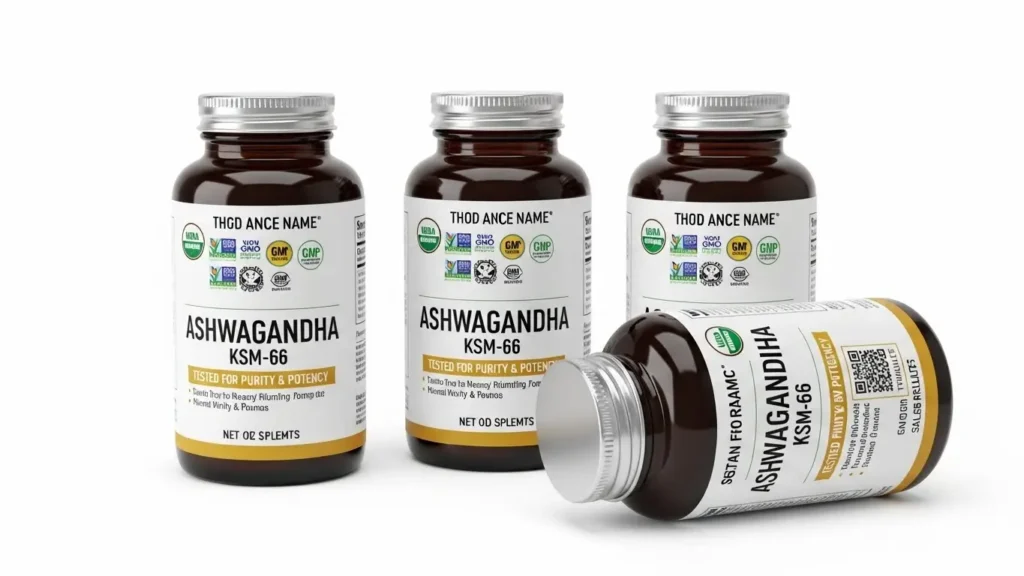
- KSM-66 (most studied)
- Sensoril (also clinically researched)
- Standardized to 5% withanolides minimum
Recommended brands:
- Nootropics Depot (pharmaceutical grade)
- Gaia Herbs (organic)
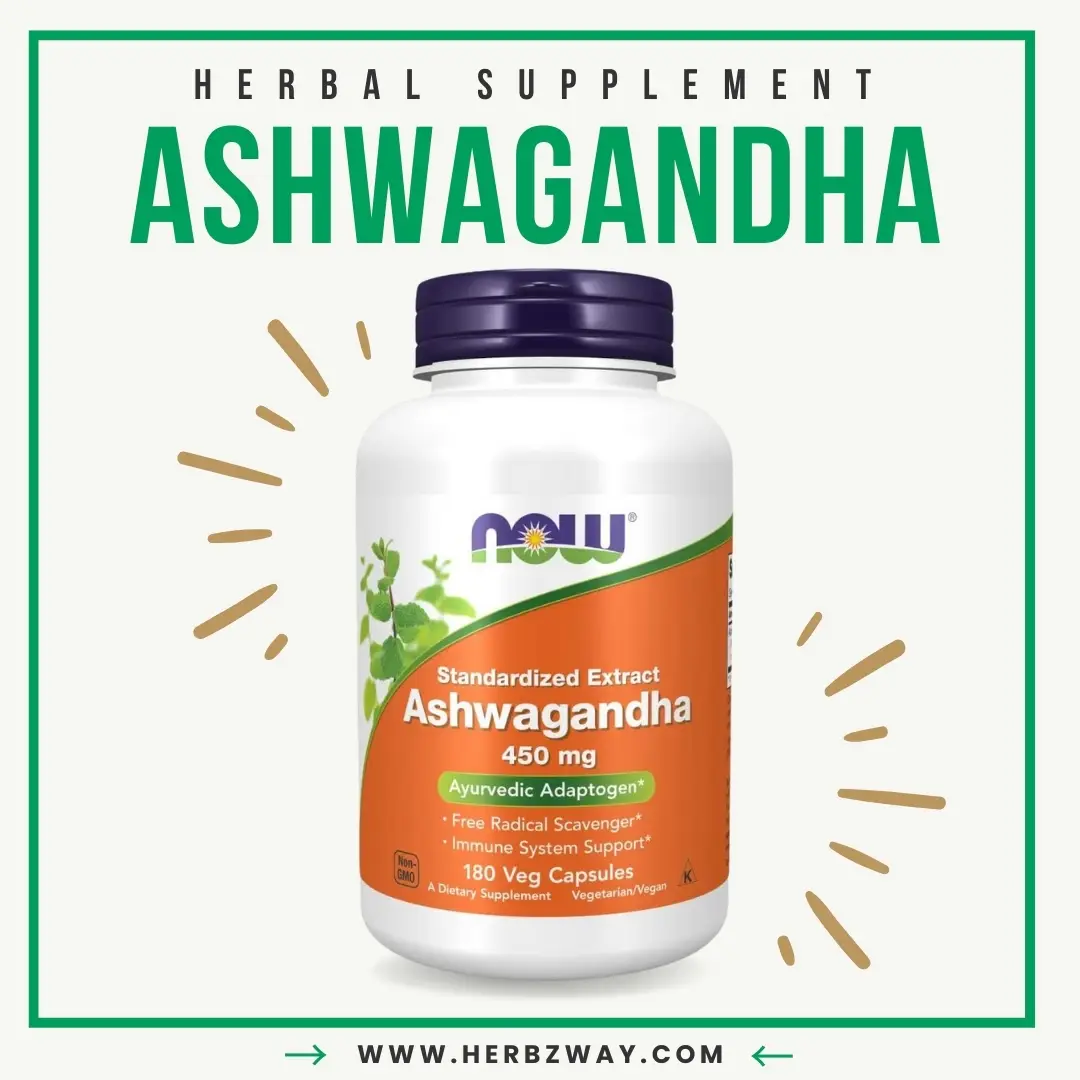
- NOW Foods (affordable, reliable)
- Jarrow Formulas (quality)
Price range: $15-30/month
See our full review: Best Ashwagandha Supplements
Holy Basil
Forms:
- Organic leaf (for tea)
- Standardized extract (capsules)
- Liquid tincture
Recommended brands:
- Organic India (traditional, high-quality tulsi tea)
- Gaia Herbs (extract capsules)
- Herb Pharm (liquid extract)
- Traditional Medicinals (tea bags)
Price range: $10-25/month
The Taste Test: What to Expect
Ashwagandha
Flavor profile:
- Bitter
- Earthy (like dirt, honestly)
- Slightly musty
- Often described as “horse smell” (literal translation of Sanskrit name)
How to take it:
- Capsules (avoid the taste)
- Mixed into smoothies (mask the flavor)
- Moon milk (traditional preparation)
- Rarely as tea (tastes bad)
Reddit: “Ashwagandha tastes terrible. Just take capsules. Don’t be a hero.”
Holy Basil
Flavor profile:
- Aromatic (pleasant)
- Spicy, peppery
- Slightly sweet
- Hints of clove and mint
How to take it:
- Tea (most traditional, tastes good)
- Capsules (if you prefer)
- Tincture (easy dosing)
- Fresh leaves (if you grow it)
Reddit: “Holy basil tea is actually enjoyable. It’s a calming ritual in itself.”
Cultural & Historical Context
Ashwagandha: “The King of Ayurvedic Herbs”
Sanskrit meaning: “Smell of a horse” (believed to give strength and vigor of a stallion)
Traditional use:
- Rasayana (rejuvenating tonic)
- For strength, vitality, longevity
- Used for 3,000-4,000 years in Ayurveda
Cultural significance:
- One of most important Ayurvedic herbs
- Used by warriors and royalty
- Associated with masculine energy
Holy Basil: “The Queen of Herbs”
Sanskrit meaning: Tulsi = “The Incomparable One”
Traditional use:
- Sacred plant in Hinduism
- Grown in homes for spiritual protection
- Used in religious rituals
- Daily stress relief and purification
Cultural significance:
- Represents the Divine Mother on Earth
- Believed to purify all who smell it
- Associated with devotion and clarity
Fun fact: Hindu families traditionally grow tulsi plants in their courtyards and worship them daily.
Frequently Asked Questions
Can I take holy basil and ashwagandha together?
Yes! Many people stack them successfully—holy basil in the morning for daytime stress management, ashwagandha in the evening for relaxation and sleep. They work through different mechanisms and complement each other well.
Which is better for anxiety, holy basil or ashwagandha?
Ashwagandha is more powerful for anxiety (especially severe anxiety, panic, and anxiety-related insomnia). Holy basil is better for mild-moderate anxiety where you need to stay functional and alert. If anxiety is your primary concern, ashwagandha is the stronger choice.
Will holy basil keep me awake at night?
It can for some people. Holy basil is more energizing/neutral than sedating, so it’s best taken in the morning or early afternoon. If you’re sensitive, avoid taking it within 4-6 hours of bedtime.
Is holy basil the same as regular basil?
No. Holy basil (Ocimum sanctum/tenuiflorum) is different from culinary basil (Ocimum basilicum). Holy basil is more medicinal, has a different flavor (spicy, peppery), and is used primarily as an adaptogen, not a cooking herb.
Which is safer long-term?
Both are generally safe for long-term use (months), but holy basil has a slightly better safety profile with fewer reported side effects. Ashwagandha requires more caution if you have thyroid issues or autoimmune conditions. Cycling both (8-12 weeks on, 2-4 weeks off) is a smart approach.
Can holy basil replace ashwagandha for sleep?
No. Ashwagandha is significantly more effective for sleep. Holy basil may help sleep indirectly by reducing stress, but it’s not sedating and won’t directly promote sleep the way ashwagandha does.
Which one is better for burnout?
Ashwagandha is better for burnout recovery—it provides deep rest and restoration. Holy basil can support you during the recovery process by managing ongoing stress, but ashwagandha’s sedating, restorative properties are more suited to burnout specifically.
The Bottom Line: Which Should You Choose?
Choose Ashwagandha if: Your primary needs are anxiety, sleep, or deep nervous system calm. You need a powerful OFF button.
Choose Holy Basil if: Your primary needs are daytime stress management, mental clarity, or balanced energy. You need to stay functional.
Choose BOTH if: You want comprehensive 24-hour stress support—calm focus during the day (holy basil) and deep rest at night (ashwagandha).
The Decision Tree
START HERE: What's your main issue?
│
├─ ANXIETY + SLEEP PROBLEMS
│  └─> Ashwagandha (evening)
│
├─ DAYTIME STRESS + NEED TO STAY ALERT
│  └─> Holy Basil (morning)
│
├─ CHRONIC OVERWHELMING STRESS
│  └─> Ashwagandha (more powerful)
│
├─ MILD-MODERATE STRESS + WANT ENERGY
│  └─> Holy Basil (won't sedate you)
│
└─ WANT COMPLETE STRESS MANAGEMENT
   └─> BOTH (holy basil AM, ashwagandha PM)
Related Resources
Ashwagandha Deep Dives:
- Ashwagandha Dosage for Anxiety
- Ashwagandha Side Effects Guide
- Best Ashwagandha Supplements
- Can You Take Ashwagandha with Antidepressants?
Adaptogen Comparisons:
Have you tried both? Which works better for you? Share your experience in the comments—your insights help others choose wisely.
If this comparison helped you decide, share it with someone confused about which adaptogen to try.
Choose wisely, choose what fits YOUR needs,
The HerbzWay Team
References: Clinical studies on ashwagandha and holy basil, traditional Ayurvedic texts, user experiences from r/Nootropics and r/Anxiety, comparative phytochemistry research
Last updated: December 2025 | Regularly reviewed as new research emerges