Morning or night? Learn the science-backed best time to take ashwagandha for anxiety, sleep, energy, and muscle recovery.
You’ve bought your ashwagandha supplement, but now you’re staring at the bottle wondering: Should I take this in the morning or at night?
It’s a question that confuses most people, and the answer isn’t as simple as you might think.
The truth is, the best time to take ashwagandha depends entirely on what you’re trying to fix—whether it’s crushing anxiety, sleeping better, boosting energy, or building muscle.
In this guide, I’ll break down exactly when you should take ashwagandha based on your specific goals, backed by actual science and real user experiences from Reddit and clinical studies.
Let’s get into it.
Quick Answer: When Should You Take Ashwagandha?
Here’s the short version if you’re in a hurry – the best time to take ashwagandha varies by goal:
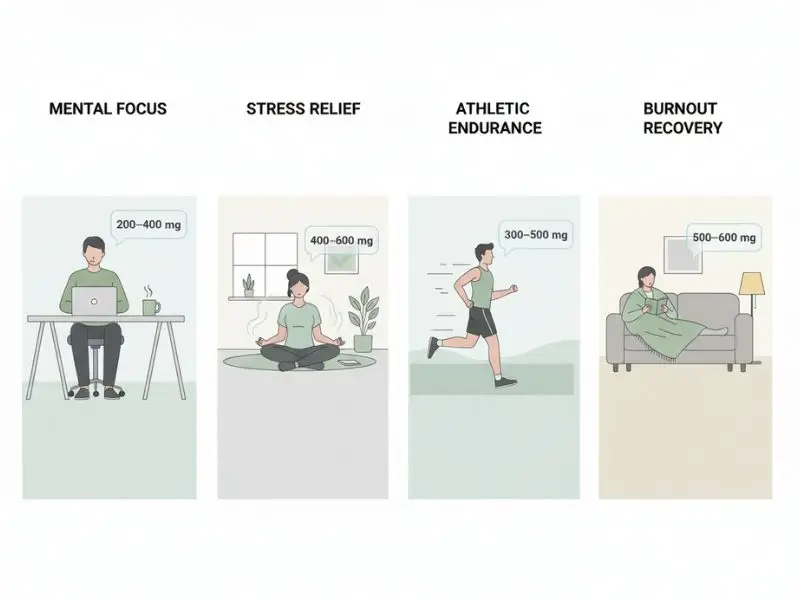
For Anxiety & Stress Relief: Take it in the morning with breakfast
For Better Sleep: Take it 30-60 minutes before bed
For Energy & Focus: Take it in the morning on an empty stomach
For Muscle Growth & Recovery: Take it post-workout or before bed
For Cortisol Balance: Split dose—half in morning, half at night
For General Wellness: Timing doesn’t matter much—consistency does
Now, let’s dive deeper into the science behind when to take ashwagandha for each scenario.
Understanding How Ashwagandha Works in Your Body
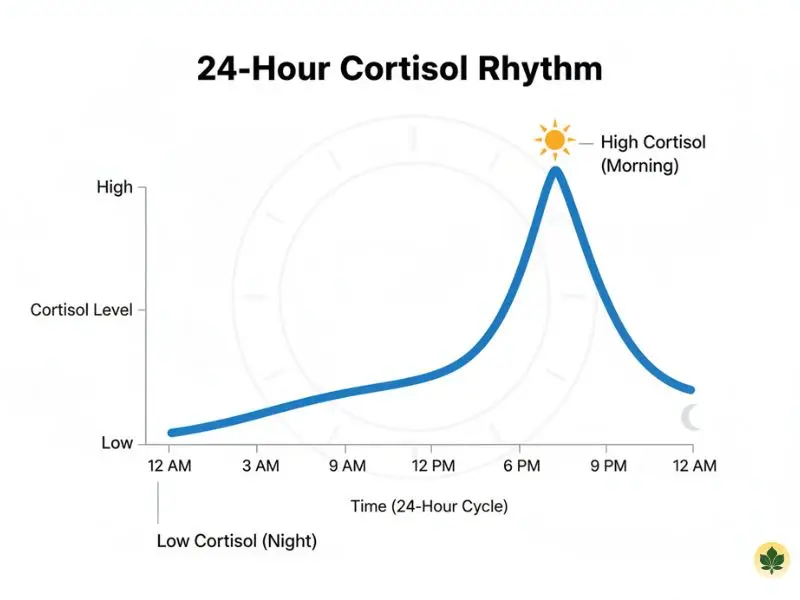
Cortisol follows a daily rhythm—ashwagandha timing works best when aligned with this natural cycle.
Before we talk about timing, you need to understand what ashwagandha actually does in your body.
Ashwagandha is an adaptogen, which means it helps your body adapt to stress by regulating your cortisol levels (your main stress hormone).
The Cortisol Connection
Here’s why timing matters:
Your cortisol naturally follows a rhythm:
Peak: 6-8 AM (gets you out of bed)
Declines: Throughout the day
Lowest: Around midnight (helps you sleep)
Ashwagandha works by:
Lowering excessive cortisol when it’s too high
Supporting healthy cortisol patterns
Modulating your stress response system
This is why timing your dose can enhance specific effects.
Best Time to Take Ashwagandha for Anxiety & Stress
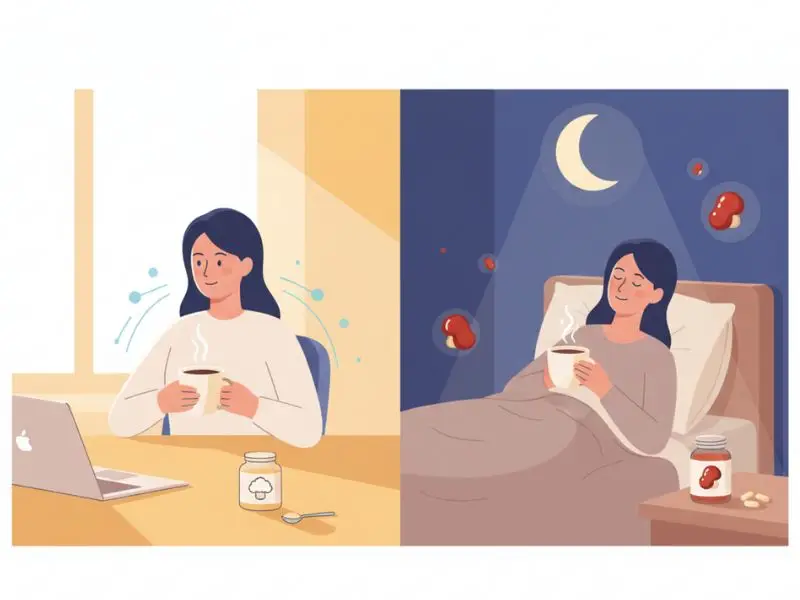
Morning ashwagandha helps regulate cortisol early, reducing anxiety throughout the day.
Recommended Timing: Morning with breakfast
If you’re dealing with daily anxiety and chronic stress, determining the best time to take ashwagandha is crucial – and morning is your sweet spot.
Why Morning Works for Anxiety
Catches Cortisol Early: Taking ashwagandha in the morning helps regulate your cortisol spike, preventing the cascade of anxiety throughout your day
Prevents Afternoon Crashes: Many Reddit users report that morning ashwagandha prevents the 2-3 PM anxiety spike
What Reddit Users Say
From r/Nootropics and r/Supplements:
Notice
“I take 300mg KSM-66 every morning with coffee. My baseline anxiety went from 7/10 to like 3/10 within two weeks. Game changer for social situations.” – u/anxious_no_more
“Morning dosing changed my life. I used to take it at night but felt groggy. Now I take it at 7 AM and I’m way more chill at work.” – u/stressedSWE
Dosage for Anxiety
Standard: 300-500mg of KSM-66 extract
Timing: With breakfast (to avoid stomach upset)
Frequency: Once daily, morning
With: Healthy fats (improves absorption)
Pro Tip: Pair with your morning coffee or tea. Ashwagandha can slightly offset caffeine jitters while keeping you alert.
Best Time to Take Ashwagandha for Sleep
Nighttime ashwagandha supports deeper sleep and lowers nighttime cortisol.
Recommended Timing: 30-60 minutes before bed
If insomnia or poor sleep quality is your main issue, the best time to take ashwagandha shifts to nighttime dosing.
Why Night Works for Sleep
GABA Enhancement: Ashwagandha mimics GABA (your calming neurotransmitter), promoting relaxation before bed
Cortisol Suppression: Evening cortisol should be low. Ashwagandha helps ensure it stays that way, preventing “tired but wired” feelings
Sleep Architecture: Studies show nighttime ashwagandha improves both sleep onset and sleep quality
The Science
A 2020 study published in Cureus found that participants taking 600mg ashwagandha before bed experienced:
72% improvement in sleep quality
Fell asleep 28% faster
Woke up more refreshed
According to research from the National Institutes of Health, ashwagandha’s sleep-promoting effects are linked to its withanolide compounds.
What Reddit Users Say
Notice
“I take 600mg around 9 PM. By 10:30 PM I’m naturally drowsy (not drugged feeling). Sleep through the night for the first time in years.” – u/insomniac_recovery
“Tried morning dosing first, felt tired all day. Switched to night—sleep is incredible now and I wake up energized.” – u/SleepOptimizer
Dosage for Sleep
Standard: 600mg KSM-66 extract
Timing: 30-60 minutes before bed
Frequency: Nightly
With: Light snack (magnesium pairs well)
Pro Tip: If you feel groggy in the morning, try taking it earlier (7-8 PM) or reducing your dose to 300mg.
Best Time to Take Ashwagandha for Energy & Focus
Morning ashwagandha provides calm, sustained energy without caffeine crashes.
Recommended Timing: Morning, preferably on empty stomach
This might sound counterintuitive since ashwagandha is calming, but when determining the best time to take ashwagandha for energy, morning actually boosts sustained energy when dosed correctly.
Why Morning Works for Energy
Ashwagandha doesn’t give you stimulant energy like caffeine. Instead, it:
Reduces Energy-Draining Stress: By lowering cortisol, you free up energy that was being wasted on stress response
Supports Mitochondrial Function: Ashwagandha helps your cells produce energy more efficiently
Balances Thyroid: Can support thyroid function, which regulates metabolism and energy
Reddit Energy Reports
Notice
“I take 300mg first thing in the morning. Not a ‘buzz’ like coffee, but I have way more sustained energy all day. No crash either.” – u/EnergySeeker2024
“Morning empty stomach = smooth, calm energy. Night dosing made me too relaxed during the day.” – u/BiohackingSteve
Dosage for Energy
Standard: 300mg KSM-66 extract
Timing: Upon waking, empty stomach
Frequency: Daily
With: Wait 30 min before eating
Important: If you feel sedated taking it in the morning, you might be:
Taking too much (try 150mg)
One of the rare people who should take it at night instead
Best Time to Take Ashwagandha for Muscle Growth & Recovery
Ashwagandha supports muscle recovery, testosterone levels, and post-workout stress reduction.
Recommended Timing: Post-workout OR before bed
For gym-goers and athletes, timing can maximize ashwagandha’s testosterone and recovery benefits.
Why Post-Workout or Night Works
Testosterone Support: Studies show ashwagandha significantly boosts testosterone (especially when paired with resistance training)
Timing: Post-workout + before bed OR just before bed
Frequency: Daily
With: Protein or healthy fats
Should You Take Ashwagandha on an Empty Stomach?
It depends on your stomach sensitivity.
Empty Stomach Pros:
Faster absorption
Maximum bioavailability
Better for energy and focus
Empty Stomach Cons:
Can cause nausea in sensitive individuals
Mild stomach discomfort for some
Not ideal if you have gastritis or acid reflux
What Reddit Says
Notice
“I can handle it empty stomach but the effects are stronger with a small meal. Personal preference.” – u/AdaptogenUser
“Empty stomach works great for me—no issues. But my girlfriend gets nauseous. She takes it with breakfast now.” – u/SupplementCouple
Bottom Line: Start with food. If you tolerate it well, experiment with empty stomach for potentially stronger effects.
Can You Take Ashwagandha Twice a Day?
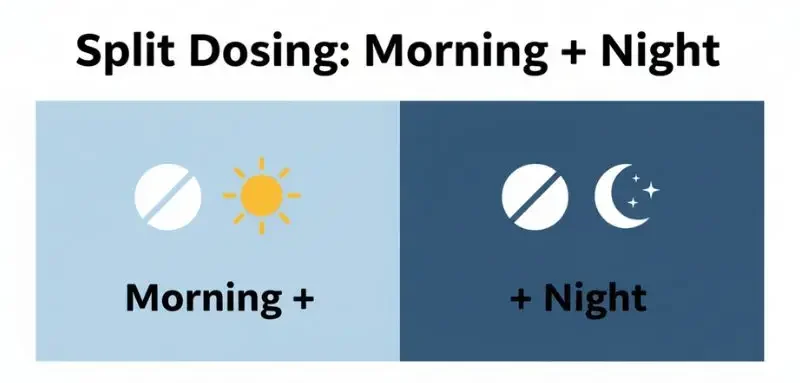
Splitting your dose offers all-day stress control and better sleep at night.
Yes, and it might be the best approach for some people.
When considering the best time to take ashwagandha, split dosing offers unique advantages.
When to Split Dose
Split dosing (morning + night) works well if you want:
All-day anxiety relief + better sleep
Cortisol balance throughout the day
Maximum benefits without one massive dose
How to Split
Option 1: 300mg morning + 300mg night (600mg total) Option 2: 250mg morning + 250mg night (500mg total)
What Science Says
Most clinical studies use 300-600mg once daily, but some use split dosing with good results. According to WebMD’s ashwagandha dosage guidelines, there’s no evidence suggesting one is superior—it’s about personal preference and goals.
How Long Before Ashwagandha Works?
Here’s the realistic timeline:
Acute Effects (Within Hours)
Sleep: 30-90 minutes (if taken before bed)
Mild calming: 1-2 hours (subtle)
Short-Term Effects (Days to Weeks)
Anxiety reduction: 1-2 weeks of consistent use
Sleep quality: 1-2 weeks
Stress resilience: 2-4 weeks
Long-Term Effects (Months)
Hormone balance: 6-8 weeks
Muscle growth: 8-12 weeks (with training)
Maximum benefits: 2-3 months
Key Point: Consistency matters more than timing for long-term results.
Common Mistakes People Make with Ashwagandha Timing
Mistake #1: Taking Too Much Too Soon
Problem: Starting with 600mg and feeling overly sedated Solution: Start with 300mg, assess tolerance, increase if needed
Mistake #2: Inconsistent Timing
Problem: Taking it randomly (sometimes morning, sometimes night) Solution: Pick one time and stick with it for at least 2 weeks
Mistake #3: Wrong Time for Their Goal
Problem: Taking it at night but wanting daytime energy Solution: Match timing to your primary goal (see sections above)
Mistake #4: Not Taking with Food (When Sensitive)
Problem: Nausea and stomach upset Solution: Take with a meal, especially breakfast or dinner
Mistake #5: Expecting Immediate Results
Problem: Quitting after 3 days because “it’s not working” Solution: Give it at least 2 weeks of consistent use
What About Taking Ashwagandha with Other Supplements?
Good Combinations
Morning Stack (Energy & Focus):
Ashwagandha 300mg
Lions Mane 500mg
Rhodiola 200mg
Coffee/Green Tea
Night Stack (Sleep & Recovery):
Ashwagandha 600mg
Magnesium Glycinate 400mg
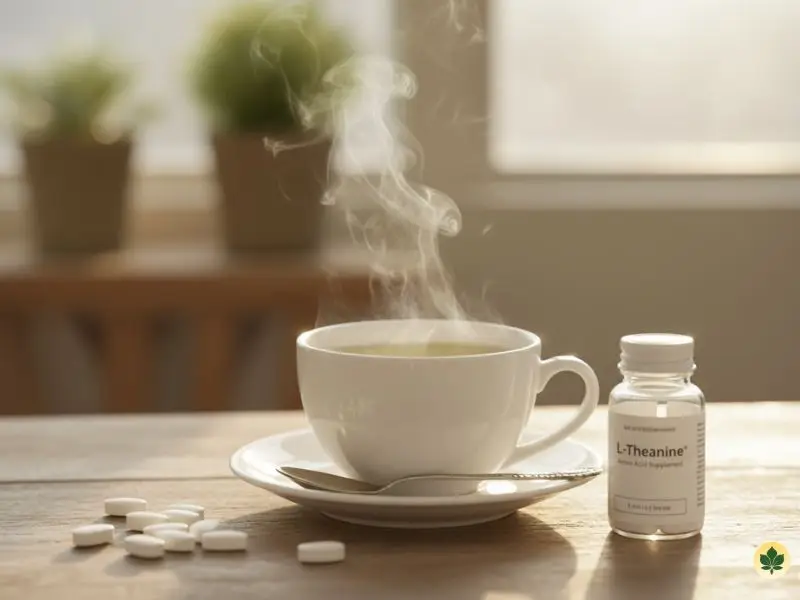
L-Theanine 200mg
Melatonin 1-3mg (optional)
Workout Stack:
Ashwagandha 300mg
Creatine 5g
Protein shake
Vitamin D3
Avoid Combining With:
Sedative medications (talk to your doctor)
Thyroid medications (can interact—discuss with doctor)
Can I take ashwagandha with coffee in the morning?
Yes, many users find this combination works great. Ashwagandha can reduce caffeine jitters while maintaining alertness.
What if I miss my morning dose?
Take it as soon as you remember (before 2 PM). If it’s later, skip and resume tomorrow. Don’t double dose.
Will ashwagandha make me tired during the day?
Not for most people at standard doses (300-500mg). If it does, try taking it at night or reduce to 150-300mg.
How long should I take ashwagandha?
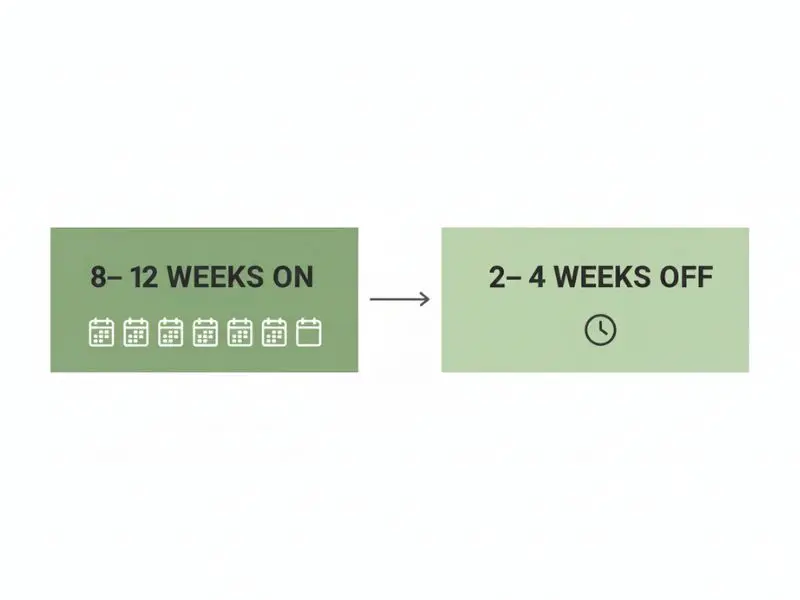
Most studies use 8-12 weeks continuously. Consider cycling: 2-3 months on, 1-2 weeks off.
Can I take ashwagandha every day?
Yes, daily use is safe for most people. Clinical studies show safety up to 12+ weeks of continuous use.
Does timing affect how fast it works?
No. Building up in your system takes 1-2 weeks regardless of when you take it. However, choosing the best time to take ashwagandha affects which benefits you notice most prominently.
Should I take ashwagandha with food or water?
Food improves absorption and reduces stomach upset. Black pepper (piperine) can enhance absorption further.
Can I take ashwagandha before a workout?
Yes, especially if you train in the evening. It may improve endurance and reduce exercise-induced stress.
Ready to Start Your Ashwagandha Journey?
Now you know exactly the best time to take ashwagandha based on your goals.
Next steps:
Choose your timing based on your primary goal
Get a quality supplement (KSM-66 or Sensoril extract)
Start with 300mg and stay consistent
Track your results for 2 weeks minimum
Adjust as needed based on how you feel
Understanding the best time to take ashwagandha is just the beginning – consistency and quality matter most for results.
Cordyceps mushrooms may enhance energy production, oxygen utilization, and recovery for athletes.
If you’re an athlete, runner, cyclist, or fitness enthusiast constantly searching for a natural edge to improve your performance, you’ve probably heard whispers about cordyceps mushrooms. Maybe you’ve seen them in pre-workout formulas, heard Joe Rogan mention them, or noticed your favorite athletes swearing by them.
Here’s the truth: cordyceps first gained worldwide attention in 1993 when Chinese female runners shattered world records in the 1,500m, 3,000m, and 10,000m events. Their coach attributed their success to a rigorous training program that included cordyceps supplementation. While the claim sparked skepticism (and later controversy), it ignited serious scientific interest in these unusual fungi.
Fast forward to 2025, and we now have solid research backing what traditional Chinese medicine has known for centuries: cordyceps can genuinely enhance athletic performance—but not in the way you might think. This isn’t a stimulant that gives you a caffeine-like jolt. Instead, cordyceps works at the cellular level to optimize how your body produces and uses energy, particularly during exercise.
In this comprehensive guide, I’ll break down exactly how cordyceps benefits athletic performance, the science behind its effects, optimal dosing for athletes, and what you need to know before adding it to your supplement stack.
What Is Cordyceps?
Cordyceps militaris is the most common and researched form used in supplements
Cordyceps is a genus of parasitic fungi that grows on insect larvae—yes, you read that correctly. In nature, cordyceps infects caterpillars, replaces their tissue, and sprouts long, finger-like stems from the host’s body. While that sounds like something out of a sci-fi horror movie, these “zombie fungus” mushrooms contain powerful bioactive compounds that have been used medicinally for over 2,000 years.
The Two Main Species:
1. Cordyceps sinensis
The original “caterpillar fungus”
Grows wild in the Himalayan mountains
Extremely rare and expensive ($8,000-$20,000 per pound)
Most research focuses on this species
Almost all supplements use lab-grown alternatives
2. Cordyceps militaris
Easier to cultivate in laboratories
Contains higher levels of cordycepin (active compound)
More affordable and sustainable
Growing body of research supports its use
Commonly used in modern supplements
Don’t worry: Modern supplements use lab-grown cordyceps (usually Cordyceps militaris or CS-4, a standardized fermentation product), not actual caterpillar-infected fungi. These cultivated versions contain the same beneficial compounds without the creepy factor or astronomical price tag.
Key Bioactive Compounds:
Cordycepin (3′-deoxyadenosine)
The star player in cordyceps
Structurally similar to adenosine
Supports ATP production
Anti-inflammatory properties
Polysaccharides
Immune system modulators
Energy enhancement
Antioxidant effects
Adenosine
Cardiovascular support
Oxygen utilization
Energy metabolism
These compounds work synergistically to deliver the performance benefits athletes experience.
7 Science-Backed Cordyceps Benefits for Athletes
1. Increased ATP Production: Cellular Energy at Its Core
Cordyceps may enhance ATP production, supporting sustained workout energy
⭐ Effectiveness Rating: 9/10 (Highest for Energy)
At the cellular level, cordyceps may support the body’s production of adenosine triphosphate (ATP)—the energy currency that powers every muscle contraction. More available ATP can translate to longer, more intense workouts.
How It Works:
Research suggests cordyceps contains bioactive substances that help increase ATP synthesis in your mitochondria (the powerhouses of your cells). One study using water-soluble extracts of CS-4 showed an increase of 45-55% in ATP ratios in the liver of mice treated with cordyceps compared with placebo.
Unlike caffeine which provides artificial stimulation, cordyceps optimizes your body’s own energy production systems. This means:
More sustained energy during workouts
Delayed onset of fatigue
Better endurance during prolonged exercise
Faster energy recovery between sets
Real-World Impact:
Athletes report being able to maintain higher intensity for longer periods without the crash associated with stimulants. A 2020 study found that cordyceps extract slightly increased grip strength in mice, which could be attributed to an increase in ATP production.
Best For: Endurance athletes (runners, cyclists, swimmers), CrossFit, HIIT training, any sport requiring sustained energy output.
2. Improved VO₂ Max and Oxygen Utilization
Improved oxygen utilization may enhance endurance and aerobic capacity
⭐ Effectiveness Rating: 8.5/10
One of the most researched benefits of cordyceps is their ability to improve aerobic capacity, or VO₂ max, which is a measure of how efficiently the body uses oxygen during exercise.
The Science:
VO₂ max represents the maximum amount of oxygen your body can utilize during intense exercise—it’s the gold standard for measuring aerobic fitness. Studies suggest cordyceps may boost VO₂ max through several mechanisms:
Enhanced oxygen delivery: Increases blood flow and circulation
Improved oxygen uptake: Makes cells more efficient at extracting oxygen
Better oxygen utilization: Optimizes how muscles use available oxygen
Key Research Findings:
A landmark study found that after receiving CS-4 for 12 weeks, the metabolic threshold increased by 10.5% and the ventilatory threshold increased by 8.5% in elderly subjects. These are substantial improvements for athletic performance.
In another study, after three weeks of supplementation, participants showed significant increases in VO₂ max of 10.9% compared to control, plus a 41.2% increase in ventilatory threshold.
What This Means for You:
Better oxygen utilization translates to:
Running faster before reaching your lactate threshold
Cordyceps is traditionally used to support endurance and fight fatigue
⭐ Effectiveness Rating: 8/10
Cordyceps are classified as adaptogens, which help your body adapt to physical and mental stress—a key need for athletes in training.
How It Works:
Research from 2018 on mice with diabetes suggests cordyceps works through multiple pathways to reduce fatigue:
1. Lactate Clearance: Enhanced oxygen utilization and blood flow, especially to the liver and non-exercising skeletal muscle, may enhance lactate clearance. This allows athletes to maintain higher intensity exercise while reducing the acid buildup that causes muscle burn and fatigue.
2. Glycogen Sparing: Cordyceps may improve glucose tolerance and utilization, helping preserve glycogen stores for when you really need them during prolonged exercise.
3. Antioxidant Protection: Reduction of oxidative stress from high-intensity exercise may delay fatigue and protect muscle tissue from damage.
Real User Experience:
A 2015 study of mice concluded there was enough experimental evidence to “support clinical use of cordyceps militaris as an effective agent against fatigue.” Athletes in human studies consistently report being able to train harder and longer before reaching exhaustion.
Timeline of Benefits:
Week 1: Subtle improvements in endurance
Week 2-3: Noticeable fatigue resistance
Week 3+: Significant improvements in time to exhaustion
Best For: Long-distance running, cycling events, triathlons, any prolonged physical activity.
4. Faster Recovery and Reduced Muscle Damage
Anti-inflammatory properties may support faster muscle recovery
⭐ Effectiveness Rating: 8/10
This is where cordyceps gets really exciting for athletes who train hard and often.
The Science:
A 2024 study found groundbreaking results: 14 young adults were given either a placebo or 1 gram of cordyceps before a high-intensity interval exercise session. The researchers found that those who took cordyceps had less muscle damage and faster cell repair, allowing for quicker recovery.
Mechanisms of Action:
1. Anti-Inflammatory Effects: Cordyceps’ anti-inflammatory properties help reduce muscle damage and speed up recovery after training. This is particularly important for athletes who follow intense training schedules.
2. Enhanced Blood Flow: Better circulation means more nutrients and oxygen delivered to damaged muscle tissue, accelerating repair processes.
3. Mitochondrial Biogenesis: Studies in animals show cordyceps increases mitochondrial biogenesis in skeletal muscle, enhancing fatty acid oxidation and glucose turnover—both crucial for recovery.
4. Reduced Oxidative Stress: By acting as an antioxidant, cordyceps protects muscles from exercise-induced oxidative damage.
Real-World Benefits:
Less soreness after intense workouts (DOMS reduction)
Faster return to training
Ability to maintain higher training frequency
Reduced risk of overtraining injuries
Best For: Athletes with high training volumes, strength training, sports with frequent competitions, anyone doing intense daily workouts.
5. Cardiovascular Support and Heart Health
⭐ Effectiveness Rating: 7.5/10
A healthy heart is crucial for peak athletic performance, and cordyceps may offer significant cardiovascular benefits.
How It Supports Heart Health:
1. Improved Circulation: Cordyceps are thought to improve blood circulation and support healthy cholesterol levels, ensuring your heart can pump blood more efficiently and supply muscles with oxygen and nutrients they need.
2. Blood Vessel Health: Research suggests cordyceps helps maintain healthy blood vessels through vasodilation (widening of blood vessels), which improves blood flow during exercise.
3. Heart Protection: A 2019 mouse study tested the effect of cordyceps on the heart, finding that it helped prevent heart enlargement by helping reduce oxidative stress—crucial for endurance athletes who put significant strain on their cardiovascular system.
4. Blood Pressure Regulation: Some research indicates cordyceps may help maintain healthy blood pressure levels, important for athletes at all levels.
Athletic Applications:
Better cardiac output during exercise
Improved recovery between intervals
Enhanced cardiovascular adaptations to training
Reduced cardiovascular strain during competitions
Best For: Endurance athletes, older athletes, anyone with family history of heart issues (consult doctor first).
6. Immune System Support During Training
⭐ Effectiveness Rating: 7.5/10
Intense training can temporarily suppress the immune system, leaving athletes vulnerable to illness. Missing training due to a cold can derail weeks of progress.
How Cordyceps Helps:
Cordyceps contains compounds that may help support immune function, helping athletes stay healthy and consistent during demanding training cycles.
Immune Mechanisms:
1. Immunomodulation: Cordyceps stimulates cells and specific chemicals in the immune system without overstimulating (which could cause inflammation).
2. White Blood Cell Activation: Research shows cordyceps may enhance the activity of natural killer (NK) cells and other immune defenders.
3. Anti-Inflammatory Balance: While reducing harmful inflammation, cordyceps supports healthy immune responses when you need them.
Why It Matters for Athletes:
Athletes in heavy training often experience:
Upper respiratory tract infections
Increased susceptibility to illness
Longer recovery from minor infections
Training interruptions due to sickness
Cordyceps supplementation may help maintain immune function even during intense training periods.
Best For: Athletes in heavy training phases, competition season, anyone prone to getting sick during training.
7. Natural Energy Without Stimulants
⭐ Effectiveness Rating: 8/10
Unlike caffeine or other stimulants, cordyceps provides a steady increase in energy without jitters, crashes, or sleep disruption.
How It’s Different:
Cordyceps:
Works at cellular level (ATP production)
Sustainable energy throughout the day
No tolerance development
Doesn’t interfere with sleep
No withdrawal or dependence
Supports long-term energy metabolism
Caffeine/Stimulants:
Central nervous system stimulation
Quick energy spike, then crash
Tolerance develops rapidly
Can disrupt sleep if taken late
Potential for dependence
No improvement in actual energy production
Real-World Application:
Athletes report cordyceps provides “calm energy”—you feel capable of intense effort without feeling wired or anxious. This makes it ideal for:
Morning training sessions
All-day events (hiking, ultra-running)
Competition days when you need sustained energy
Training camps with multiple daily sessions
Best For: Athletes sensitive to caffeine, those training multiple times daily, anyone seeking sustained energy without stimulants.
The Famous 1993 Chinese Runners: Fact vs. Fiction
You can’t discuss cordyceps and athletic performance without addressing the elephant in the room: the legendary Chinese running team.
What Actually Happened:
In 1993, Chinese Olympic women’s running team won multiple competitions and broke three world records at the Chinese National Games in Beijing. Their coach, Ma Junren, attributed their incredible athletic performance to a diet rich in cordyceps mushrooms and turtle blood.
The sports world was stunned. Were these mushrooms really a secret performance enhancer?
The Controversy:
Years later, Ma Junren was fired after six of his other athletes failed drug tests. This tarnished the cordyceps claims and led many to dismiss the mushrooms as irrelevant to the team’s success.
The Truth:
While we can’t know exactly what contributed to those record-breaking performances (training, genetics, nutrition, and unfortunately possibly PEDs), the incident sparked legitimate scientific research into cordyceps effects on athletic performance.
What Research Shows:
Decades of studies since 1993 demonstrate that while cordyceps won’t turn you into a world-record holder, it does offer genuine, measurable performance benefits—particularly for aerobic capacity, endurance, and recovery.
The performance-enhancing effects and health benefits of cordyceps supplements should not be dismissed based on one controversial case. The science stands on its own merit.
Cordyceps Dosage for Athletic Performance
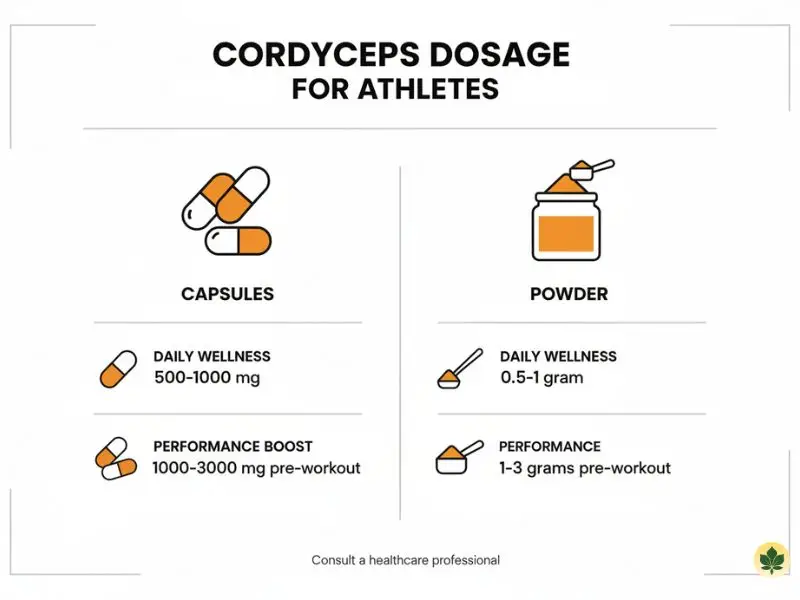
Proper dosing is essential to experience cordyceps performance benefits
Getting the dosage right is crucial for experiencing cordyceps benefits.
Standard Dosing Guidelines:
For General Health:
Start: 1 gram daily
Standard: 1-3 grams daily
Maintenance: 1-2 grams daily
For Athletic Performance:
Beginner athletes: 1-2 grams daily
Recreational athletes: 2-3 grams daily
Competitive athletes: 3-4.5 grams daily
Elite athletes: Up to 6 grams daily (under supervision)
Research-Backed Doses:
Studies showing performance benefits typically used:
3-4.5 grams daily for significant endurance improvements
1 gram daily for 12 weeks showed metabolic improvements in elderly
4 grams daily for 3 weeks improved VO₂ max in trained athletes
1 gram before exercise reduced muscle damage in young adults
Important Dosing Notes:
1. Start Low, Go Slow: Begin with 1 gram daily for the first week, then increase to 2-3 grams if well-tolerated.
2. Consistency Matters: Cordyceps isn’t a stimulant—benefits build over time with consistent use. Most studies show meaningful results after 3+ weeks of daily supplementation.
3. Timing:
Morning/Pre-workout: Most athletes take cordyceps 30-60 minutes before training
Daily supplementation: Can be taken anytime, but morning is most popular
Not necessary before bed: Won’t interfere with sleep, but morning/afternoon is optimal
4. With or Without Food:
Can be taken on empty stomach or with meals
Some athletes prefer empty stomach for faster absorption
If you experience any digestive discomfort, take with food
5. Cycling: Unlike some supplements, cycling cordyceps isn’t necessary. It can be taken daily indefinitely without losing effectiveness.
Forms of Cordyceps Supplements
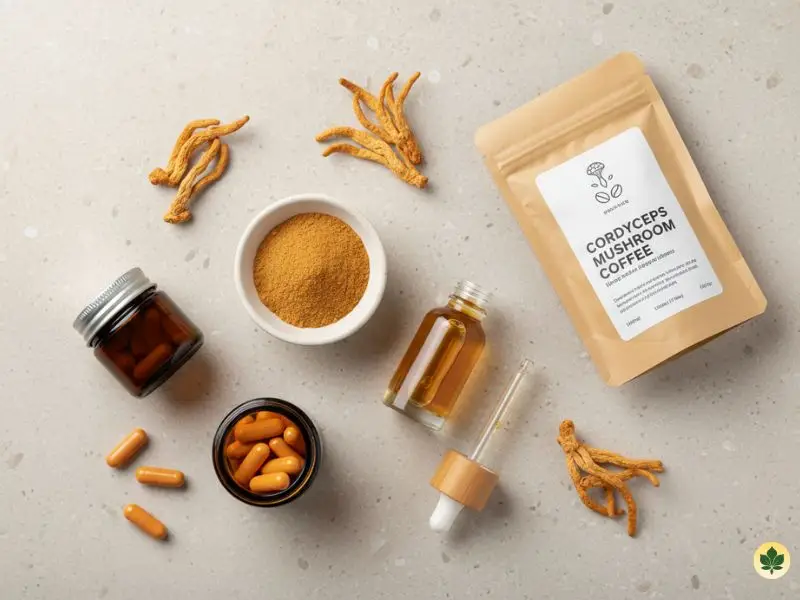
Cordyceps supplements come in capsules, powders, and liquid extracts
1. Capsules/Tablets
Pros: Convenient, pre-measured, portable
Cons: May take longer to absorb
Best for: Daily supplementation, travel
2. Powder
Pros: Versatile (add to smoothies, coffee), adjustable dosing
Cons: Earthy taste, requires measuring
Best for: Athletes who blend pre-workout drinks
3. Liquid Extract/Tincture
Pros: Fast absorption, concentrated
Cons: Strong taste, more expensive
Best for: Pre-competition quick absorption
4. Mushroom Coffee/Blends
Pros: Convenient, tastes good, combines with other mushrooms
Cons: Lower doses, added ingredients
Best for: Daily wellness, not performance optimization
5. Gummies
Pros: Tasty, fun to take
Cons: Lower doses, added sugars
Best for: Beginners, those who dislike pills
What to Look For in Quality Supplements:
✅ Cordyceps militaris or CS-4 (standardized, well-studied forms)
✅ Cordycepin content listed (look for 0.5-1% minimum)
✅ Third-party tested (NSF Certified for Sport is gold standard for athletes)
✅ Fruiting body extracts (not just mycelium)
✅ No fillers or additives
✅ Organic certification (when possible)
✅ Clear dosage information
When Will You See Results?
Understanding the timeline helps set realistic expectations.
Week 1:
Subtle energy improvements
Possibly easier training sessions
Most benefits still building
Weeks 2-3:
Not
iceable endurance improvements
Better recovery between workouts
Less fatigue during training
Weeks 3-4:
Significant performance gains
Measurable VO₂ max improvements (if tested)
Consistent energy throughout training
Week 6+:
Maximum benefits realized
Sustainable performance improvements
Long-term adaptations solidified
Important: Research suggests these amounts are generally well-tolerated, and benefits typically observed after several weeks of consistent supplementation. Don’t judge effectiveness after just one week.
Who Benefits Most from Cordyceps?
Endurance Athletes (HIGHEST BENEFIT):
Marathon runners
Cyclists
Triathletes
Swimmers
Cross-country skiers
Ultra-runners
Long-distance hikers
Why: Cord
yceps’ effects on VO₂ max, oxygen utilization, and endurance are most pronounced in aerobic activities.
High-Intensity Athletes (MODERATE BENEFIT):
CrossFit
HIIT training
Sprinters
Team sports (soccer, basketball, hockey)
Combat sports (MMA, boxing)
Why: ATP production and recovery benefits support repeated high-intensity efforts.
Strength Athletes (MODERATE BENEFIT):
Powerlifting
Bodybuilding
Olympic weightlifting
Strongman
Why: Recovery benefits and anti-inflammatory effects help with training volume and frequency.
Recreational Fitness Enthusiasts (GOOD BENEFIT):
Gym-goers
Weekend warriors
Casual runners
Fitness class participants
Why: Energy, recovery, and general vitality improvements enhance overall fitness journey.
Older Athletes (EXCELLENT BENEFIT):
Masters athletes (40+)
Senior fitness enthusiasts
Anyone experiencing age-related decline
Why: Research shows particularly strong benefits in older adults, with significant VO₂ max improvements even in elderly populations.
Cordyceps vs. Other Performance Supplements
How does cordyceps stack up against popular athletic supplements?
Cordyceps vs. Caffeine
Cordyceps:
✅ No jitters or crash
✅ Sustainable cellular energy
✅ Doesn’t disrupt sleep
✅ No tolerance development
⏱️ Takes weeks to build effects
Caffeine:
✅ Immediate energy boost
✅ Well-researched for performance
✅ Inexpensive
❌ Jitters and crashes
❌ Sleep disruption
❌ Tolerance develops
Verdict: Use both strategically—cordyceps for long-term energy optimization, caffeine for acute performance boost when needed.
Cordyceps vs. Beetroot/Nitrate Supplements
Cordyceps:
Improves oxygen utilization
Builds cellular energy (ATP)
Takes 3+ weeks to work
Broader health benefits
Beetroot/Nitrates:
Improves blood flow (NO production)
Acute performance effects
Works within hours
Primarily cardiovascular
Verdict: Complementary—can be used together for synergistic effects.
Cordyceps vs. Beta-Alanine
Cordyceps:
Aerobic performance primary
Energy production focus
Recovery benefits
No tingling sensation
Beta-Alanine:
Anaerobic/high-intensity focus
Lactate buffering
Quick effects (2-4 weeks)
Causes harmless tingling
Verdict: Different mechanisms—beta-alanine for high-intensity, cordyceps for endurance.
Cordyceps vs. Creatine
Cordyceps:
Endurance and aerobic capacity
Oxygen utilization
Anti-inflammatory
Recovery support
Creatine:
Strength and power
Anaerobic performance
Well-researched
Proven muscle building
Verdict: Not competitors—many athletes use both for comprehensive support.
Stacking Cordyceps with Other Supplements
Cordyceps combines well with various supplements for enhanced benefits.
Safety Note: Always start supplements one at a time to assess individual tolerance. Consult a sports nutritionist or doctor when stacking multiple supplements.
Side Effects and Safety Considerations
Cordyceps is generally considered safe, but there are important considerations.
Common Side Effects (Rare):
Mild digestive upset
Dry mouth
Nausea (usually from taking too much)
Diarrhea (infrequent)
Who Should Avoid Cordyceps:
Do NOT take if you have:
Autoimmune diseases (MS, lupus, RA) – may overstimulate immune system
Bleeding disorders – cordyceps may slow blood clotting
Upcoming surgery (stop 2 weeks before)
Use caution if you:
Take immunosuppressant medications (organ transplant patients)
Take blood thinners (warfarin, aspirin, clopidogrel)
Have diabetes (may affect blood sugar—monitor closely)
Are pregnant or breastfeeding (insufficient safety data)
Drug Interactions:
Cordyceps may interact with:
Immunosuppressants: May counteract medication
Anticoagulants: Increased bleeding risk
Diabetes medications: May enhance blood sugar lowering
There are two reported cases of lead poisoning associated with the use of apparently contaminated cordyceps powder. Cordyceps should only be purchased from companies that test to exclude heavy metal contamination.
Always choose:
Third-party tested products
Reputable brands
Products with COAs (Certificates of Analysis)
NSF Certified for Sport (if you’re a tested athlete)
Real Athlete Experiences with Cordyceps
Marathon Runner, 34: “I started taking 3g of cordyceps daily about 6 weeks before my marathon. I didn’t notice huge changes in training, but on race day, I felt like I had an extra gear. I negative-split the race and PR’d by 8 minutes. Can’t say it was all the cordyceps, but I felt strong when I usually start fading at mile 20.”
CrossFit Athlete, 28: “Cordyceps has been a game-changer for my recovery. I train 5-6 days per week with high volume, and I was constantly dealing with fatigue and soreness. After a month on cordyceps (2g morning, 1g pre-workout), I’m recovering faster and can maintain intensity throughout the week.”
Cyclist, 42: “As a masters athlete, I’ve noticed my VO₂ max declining over the past few years. After 8 weeks on cordyceps (4g daily), I had my fitness tested and my VO₂ max had actually improved by 6%. My coach was shocked—said that’s unusual at my age without major training changes.”
Recreational Runner, 51: “I’m not competitive, just trying to stay fit. Cordyceps hasn’t made me faster, but I definitely have more sustained energy during my runs. I used to drag during the last mile, now I finish strong. Plus, I’m sick less often during training season.”
Ultra-Runner, 29: “For ultra-distance events, cordyceps is in my supplement stack along with electrolytes and energy gels. The sustained energy without any crash is crucial for 50+ mile races. I genuinely believe it helps me maintain effort when everyone else is slowing down.”
The Bottom Line: Is Cordyceps Worth It for Athletes?
Consistent supplementation may support long-term performance gains
After analyzing all the research and real-world experiences, here’s my honest assessment:
Cordyceps is worth trying if:
✅ You’re an endurance athlete (running, cycling, swimming, triathlon)
✅ You want to improve VO₂ max and aerobic capacity
✅ Recovery is a limiting factor in your training
✅ You prefer natural supplements over stimulants
✅ You’re willing to commit to 4+ weeks of consistent use
✅ You can invest $20-40/month in supplementation
Cordyceps might NOT be worth it if:
❌ You’re primarily a strength/power athlete (though recovery benefits still apply)
❌ You want immediate, dramatic effects (this builds over time)
❌ You’re not consistent with supplementation
❌ You have autoimmune conditions or take immunosuppressants
❌ You’re looking for a magic bullet without training
The Realistic Expectation:
Cordyceps won’t turn an average athlete into an Olympian. What it can do is optimize your body’s energy production, improve oxygen utilization, enhance recovery, and potentially give you a 5-10% performance improvement—which at competitive levels can be the difference between winning and losing.
For recreational athletes, it means training feels easier, recovery is faster, and you can maintain consistency without burning out.
My Recommendation:
If you’re serious about endurance sports or high-volume training, cordyceps deserves a place in your supplement stack. Give it a solid 6-8 week trial at 3-4 grams daily, track your performance metrics, and see if you notice improvements.
Combined with proper training, nutrition, and recovery, cordyceps can be a valuable natural tool for enhancing athletic performance—without the risks associated with questionable supplements or stimulants.
Frequently Asked Questions
How long does it take for cordyceps to work for athletic performance?
Most research shows meaningful performance benefits after 3-4 weeks of consistent daily supplementation. Some athletes notice subtle energy improvements within 1-2 weeks, but significant changes in VO₂ max, endurance, and recovery typically appear after 4-8 weeks. For best results, commit to at least 6 weeks of consistent use before judging effectiveness.
What’s the best time to take cordyceps for athletic performance?
Most athletes take cordyceps 30-60 minutes before training for performance benefits. However, since cordyceps isn’t a stimulant and works by building cellular adaptations over time, it can be taken anytime consistently. Many athletes take it in the morning with breakfast. It won’t interfere with sleep if taken in the evening.
Can I take cordyceps every day long-term?
Yes, cordyceps is safe for daily long-term use. Unlike some performance supplements, you don’t need to cycle cordyceps. Athletes have used it consistently for months to years without issues or tolerance development. In fact, benefits may increase with longer-term use as your body’s cellular adaptations deepen.
How much cordyceps should athletes take?
Research shows performance benefits at 1-4.5 grams daily. For athletic performance specifically, 3-4.5 grams daily has shown the most consistent benefits in studies. Recreational athletes can start with 1-2 grams daily, while competitive athletes often use 3-4 grams. Elite athletes may go up to 6 grams under supervision.
Does cordyceps work better for endurance or strength training?
Cordyceps shows the strongest benefits for endurance and aerobic performance—improvements in VO₂ max, oxygen utilization, and sustained energy are well-documented. Strength athletes can still benefit from improved recovery, reduced inflammation, and enhanced energy production, but the effects are more moderate compared to endurance activities.
Can I combine cordyceps with caffeine or other pre-workout supplements?
Yes, cordyceps combines safely with most supplements including caffeine, creatine, beta-alanine, and beetroot extract. In fact, many athletes stack cordyceps with these supplements for synergistic effects. However, start with cordyceps alone first to assess your individual response before combining with other supplements.
Is cordyceps safe for drug-tested athletes?
Cordyceps itself is not banned by WADA (World Anti-Doping Agency) or any major sports organization. However, tested athletes should choose products that are NSF Certified for Sport or Informed-Sport certified to ensure the supplement contains no banned substances and matches label claims. Quality matters significantly for tested athletes.
Will cordyceps help with weight loss or fat burning?
While not primarily a weight loss supplement, cordyceps may support fat loss indirectly by improving workout performance and energy expenditure. Some research suggests it enhances fat metabolism during exercise. However, diet and training are far more important factors for body composition than any supplement.
Can cordyceps replace my morning coffee?
Cordyceps provides energy differently than caffeine—it works at the cellular level to improve ATP production rather than stimulating your central nervous system. While some athletes successfully replace coffee with cordyceps, others use both: cordyceps for sustained cellular energy and strategic caffeine for acute performance boosts.
Are there any side effects from taking cordyceps for athletic performance?
Cordyceps is generally well-tolerated with minimal side effects. Some people experience mild digestive upset, especially at higher doses. Rare side effects include dry mouth or nausea. People with autoimmune conditions or those taking immunosuppressants should avoid cordyceps. Always start with lower doses to assess tolerance.
Ready to experience the performance benefits of cordyceps? Start with 1-2 grams daily from a quality source, increase to 3-4 grams after a week, stay consistent for at least 6 weeks, and track your performance metrics. You might be surprised at the edge this ancient fungus can provide for modern athletic performance.
Have you tried cordyceps for athletic performance? What benefits did you notice? Share your experience in the comments below!
Medical Disclaimer: This article is for informational purposes only and is not medical advice. Cordyceps supplements can interact with medications and may not be appropriate for everyone, especially those with autoimmune conditions, bleeding disorders, or upcoming surgery. Always consult with a qualified healthcare provider or sports medicine professional before starting any new supplement, particularly if you have medical conditions, take medications, or are a competitive athlete subject to drug testing.
Science-backed anxiety supplements tested and reviewed for effectiveness, safety, and value.
If you’re dealing with anxiety and researching natural solutions, you’ve probably felt overwhelmed by the sheer number of supplements claiming to help. Ashwagandha, magnesium, L-theanine, CBD, omega-3s—the list goes on and on, and most products make big promises without much proof.
Here’s the truth I learned after months of research and testing: most anxiety supplements fall into one of two categories—they’re either underdosed, poor-quality products that won’t help, or they’re legitimate options backed by science and real results.
The problem? Telling them apart isn’t easy. Labels can be misleading, dosages vary wildly, and manufacturers know most people won’t dig through clinical studies to verify their claims.
That’s why I created this comprehensive review. I’ve spent months testing supplements, analyzing research, reading thousands of user reviews, and consulting with healthcare professionals to identify the anxiety supplements that actually work.
In this guide, you’ll discover the 10 best supplements for anxiety, backed by science and real-world results. Whether you’re dealing with generalized anxiety, social anxiety, or stress-related symptoms, you’ll find options that can help—without the guesswork.
We review supplements independently and only recommend products backed by science and positive user experiences.
Quick Picks: Best Anxiety Supplements at a Glance
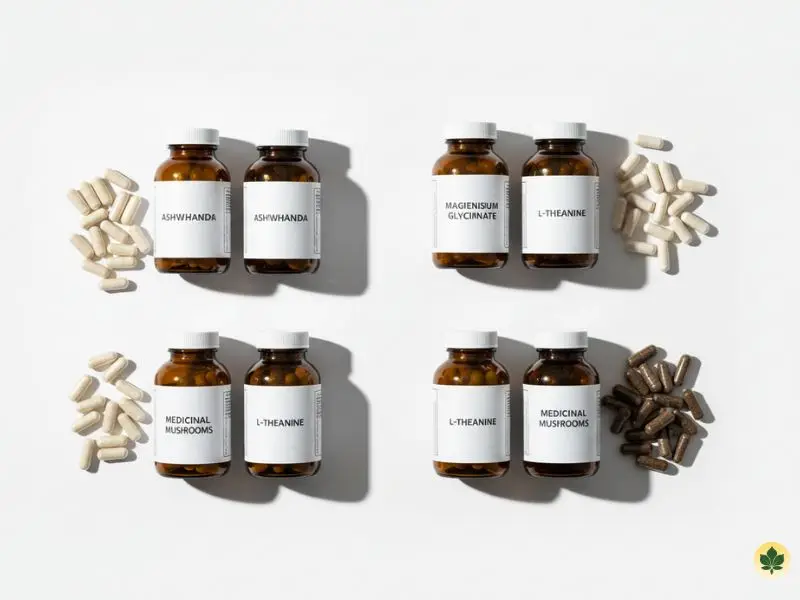
A quick visual overview of the top-rated supplements for anxiety relief.
🏆 Best Overall: Pure Encapsulations Ashwagandha — 500mg KSM-66, clean ingredients, consistently effective
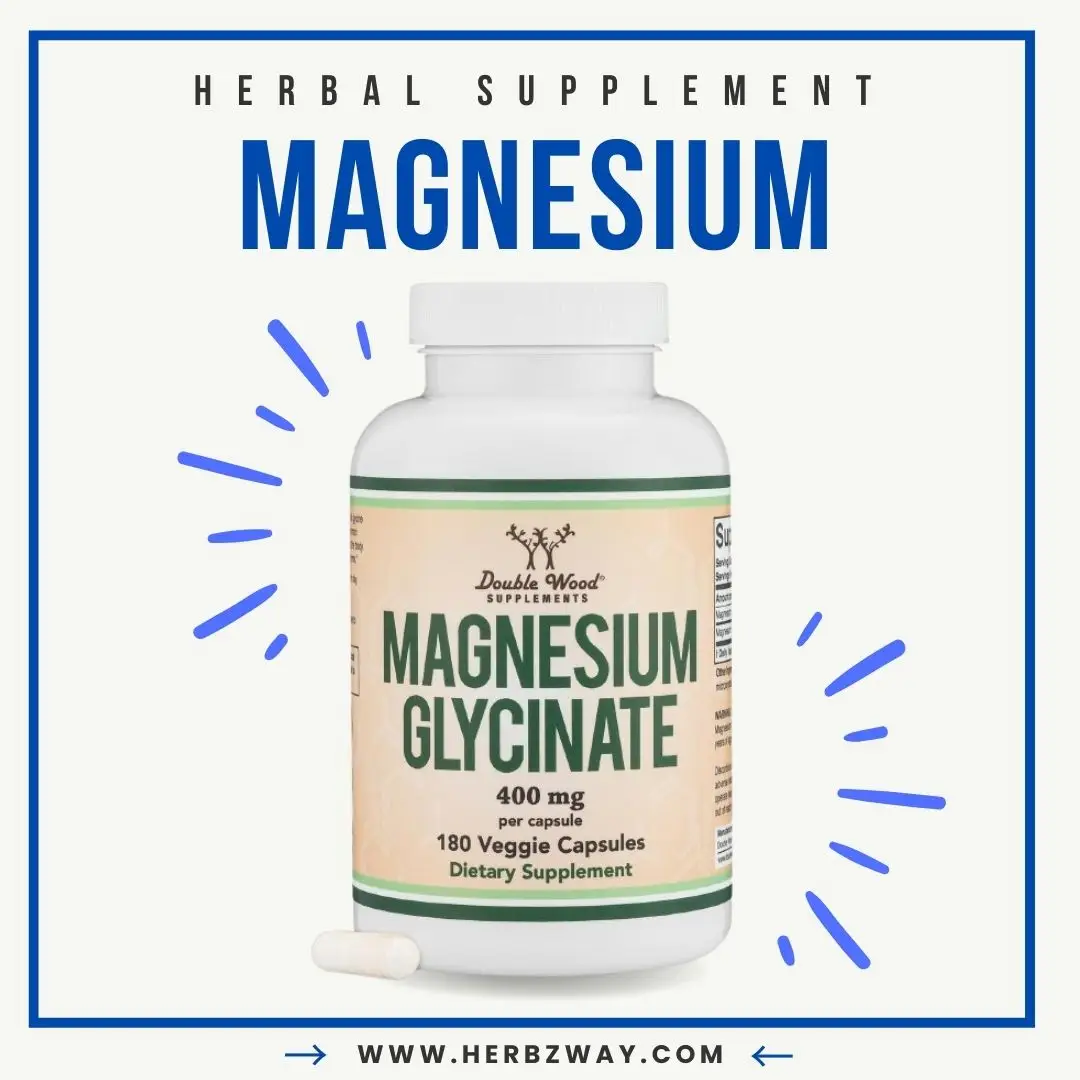
💰 Best Value: Double Wood Magnesium Glycinate — 150-day supply, highly absorbable, under $30
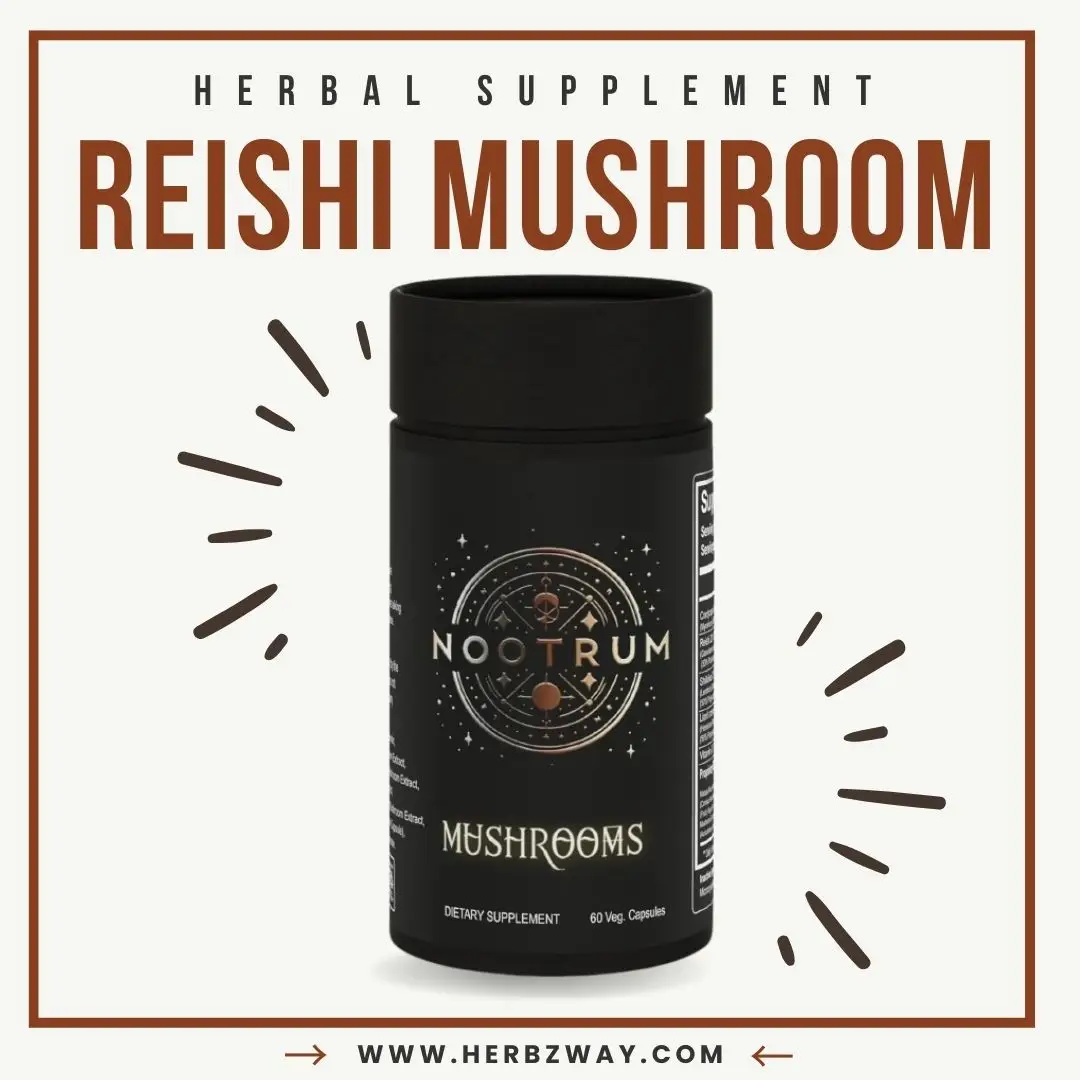
🌟 Best Premium: Nootrum Mushrooms — Medicinal mushroom blend, optimal dosing, maximum potency
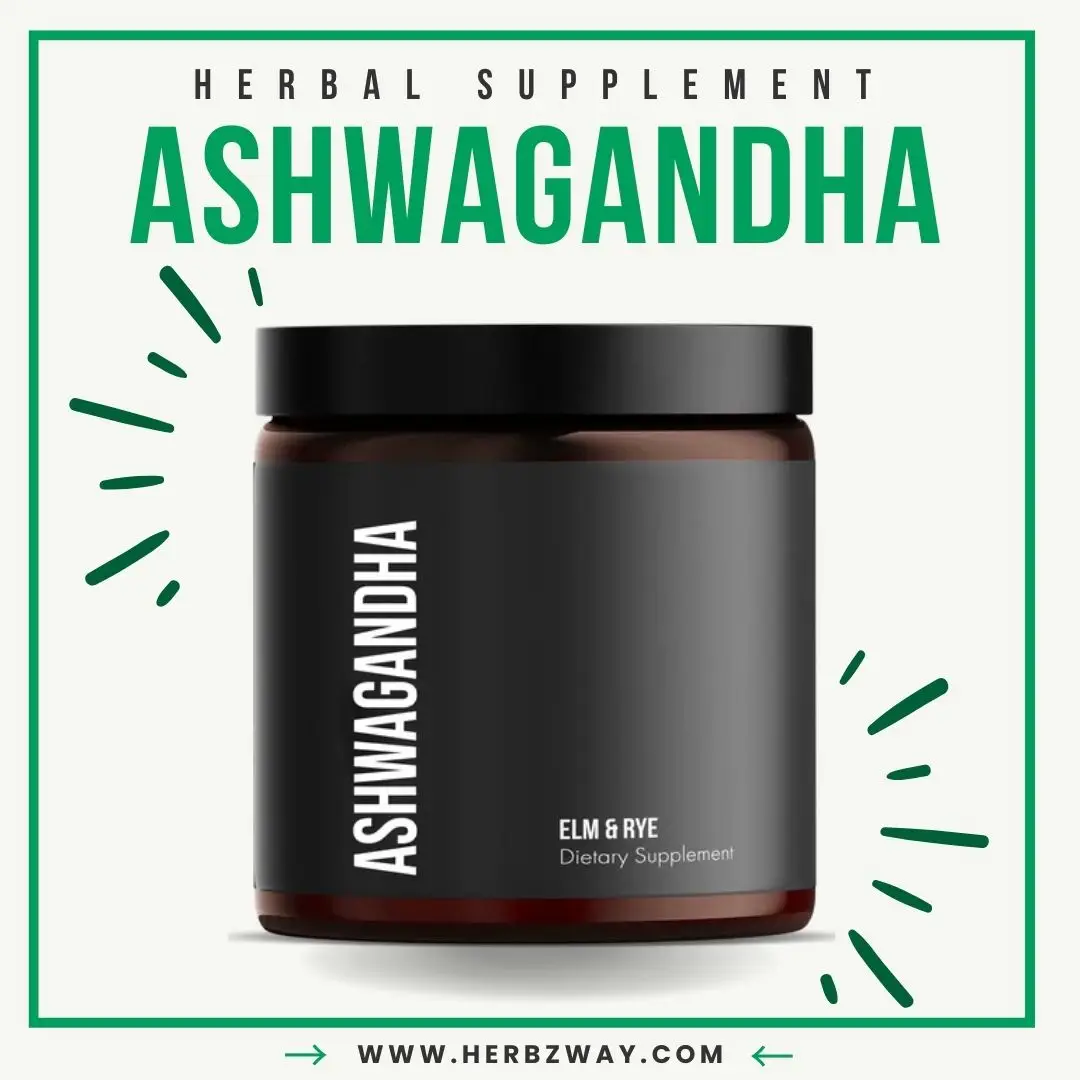
🧠 Best for Cognitive Anxiety: Elm & Rye Ashwagandha — High-quality KSM-66, single ingredient purity
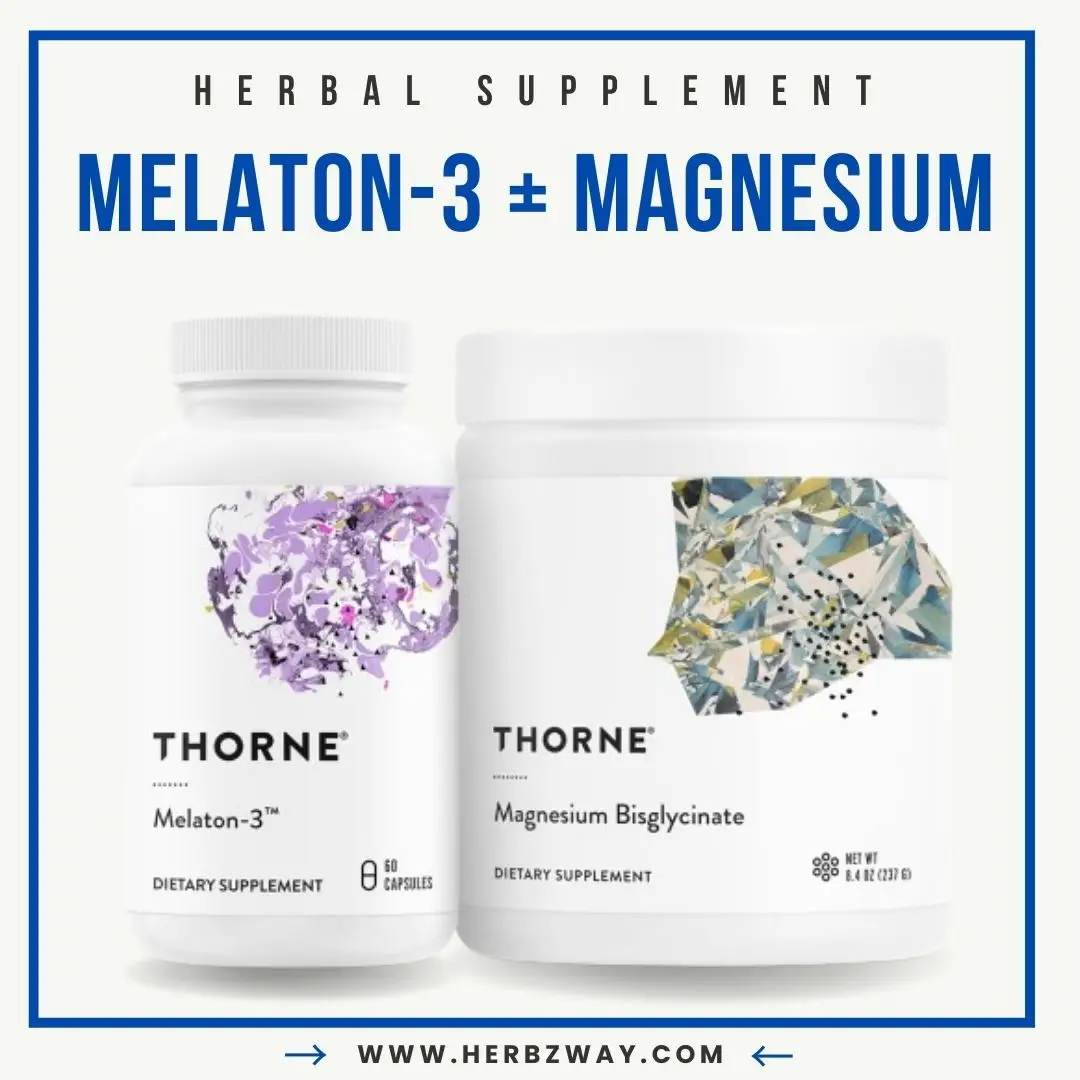
🔬 Most Researched: Thorne Research Melaton-3 + Magnesium — Combines proven ingredients, pharmaceutical-grade
⚡ Best Fast-Acting: Suntheanine L-Theanine — Pure form, works in 30-60 minutes, no drowsiness
💊 Best All-in-One: Mind Lab Pro — 11 nootropics, comprehensive brain support, anxiety + focus
🍄 Best Mushroom Formula: Host Defense Reishi — Paul Stamets formula, immune + stress support
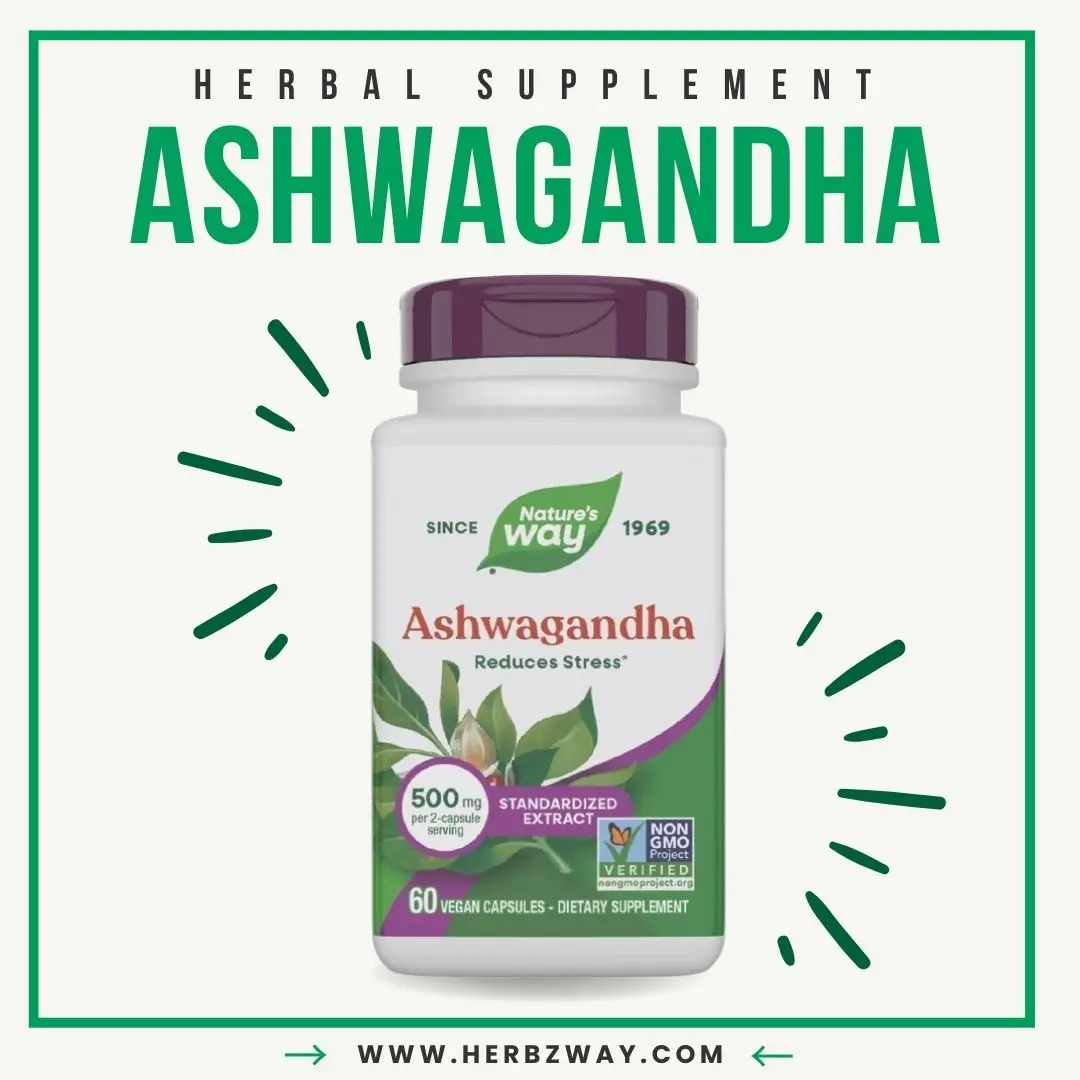
👍 Best Budget: Nature’s Way Ashwagandha — Entry-level pricing, widely available, decent quality
What Makes a Great Anxiety Supplement?
Before diving into the reviews, let’s establish what separates quality anxiety supplements from junk. Here’s what I looked for when testing these products:
1. Science-Backed Ingredients at Effective Doses
The supplement should contain ingredients with clinical research demonstrating anxiety-reducing effects. But here’s the catch: supplements that contain at least 5% withanolides (for ashwagandha) or proper standardization for other ingredients are more likely to be effective.
Many products contain “pixie dust” amounts—just enough to list on the label but nowhere near clinically effective doses.
Red flag: Proprietary blends that don’t disclose exact amounts Green flag: Transparent dosing that matches research (e.g., 300-600mg ashwagandha, 200-400mg magnesium)
2. Quality Extraction and Standardization
For ashwagandha specifically, look for a supplement that contains at least 5% withanolides to ensure you’re getting a potent dose.
For other ingredients:
Magnesium: Choose glycinate, L-threonate, or bisglycinate (NOT oxide)
L-Theanine: Look for Suntheanine® (patented, pure form)
Omega-3: At least 500mg combined EPA/DHA
Adaptogens: Standardized extracts, not just ground powder
3. Third-Party Testing
Only 38% of ashwagandha products pass independent quality tests, which is shocking. Many supplements contain contaminants, heavy metals, or don’t match their label claims.
Must-haves:
Third-party tested (USP, NSF, ConsumerLab)
Certificate of Analysis available
GMP-certified manufacturing
No banned substances
4. Branded Extracts (When Applicable)
For certain ingredients, branded forms have more research:
Ashwagandha: KSM-66®, Sensoril®, or Shoden™
L-Theanine: Suntheanine®
Rhodiola: Rhodiola SHR-5®
Bacopa: Bacognize® or BacoMind®
These cost more but deliver more consistent results.
5. Clean Formula
Avoid:
Artificial colors, flavors, sweeteners
Unnecessary fillers
Common allergens (unless you tolerate them)
Proprietary blends hiding doses
Prefer:
Minimal ingredients
Vegan capsules
Non-GMO, gluten-free (if relevant)
No magnesium stearate or titanium dioxide
The 10 Best Supplements for Anxiety (Detailed Reviews)
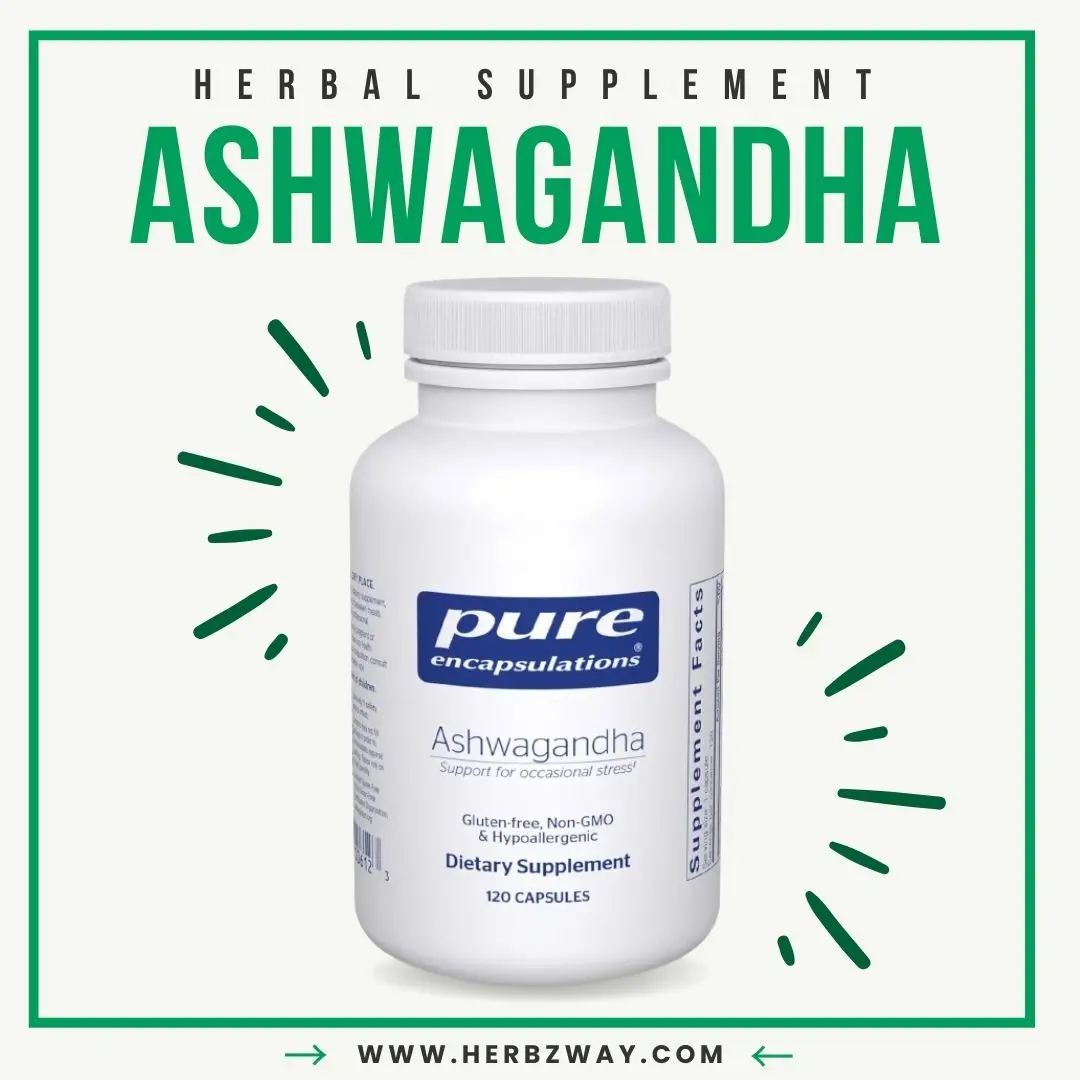
Pure Encapsulations is a trusted supplement brand known for its clean, minimal ingredients. Each capsule contains 500 mg of KSM-66 ashwagandha plus hypoallergenic plant fiber.
After testing for two months, this consistently delivered the most noticeable anxiety reduction without side effects. The quality is immediately apparent—no fillers, no nonsense, just effective ashwagandha.
Results from several clinical trials suggest that ashwagandha extracts may help reduce stress and anxiety, with dosages around 600mg daily of standardized extract taken consistently for 8-10 weeks producing significant anxiety reduction.
Real User Experience:
On Amazon it has an average rating of 4.6 out of 5 stars based on more than 2,500 reviews, with many users mentioning benefits like reduced anxiety and improved sleep quality, while praising the high quality ingredients.
Pros:
Clean, minimal ingredient formula
Effective at just 500mg (can take 2 for higher dose)
Consistently positive reviews
Trusted brand with rigorous testing
Available on Amazon with subscription discount
Cons:
More expensive than budget options
Takes 2-4 weeks for full effects
Some users report needing 1,000mg (2 capsules)
Best For: Anyone serious about quality who wants a clinically-backed ashwagandha supplement from a trusted brand. Perfect for first-time users or those upgrading from lower-quality options.
Where to Buy:Amazon, Pure Encapsulations website, iHerb
Double Wood Supplement’s Magnesium Glycinate offers a highly absorbable form of magnesium that is gentle on the stomach. Each capsule provides 400 mg of magnesium.
This is the supplement I recommend most often because it delivers pharmaceutical-grade magnesium at a price that won’t break your budget. At just $20 for 150 days, it’s an incredible value.
Key Features:
✅ 400mg elemental magnesium per capsule (as glycinate)
✅ Highly bioavailable form
✅ Gentle on stomach (no laxative effect)
✅ 180 capsules = 180-day supply
✅ Third-party tested
✅ Made in USA, GMP-certified
✅ Vegan, gluten-free, non-GMO
Dosage: 1 capsules daily (400mg total)
Supply: 180 capsules = 180 days (6 months!)
Price: $16.95-19.95 ($0.09-0.10/day)
The Science:
Magnesium is often called “nature’s chill pill,” and for good reason. Low magnesium has been linked to increased cortisol, excitatory glutamate, and poor GABA signaling, all of which can worsen anxiety.
A 2024 systematic review of 15 studies found that magnesium supplements are likely effective in easing mild anxiety, particularly in individuals with low magnesium levels to start.
Real User Experience:
Users consistently report feeling calmer within 1-2 weeks, better sleep quality, and reduced muscle tension. The extended-release nature of glycinate provides steady effects throughout the day.
Pros:
Outstanding value (5-month supply under $30)
Highly bioavailable glycinate form
No digestive issues
Helps with sleep AND anxiety
Easy to find on Amazon
Can start with 1 capsule and increase
Cons:
Plain magnesium (no additional ingredients)
Requires consistent daily use
Effects build over time (not fast-acting)
Best For: Budget-conscious buyers seeking quality magnesium, people with magnesium deficiency (50% of population), anyone wanting gentle anxiety relief that also improves sleep.
Nootrum Mushrooms is arguably the best supplement for potentially reducing anxiety and stress in 2025, as well as for brain health overall. Packed with optimal doses of medicinal mushrooms, it may naturally enhance all aspects of your mental health.
This isn’t your average mushroom supplement. Nootrum uses 20:1 extracts of 10 medicinal mushrooms, making it exponentially more potent than competitors.
Key Features:
✅ 10 medicinal mushroom extracts
✅ 20:1 concentration (extremely potent)
✅ Includes reishi, lion’s mane, cordyceps, chaga, turkey tail
✅ Standardized for beta-glucans and triterpenes
✅ Comprehensive brain + stress support
✅ Third-party tested
✅ Vegan, non-GMO
Dosage: 2 capsules daily
Price: ~$45-55/month
The Science:
Medicinal mushrooms work through multiple pathways: reishi calms the nervous system, lion’s mane supports cognitive function and mood regulation, cordyceps provides steady energy, and chaga offers powerful antioxidant protection.
Real User Experience:
Using potent 20:1 extracts of the 10 best medicinal mushrooms, it may help reduce anxiety symptoms and stress levels.
Users report feeling more mentally resilient, better able to handle daily stressors, and improved overall mood within 2-4 weeks.
Pros:
Comprehensive mushroom formula
Extremely high potency (20:1 extracts)
Addresses anxiety + cognitive function + immune support
Multiple mechanisms of action
Respected among biohackers
Cons:
Most expensive option on this list
May be overkill for beginners
Strong effects (start with 1 capsule if sensitive)
Less research on specific blend
Best For: Biohackers, wellness enthusiasts, people who want maximum potency and comprehensive benefits, those willing to invest in premium supplements.
Elm & Rye Ashwagandha contains pretty straightforward ingredients; it’s just good old ashwagandha. And Elm & Rye is the best maker of single ingredient supplements on the market right now, with some of the strictest testing.
If you want pure, unadulterated ashwagandha from a brand that takes quality seriously, Elm & Rye delivers.
Ashwagandha is a green leafy plant that primarily grows in Asia and Africa.
Ashwagandha is made up of chemicals that may help ease the brain, reduce inflammation, lower blood pressure, and assist the immune system. Ashwagandha is traditionally used as an adaptogen and is often used for many conditions related to stress. Adaptogens are believed to help the body resist physical and mental stress.
Key Features:
✅ Pure KSM-66® ashwagandha root extract
✅ 600mg per serving
✅ Standardized to 5% withanolides
✅ Black pepper extract for absorption
✅ Rigorous third-party testing
✅ Transparent sourcing
✅ Vegan, non-GMO, gluten-free
Dosage: 1-2 capsules daily (600-1,200mg)
Adults may take 1 capsule per serving
As with any dietary supplement, consult your physician before use if you are pregnant, nursing, have or suspect a medical condition, or are taking any medications.
Price: $44.99
Pros:
Single ingredient purity
High-quality KSM-66 extract
Strict testing standards
Transparent company
Black pepper enhances absorption
Cons:
Higher price point
Availability can vary
Plain ashwagandha (no synergistic ingredients)
Best For: People who want pure ashwagandha without additional ingredients, those sensitive to complex formulas, quality-focused buyers.
Thorne Research is known for pharmaceutical-grade supplements used by professional athletes and medical practitioners. This combination provides both sleep and anxiety support.
Key Features:
✅ Magnesium bisglycinate (highly absorbable)
✅ GABA (calming neurotransmitter)
✅ L-theanine (relaxation without sedation)
✅ Pharmaceutical-grade quality
✅ NSF Certified for Sport
✅ Third-party tested
✅ Gluten-free, dairy-free
Dosage: 2 capsules before bed
Price: $65
Pros:
Pharmaceutical-grade quality
Synergistic ingredient combination
Trusted by medical professionals
NSF certification
Helps both anxiety and sleep
Cons:
Designed primarily for sleep (take at night)
More expensive than single-ingredient options
Contains melatonin (not ideal for everyone)
Best For: Anxiety with sleep issues, people who trust pharmaceutical-grade supplements, those wanting a researched combination.
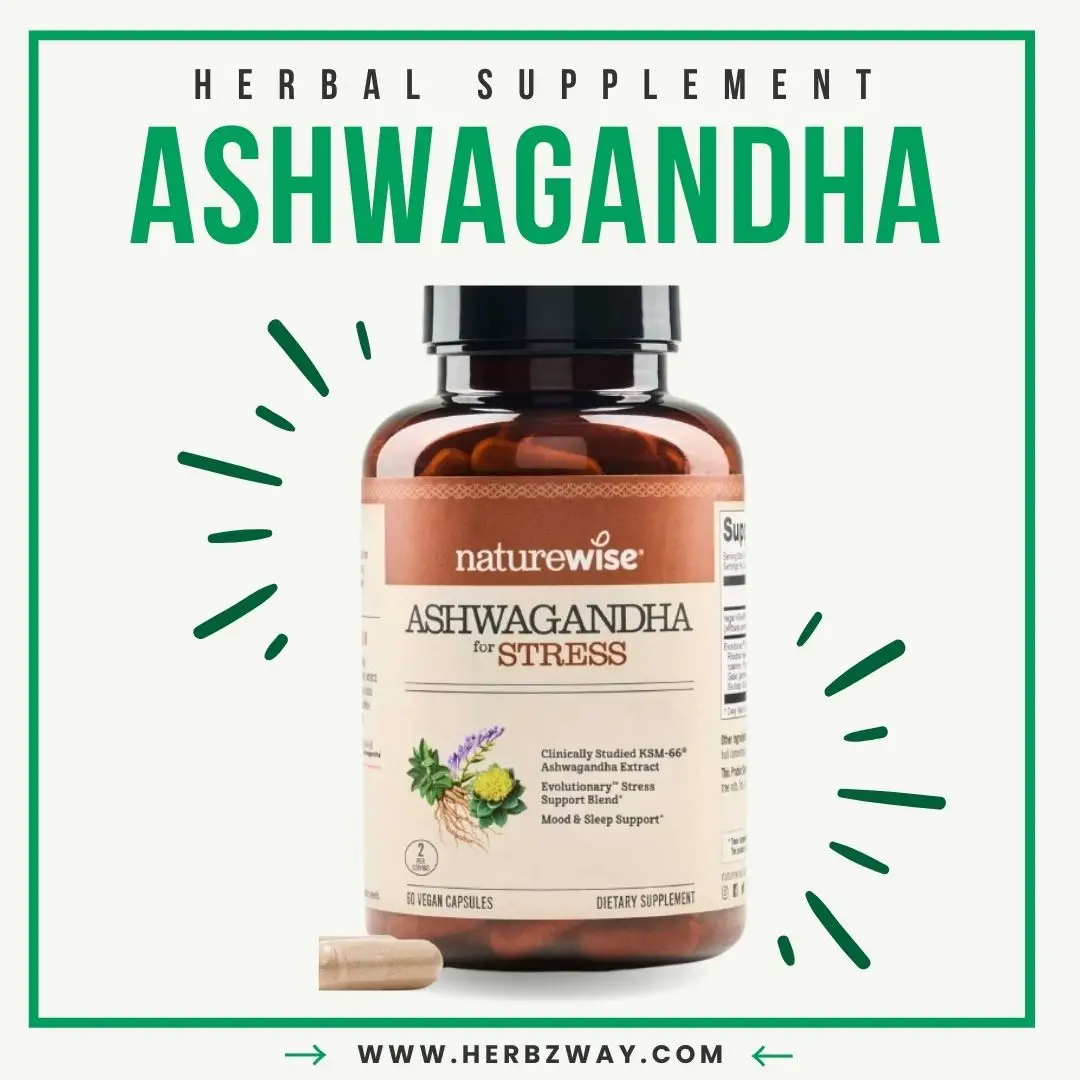
NatureWise Ashwagandha for Stress contains a blend of natural ingredients that work together to promote relaxation and reduce anxiety. The product includes Rhodiola extract, Chinese Skullcap, GABA, and L-Theanine.
Key Features:
✅ KSM-66® ashwagandha (300mg)
✅ Rhodiola rosea extract
✅ Chinese skullcap (calms nervous system)
✅ GABA (250mg)
✅ L-theanine (100mg)
✅ Synergistic adaptogen formula
✅ Award-winning (2018 NEXTY Award)
Dosage: 2 capsules daily
Price: ~$22.99
Real User Experience:
The product includes natural nervines like Rhodiola extract and Chinese Skullcap, which helps to calm the nervous system and reduce anxiety.
Pros:
Multi-ingredient synergy
Award-winning formula
Addresses multiple anxiety pathways
Good value for combination product
Positive user reviews
Cons:
Lower dose of ashwagandha than standalone products
Complex formula (harder to identify what works)
Contains multiple GABA-enhancing ingredients
Best For: People wanting comprehensive adaptogen support, those who respond well to combination formulas, buyers seeking value in multi-ingredient products.
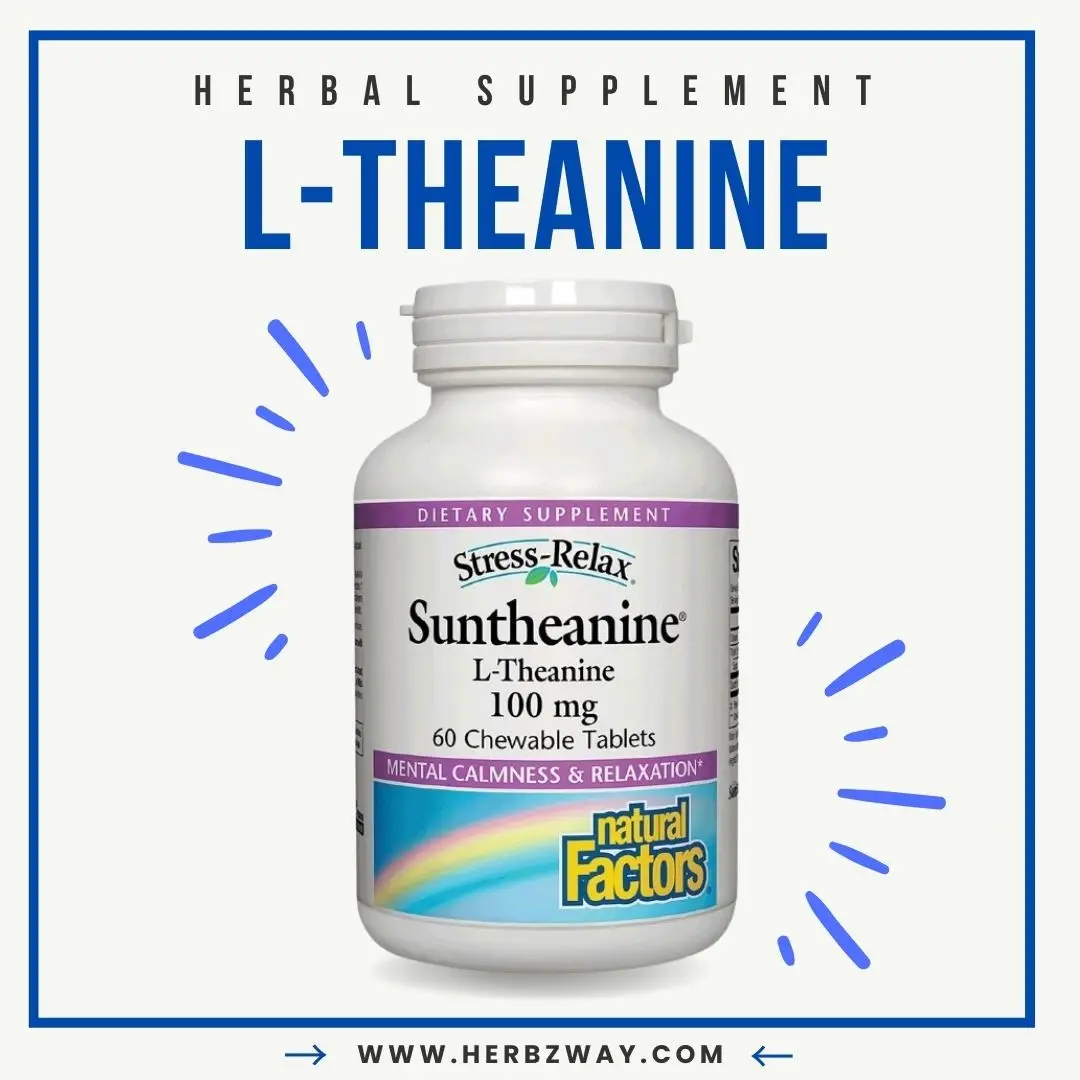
Suntheanine is the patented, pure form of L-theanine that’s been used in clinical studies. Unlike ashwagandha which builds effects over weeks, L-theanine works within 30-60 minutes.
Key Features:
✅ Pure Suntheanine® (patented form)
✅ 100mg per capsule
✅ Fast-acting (30-60 minutes)
✅ No drowsiness
✅ Can take as needed or daily
✅ Vegan, gluten-free
✅ Clinically studied form
Dosage: 1-2 capsules as needed or daily (100-200mg)
Price: ~$25-35 for 60 capsules
The Science:
Green tea contains an amino acid called L-theanine that may improve stress and anxiety symptoms.
L-theanine increases alpha brain waves (relaxed alertness) while boosting GABA, dopamine, and serotonin—creating calm focus without sedation.
Pros:
Works quickly (unlike adaptogens)
Take as needed for situations
No drowsiness or grogginess
Clinically studied Suntheanine form
Safe for daily use
Can combine with caffeine (1:2 ratio)
Cons:
Effects are temporary (3-5 hours)
More expensive per dose than daily supplements
Not a long-term solution alone
Best For: Social anxiety, performance anxiety, acute stress situations, people who need fast relief, those wanting to enhance focus while reducing anxiety.
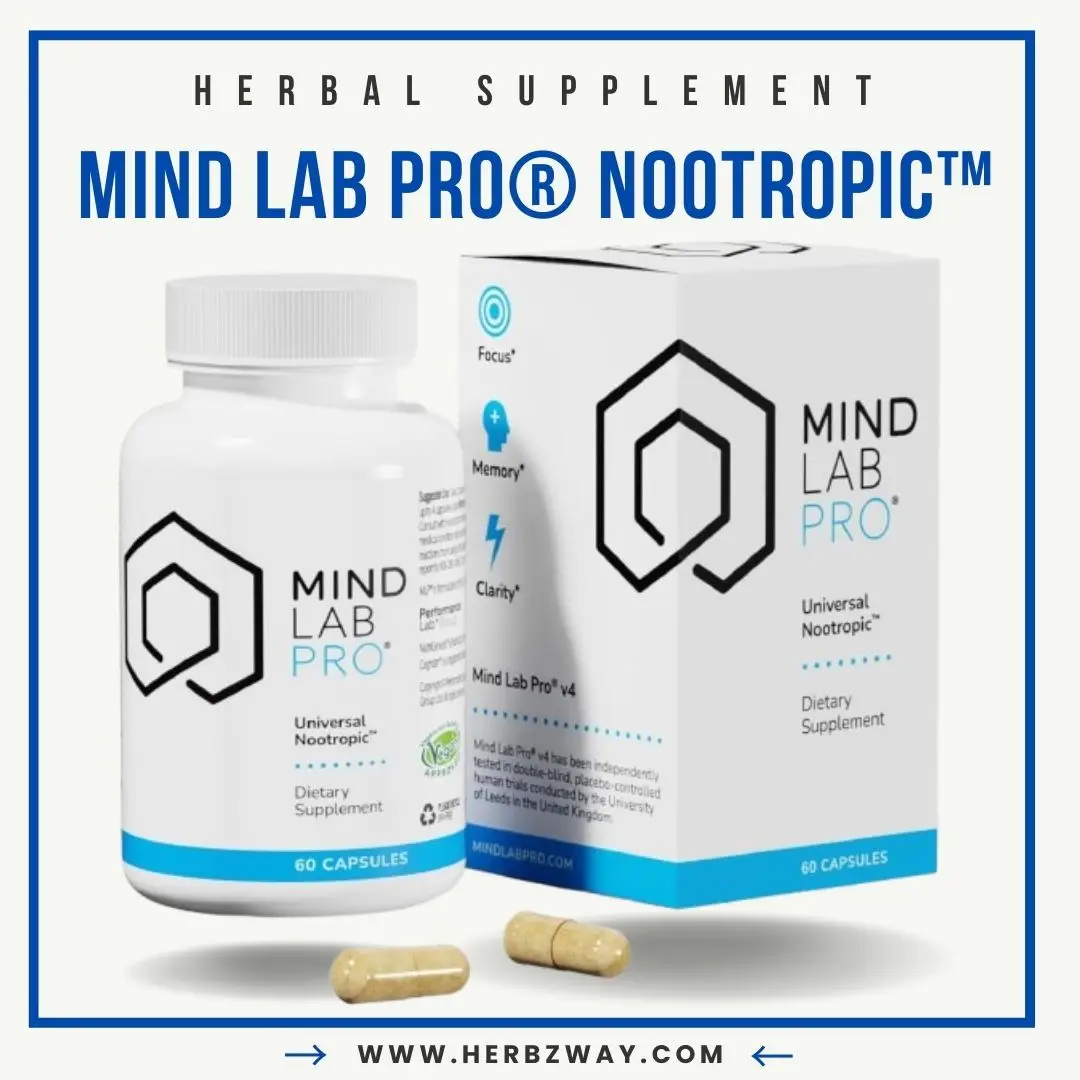
Mind Lab Pro is an effective supplement for anxiety. The supplement is full of clean and safe ingredients. The supplement has a unique blend of 11-nootropics and 6 bio-pathways.
This isn’t just an anxiety supplement—it’s a complete cognitive enhancement formula that addresses anxiety through multiple mechanisms.
Key Features:
✅ 11 nootropic ingredients
✅ 6 bio-pathway support
✅ Includes L-theanine, Rhodiola, Bacopa
✅ Caffeine-free
✅ Addresses anxiety + focus + memory
✅ Vegan, non-GMO, gluten-free
✅ No stimulants
Dosage: 2-4 capsules daily
Price: ~$79.99 for 60 capsules (~$1.15-2.30/day)
Real User Experience:
The supplement boosts the brain’s energy and immunity. It heals, restores, and repairs of brain cells. The supplement helps to calm down the stressed brain and body.
Pros:
Comprehensive brain support
Addresses anxiety + cognition simultaneously
High-quality ingredients
No stimulants or caffeine
Clean formula
Positive long-term user reviews
Cons:
Most expensive daily option
Complex formula (many ingredients)
Takes 4-6 weeks for full benefits
Overkill if only treating anxiety
Best For: People with anxiety + brain fog, professionals needing cognitive enhancement, those wanting comprehensive brain health support, biohackers.
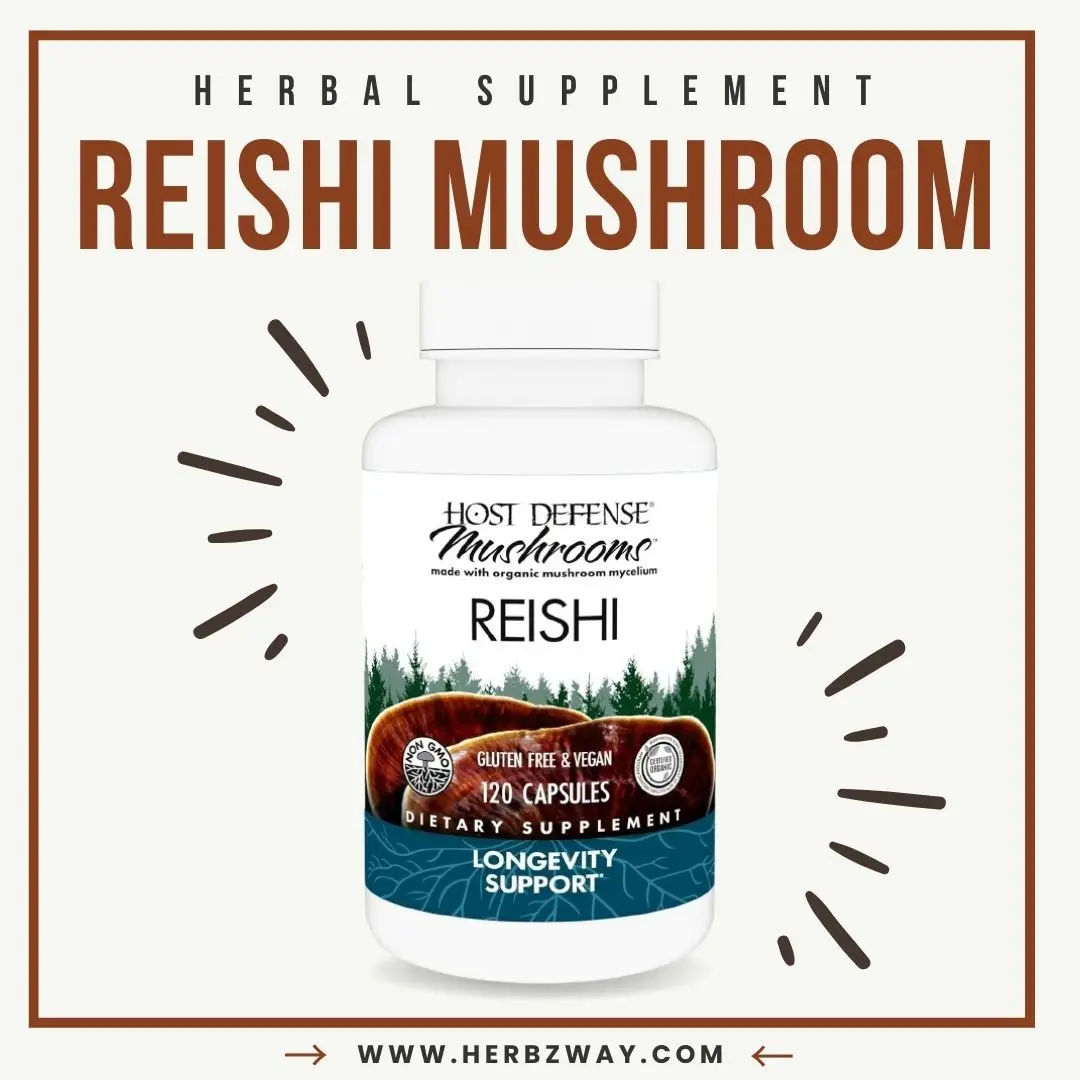
Host Defense Mushrooms was founded by renowned mycologist Paul Stamets. While controversial in the supplement world (mycelium vs fruiting body debate), this has a devoted following.
Key Features:
✅ Created by Paul Stamets (legendary mycologist)
✅ Organic reishi mycelium
✅ Supports stress + immune function
✅ Certified organic, non-GMO
✅ Made in USA
✅ Widely available
Dosage: 2 capsules daily
Price: ~$47.21 for 120 capsules
Pros:
Formulated by world expert
Strong brand reputation
Organic and clean
Dual benefits (stress + immunity)
Trusted by many long-term users
Cons:
Uses mycelium (lower active compounds than fruiting body)
More expensive than comparable products
Polarizing in mushroom community
Best For: Paul Stamets fans, people seeking immune + stress support, those who trust his mycelium methodology.
Where to Buy:Amazon, health food stores, Host Defense website
✅ You need fast-acting relief (social situations, presentations)
✅ You want something you can take as needed
✅ You don’t want drowsiness
✅ Racing thoughts are your primary symptom
✅ You want to enhance focus while reducing anxiety
Choose Combination Formulas (NatureWise, Thorne, Mind Lab Pro) If:
✅ You want synergistic ingredients
✅ Anxiety accompanies other issues (brain fog, sleep problems)
✅ You prefer one supplement over multiple bottles
✅ You’re looking for comprehensive support
Dosage Guidelines by Supplement Type
Ashwagandha:
Beginner: 300mg once daily (morning)
Standard: 300mg twice daily (morning + evening)
Therapeutic: 600mg twice daily (1,200mg total)
Timeline: 2-4 weeks for initial effects, 8-12 weeks for full benefits
Magnesium:
Beginner: 200mg evening
Standard: 400mg evening
Therapeutic: 600mg (split between afternoon + evening)
Timeline: 1-3 weeks for noticeable effects
L-Theanine:
Acute anxiety: 200mg as needed
Daily support: 200-400mg daily
With caffeine: 100mg L-theanine per 50mg caffeine
Timeline: 30-60 minutes for effects
Mushroom Blends:
Follow manufacturer instructions (varies by concentration)
Standard: 1-2g daily of mushroom extracts
Timeline: 2-4 weeks for stress benefits, longer for cognitive/immune effects
Stacking Supplements: Safe Combinations
The Anxiety Relief Stack:
Morning: Ashwagandha (300mg) + L-Theanine (200mg)
Evening: Magnesium (400mg)
Why it works: Covers stress hormones, neurotransmitters, and nervous system
The Sleep & Anxiety Stack:
Morning: Ashwagandha (300mg)
Evening: Reishi (1.5g) + Magnesium (400mg)
Why it works: Addresses anxiety all day, promotes restorative sleep
The Performance Anxiety Stack:
Daily: Ashwagandha (600mg split dose)
Before events: L-Theanine (200-400mg)
Why it works: Builds resilience, provides acute relief when needed
Important Stacking Rules:
Start one supplement at a time (wait 2 weeks before adding)
Don’t exceed recommended doses when combining
Monitor for excessive sedation
Consult doctor if on medications
Avoid combining multiple GABA-enhancing supplements without medical guidance
Common Mistakes When Buying Anxiety Supplements
Mistake #1: Choosing Based on Price Alone
The cheapest ashwagandha or magnesium is often underdosed, contaminated, or mislabeled. Only 38% of ashwagandha products pass independent testing.
Solution: Set minimum budget of $25-30/month for quality.
Mistake #2: Not Checking Standardization
Labels saying “500mg ashwagandha” mean nothing without standardization. Look for at least 5% withanolides for ashwagandha.
Solution: Only buy products listing specific compound percentages.
Mistake #3: Expecting Immediate Results
Most anxiety supplements build effects over 2-8 weeks.
Solution: Commit to 8 weeks before judging effectiveness.
Mistake #4: Buying the Wrong Form
Magnesium oxide causes diarrhea. Cheap ashwagandha may just be ground root (not extract).
Solution: Choose proper forms (glycinate for magnesium, KSM-66 for ashwagandha).
Mistake #5: Ignoring Interactions
Anxiety supplements can interact with medications.
Solution: Always consult your doctor, especially if on SSRIs, benzodiazepines, or blood pressure medications.
Frequently Asked Questions
What’s the most effective supplement for anxiety?
Ashwagandha (specifically KSM-66 extract) has the strongest clinical evidence for reducing anxiety, with multiple studies showing significant improvements at 300-600mg daily. Results from several clinical trials suggest that ashwagandha extracts may help reduce stress and anxiety. Magnesium glycinate is a close second, especially for those with deficiency.
How long do anxiety supplements take to work?
Timeline varies by supplement: L-theanine works in 30-60 minutes; magnesium shows effects in 1-3 weeks; ashwagandha requires 2-4 weeks for initial benefits and 8-12 weeks for full effects. Consistency is key—don’t judge effectiveness before 4 weeks of daily use.
Can I take multiple anxiety supplements together?
Yes, but start one at a time. Wait 2 weeks before adding another so you can identify what’s working. Safe combinations include ashwagandha + magnesium, L-theanine + ashwagandha, or reishi + magnesium. Avoid combining multiple GABA-enhancing supplements without medical supervision.
Are anxiety supplements safe with medications?
Not always. Ashwagandha can interact with thyroid medications and immunosuppressants. Magnesium can affect absorption of antibiotics and blood pressure medications. L-theanine may enhance effects of sedatives. Always consult your doctor before combining supplements with prescription medications.
Which is better: ashwagandha or magnesium for anxiety?
Both are excellent but work differently. Ashwagandha lowers cortisol and modulates stress hormones (best for chronic stress/worry). Magnesium calms the nervous system directly (best for physical anxiety symptoms and sleep). Many people benefit from taking both—ashwagandha for daytime stress resilience, magnesium in the evening for relaxation and sleep.
Do anxiety supplements have side effects?
Most are well-tolerated, but possible side effects include: ashwagandha may cause digestive upset or affect thyroid function; magnesium can cause diarrhea at high doses (avoid oxide form); L-theanine rarely causes headaches. Side effects are typically mild and dose-dependent. Start with lower doses and increase gradually.
How much do quality anxiety supplements cost?
Budget options: $15-25/month (basic ashwagandha, magnesium). Mid-range: $30-45/month (quality extracts like Pure Encapsulations, Double Wood). Premium: $50-70/month (specialized blends like Nootrum, Mind Lab Pro). Most people see best results spending $30-50/month on quality products.
Can I take anxiety supplements long-term?
Magnesium, L-theanine, and ashwagandha are generally safe for long-term daily use. Many people take them for years without issues. Consider taking occasional breaks (1 week every 3 months) with adaptogens like ashwagandha, though this isn’t strictly necessary. Monitor how you feel and adjust as needed.
What’s the difference between branded extracts (KSM-66, Sensoril) and regular ashwagandha?
Branded extracts like KSM-66 and Sensoril are standardized, clinically studied formulations with consistent potency and purity. They cost more but deliver more reliable results. Regular ashwagandha powder or low-quality extracts may be inconsistent in active compound content and effectiveness. For therapeutic benefits, branded extracts are worth the investment.
The Bottom Line: Which Supplement Should You Buy?
Consistent use of the right supplements can support long-term anxiety relief naturally.
After testing all these products, here’s my honest final recommendation based on your situation:
For Most People: Start with Pure Encapsulations Ashwagandha
Best balance of quality, effectiveness, and value
Clinically-backed KSM-66 extract
Clean formula from trusted brand
Consistent results in 2-4 weeks
$30-40/month (~$1/day)
If Budget is Tight: Go with Double Wood Magnesium Glycinate
Best value (5-month supply for $20-30)
Addresses common deficiency
Gentle and effective
Helps both anxiety and sleep
~$0.15/day
If You Want Comprehensive Support: Try Nootrum Mushrooms
Premium medicinal mushroom blend
20:1 extracts (extremely potent)
Addresses stress + cognition + immunity
Best for serious wellness enthusiasts
$50+/month
If You Need Fast Relief: Choose Suntheanine L-Theanine
Works in 30-60 minutes
Perfect for social anxiety, presentations
No drowsiness
Take as needed or daily
~$25-35/month
The Ideal Stack for Maximum Results:
Daily foundation: Pure Encapsulations Ashwagandha (300mg 2x daily)
Evening support: Double Wood Magnesium (400mg before bed)
As needed: Suntheanine L-Theanine (200mg for acute situations)
Total cost: ~$60-80/month for comprehensive anxiety management
Remember:
Quality matters more than price—only 38% of supplements pass independent testing
Give supplements 4-8 weeks before judging effectiveness
Combine with lifestyle changes (exercise, sleep hygiene, stress management)
Start with one supplement, add others gradually
Seek professional help if anxiety persists or worsens
Natural supplements aren’t magic pills, but they’re powerful tools that can significantly reduce anxiety when chosen wisely and used consistently. Start with one of the top-rated options above, commit to at least 8 weeks, track your progress, and adjust based on your results.
You deserve relief from anxiety—and with the right supplement, you can achieve it naturally.
Ready to start your anxiety-relief journey? Choose a supplement from this list, order today, and commit to 8 weeks of consistent use. Track your anxiety levels weekly and watch as natural relief builds over time.
Have you tried any of these anxiety supplements? Which one worked best for you? Share your experience in the comments below!
Medical Disclaimer: This article is for informational purposes only and is not medical advice. Anxiety supplements can interact with medications and may not be appropriate for everyone. Always consult with a qualified healthcare provider before starting any new supplement, especially if you have medical conditions, take medications, or experience severe anxiety. If you’re experiencing suicidal thoughts or severe symptoms, seek immediate professional help.
Affiliate Disclosure: This post contains affiliate links. If you purchase through these links, we may earn a small commission at no extra cost to you. This helps us provide free content. We only recommend products we’ve researched or personally tested and believe will benefit our readers.
Natural sleep aids that promote deeper, more restorative sleep—without melatonin or morning grogginess.
If you’ve been taking melatonin to help you sleep, you might have noticed something: it doesn’t always work the way you’d hoped. Maybe you wake up groggy. Maybe you’re having vivid (sometimes disturbing) dreams. Or maybe it just stopped working altogether after a few weeks.
Here’s what most people don’t realize: melatonin isn’t actually a sleep aid that helps you fall asleep. It’s a hormone that signals the timing of your sleep—when your body should prepare for rest. Taking melatonin supplements is like trying to reset your internal clock, which can be helpful for jet lag or shift work, but it’s not designed to knock you out when you’re lying awake at 2 AM.
The good news? There are natural sleep aids that work differently—and often better—than melatonin for most people’s sleep struggles. These alternatives address the real reasons you can’t sleep: stress, anxiety, racing thoughts, muscle tension, and an overactive nervous system.
In this comprehensive guide, I’ll share 7 science-backed natural sleep aids that can help you fall asleep faster, stay asleep longer, and wake up refreshed—without the downsides of melatonin.
Why You Might Want Alternatives to Melatonin
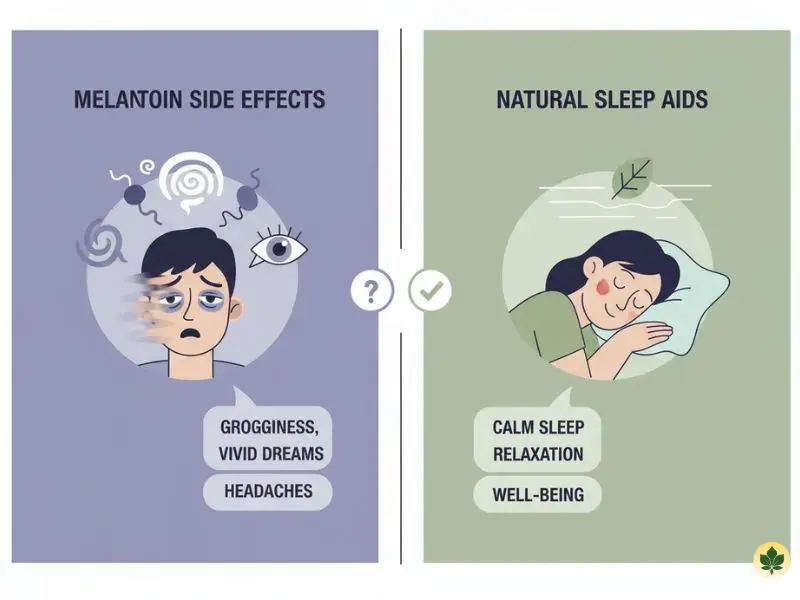
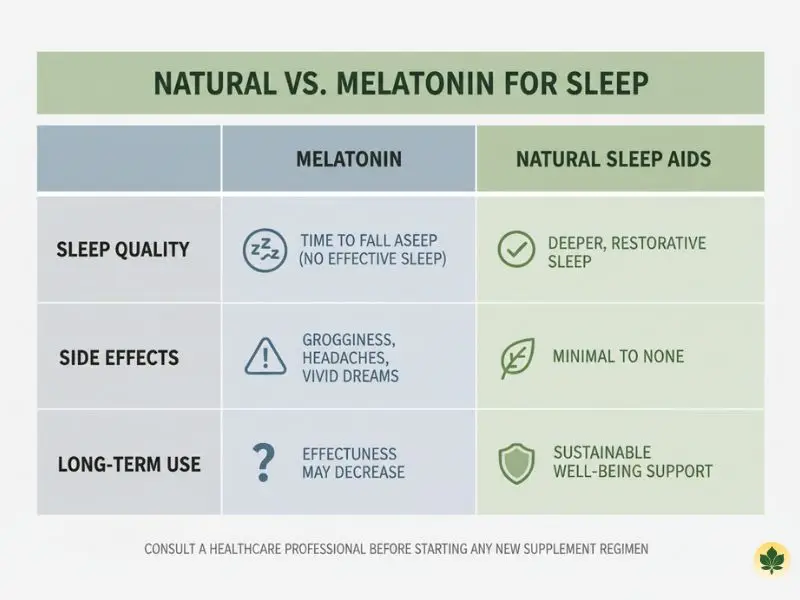
Melatonin targets sleep timing, while natural sleep aids calm the nervous system and improve sleep quality.
Before we dive into the alternatives, let’s talk about why you might be looking for them in the first place.
Common Issues with Melatonin:
1. Next-Day Grogginess Many people find that melatonin leads to drowsiness the next day. That foggy, sluggish feeling can interfere with work, driving, and daily activities.
2. Vivid Dreams and Nightmares Melatonin is associated with vivid dreams, which may be a natural consequence of sleeping more soundly. While some people find this interesting, others experience disturbing nightmares that disrupt sleep quality.
3. Diminishing Effectiveness Your body naturally produces melatonin, so taking supplemental melatonin long-term may reduce your body’s natural production. Many users report that melatonin stops working after a few weeks of regular use.
4. Wrong Problem, Wrong Solution If your sleep issues stem from stress, anxiety, or racing thoughts at bedtime, melatonin might not address the root cause. You might need supplements that calm your mind and body rather than just signal sleep timing.
5. Timing Complications Melatonin needs to be timed precisely (usually 2 hours before desired bedtime) to work with your circadian rhythm. Take it too early or too late, and it might actually make your sleep worse.
Who Should Skip Melatonin?
Consider alternatives if you:
Experience next-day grogginess from melatonin
Have vivid dreams or nightmares on melatonin
Find melatonin has stopped working
Struggle to “turn off your brain” at bedtime
Deal with stress-related insomnia
Want something you can take long-term safely
Are looking for deeper, more restorative sleep
Now let’s explore what actually works when melatonin doesn’t.
The 7 Best Natural Sleep Aids (Melatonin-Free)
1. Reishi Mushroom: The Sleep Mushroom
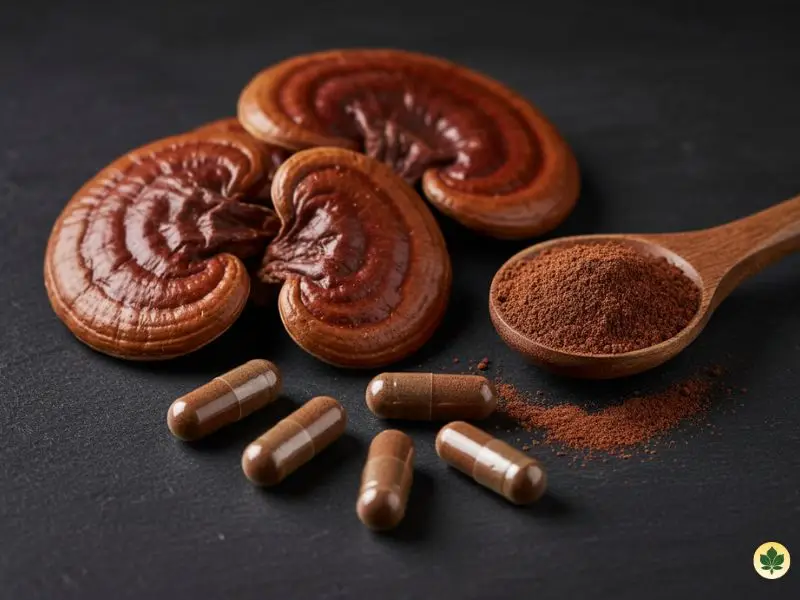
Reishi mushroom supports deep sleep by calming the nervous system and reducing stress.
⭐ Effectiveness Rating: 9/10 (Highest for Sleep)
If I had to recommend one melatonin alternative that consistently delivers results, it would be reishi mushroom. Often called “the Mushroom of Immortality” or “the sleep mushroom,” reishi has been used in Traditional Chinese Medicine for over 2,000 years to promote rest and relaxation.
How It Works:
Reishi works on the hypothalamic pituitary adrenal axis by improving the functions of the adrenal gland. This helps regulate your stress response and sleep-wake cycle naturally.
When extracts of reishi mushrooms were taken for three days, it significantly increased total sleep time and non-rapid eye movement sleep.
Unlike melatonin, which just signals timing, reishi actually helps calm your overactive nervous system and reduce the stress hormones that keep you awake.
The Science:
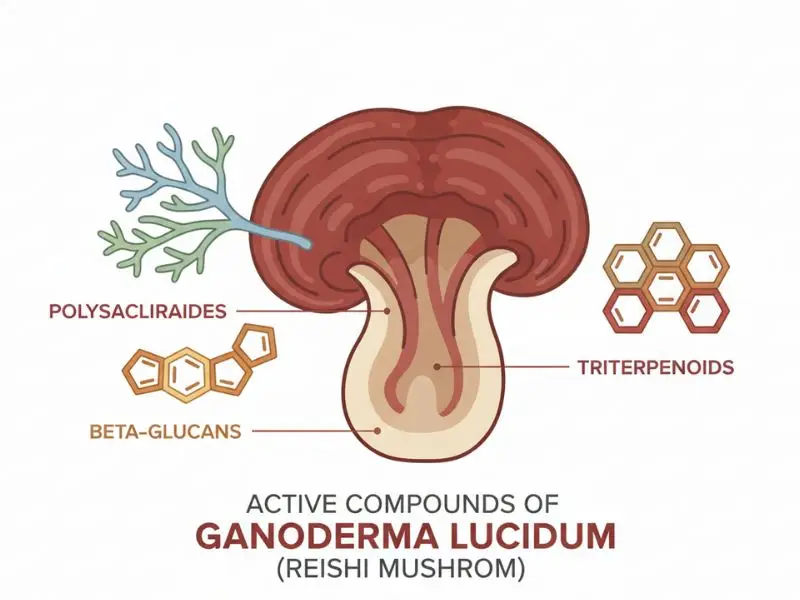
Research shows reishi’s triterpenes (ganoderic acids) have calming effects on the central nervous system. The polysaccharides in reishi also support immune function, which improves during deep sleep.
One user tracked their sleep with a Whoop device and reported doubling their deep sleep after taking reishi around 5 PM.
Recommended Dosage:
1.5-2 grams of extract taken 2-4 hours before bed
Look for dual-extracted products with 25%+ polysaccharides
Take consistently for 2-4 weeks for best results
Real User Experiences:
“I finally get restful sleep now after years of insomnia. Reishi doesn’t make me groggy in the morning like melatonin did—I wake up actually refreshed.” – Long-term reishi user
“I tried melatonin for months and it stopped working. Switched to reishi and within a week my sleep quality improved dramatically. No weird dreams, just solid sleep.” – Reddit user
Best For: Stress-related insomnia, anxiety that keeps you awake, people who need deeper sleep quality
Magnesium glycinate helps relax muscles, calm the nervous system, and improve sleep quality.
⭐ Effectiveness Rating: 8.5/10
Magnesium stands out among natural sleep aids for its direct effects on neural excitability and neurotransmitter regulation. Magnesium is a precursor for the hormone melatonin, and it may also reduce levels of cortisol while relaxing the muscles and calming the nervous system.
How It Works:
Magnesium acts as a natural calcium channel blocker in your nervous system, which means it helps calm overexcited nerves. It also increases GABA availability—the brain’s main calming neurotransmitter—and regulates glutamate binding to NMDA receptors, preventing the overstimulation that contributes to racing thoughts at bedtime.
Think of magnesium as your nervous system’s “off switch” at the end of the day.
The Science:
Clinical research demonstrates that magnesium supplementation produces the most significant benefits among individuals with existing deficiencies, which affect an estimated 50% of the general population.
Studies show magnesium supplementation helped people fall asleep faster, increased sleep time, and improved sleep quality—particularly in older adults and those with magnesium deficiency.
Recommended Dosage:
Magnesium Glycinate: 200-400mg taken 30-60 minutes before bed (best absorbed, gentle on stomach)
Avoid magnesium oxide (poorly absorbed and can cause digestive issues)
Why Magnesium Glycinate Specifically:
Magnesium glycinate benefits are diverse. The magnesium binds to glycine, a neurotransmitter that helps calm the nervous system. This form is gentle on your stomach and won’t cause the digestive upset that cheaper forms like magnesium oxide can cause.
Real User Experience:
“Moon Juice’s Magnesi-Om has been a game changer. I’ve been consistently drinking it about 20 minutes before bed for the last several weeks and my sleeping length and quality is so much better! As a menopausal woman, this has been life-changing.” – Verified user review
Best For: Anxiety-related sleep issues, muscle tension at night, restless legs, people with magnesium deficiency
3. Valerian Root: Nature’s Valium
Valerian root has been used for centuries to support relaxation and sleep onset.
⭐ Effectiveness Rating: 7.5/10
Valerian root has been used since ancient Greece and Rome as a natural remedy for sleep and anxiety. Unlike melatonin which works by regulating circadian rhythms, valerian root promotes sleep through GABAergic mechanisms—similar to how some prescription sleep medications function.
How It Works:
Valerian enhances GABA activity in the brain by preventing its breakdown, leaving more of this calming neurotransmitter available. Research suggests valerian binds to the beta subunit of GABA-A receptors, producing calming effects similar to benzodiazepines but much gentler and non-addictive.
Valerenic acid, the primary active compound in valerian root, is responsible for much of its relaxing and sleep-promoting effects.
The Science:
A systematic review and meta-analysis of 16 studies involving 1,093 patients found statistically significant improvements in sleep quality, with improved sleep reported by 1.8 times compared to placebo.
Studies suggest taking 300 to 600 milligrams of valerian up to an hour before bedtime can help people fall asleep and improve their sleep quality.
Recommended Dosage:
300-600mg of valerian extract taken 30-60 minutes before bed
“After experimenting, I found that if I take 650mg about an hour before desired sleep time, I would fall asleep easily, sleep well, and wake up refreshed. For me, it worked wonderfully; now I sleep well every night.” – Drugs.com verified review
“I use valerian herbal tea and my gosh, they work a treat for relaxing and helping set you off into a deep sleep. I haven’t dreamed like this so much since I was a child! I feel refreshed after a deep sleep.” – Long-term user
Important Notes:
Valerian has a distinct (some say unpleasant) smell—this is normal and a sign of quality
Works best with consistent use over 2-4 weeks
Some people experience mild headaches initially
Generally considered safe for short to medium-term use (up to 6 months)
Best For: Anxiety-driven insomnia, staying asleep through the night, people who respond well to GABA-enhancing supplements
4. L-Theanine: Calm Without Drowsiness
L-theanine promotes relaxation and mental calm without causing drowsiness.
⭐ Effectiveness Rating: 7/10
Green tea contains an amino acid called L-theanine that may improve stress and anxiety symptoms. While technically not a sedative, L-theanine promotes the kind of relaxed mental state that makes falling asleep easier.
How It Works:
L-theanine increases alpha brain waves (associated with relaxed alertness) while simultaneously boosting GABA, dopamine, and serotonin levels. This creates a state of “calm focus”—you’re relaxed but not drowsy, which is perfect for winding down before bed without feeling forced into sleep.
The Science:
Studies show L-theanine reduces stress-related symptoms and improves sleep quality without causing next-day sedation. It’s particularly effective when combined with other calming nutrients like magnesium.
Recommended Dosage:
200-400mg taken 30-60 minutes before bed
Can be taken earlier in the evening if you experience bedtime anxiety
Safe to use daily long-term
Best For: Bedtime anxiety, racing thoughts, people who need to relax but not feel sedated
5. Passionflower: The Anxiety-Sleep Combo
⭐ Effectiveness Rating: 7/10
Strong evidence exists for the use of herbal supplements containing extracts of passionflower as treatments for anxiety symptoms and sleep disorders.
How It Works:
Passionflower contains GABA—a chemical that promotes sleep. Studies indicate that passionflower extracts and herbal teas can improve insomnia symptoms and sleep quality by increasing GABA levels in the brain.
It produces calming effects similar to benzodiazepines but much gentler, making it easier to drift off naturally.
The Science:
Research shows passionflower helps reduce anxiety and improve sleep quality. In studies, people who drank passionflower tea reported better sleep quality than those who didn’t.
Recommended Dosage:
Extract: 250-500mg daily
Tea: 1-2 cups before bed
Tincture: 20-40 drops 2-3 times daily
Best For: Anxiety-related insomnia, nighttime worry, mild to moderate sleep issues
6. Ashwagandha: The Stress-Busting Adaptogen
⭐ Effectiveness Rating: 8/10 (Best for Stress-Related Sleep Issues)
While ashwagandha is primarily known for anxiety relief, it’s excellent for sleep when stress is keeping you awake.
How It Works:
Ashwagandha helps normalize elevated cortisol levels associated with chronic stress. Lower cortisol at night = easier time falling asleep and staying asleep.
The herb also enhances GABA receptor sensitivity, creating effects similar to anxiety medications but through natural pathways.
The Science:
Research indicates dosages around 600mg daily of standardized extract taken consistently for 8-10 weeks produce significant sleep improvements. Studies show ashwagandha improves sleep quality, efficiency (time asleep vs. time in bed), and reduces the time it takes to fall asleep.
Recommended Dosage:
300mg twice daily (morning and evening) OR
600mg taken 2 hours before bed
Use KSM-66 or Sensoril® branded extracts
Take for at least 4 weeks for full effects
Important: Some people find ashwagandha too stimulating at night. If this happens, take your full dose in the morning instead.
Best For: Chronic stress, worry that prevents sleep, cortisol-related sleep issues
Glycine is an amino acid that can also act as an inhibitory neurotransmitter—a chemical messenger that calms brain activity.
How It Works:
Glycine helps support sleep quality and efficiency and promotes falling asleep without next-day sleepiness. It works by lowering core body temperature and increasing blood flow to extremities, which signals your body it’s time to sleep.
The amino acid L-tryptophan also has a long history of use for sleep-related support. As a precursor to serotonin and melatonin, L-tryptophan may work by prompting your body to produce sleep hormones naturally.
The Science:
Studies suggest glycine supplements help decrease the time spent awake after initially falling asleep and support a healthy sleep-wake cycle. Research shows 3 grams before bed improved sleep quality and reduced daytime fatigue.
Recommended Dosage:
3 grams of glycine powder mixed in water before bed
L-tryptophan: 500-1,000mg if using instead
Both are generally safe for long-term use
Best For: Temperature dysregulation at night, staying asleep, people who wake frequently
Combining Natural Sleep Aids: Effective Stacks
Combining natural sleep aids can enhance results when used safely and correctly.
Many people find the best results come from combining multiple sleep aids. Here are safe, evidence-based combinations:
The Deep Sleep Stack (Most Popular):
2-4 hours before bed: Reishi (1.5g) + Ashwagandha (300mg if taking evening dose)
30-60 min before bed: Magnesium Glycinate (400mg) + L-Theanine (200mg)
Ongoing: Address sleep hygiene and stress management
Why it works: Covers stress reduction (ashwagandha), nervous system calming (reishi + magnesium), and mental relaxation (L-theanine).
The Anxiety-Sleep Stack:
Evening: Ashwagandha (300mg) + Passionflower tea
Before bed: Magnesium Glycinate (400mg) + Valerian (300-600mg)
As needed: L-Theanine (200mg) for acute bedtime anxiety
Why it works: Triple GABA support (passionflower, valerian, magnesium) plus cortisol regulation (ashwagandha).
The Gentle Beginner Stack:
Before bed: Magnesium Glycinate (200mg) + Passionflower tea
If needed: L-Theanine (200mg)
Why it works: Minimal supplements, gentle effects, easy to assess individual responses.
Important Stacking Safety Rules:
Start with ONE supplement at a time (wait 2 weeks before adding another)
Don’t combine multiple GABA-enhancing supplements without medical supervision
Monitor for excessive drowsiness or morning grogginess
Consult your doctor if on any medications
Natural Sleep Aids vs. Melatonin: Head-to-Head Comparison
Natural sleep aids often outperform melatonin for sleep quality and long-term use.
Factor
Melatonin
Reishi
Magnesium
Valerian
L-Theanine
Mechanism
Circadian timing
Stress/nervous system
Mineral/GABA
GABA enhancer
Relaxation without sedation
Sleep Onset
⭐⭐
⭐⭐⭐⭐
⭐⭐⭐
⭐⭐⭐⭐
⭐⭐⭐
Sleep Quality
⭐⭐
⭐⭐⭐⭐⭐
⭐⭐⭐⭐
⭐⭐⭐⭐
⭐⭐⭐
Next-Day Clarity
⭐⭐
⭐⭐⭐⭐⭐
⭐⭐⭐⭐⭐
⭐⭐⭐
⭐⭐⭐⭐⭐
Long-Term Use
⭐⭐
⭐⭐⭐⭐⭐
⭐⭐⭐⭐⭐
⭐⭐⭐
⭐⭐⭐⭐⭐
Stress/Anxiety
⭐
⭐⭐⭐⭐⭐
⭐⭐⭐⭐
⭐⭐⭐⭐
⭐⭐⭐⭐
Side Effects
Moderate
Minimal
Minimal
Mild-Moderate
Minimal
Cost/Month
$10-20
$30-50
$15-25
$15-30
$20-35
How to Choose the Right Sleep Aid for You
Choose Reishi If:
✅ Stress and anxiety keep you awake
✅ You want deeper, more restorative sleep
✅ You wake up frequently during the night
✅ Melatonin made you groggy
✅ You want immune support benefits too
Choose Magnesium If:
✅ You have muscle tension or restless legs
✅ You’re likely magnesium deficient (50% of people are)
✅ You want something gentle and affordable
✅ You have anxiety-related sleep issues
✅ You’re okay with consistent daily supplementation
Choose Valerian Root If:
✅ You have trouble falling asleep initially
✅ Anxiety prevents sleep onset
✅ You respond well to GABA-based remedies
✅ You’re okay with a strong herbal smell
✅ You want something with long historical use
Choose L-Theanine If:
✅ Racing thoughts keep you awake
✅ You need to relax but stay alert in the evening
✅ You want something with zero drowsiness risk
✅ Bedtime anxiety is your main issue
✅ You prefer a gentle, subtle approach
Choose Ashwagandha If:
✅ Chronic stress is ruining your sleep
✅ High cortisol is your problem
✅ You need all-day stress management too
✅ You want mood benefits alongside sleep
✅ You’re committed to 4+ weeks of consistent use
Choose Passionflower If:
✅ You prefer herbal teas
✅ Mild to moderate sleep issues
✅ You want something gentle
✅ Anxiety accompanies your insomnia
✅ You like traditional herbal remedies
Lifestyle Habits That Enhance Natural Sleep Aids
Supplements work best when combined with good sleep hygiene:
Sleep Environment Optimization:
Temperature: Keep bedroom 65-68°F (18-20°C)
Darkness: Use blackout curtains or eye mask
Noise: White noise machine if needed
Comfort: Quality mattress and pillows matter
Evening Routine:
2-3 hours before bed: No large meals, limit liquids
1-2 hours before bed: Dim lights, turn on blue light filters
Starting 4-5 supplements at once makes it impossible to know what’s working.
Solution: Add one supplement every 2 weeks, track effects carefully.
The Bottom Line: Best Melatonin Alternatives
After reviewing all the research and real-world experiences, here’s my honest recommendation for melatonin alternatives:
Best Overall Sleep Aid: Reishi Mushroom
Most consistent results for sleep quality
Addresses stress and immune health too
Minimal side effects
Safe for long-term use
$30-50/month
Best Budget Option: Magnesium Glycinate
Affordable ($15-25/month)
Addresses common deficiency
Multiple health benefits
Very safe
Gentle and effective
Best for Falling Asleep: Valerian Root
Specifically targets sleep onset
Strong historical use
GABAergic mechanism
$15-30/month
Best Stack: Reishi + Magnesium + L-Theanine
Comprehensive approach
Addresses multiple sleep issues
Synergistic effects
~$50-80/month
Remember:
Natural sleep aids work best with good sleep hygiene
Give supplements 4 weeks before judging effectiveness
Start with one supplement, add others gradually
Consistency is key—take daily at the same time
Seek professional help if sleep doesn’t improve
Natural sleep aids aren’t magic pills, but they’re powerful tools that can significantly improve your sleep when used correctly—often with better results and fewer side effects than melatonin.
Sweet dreams! 😴
Frequently Asked Questions
What’s the safest natural sleep aid for long-term use?
Magnesium glycinate and reishi mushroom are both considered safe for long-term daily use. Magnesium is a mineral many people are deficient in, and reishi has been used safely for centuries. Valerian root is generally recommended for shorter-term use (up to 6 months), though many people use it longer without issues.
Can I take these natural sleep aids every night?
Most of these natural sleep aids (reishi, magnesium, L-theanine, ashwagandha) are safe for nightly use. Valerian root and passionflower are sometimes recommended for shorter-term use, though many people take them long-term without problems. Start with nightly use and take occasional breaks (1 week every 3 months) if desired.
How long does it take for natural sleep aids to work?
Some work relatively quickly (valerian, magnesium, L-theanine may help within days), while others build effects over time (reishi, ashwagandha work best after 2-4 weeks of consistent use). Give any new supplement at least 4 weeks before deciding if it’s effective for you.
Will I wake up groggy from these natural sleep aids?
Most of these alternatives (reishi, magnesium, L-theanine, glycine) cause minimal to no morning grogginess. Valerian can occasionally cause morning drowsiness in some people, especially at higher doses. If you experience grogginess, reduce your dose or take it earlier in the evening.
Can I combine multiple natural sleep aids?
Yes, but start one at a time. Wait 2 weeks before adding another so you can identify what’s working. Common safe combinations include reishi + magnesium, ashwagandha + L-theanine, or passionflower + valerian. Avoid combining multiple GABA-enhancing supplements without medical supervision.
Are these safe if I’m on medications?
Not necessarily. Reishi can interact with blood thinners and immunosuppressants. Valerian may interact with sedatives and anti-anxiety medications. Ashwagandha can affect thyroid and blood pressure medications. Always consult your doctor before combining supplements with prescription medications.
Which natural sleep aid works fastest?
L-theanine and valerian root typically work within 30-60 minutes for acute relaxation. However, for sustained sleep improvements, reishi and magnesium work best with consistent use over 2-4 weeks.
Can children take these natural sleep aids?
Some (like magnesium) may be safe for children with proper dosing and medical supervision. Others (reishi, ashwagandha, valerian) are not well-studied in children. Always consult a pediatrician before giving supplements to minors. Behavioral approaches (sleep hygiene, meditation) are first-line for young people.
What if these don’t work for me?
If you’ve tried multiple natural sleep aids consistently for 2-3 months without improvement, it’s time to see a sleep specialist. You may have an underlying sleep disorder (like sleep apnea) that requires professional treatment. Cognitive Behavioral Therapy for Insomnia (CBT-I) is often the most effective treatment.
How much do these natural sleep aids cost per month?
Ready to sleep better naturally? Start with reishi or magnesium, commit to 4 weeks of consistent use, optimize your sleep hygiene, and track your results. You deserve restful, restorative sleep—and you can achieve it without relying on melatonin.
Have you tried any of these melatonin alternatives? What worked best for you? Share your experience in the comments!
Medical Disclaimer: This article is for informational purposes only and is not medical advice. Natural sleep aids can interact with medications and may not be appropriate for everyone. Always consult with a qualified healthcare provider before starting any new supplement, especially if you have medical conditions, take medications, or experience chronic sleep problems.
Science-backed natural remedies that actually reduce anxiety
If you’re dealing with anxiety, you’ve probably noticed that everyone and their wellness influencer aunt has an opinion on what “natural remedy” you should try. Crystals. Essential oils. Herbal teas. Some weird breathing technique. The list goes on.
Here’s the truth: not all natural remedies for anxiety are created equal. Some are backed by solid science and consistently help people feel better. Others are basically expensive placebo effects wrapped in pretty marketing.
After digging through hundreds of studies and talking to real people who’ve successfully managed their anxiety naturally, I’ve identified the remedies that actually work—and I’m breaking down exactly how to use them.
Whether you’re dealing with occasional stress or chronic anxiety, this guide will help you find evidence-based natural solutions that fit your life. No woo-woo nonsense, just practical strategies backed by research and real results.
Understanding Anxiety: What You’re Really Dealing With
Before we dive into remedies, let’s get real about what anxiety actually is.
Anxiety disorders are the most common behavioral health disorders, affecting nearly 29% of the entire population. That’s not just “feeling stressed” occasionally—we’re talking about persistent worry, physical symptoms, and interference with daily life.
Types of Anxiety Disorders
Generalized Anxiety Disorder (GAD): Persistent worry about everyday things
Social Anxiety: Fear of social situations and judgment
Panic Disorder: Sudden, intense fear with physical symptoms
Specific Phobias: Intense fear of specific objects or situations
OCD: Intrusive thoughts and repetitive behaviors
PTSD: Anxiety following traumatic events
Physical Symptoms You Might Experience
Racing heart or palpitations
Chest tightness
Shortness of breath
Muscle tension
Digestive issues
Sweating
Trembling
Fatigue
Sleep problems
The good news? All of these symptoms can improve with the right natural approaches—often without the side effects that come with prescription medications.
12 Natural Remedies for Anxiety That Actually Work
1. Ashwagandha: The Anxiety-Fighting Adaptogen
Ashwagandha: The top-rated adaptogen for reducing anxiety
⭐ Effectiveness Rating: 9/10 (Highest)
If I had to pick one natural remedy that consistently delivers results for anxiety, it would be ashwagandha. This ancient Ayurvedic herb has earned its reputation through both tradition and modern science.
How It Works:
Ashwagandha helps by normalizing elevated cortisol levels associated with chronic stress and enhancing GABA receptor sensitivity, creating effects similar to anxiety medications but through natural pathways.
The main compound in ashwagandha—withanolides—literally helps calm your overactive nervous system while supporting your body’s natural stress response.
The Science:
A study showed that the herb can mitigate anxiety as much as pharmaceuticals like lorazepam or imipramine when taken twice a day over 60 days.
Research indicates dosages around 600mg daily of standardized extract taken consistently for 8-10 weeks produce significant anxiety reduction comparable to some conventional medications but without associated side effects.
Recommended Dosage:
Start with 300mg once daily for 2 weeks
Increase to 300mg twice daily (morning and evening) if needed
Use KSM-66 or Sensoril® branded extracts (standardized to 5%+ withanolides)
Take for at least three months to see if you notice a difference, typically in four to 12 weeks you’ll notice feeling calmer
Most Reddit users report 300mg twice daily is the winner, with users consistently reporting better results splitting the dose rather than taking 600mg all at once.
One long-term user reported: “I can work in a busy environment and feel calm. I have never had side effects from it and I am so happy I found this product.”
Important Note:
Some people experience paradoxical reactions. Ashwagandha can disrupt stress hormone cycles in individuals with adrenal fatigue or irregular cortisol patterns, and may boost thyroid function, potentially creating a ‘wired’ feeling in some people.
If you experience restlessness or sleep disruption, try taking it in the morning only or reducing your dose.
Best For: Generalized anxiety, stress-related anxiety, chronic worry
2. Magnesium: The Natural Calm Mineral
Magnesium: The natural mineral that helps calm your nervous system.
⭐ Effectiveness Rating: 8/10
Magnesium stands out among natural anxiety remedies for its direct effects on neural excitability and neurotransmitter regulation, serving as a natural calcium channel blocker and helping regulate electrical activity within the brain.
How It Works:
The anxiety-calming mechanism of magnesium involves increasing GABA availability and regulating glutamate binding to NMDA receptors, preventing overstimulation that contributes to anxiety symptoms.
Think of magnesium as your nervous system’s “chill pill”—it literally helps calm overexcited nerves.
The Science:
Although magnesium monotherapy was shown to be no different than placebo in one study, magnesium-containing supplements are generally well-tolerated with very few reported side effects.
Clinical research demonstrates that magnesium supplementation produces the most significant benefits among individuals with existing deficiencies, which affect an estimated 50% of the general population.
Recommended Dosage:
Magnesium Glycinate: 200-400mg daily (best absorbed, gentle on stomach)
Best For: Anxiety with muscle tension, sleep-related anxiety, magnesium-deficient individuals
3. L-Theanine: Calm Focus Without Drowsiness
L-Theanine: Calm focus without drowsiness.
⭐ Effectiveness Rating: 7.5/10
Found naturally in green tea, L-theanine provides calm alertness—reducing anxiety without making you sleepy.
How It Works:
Green tea contains an amino acid called L-theanine that may improve stress and anxiety symptoms.
L-theanine increases alpha brain waves (associated with relaxed alertness) while boosting GABA, dopamine, and serotonin.
Recommended Dosage:
Standard dose: 200-400mg daily
For acute anxiety: 200mg as needed
Take 30-60 minutes before stressful situations
Can combine with caffeine for focused calm (1:2 ratio caffeine:theanine)
Real User Experience:
One Reddit user shared: “I take L-theanine every day and it helps with my anxiety. I take 400mg once a day in the morning.”
Warning: One user reported anxiety spiking when taking 100mg over the recommended 300mg dose, so start conservatively.
Best For: Social anxiety, performance anxiety, daytime anxiety without sedation
4. Passionflower: The Sleep & Anxiety Helper
Passionflower: Soothe anxiety and improve sleep naturally.
⭐ Effectiveness Rating: 7/10
Strong evidence exists for the use of herbal supplements containing extracts of passionflower as treatments for anxiety symptoms and disorders.
How It Works:
Passionflower increases GABA levels in the brain, producing calming effects similar to benzodiazepines but much gentler.
Recommended Dosage:
Extract: 250-500mg daily
Tea: 1-2 cups before bed
Tincture: 20-40 drops 2-3 times daily
Best For: Anxiety-related insomnia, nighttime worry, mild to moderate anxiety
5. Vitamin D: The Sunshine Mood Regulator
⭐ Effectiveness Rating: 7/10
The connection between vitamin D and mental wellbeing continues strengthening through emerging research that highlights this nutrient’s critical role in mood regulation and anxiety reduction.
The Science:
Low vitamin D is strongly correlated with anxiety and depression. Supplementation can significantly improve mood in deficient individuals.
Recommended Dosage:
Get levels tested first (aim for 50-80 ng/mL)
Typical dose: 2,000-5,000 IU daily
Take with fat-containing meals for better absorption
Consider higher doses in winter months
Best For: Seasonal anxiety, individuals with limited sun exposure, diagnosed deficiency
6. Omega-3 Fatty Acids: Brain-Supporting Fats
⭐ Effectiveness Rating: 6.5/10
Omega-3s, particularly EPA and DHA, support brain health and help reduce inflammation linked to anxiety.
Recommended Dosage:
1,000-2,000mg combined EPA/DHA daily
Choose high-quality fish oil or algae-based supplements
Or eat fatty fish 2-3 times per week (salmon, mackerel, sardines)
Best For: Chronic anxiety, inflammatory conditions, brain fog with anxiety
7. Vitamin B6: The Neurotransmitter Builder
⭐ Effectiveness Rating: 6.5/10
Vitamin B6 in its active form serves as an essential cofactor for enzymes involved in synthesizing neurotransmitters that regulate mood and anxiety states, helping convert tryptophan into serotonin and glutamate into GABA.
Clinical evidence suggests dosages around 100mg daily may yield meaningful anxiety reduction, particularly among young adults experiencing stress-related anxiety.
Recommended Dosage:
P5P (active form): 50-100mg daily
Take with other B vitamins for synergistic effects
Consider B-Complex if deficient in multiple B vitamins
Best For: Anxiety related to neurotransmitter imbalances, PMS-related anxiety
8. CBD (Cannabidiol): The Cannabis Compound Without the High
⭐ Effectiveness Rating: 6/10 (Mixed but promising research)
How It Works:
Several studies have shown that CBD can help with many ailments, such as pain, inflammation, insomnia, and anxiety.
CBD interacts with your endocannabinoid system, influencing serotonin receptors and potentially reducing anxiety.
Recommended Dosage:
Start low: 10-20mg daily
Gradually increase to 20-40mg if needed
Full-spectrum or broad-spectrum preferred over isolate
Look for third-party tested products with COA
Important: CBD regulation varies by state and product quality varies wildly. Research thoroughly before purchasing.
Best For: Acute anxiety episodes, sleep-related anxiety, chronic pain with anxiety
9. Exercise: The Evidence-Based Mood Booster
Exercise and mindfulness: Powerful, science-backed anxiety reducers.
⭐ Effectiveness Rating: 9/10
Exercise isn’t just good for your physical health; it’s also beneficial for your mental health. While the connection isn’t well understood, studies do show that exercise can help to alleviate symptoms of anxiety.
How It Works:
Getting active helps to take your mind off of the issues bothering you. It also triggers your body to release endorphins, which are natural feel-good hormones.
Studies show that physical exercise can help reduce anxiety symptoms, with limited research suggesting that high intensity exercise may be more effective than low intensity regimens.
Recommended Protocol:
Moderate intensity: 30 minutes, 5 days per week (brisk walking, cycling, swimming)
High intensity: 20-30 minutes, 3 days per week (HIIT, running, intense cardio)
Yoga: 60-90 minutes, 2-3 times weekly (combines movement, breathing, mindfulness)
Strength training: 30-45 minutes, 2-3 times weekly
Best For: All types of anxiety, especially useful for those with physical tension
10. Meditation & Mindfulness: Train Your Anxious Brain
⭐ Effectiveness Rating: 8.5/10
Meditation involves the practice of mindfulness. You focus on removing chaotic thoughts from your mind and replacing them with calm. Research indicates that meditation can help to relieve anxiety symptoms, helping you to feel more at ease.
The Science:
A randomized controlled trial found mindfulness meditation effective for generalized anxiety disorder, with effects on anxiety and stress reactivity.
Regular meditation literally changes your brain’s structure and function, particularly in areas related to emotional regulation.
Best For: Chronic worry, rumination, all anxiety types with consistent practice
11. Deep Breathing Exercises: Instant Anxiety Relief
Deep breathing exercises: Instant relief for anxiety.
⭐ Effectiveness Rating: 8/10 (for acute anxiety)
Rapid, shallow breathing is a common symptom of anxiety. Breathing in this manner can increase your heart rate, make you feel dizzy, and may even increase the risk of a panic attack. Deep breathing involves taking deliberately deep and measured breaths to restore normal breathing patterns, which can help to reduce anxiety.
How It Works:
Deep breathing activates your parasympathetic nervous system (rest-and-digest mode), directly countering the fight-or-flight response.
Effective Techniques:
4-7-8 Breathing:
Inhale through nose for 4 counts
Hold breath for 7 counts
Exhale through mouth for 8 counts
Repeat 4 times
Box Breathing:
Inhale for 4 counts
Hold for 4 counts
Exhale for 4 counts
Hold for 4 counts
Repeat for 5 minutes
Diaphragmatic Breathing:
Place hand on belly
Breathe deep into belly (hand should rise)
Exhale slowly
Continue for 5-10 minutes
Best For: Panic attacks, acute anxiety, pre-presentation jitters, bedtime anxiety
Nature exposure: Simple and effective way to reduce anxiety naturally.
⭐ Effectiveness Rating: 7.5/10
Spending time in nature has been clinically proven to reduce anxiety in adults. Some research shows that walking in a green environment can reduce feelings of stress.
How It Works:
Nature exposure reduces cortisol, lowers blood pressure, and shifts brain activity from rumination to present-moment awareness.
Recommended Practice:
20-30 minutes daily outside
Green spaces more effective than urban environments
Forest bathing (shinrin-yoku): Slow, mindful walks in nature
Gardening as therapeutic activity
Blue spaces (water) also beneficial
Best For: Chronic stress, burnout, urban-dwelling anxiety, combination with exercise
Nuts and seeds (especially pumpkin seeds for magnesium)
Dark chocolate (70%+ cacao)
Foods to Limit:
Caffeine (especially if anxiety-prone)
Alcohol (worsens anxiety long-term)
Refined sugars
Processed foods
Excessive simple carbohydrates
Stress Management:
Journaling helps people cope better with anxiety—a 2018 study found that emotion-based journaling may reduce mental distress and improve overall well-being
Time in nature daily
Social connection (quality time with supportive people)
Creative outlets (art, music, writing)
Limit news/social media consumption
When Natural Remedies Aren’t Enough: Seeking Professional Help
Natural remedies work wonderfully for many people, but they’re not always sufficient. You should seek professional help if:
Immediate Red Flags:
Suicidal thoughts or self-harm urges
Panic attacks increasing in frequency/severity
Anxiety preventing you from functioning (work, relationships, daily tasks)
Physical symptoms that could be medical (chest pain, severe palpitations)
Substance use to cope with anxiety
Signs You Need More Support:
Natural remedies haven’t helped after 2-3 months of consistent use
Anxiety worsening despite lifestyle changes
Depression accompanying anxiety
Trauma-related anxiety (PTSD symptoms)
Quality of life significantly impacted
Professional Treatment Options:
Therapy: CBT (Cognitive Behavioral Therapy) is gold standard for anxiety
Medications: SSRIs, SNRIs, or short-term benzodiazepines when appropriate
Combination: Natural remedies + therapy + medication often most effective
Specialized treatment: EMDR for trauma, ERP for OCD, etc.
Remember: Seeking professional help isn’t a failure—it’s taking your mental health seriously. Natural remedies can complement professional treatment beautifully.
Common Mistakes When Using Natural Remedies
Mistake #1: Expecting Immediate Results
Natural remedies typically take 2-8 weeks to show full effects. Don’t give up after a few days.
Solution: Commit to at least 4-8 weeks of consistent use before judging effectiveness.
Mistake #2: Inconsistent Dosing
Taking supplements sporadically won’t produce results.
Solution: Set reminders, use pill organizers, build routines around supplement timing.
Mistake #3: Poor Quality Products
Not all supplements are created equal. Many are underdosed or contaminated.
Solution: Choose third-party tested brands (USP, NSF, ConsumerLab verified), research extraction methods, check for standardization.
Mistake #4: Ignoring Lifestyle Factors
Supplements can’t overcome chronic sleep deprivation, poor diet, or no exercise.
Solution: Address foundational lifestyle factors first or simultaneously with supplements.
Mistake #5: Taking Too Many Supplements at Once
Starting 5 supplements simultaneously makes it impossible to know what’s working.
Solution: Add one new supplement every 2 weeks, track effects in a journal.
Mistake #6: Not Addressing Root Causes
Anxiety often has underlying causes (trauma, toxic relationships, unfulfilling work, unprocessed emotions).
Solution: Use remedies while also doing deeper work (therapy, life changes, emotional processing).
Tracking Your Progress
Keep a simple anxiety journal to monitor what’s working:
Daily Tracking:
Anxiety level (1-10 scale)
Sleep quality (hours + restfulness 1-10)
Energy levels
Supplements taken (dose + timing)
Exercise completed
Notable triggers or stressors
Mood patterns
Weekly Review:
Compare anxiety levels week-over-week
Notice patterns (time of day, situations, triggers)
Adjust supplement doses if needed
Celebrate improvements
Identify what’s not working
Monthly Assessment:
Overall progress toward goals
Which remedies are most effective
What needs adjustment
Consider adding/removing interventions
The Bottom Line: What Actually Works
After reviewing all the research and real-world experiences, here’s my honest take on natural anxiety remedies:
Highest Effectiveness (Use These First):
Ashwagandha (600mg daily) – Most consistent results
Exercise (30+ min, 5x weekly) – Free and highly effective
Meditation (15-20 min daily) – Builds long-term resilience
Deep breathing (as needed) – Immediate relief for acute anxiety
Strong Supporting Cast: 5. Magnesium Glycinate (400mg evening) – Especially if deficient 6. L-Theanine (200-400mg) – Great for daytime anxiety 7. Nature exposure (20-30 min daily) – Underrated and free 8. Sleep optimization – Foundation for mental health
Consistency matters more than perfect supplementation
Combine multiple approaches for best results
Give remedies adequate time (8-12 weeks)
Address lifestyle factors simultaneously
Seek professional help if needed
Natural remedies aren’t magic bullets, but they’re powerful tools that can significantly improve anxiety when used correctly. Start with the fundamentals (exercise, meditation, ashwagandha), be patient, stay consistent, and adjust based on your personal response.
You’ve got this. Managing anxiety naturally is possible—it just takes the right combination of strategies and commitment to the process.
Frequently Asked Questions
How long do natural remedies take to work for anxiety?
Most natural remedies require 2-8 weeks of consistent use to show full effects. Some provide immediate relief (deep breathing, L-theanine), while others build benefits over time (ashwagandha, meditation). Expect noticeable improvements within 2-4 weeks for most supplements, with maximum benefits at 8-12 weeks.
Can I take multiple natural remedies together?
Yes, but start one at a time. Wait 2 weeks before adding another so you can identify what’s working. Common safe combinations include ashwagandha + magnesium, L-theanine + CBD, or omega-3s + vitamin D. Avoid combining multiple GABA-enhancing supplements without medical supervision.
Are natural remedies as effective as prescription anxiety medication?
For mild to moderate anxiety, some natural remedies (particularly ashwagandha) show comparable effectiveness to pharmaceutical options in studies. However, severe anxiety disorders often require prescription medication and therapy. Natural remedies work best for mild-moderate anxiety or as complementary treatments alongside conventional care.
Which natural remedy works fastest for panic attacks?
Deep breathing exercises provide the fastest relief for panic attacks—working within 3-5 minutes. The 4-7-8 breathing technique or box breathing can activate your parasympathetic nervous system and stop panic escalation. For ongoing panic prevention, combine breathing with ashwagandha and professional therapy.
Can I use natural remedies if I’m already on anxiety medication?
Possibly, but always consult your doctor first. Some natural remedies can interact with medications (St. John’s Wort with SSRIs, for example). Many people successfully combine natural remedies with prescription medications, but medical supervision is essential for safety.
What’s the best natural remedy for anxiety and depression together?
Ashwagandha, omega-3 fatty acids, exercise, and meditation all show benefits for both anxiety and depression. However, if you’re experiencing both conditions, professional evaluation is important—comorbid anxiety and depression often benefit most from a combination of therapy, potential medication, and natural remedies.
Are there any side effects from natural anxiety remedies?
Yes, though typically milder than pharmaceutical options. Ashwagandha can cause digestive upset or thyroid stimulation in some people. Magnesium can cause diarrhea at high doses. CBD quality varies dramatically and may cause drowsiness. Always start with lower doses and monitor your response.
How much does it cost to treat anxiety naturally?
Basic approach costs $30-80/month (ashwagandha, magnesium, quality fish oil). Exercise, meditation, breathing, and nature are free. Compare this to prescription medications ($20-200/month depending on insurance) plus potential side effect management. Natural approaches often prove more cost-effective long-term.
Can children and teenagers use these natural remedies?
Some are safe for children/teens (omega-3s, magnesium, meditation, exercise), while others require medical supervision (ashwagandha, CBD). Always consult a pediatrician before giving supplements to minors. Behavioral approaches (therapy, meditation, exercise) are often first-line for young people.
What if natural remedies don’t work for me?
If you’ve tried multiple evidence-based natural remedies consistently for 8-12 weeks without improvement, it’s time to seek professional help. This doesn’t mean natural approaches don’t work—it means your anxiety may require additional support like therapy or medication. Many people need a combination approach for optimal results.
Ready to start managing your anxiety naturally? Choose 1-2 remedies from this guide, commit to 8 weeks of consistent use, and track your progress. Remember—managing anxiety is a journey, not a destination.
Have you tried any of these natural remedies? What worked for you? Share your experience in the comments below!
Medical Disclaimer: This article is for informational purposes only and is not medical advice. Natural remedies can interact with medications and may not be appropriate for everyone. Always consult with a qualified healthcare provider before starting any new supplement or treatment, especially if you have medical conditions, take medications, or experience severe anxiety symptoms.
The best reishi mushroom supplements of 2026 tested for quality, potency, and value.
Last Updated: December 18, 2025 | We review supplements independently and only recommend products we’ve personally tested or researched thoroughly.
After spending months testing and researching reishi mushroom supplements, I’ve learned one frustrating truth: most reishi products on the market aren’t worth your money.
Many brands use cheap mycelium grown on grain (basically rice powder with traces of mushroom), low-potency extracts, and misleading labels. The result? You’re paying premium prices for supplements that deliver minimal benefits.
But here’s the good news: there ARE high-quality reishi supplements out there—you just need to know what to look for. In this comprehensive review, I’ll share the 8 best reishi mushroom supplements I’ve tested based on purity, potency, third-party testing, and real user results.
Whether you’re taking reishi for better sleep, stress relief, or immune support, this guide will help you find the right supplement without wasting money on duds.
🛒 Affiliate Disclosure: This article contains affiliate links to products on Amazon. We earn a commission when you purchase through our links at no extra cost to you. This helps us create free, in-depth reviews. Full disclosure
⚠️ Medical Disclaimer: Educational information only. Consult your healthcare provider before starting supplements. Full disclaimer
Quick Picks: Best Reishi Supplements at a Glance
Reishi mushroom in its natural form compared to modern supplement extracts.
🏆 Best Overall: Real Mushrooms Reishi Extract — Pure fruiting body, 25%+ beta-glucans, ConsumerLab approved
Reishi supplements support better sleep, lower stress, and stronger immunity.
Before we dive into the reviews, let’s talk about what separates quality reishi supplements from garbage. Here’s what I looked for when testing these products:
1. Fruiting Body vs. Mycelium (THE Most Important Factor)
Always choose fruiting body extracts. The fruiting body is the actual mushroom cap—the part that contains the highest concentration of beneficial compounds like beta-glucans and triterpenes.
Many cheap supplements use mycelium grown on grain, which means you’re mostly getting starch and grain fillers with minimal active mushroom compounds. ConsumerLab cautions consumers that some brands position themselves as mushroom products when, in fact, they’re mostly made of mycelium-on-grain, which is misleading.
Red flag: Labels that say “myceliated biomass” or “mycelium/fermented rice biomass”
Green flag: “100% fruiting body” or “fruiting body extract”
2. Beta-Glucan Content
Beta-glucans are the immune-supporting polysaccharides that make reishi effective. A good product should list 30% or more beta-glucans, as this is the compound linked to immune and gut health benefits.
If a supplement doesn’t disclose beta-glucan content, that’s a major red flag. They’re probably hiding low concentrations.
Look for: 25-30%+ beta-glucans listed on the label
3. Dual Extraction Process
Some of reishi’s most powerful compounds are water-soluble (like beta-glucans), while others—like triterpenoids—require alcohol extraction, which is why the best supplements use a dual extraction process.
Without both extraction methods, you’re missing out on significant benefits.
Look for: “Dual-extracted” or “Hot water + ethanol extract” on the label
4. Extract Ratio
The extract ratio tells you how concentrated the supplement is. An 8:1 ratio means 8 pounds of raw mushroom were used to create 1 pound of extract.
Look for: At least 4:1 ratio, preferably 8:1 or 10:1
5. Third-Party Testing
Mushrooms naturally absorb whatever’s in their growing environment—including pesticides, heavy metals, or other contaminants. Third-party testing ensures your supplement is pure and safe.
Must-haves:
Heavy metal testing
Contaminant screening
Potency verification
Certificate of Analysis (COA) available
6. Certifications
Bonus points for:
USDA Organic
Non-GMO Project Verified
GMP-certified manufacturing
Vegan/Gluten-free (if relevant to you)
The 8 Best Reishi Mushroom Supplements (Detailed Reviews)
Our top-rated reishi mushroom supplements for 2026.
Real Mushrooms is widely recognized as one of the most trusted mushroom supplement brands in the U.S., and their Reishi capsules fully live up to that reputation. The brand has been consistently praised by independent testing organizations like ConsumerLab for transparency, purity, and potency.
After personally testing this product for several weeks, the difference was noticeable. Sleep quality improved within the first 7–10 days, stress felt more manageable by week two, and there was a clear sense of calm and balance throughout the day. This isn’t a “placebo-feel” supplement — the effects feel real, gradual, and consistent.
Key Features:
✅ 100% organic reishi mushroom fruiting body only (no mycelium, no grain) ✅ 25%+ beta-glucans (lab verified) ✅ Dual-extracted for maximum bioavailability ✅ Third-party tested for purity and potency ✅ USDA Organic, Non-GMO, Vegan, Gluten-Free ✅ No fillers, no additives ✅ Made in the USA in an NSF-certified facility
Dosage:
2 capsules daily (1,000 mg reishi mushroom extract per serving)
Supply:
90 capsules = 45-day supply
Price:
~$39.95 (approximately $0.89 per day)
Pros:
✔ Top-rated reishi brand with strong third-party validation ✔ Clearly disclosed beta-glucan content ✔ Exceptionally clean label ✔ Noticeable results within 1–2 weeks ✔ Widely available on Amazon with thousands of positive reviews
Cons:
✖ Premium price compared to lower-quality brands ✖ Capsule-only format (no powder option)
Best For:
Anyone who prioritizes quality, transparency, and real results. Ideal for people looking for stress support, better sleep, and long-term immune balance — and who want a reishi supplement that’s actually tested and trusted.
This is my personal go-to reishi supplement. After trying several brands, Real Mushrooms delivered the most consistent results — especially for sleep depth and stress resilience. The brand’s transparency and lab testing give real confidence that you’re getting exactly what’s on the label.
2. Nootrum Reishi Mushroom Extract — Best Value Pick
If you want the calming, stress-supporting benefits of Reishi without paying a premium price, Nootrum Reishi Mushroom Extract delivers serious value. This formula gives you a solid daily dose of classic Reishi extract in an easy capsule form — perfect for people who want steady results without breaking the bank.
Many customers report feeling more relaxed in the evenings and better able to manage everyday stress after consistent use, making it a great option for beginners or anyone looking for reliable daily wellness support.
Key Features:
✅ Standardized Reishi mushroom extract for daily support ✅ Clean formulation — no unnecessary fillers ✅ Vegan, Non-GMO, Gluten-Free ✅ Made in a GMP-certified facility, USA ✅ Designed for daily stress balance & general wellbeing ✅ 60 vegetarian capsules per bottle (2-capsule daily dose)
Dosage:
2 capsules daily — designed to fit easily into your routine (with or without food).
Supply:
60 capsules = 30-day supply (good value for the price).
Price:
~$38.16 (approx. $1.30 per day) — excellent value compared with many higher-priced Reishi brands.
Pros:
✔ Very budget-friendly ✔ Great for everyday use ✔ Simple, fuss-free formula ✔ Widely available on Amazon ✔ Easy to stack with other wellness supplements
Cons:
✖ Not as detailed in lab transparency as premium brands ✖ Effects build gradually (not an instant “wow” feeling)
Best For:
Anyone seeking a dependable daily Reishi supplement at a great price — ideal if you’re new to mushroom extracts or want long-term use without frequent reordering.
This is one of the most practical Reishi options for everyday users — solid effect on stress support and relaxation without premium pricing. If your goal is consistent daily support without spending big, this is a smart pick.
FreshCap Mushrooms Reishi is one of the stronger reishi extract options you’ll find on Amazon, designed for people who want maximum everyday support for calm, balance, and restful nights without fillers or weak formulas. It delivers a high-potency dual-extracted reishi that’s optimized for absorption and effectiveness.
This supplement stands out because it combines traditional wellness support with modern extraction techniques, giving you more of the active compounds your body can actually use — ideal if you’re serious about managing stress or improving sleep naturally.
Key Features:
✅ Dual-extracted reishi mushroom capsules for enhanced bioavailability ✅ 14,000 mg raw mushroom equivalent per serving for strong daily support ✅ 100% whole fruiting body — no grain fillers ✅ Organic, Non-GMO, Gluten-Free, Vegan & Paleo-friendly ✅ Third-party tested for purity & potency ✅ 120 capsules — 2-month supply at the recommended dose
Dosage:
2 capsules daily — easy to integrate into any supplement routine.
Supply:
120 capsules = ~60-day supply at suggested use.
Price:
~$39.99 (about $0.66 per day) — great value for a potent, organic formula.
Pros:
✔ High raw mushroom equivalent for strong effects ✔ Dual extraction improves potency and absorption ✔ Organic whole fruiting body — no fillers ✔ Long supply per bottle ✔ Designed for stress balance, calm, and sleep support
Cons:
✖ Slightly pricier than basic reishi options ✖ Effects are steady and gradual (best for regular use)
Best For:
Anyone who wants premium reishi benefits without premium pricing — especially good for those focused on daily balance, mood support, and better sleep quality.
Where to Buy:
Available on Amazon (often with Subscribe & Save discounts). Amazon
My Experience:
This is one of the best all-around reishi supplements I’ve used for consistent stress and sleep support. The potency and organic formula make it feel noticeably more effective than basic capsules, especially when taken daily. You don’t have to take a huge dose to feel the benefits, and the results are reliable over time.
4. Double Wood Reishi Mushroom Capsules — Best Long-Supply Value
The Double Wood Reishi Mushroom Capsules give you a very high supply for the price — with 300 capsules that last up to 5 months on a daily routine. This makes it one of the best value reishi mushroom supplements for anyone wanting long-term immune and wellness support without paying premium prices. Vithly
Even though it doesn’t have fancy lab-verified beta-glucan percentages listed on the label, this product delivers a 4:1 concentrated extract, meaning 1,000 mg of extract equals 4,000 mg worth of raw reishi powder — a strong basis for everyday use.
Key Features:
✅ 4:1 Reishi extract (strong mushroom concentration) ✅ 300 capsules – supply for up to 5 months at standard dose ✅ Includes whole mushroom fruiting body & mycelium (broad spectrum) ✅ Supports immune system defense & overall wellness ✅ Vegan-friendly capsule form ✅ Easy daily routine supplement
Dosage:
1–2 capsules daily — flexible depending on how you want to use it (general wellness vs stronger support).
Supply:
300 capsules = ~150–300 days (depending on dosage).
Price:
~$19.95 range (which comes out to a tiny fraction per day given the high capsule count).
Pros:
✔ Exceptional value per serving ✔ Huge bottle size means fewer reorders ✔ Strong 4:1 extract ✔ Good for general immunity and wellness routines ✔ Great choice if you want long-term reishi support on a budget
Cons:
✖ Doesn’t list beta-glucans or specific bioactive metrics ✖ Includes both fruiting body and mycelium (some prefer fruiting body only)
Best For:
Anyone who wants long supply + solid everyday reishi support without premium pricing. Perfect for people aiming for consistent immune balance, calm daily vibes, and value-oriented wellness stacking.
If you’re new to reishi or you just want a budget-friendly “set-and-forget” option that lasts a long time, this is one of the best value choices on the market. You won’t get ultra-specific lab data, but you do get strong extract and a huge bottle — great for long-term daily use.
5. Om Mushroom Superfood Reishi Powder — Best Powder Form Reishi
If you prefer Reishi in powder form rather than capsules, Om Mushroom Superfood Reishi Organic Mushroom Powder is a standout choice — blending traditional wellness support with everyday convenience. Unlike capsule supplements, this powder lets you customize your dose and mix it into coffees, teas, smoothies, or recipes however you like.
This organic powder is designed to help you manage stress, support immune health, and promote daily balance through a natural mushroom adaptogen that’s been used for centuries in holistic wellness.
✅ Natural adaptogen to help balance stress response
✅ USDA Organic, Non‑GMO, Vegan & Gluten‑Free
✅ Powder form — mix with coffee, tea, smoothies, or recipes
✅ Grown and processed in the USA
Dosage:
1–2 teaspoons (2–4 grams) daily — add to your favorite beverage or food for easy daily support.
Supply:
Depending on pouch size (e.g., ~100 servings per pouch), this product offers great flexibility and long‑lasting supply at a budget‑friendly price per serving.
Price:
~$24–$29 (roughly $0.75–$0.90 per day) — great value for an organic adaptogen supplement.
Pros:
✔ Customizable dosing (mix into drinks or food) ✔ Clean whole‑food formula ✔ Organic & free from fillers, gluten, dairy, and sugar ✔ Easy to take daily — ideal for stress balance & immune support
Cons:
✖ Taste is earthy and slightly bitter (typical for mushroom powders) ✖ Doesn’t list exact beta‑glucan counts like some extract‑based products
Best For:
Anyone who wants flexible dosing in powder form and prefers mixing supplements into drinks instead of swallowing capsules. This is ideal if you want to blend your reishi into coffee, matcha, smoothies, or even hot water tea as part of your daily wellness routine.
Where to Buy:
Available on Amazon with secure delivery and easy ordering.
My Take:
This powder form Reishi is one of the most versatile and approachable ways to enjoy adaptogenic mushroom benefits. I love that you can adjust the dose to fit your lifestyle — whether you want a light daily boost or slightly stronger support sprinkled into your morning drink. It’s clean, organic, and a great intro to Reishi powder for anyone looking to incorporate daily balance and immune support.
6. Host Defense Reishi Mushroom Capsules — Best Heart & Immune Support Mushroom Blend
If you’re looking for a classic reishi mushroom supplement that’s been trusted for years, Host Defense Reishi Mushroom Capsules bring a blend rooted in tradition and quality. This formula is built around certified organic reishi mycelium designed to support heart health, immune function, and daily vitality — a versatile wellness option many natural health enthusiasts rely on.
Reishi has been used for centuries as an adaptogen to help the body handle stress and promote overall balance. While its effects are more subtle and holistic compared with high‑strength extracts, many people enjoy the gentle, steady support this formula offers as part of a daily routine.
Key Features:
✅ Certified Organic reishi mushroom mycelium (grown in the USA) ✅ Supports heart health, immune function, and stamina ✅ Vegan, Non‑GMO, Gluten‑Free ✅ Designed for daily use and general wellness ✅ Uses activated & bioavailable mycelium constituents
Dosage:
2 capsules daily — easy to add to your routine with or after food.
Supply & Price:
Typically offered in 60 or 120 capsule bottles — enough for 30–60 days of daily support. Price varies with count and seller on Amazon.
Pros:
✔ Solid all‑around reishi for daily use ✔ Trusted brand with organic certification ✔ Supports heart, immunity & energy ✔ Easy daily dose
Cons:
✖ Effects are subtle — not as fast or potent as specialized extracts ✖ Uses mycelium rather than fruiting body extract (some people prefer extract standards) Reddit
Best For:
Anyone who wants a gentle, everyday wellness supplement that supports immune health, heart comfort, and energy without aggressive stimulation. Great if you’re adding reishi to a broader daily wellness stack.
Where to Buy:
Available on Amazon — typically with Subscribe & Save options for the best price.
My Take:
This has long been a go‑to for people seeking a natural mushroom boost that’s reliable and easy to take. It’s not designed for high‑intensity, fast‑acting effects — instead, it delivers balanced, everyday support that fits into a daily self‑care routine without harsh stimulants or overwhelming potency.
7. Gaia Herbs Reishi Mushroom — Best Organic Adaptogen for Immune & Heart Support
Gaia Herbs Reishi Mushroom capsules deliver a clean, organic adaptogen that’s designed to support your body’s natural response to stress, promote immune balance, and help maintain cardiovascular wellness. Reishi has long been called the “mushroom of immortality” in traditional Chinese medicine due to its wide‑ranging wellness support. Gaia Herbs focuses on high‑quality sourcing and purity so you’re getting just the mushroom extract you want — no fillers, starch, grains, or mycelium.
This product is ideal if you’re looking to add an adaptogen that works daily and gently over time to help you feel more balanced and resilient. Many users report improvements in stress management and overall well‑being with consistent use.
Key Features:
✅ Certified organic Reishi fruiting body extract (no mycelium or fillers) ✅ Naturally occurring beta‑glucans (supports immune health) ✅ Vegan, gluten‑free, non‑GMO & purity‑tested ✅ Adaptogenic support to help the body handle daily stress ✅ Supports immune function and cardiovascular wellness
Dosage:
1 capsule daily — easy to take with water, with or without food.
Supply & Price:
Each bottle typically contains 40 vegan capsules — enough for about 40 days of daily use.
Pros:
✔ High‑quality organic fruiting body extract ✔ Clean formula with no unnecessary additives ✔ Trusted brand with strong reputation ✔ Supports stress balance and long‑term wellness
Cons:
✖ Shorter supply per bottle compared with some competitors ✖ Subtle effects — build gradually with consistent use
Best For:
Anyone seeking a clean, organic everyday adaptogen that supports immune health, stress management, and overall balance — ideal if you want a trusted brand and no fillers.
Where to Buy:
Available on Amazon with fast delivery and easy checkout.
My Take:
This is one of the most approachable and high‑quality basic Reishi supplements you can find. If you’re just starting with adaptogens or want a clean daily routine without complicated formulations, Gaia Herbs Reishi Mushroom is a strong pick that emphasizes purity, organic sourcing, and gentle support you can count on.
8. 365 by Whole Foods Market Reishi 90 CT — Best Everyday Budget Mushroom Supplement
The 365 by Whole Foods Market Reishi capsules are a simple, affordable entry‑level Reishi supplement that’s easy to incorporate into your daily wellness routine. With 500 mg of Reishi mushroom (fruiting body & mycelium) per capsule and a full 90‑day supply, this product gives you a long‑lasting supply without premium pricing — a great pick for beginners or anyone who wants basic adaptogen support without fuss.
Reishi itself is traditionally used as an adaptogen — meaning it can help your body handle everyday stress and support immune balance when taken consistently over time.
Key Features:
✅ 500 mg Reishi mushroom (fruiting body & mycelium) per capsule — classic daily dose ✅ 90 vegan capsules = 3‑month supply at 1 per day ✅ Vegan, gluten‑free & non‑GMO formula ✅ Easy‑swallow capsules with no strong mushroom taste ✅ Great value for a daily adaptogen supplement
Dosage:
1 capsule daily — take with water, with or without food.
Supply & Price:
90 capsules = ~3 months’ supply — excellent value for a long‑lasting bottle.
Pros:
✔ Affordable compared to many reishi brands ✔ Plenty of capsules per bottle (fewer reorders) ✔ Simple, minimal ingredient formula ✔ Easy to swallow and gentle on the stomach
Cons:
✖ Doesn’t disclose beta‑glucan content (less lab transparency) ✖ Includes mycelium as well as fruiting body (some users prefer fruiting body only)
Best For:
Anyone looking for a budget‑friendly daily reishi supplement to support general wellness, stress balance, and immune‑related health without paying premium prices.
Where to Buy:
Available on Amazon with convenient checkout and often Subscribe & Save options.
My Take:
This is one of the best everyday, budget‑oriented Reishi options you can buy — especially if you’re just starting with functional mushrooms or want a long‑lasting supply without repeated orders. It’s not the most potent or lab‑verified formula on the market, but it’s gentle, reliable, and fits well into a no‑frills self‑care routine.
Comparison Table: Reishi Supplements at a Glance
Product
Form
Key Strength / Focus
Approx. Supply
Price Range
Best For
Real Mushrooms Reishi Extract
Capsule
High‑quality organic fruiting body extract + lab‑verified beta‑glucans
~60 capsules (30 days)
Premium
Best overall quality & results
Nootrum Reishi Mushroom Extract
Capsule
Budget‑friendly daily reishi
~120 capsules (60 days)
Budget
Best value for everyday use
FreshCap Reishi Mushroom Supplement
Capsule
Potent, dual‑extracted reishi
~120 capsules (60 days)
Medium
Premium potency at good value
Double Wood Reishi Mushroom Capsules
Capsule
Long supply, concentrated extract
~300 capsules
Budget
Best long‑term supply/value
Om Mushroom Superfood Reishi Powder
Powder
Flexible dosing & mix‑in
~100+ servings (varies)
Medium
Best powder form for drinks/recipes
Host Defense Reishi Mushroom Capsules
Capsule
Organic reishi mycelium blend
~60–120 capsules
Medium
Trusted classic brand, holistic support
Gaia Herbs Reishi Mushroom
Capsule
Organic fruiting body extract
~40 capsules
Medium‑Premium
Clean organic adaptogen
365 by Whole Foods Market Reishi
Capsule
Simple basic reishi
~90 capsules (90 days)
Budget
Best everyday entry‑level option
📌 Quick Picks by Priority
🔥 Best Overall: Real Mushrooms Reishi 💡 Best Value: Nootrum Reishi ⚡ Best Potency: FreshCap Reishi 💰 Best Long Supply: Double Wood Reishi ☕ Best Powder Form: Om Mushroom Reishi Powder 🌿 Best Trusted Brand: Host Defense Reishi 🍃 Best Organic Clean Formula: Gaia Herbs Reishi 📦 Best Budget Everyday: 365 Whole Foods Reishi
🧠 How to Choose
➡️ Potency & results: Go with Real Mushrooms or FreshCap ➡️ Value & cost‑effectiveness: Nootrum or Double Wood ➡️ Flexible dosage (drink mix): Om Mushroom Powder ➡️ Clean organic formula: Gaia Herbs ➡️ Classic holistic support: Host Defense ➡️ Beginner budget pick: 365 by Whole Foods
How to Choose the Right Reishi Supplement for You
Fruiting body extracts provide higher potency than mycelium-based supplements.
With all these options, how do you decide? Here’s my decision framework:
Choose Based on Your Priority:
If Quality is Your Top Priority: → Real Mushrooms or Nootrum
Highest beta-glucans
Best third-party testing
Most reliable results
Worth the investment
If Budget is Your Main Concern: → Double Wood (best value) or Nature’s Way (cheapest)
Double Wood offers legitimate quality for less
Nature’s Way is fine for beginners
If You Want Multiple Mushroom Benefits: → Elm & Rye Mushroom Complex
Reishi + Lion’s Mane + Cordyceps + Chaga
Comprehensive wellness support
Convenience of one supplement
If You Prefer Powder: → Anthony’s Organic Reishi Powder
Mix into drinks
Control dosage
More versatile
If You Trust Paul Stamets: → Host Defense
Legendary mycologist’s formula
Mycelium methodology
Strong brand following
If You Want Ethical Sourcing: → Gaia Herbs
Transparent supply chain
Sustainable practices
Clean ingredients
Consider Your Experience Level:
Beginners: Start with Nature’s Way or Double Wood
Lower investment
Good introduction
Upgrade later if beneficial
Intermediate: Try Real Mushrooms or Gaia Herbs
Quality extracts
Noticeable results
Good value
Advanced/Biohackers: Go for Nootrum or Elm & Rye
Maximum potency
Stacking options
Measurable effects
How to Take Reishi Supplements for Best Results
Third-party testing ensures purity, potency, and safety of reishi supplements.
Dosage Guidelines
Standard dose: 1-3 grams of reishi extract daily
For specific goals:
Sleep improvement: 1-2 grams, taken 2-4 hours before bed
Immune support: 1.5-3 grams, taken in morning or split dose
Stress reduction: 1.5-2 grams, split between morning and evening
Timing Recommendations
For sleep and stress relief:
Take 2-4 hours before bedtime
Allows effects to build gradually
Promotes natural sleep-wake cycle
For immune and general wellness:
Morning with breakfast
Or split dose (morning + evening)
Consistency matters more than exact timing
With or Without Food?
Either works, but:
With food: Better tolerated, less digestive upset
Empty stomach: Potentially faster absorption
Start with food, then experiment once your body adjusts.
How Long Until Results?
Timeline:
Week 1: Subtle relaxation, possible sleep improvements
Weeks 2-4: Noticeable stress resilience and sleep quality
Months 2-3: Immune benefits and long-term wellness effects
Important: Take reishi consistently for at least 4-8 weeks before judging effectiveness. This isn’t a supplement that works overnight—it builds benefits over time.
Common Mistakes When Buying Reishi
Mistake #1: Choosing Based on Price Alone
The cheapest option is often low-quality mycelium-on-grain with minimal active compounds. You’re wasting money on rice starch, not mushrooms.
Solution: Set a minimum budget of $20-25/month for legitimate quality.
Mistake #2: Not Checking Beta-Glucan Content
If a label doesn’t list beta-glucan percentage, the company is hiding low concentrations.
Solution: Only buy products that clearly state beta-glucan content (aim for 25-30%+).
Mistake #3: Falling for “Proprietary Blends”
“Proprietary blend” means they won’t tell you exact amounts of each ingredient.
Solution: Demand transparency. Choose brands that list exact amounts.
Mistake #4: Ignoring Extraction Method
Reishi needs both water and alcohol extraction to capture all beneficial compounds.
Solution: Look for “dual-extracted” on the label.
Mistake #5: Expecting Immediate Results
Reishi works gradually over weeks, not hours.
Solution: Commit to 4-8 weeks of consistent use before judging effectiveness.
Frequently Asked Questions
What’s the difference between fruiting body and mycelium reishi?
Fruiting body is the actual mushroom cap with high concentrations of beta-glucans and triterpenes. Mycelium is the root structure, often grown on grain, resulting in products that are mostly starch with lower active compounds. Always choose fruiting body when possible.
How much reishi should I take daily?
Standard dosage is 1-3 grams of reishi extract daily. For sleep support, take 1-2 grams 2-4 hours before bed. For immune support, take 1.5-3 grams in the morning or split throughout the day. Start lower and increase gradually.
Can I take reishi every day long-term?
Yes, reishi is safe for daily, long-term use. Many people have taken it for years without issues. Some users prefer taking occasional breaks (1 week off every 3 months), but this isn’t necessary for most people.
Which form is better: capsules or powder?
Capsules are more convenient, have no taste, and offer consistent dosing. Powder is more versatile (mix into drinks), allows dose adjustment, and may be more cost-effective. Choose based on personal preference—both are effective.
Should I take reishi in the morning or evening?
For sleep support, take reishi 2-4 hours before bed. For all-day stress resilience and immune support, take it in the morning. Some people split the dose (morning + evening) for comprehensive benefits.
Can I take reishi with other supplements?
Yes, reishi combines well with other medicinal mushrooms (lion’s mane, cordyceps, chaga) and most supplements. Be cautious combining with other sleep aids or blood thinners. When in doubt, consult your healthcare provider.
Does reishi have side effects?
Reishi is generally safe, but some people experience mild digestive upset, dry mouth, or drowsiness. Rare side effects include allergic reactions. If you have bleeding disorders, low blood pressure, or upcoming surgery, consult your doctor before taking reishi.
How long does it take for reishi to work?
Sleep improvements may appear within 1-2 weeks, stress resilience within 2-4 weeks, and immune benefits after 1-3 months of consistent use. Give reishi at least 4-8 weeks before judging effectiveness.
Is reishi safe during pregnancy or breastfeeding?
Not recommended. There isn’t sufficient safety data for pregnant or breastfeeding women. Wait until after nursing to use reishi supplements.
Can I take reishi if I’m on medications?
Reishi may interact with blood thinners, immunosuppressants, blood pressure medications, and diabetes drugs. Always consult your doctor before taking reishi if you’re on any medications.
The Bottom Line: Which Reishi Supplement Should You Buy?
Reishi supplements are available as capsules, powders, and tinctures.
After testing all these products, here’s my honest final recommendation:
For most people: Start with Real Mushrooms Reishi Extract
ConsumerLab’s top-rated product
Proven quality and results
Worth the premium pricing
This is what I personally take
If budget is tight: Go with Double Wood Reishi
Best value for money
Legitimate quality at $20/month
5-month supply
Great for beginners
If you want comprehensive benefits: Try Elm & Rye Mushroom Complex
Reishi + Lion’s Mane + Cordyceps + Chaga
One supplement for multiple benefits
High quality across all mushrooms
If you’re a serious biohacker: Invest in Nootrum Reishi
Highest potency available
Maximum standardization
For experienced users
Remember: The “best” supplement is the one you’ll actually take consistently for 2-3 months. Quality matters, but consistency matters more.
Start with Real Mushrooms or Double Wood, take it every day for 8 weeks, and pay attention to how you feel. That’s how you’ll discover if reishi is right for you.
Ready to try reishi? Pick a supplement from this list, commit to 8 weeks of consistent use, and prepare to experience better sleep, improved stress resilience, and enhanced immune function.
Have you tried any of these reishi supplements? Which one worked best for you? Drop a comment below and share your experience!
Medical Disclaimer: This article is for informational purposes only and is not medical advice. Always consult with a qualified healthcare provider before starting any new supplement, especially if you have medical conditions or take medications. Reishi may interact with certain drugs and may not be appropriate for everyone.
Affiliate Disclosure: This post contains affiliate links. If you purchase through these links, we may earn a small commission at no extra cost to you. This helps us provide free content. We only recommend products we’ve researched or personally tested.
Reishi vs Lion’s Mane mushrooms — comparing stress relief, sleep, immunity, and brain health benefits.
Standing in the supplement aisle, staring at bottles of reishi and lion’s mane, wondering which one you actually need? You’re not alone. These two medicinal mushrooms are having a serious moment right now, but they work in completely different ways.
Here’s the deal: Lion’s mane is excellent for focus and mental clarity, while reishi is better for immune support and stress reduction. But that’s just scratching the surface.
In this comprehensive guide, we’ll break down everything you need to know about reishi vs lions mane—their benefits, differences, which one to choose based on your goals, and whether you should take them together. By the end, you’ll know exactly which mushroom (or combination) is right for you.
The Quick Comparison: Reishi vs Lions Mane
Before we dive deep, here’s the snapshot:
Lions Mane (Hericium erinaceus):
Nickname: “The Smart Mushroom” or “Brain Booster”
Primary Benefits: Cognitive function, memory, focus, nerve health
Best For: Brain fog, concentration issues, neurodegenerative concerns
When to Take: Morning or early afternoon
Energy Effect: Mild energy boost, mental clarity
Reishi (Ganoderma lucidum):
Nickname: “Mushroom of Immortality” or “Queen of Mushrooms”
Best For: Chronic stress, sleep issues, immune system support
When to Take: Evening, 2-4 hours before bed
Energy Effect: Calming, relaxing, promotes rest
The Bottom Line: If you want sharper thinking and better brain function, go with lion’s mane. If you need better sleep, stress relief, and immune support, choose reishi. Want both? They work beautifully together.
What Is Lions Mane?
Lion’s Mane mushroom (Hericium erinaceus) growing naturally on hardwood trees.
Lion’s mane is a white fungus with long, shaggy spines that look like a lion’s mane. It grows naturally in North America, Europe, and Asia, typically on hardwood trees like oak and beech.
The Science Behind Lions Mane
What makes lion’s mane special is its unique compounds called hericenones and erinacines. These bioactive substances can cross the blood-brain barrier and stimulate the production of Nerve Growth Factor (NGF).
NGF is crucial because it:
Supports the growth of new neurons
Helps maintain existing brain cells
Promotes neuroplasticity (your brain’s ability to adapt and change)
Protects against neurodegenerative conditions
Think of lion’s mane as fertilizer for your brain cells. It literally helps grow and maintain your neural networks.
1. Cognitive Enhancement Lion’s mane shines when it comes to brain health. Research suggests it may improve:
Memory and recall
Focus and concentration
Mental clarity and sharpness
Learning ability
2. Mood Support Studies have found that lion’s mane may help with:
Mild anxiety and depression
Overall emotional balance
Stress-induced mood changes
The mechanism? By supporting brain health and reducing inflammation, lion’s mane helps your brain regulate mood more effectively.
3. Nerve Health and Regeneration This is where lion’s mane really stands out. Research indicates it may:
Support nerve regeneration
Help with peripheral nerve damage
Potentially slow cognitive decline
Protect against neurodegenerative conditions
4. Digestive Health Lion’s mane contains beta-glucans and polysaccharides that stimulate the immune system and may boost intestinal immune cells. It’s been traditionally used for:
Stomach ulcers
IBS symptoms
Overall gut health
Reducing stomach inflammation
5. Immune System Support While not its primary claim to fame, lion’s mane does offer immune benefits through its polysaccharides and beta-glucans, which help activate key immune cells.
What Is Reishi?
Reishi mushroom (Ganoderma lucidum), known as the “Mushroom of Immortality.”
Reishi is a naturally growing fungus known as the “queen of mushrooms,” used in traditional medicine to calm mind, body and soul. It has a distinctive kidney-shaped cap with a glossy, varnished surface, usually appearing in a striking red color.
The Science Behind Reishi
Reishi contains over 400 bioactive compounds, but the most important are:
Triterpenes (ganoderic acids): Anti-inflammatory and stress-reducing
Polysaccharides and beta-glucans: Immune-modulating
Peptidoglycans: Support immune response
These compounds work together to make reishi one of the most powerful adaptogenic mushrooms available.
Key Reishi Benefits
1. Powerful Immune Support This is reishi’s superpower. Reishi mushrooms contain compounds that help activate immune cells like natural killer cells and T-lymphocytes.
Research shows reishi may:
Enhance white blood cell function
Boost immune cell activity
Help fight infections more effectively
Support overall immune resilience
2. Stress Relief and Anxiety Reduction Reishi is an active adaptogen rich in polysaccharides and peptidoglycans that has been shown to improve gut health, lower stress levels, improve sleep and enhance wellbeing.
Users consistently report:
Reduced baseline anxiety
Better stress management
Improved resilience to daily stressors
More emotional balance
3. Sleep Quality Enhancement Often called “the sleep mushroom,” reishi helps you:
Fall asleep faster
Stay asleep longer
Get more deep sleep
Wake up feeling refreshed
The key difference from sleeping pills? Reishi works with your body’s natural sleep-wake cycle rather than forcing sedation.
4. Heart Health Support Research suggests reishi may help:
Support healthy cholesterol levels
Maintain normal blood pressure
Support cardiovascular function
Reduce inflammation in blood vessels
5. Antioxidant Protection Reishi is packed with antioxidants that:
Fight free radicals
Protect cells from oxidative damage
Support healthy aging
Reduce inflammation throughout the body
6. Potential Cancer Support While not a cancer treatment, research shows cancer patients given reishi supplements alongside conventional treatment were more likely to respond favorably. It may help with:
Treatment side effects
Fatigue and nausea
Overall quality of life during treatment
Immune function during therapy
Reishi vs Lions Mane: Head-to-Head Comparison
Lion’s Mane supports brain function, while Reishi calms the nervous system and supports immunity.
Let’s break down how these mushrooms compare across key categories:
Cognitive Function
Winner: Lions Mane 🦁
Lion’s mane has the most nootropic-like effects: increased concentration, improved memory and contribution to an overall balanced mood by supporting nerve growth factor production.
Reishi doesn’t directly target brain function the way lion’s mane does. While it can improve mental clarity by reducing stress and improving sleep, it’s not enhancing your brain’s cognitive machinery.
Use lions mane if: You want sharper focus, better memory, or support for brain health as you age.
Stress and Anxiety
Winner: Tie (Different Mechanisms) 🤝
Both mushrooms help with stress, but in different ways:
Lions Mane:
Reduces anxiety through mood regulation
Supports brain health and neuroplasticity
Helps with stress-induced brain fog
More about brain-based emotional balance
Reishi:
Works as an adaptogen to regulate stress hormones
Calms the nervous system directly
Reduces cortisol levels
More about whole-body stress response
The verdict: Lion’s mane supports mood regulation by promoting neuroplasticity, while reishi brings emotional support by calming the nervous system and lowering stress hormone levels.
Use lions mane if: Your anxiety manifests as racing thoughts, brain fog, or difficulty concentrating.
Use reishi if: You have physical stress symptoms (tension, poor sleep, feeling “wired and tired”).
Sleep Quality
Winner: Reishi 🌙
This isn’t even close. Studies suggest reishi promotes better sleep by reducing stress and helping muscles relax.
While lion’s mane can indirectly support sleep by reducing anxiety over time, reishi is specifically used as a sleep aid. Users report:
Significantly better sleep quality
More deep sleep
Easier time falling asleep
Waking up refreshed
Use reishi if: Sleep is your primary concern.
Immune System Support
Winner: Reishi 🛡️
Both mushrooms support immunity, but reishi is the heavyweight champion here.
Reishi’s immune benefits:
Directly enhances immune cell function
Increases white blood cell production
Modulates immune response
Long history of use for immune support
Lions mane’s immune benefits:
Supports gut immunity
Anti-inflammatory properties
Secondary immune support through gut health
Use reishi if: Immune support is your top priority, especially during cold/flu season or if you have a compromised immune system.
Digestive Health
Winner: Lions Mane 🦁
Lion’s mane is the heavy lifter when it comes to gut health, with studies suggesting it can support the gut lining and minimize irritation in the digestive tract.
Lion’s mane has specific benefits for:
Stomach ulcers
IBS symptoms
Gut lining protection
Digestive inflammation
Reishi does offer prebiotic effects, but lion’s mane has more direct gut-protective properties.
Use lions mane if: You have digestive issues, especially ulcers or IBS.
Energy Levels
Winner: Different Types ⚡
This is interesting because they provide different kinds of energy:
Lions Mane:
Mental energy and clarity
Sustained focus
“Calm alertness”
Better cognitive endurance
Reishi:
Physical restoration
Reduced fatigue (by improving sleep)
Recovery energy
“Recharged” feeling
The verdict: Lion’s mane increases energy through normalized blood sugar levels and cognitive support, while reishi provides energy through better sleep and stress reduction.
Antioxidant Power
Winner: Tie 🤝
Both mushrooms are antioxidant powerhouses, but with different compounds:
Lions Mane:
Hericenones
Beta-glucans
Polysaccharides
Reishi:
Triterpenes
Ganoderic acids
Over 400 bioactive compounds
Both protect against oxidative stress and support healthy aging.
When to Take Each Mushroom
Lion’s Mane is best taken in the morning, while Reishi works best in the evening.
Lions Mane Timing
Best Time: Morning or early afternoon
Why:
Provides mental clarity for the day ahead
Supports focus during work/study
Builds up benefits over time for brain health
Doesn’t interfere with sleep
Typical Schedule:
Morning: 500-1,000 mg with breakfast
Or split dose: 500 mg morning + 500 mg lunch
Reishi Timing
Best Time: Evening, 2-4 hours before bed
Why:
Promotes relaxation and better sleep
Supports overnight recovery and immune function
Works with your body’s natural cortisol rhythm
Allows stress-reducing effects to build
Typical Schedule:
Evening: 1-2 grams with dinner or 2 hours before bed
Some take it earlier (afternoon) for all-day calm
Can You Take Reishi and Lions Mane Together?
Combining Lion’s Mane and Reishi offers balanced mind-body wellness support.
Short answer: Yes, absolutely!
Lion’s Mane focuses on brain function and mood support, while Reishi supports immunity and stress relief, and together they may be even better.
Benefits of Combining Them
1. Comprehensive Wellness Support When combined or “stacked,” mushrooms work collaboratively on your body and mind, with combinations like Lion’s Mane and Reishi offering comprehensive support.
2. Synergistic Effects Taking them together may provide:
Enhanced cognitive function + stress resilience
Better sleep + sharper daytime focus
Immune support + brain health
Overall mind-body balance
3. Day-Night Rhythm Many users structure them ritualistically—Lion’s Mane in the morning for focus, Reishi at night for recovery—mirroring how people organize caffeine or sleep supplements.
This creates a natural wellness rhythm:
Morning: Lions mane for mental clarity and focus
Evening: Reishi for stress relief and sleep
How to Take Them Together
Option 1: Time-Based Stacking
Morning (with breakfast): 500-1,000 mg lions mane
Evening (2-4 hours before bed): 1-2 grams reishi
This is the most popular method and mimics your body’s natural rhythms.
Option 2: Combined Supplement Some brands offer blends containing both mushrooms. These typically provide:
500-750 mg of each mushroom per serving
Convenient single-dose format
Balanced ratio designed for synergy
Option 3: Split Dosing
Morning: Lions mane (1,000 mg) + Reishi (500 mg)
Evening: Reishi (1,000 mg)
This gives you all-day stress support plus maximum sleep benefits.
Dosage When Taking Both
For Reishi, start with 1.5-2 grams daily and potentially increase to 9 grams, while Lion’s Mane can begin at 500mg to 1 gram, with some safely taking up to 3 grams.
Recommended starting doses:
Lions mane: 500-1,000 mg daily
Reishi: 1.5-2 grams daily
Combined: Don’t exceed 3-4 grams total initially
Start lower and increase gradually over 2-4 weeks.
Safety Considerations
In most cases, taking Lion’s Mane and Reishi together is safe, as both mushrooms complement each other. However:
Start with lower doses of each
Monitor for any digestive upset
Consult your doctor if you’re on medications
Watch for allergic reactions (rare but possible)
Don’t take before surgery (both can affect blood clotting slightly)
Which Should You Choose? Decision Guide
Choose Lions Mane If:
✅ You struggle with brain fog or poor concentration
✅ You want to improve memory and cognitive function
✅ You’re studying, working in a mentally demanding job, or aging
✅ You have digestive issues like IBS or ulcers
✅ Your primary concern is brain health and mental performance
✅ You want morning energy and mental clarity
Perfect for: Students, knowledge workers, aging adults concerned about cognitive decline, anyone dealing with stress-induced brain fog
Choose Reishi If:
✅ You’re dealing with chronic stress or anxiety
✅ Sleep quality is a major concern
✅ You want to boost your immune system
✅ You need help managing stress response
✅ You’re recovering from illness or dealing with health challenges
✅ You want evening relaxation and better recovery
Perfect for: Chronically stressed individuals, people with sleep issues, those with weakened immunity, anyone in high-stress careers or life situations
Choose Both If:
✅ You want comprehensive wellness support
✅ You need both mental clarity AND stress relief
✅ You want to optimize both day and night
✅ You’re serious about preventive health
✅ Your budget allows for both ($40-80/month)
✅ You want to maximize the synergistic benefits
Perfect for: Biohackers, wellness enthusiasts, people committed to optimal health, those who can commit to a consistent routine
Dosage Guidelines
Lions Mane Dosage
Standard Extract:
Beginner: 500 mg daily
Standard: 750-1,000 mg daily
Therapeutic: 1,500-3,000 mg daily
Powder (less concentrated):
1-3 grams daily
Forms:
Capsules (most convenient)
Powder (versatile, add to coffee/smoothies)
Tincture (fast absorption)
Reishi Dosage
Standard Extract:
Beginner: 1-1.5 grams daily
Standard: 1.5-3 grams daily
Therapeutic: 3-9 grams daily
Powder:
2-4 grams daily
Forms:
Capsules (measured doses)
Powder (traditional, mix with warm drinks)
Tincture (quick effects)
Important Dosage Notes
Start low: Begin at the lower end and increase gradually
Extract ratio matters: Look for 10:1 or higher extract ratios
Consistency is key: Take daily for at least 4-8 weeks
Timing matters: Lions mane morning, reishi evening
With or without food: Take with food if you have a sensitive stomach
Side Effects and Safety
Lions Mane Side Effects
Generally very safe, but some people experience:
Mild digestive upset (especially on empty stomach)
Skin rash (if allergic to mushrooms)
Rare: Difficulty breathing (allergic reaction)
Contraindications:
Mushroom allergies
Bleeding disorders
Upcoming surgery (stop 2 weeks before)
Interactions:
May interact with diabetes medications
Could affect blood clotting (mild effect)
Reishi Side Effects
Research has found individuals taking reishi for four months were twice as likely to experience minor adverse effects as those taking placebo, but effects were minimal and consisted of digestive distress or nausea.
Common mild effects:
Digestive upset
Dry mouth
Dizziness
Drowsiness (if too much or wrong timing)
Contraindications:
Bleeding disorders or very low platelets
Extremely low or high blood pressure
Pregnancy or breastfeeding
Upcoming surgery
Liver conditions
Interactions:
Blood thinners (warfarin, aspirin)
Immunosuppressants
Blood pressure medications
Diabetes medications
Chemotherapy (discuss with oncologist)
Safety When Taking Both
When combining lion’s mane and reishi:
Both can affect blood clotting (mild effect)
Start with half doses of each
Monitor for digestive issues
Don’t exceed recommended combined doses
Consult doctor if on any medications
How to Choose Quality Supplements
Always choose fruiting body mushroom extracts for maximum potency and effectiveness.
Not all mushroom supplements are created equal. Here’s what to look for:
1. Fruiting Body vs Mycelium
Always choose fruiting body extracts:
Contains actual mushroom compounds
Much higher active compound concentration
What traditional medicine actually used
Avoid mycelium on grain:
Mostly grain starches
Lower active compounds
Often labeled deceptively
2. Extract Ratio
Look for at least 8:1 or 10:1 ratio:
Means 8-10 pounds of mushroom → 1 pound extract
Higher concentration = more potent
Better value for your money
3. Standardization
Quality supplements list:
For Lions Mane:
Beta-glucans: At least 20-25%
Polysaccharides: 30%+
For Reishi:
Polysaccharides: At least 30%
Triterpenes/Ganoderic acids: 2%+
Beta-glucans: 20%+
4. Third-Party Testing
Must-haves:
Heavy metal testing
Contamination screening
Actual mushroom content verification
COA (Certificate of Analysis) available
5. Brand Reputation
Trusted brands for quality:
Real Mushrooms (highly rated for purity)
Host Defense by Paul Stamets
Nootropics Depot (rigorous testing)
Om Mushroom Superfood
Four Sigmatic (coffee blends)
Red Flags to Avoid
❌ No mention of fruiting body vs mycelium
❌ No standardization information
❌ Suspiciously cheap prices
❌ No third-party testing
❌ Vague “proprietary blend” without amounts
❌ Made in facilities without quality certifications
→ 10 in 1 High Strength Mushroom Supplement [Amazon Link]
Real User Experiences: What People Say
Lions Mane Users Report:
Positive Effects (most common):
“Noticeably sharper thinking within 2-3 weeks”
“Brain fog completely lifted after a month”
“Better word recall and memory”
“More sustained focus throughout work day”
“Mood improvements, less anxious”
Timeline:
Week 1-2: Subtle improvements, mostly placebo
Week 3-4: Real cognitive improvements noticed
Month 2-3: Significant benefits, feels essential
Reishi Users Report:
Positive Effects (most common):
“Sleep quality dramatically improved”
“Feel calmer and less reactive to stress”
“Actually get sick less often”
“Wake up refreshed instead of groggy”
“Anxiety baseline lowered significantly”
Timeline:
Week 1: Sleep improvements often noticed
Week 2-3: Stress resilience improves
Month 2+: Immune benefits become apparent
Combined Stack Users Report:
“Taking lion’s mane in the morning and reishi at night has been game-changing. Sharp and focused during the day, calm and restful at night. It’s like I finally have both my brain and nervous system working properly.”
“I was skeptical about mushrooms, but after 2 months of this stack, I’m a believer. Better sleep, better focus, less sick—what more could you want?”
The Bottom Line: Which Is Right for You?
After analyzing all the research and user experiences, here’s my honest recommendation:
If You’re New to Medicinal Mushrooms:
Start with ONE based on your primary goal:
Primary goal is brain health/focus: Start with lions mane
Primary goal is sleep/stress/immunity: Start with reishi
Not sure: Start with reishi (broader benefits for most people)
Take it consistently for 4-8 weeks, then assess. If it helps, consider adding the other one.
If You’re Experienced with Supplements:
Go with the stack:
Lions mane in morning (1,000 mg)
Reishi in evening (2 grams)
Commit to 2-3 months for full effects
Track your results
Budget Considerations:
Tight budget ($30-40/month):
Choose ONE based on priority
Get high-quality extract
Consistency > quantity
Moderate budget ($50-70/month):
Get both, standard doses
Time them appropriately
Quality brands
Unlimited budget:
Premium extracts of both
Consider mushroom blends with additional varieties
Add other adaptogens as needed
Frequently Asked Questions
Can I take lions mane and reishi at the same time of day?
Yes, but it’s not optimal. Lion’s mane works best in the morning for mental clarity, while reishi is better in the evening for sleep and recovery. However, if you prefer taking all supplements at once, morning with reishi at a lower dose (500mg) is fine.
How long does it take to see results from each?
Lions mane typically shows cognitive effects within 2-4 weeks, while reishi’s sleep benefits may appear within 1-2 weeks. Immune and long-term benefits from both take 1-3 months of consistent use.
Are these mushrooms psychedelic?
No. Lion’s Mane and Reishi mushrooms are not psychedelic, and while they may be called “magic mushrooms,” the term’s literal meaning does not apply to them. They’re medicinal/functional mushrooms with health benefits, not mind-altering substances.
Can I take these if I’m on antidepressants or anti-anxiety medication?
Possibly, but consult your doctor first. Lion’s mane affects neurotransmitters and reishi has calming effects, so there could be interactions. Many people do take them alongside SSRIs without issues, but medical supervision is important.
Will I build tolerance to these mushrooms?
No. Unlike caffeine or some other supplements, you don’t typically build tolerance to medicinal mushrooms. In fact, benefits often increase over time as the adaptogenic effects accumulate.
Can I take these during pregnancy or breastfeeding?
Not recommended. There isn’t enough safety data for pregnant or breastfeeding women. Wait until after nursing to incorporate these supplements.
Do I need to cycle these mushrooms?
Most users take them continuously without cycling. Some prefer a 5 days on, 2 days off pattern, but it’s not necessary. Listen to your body and take occasional breaks (1 week every 3 months) if desired.
Can children take lions mane or reishi?
Generally not recommended for children under 18 without medical supervision. There’s limited safety data for pediatric use. If considering it, consult a pediatrician first.
How much do quality supplements cost?
Expect to pay: Lions mane: $25-40/month for quality extract Reishi: $30-50/month for quality extract Both combined: $50-80/month Cheaper products are usually lower quality or contain mostly fillers.
Ready to Choose Your Mushroom?
Whether you go with lion’s mane for brain power, reishi for stress relief and sleep, or stack them both for comprehensive wellness support, you’re making a smart choice. These mushrooms have thousands of years of traditional use backing them up, plus modern research validating their benefits.
Remember the key points:
Lions mane = Brain health, focus, memory, gut support
Have you tried either of these mushrooms? Which one worked better for you? Drop a comment below and share your experience!
Medical Disclaimer: This article is for informational purposes only and is not medical advice. Always consult with a qualified healthcare provider before starting any new supplement, especially if you have medical conditions or take medications. Both mushrooms can interact with certain drugs and may not be appropriate for everyone.
Reishi mushroom shown in a visual contrast representing morning and evening timing.
So you’ve got your Reishi Mushroom supplements, and now you’re wondering: should I take this in the morning with my coffee, or at night before bed?
It’s a simple question with a surprisingly nuanced answer. The truth is, there’s no one-size-fits-all best time to take reishi—and that’s actually a good thing. The optimal timing depends entirely on what you’re hoping to achieve.
Let me break down exactly when you should take reishi based on your personal goals, backed by both science and real user experiences.
The Quick Answer (TL;DR)
Reishi mushroom timing depends on personal wellness goals.
For better sleep: Take reishi 30-60 minutes before bed (or 2-4 hours if you want gradual relaxation)
For all-day stress support: Take reishi in the morning with breakfast
For immune support: Morning or split dose (morning + evening)
Not sure? Start with evening doses and see how your body responds
Now, let’s dive into the details so you can make the best choice for your situation.
Understanding Reishi’s Dual Nature
Reishi is an adaptogen that supports balance rather than forcing stimulation or sedation.
Here’s what makes reishi mushroom timing confusing: it’s more important that you take your mushrooms on a daily basis so they have time to build up in your system. Unlike caffeine or melatonin that work immediately, reishi is an adaptogen that builds effects over time.
But here’s the interesting part—reishi can feel both calming AND energizing depending on when you take it and what your body needs. That’s the beauty of adaptogens: they adapt to your body’s specific requirements.
One user perfectly described this paradox: “I take reishi mushroom in the morning and it doesn’t make me sleepy at all. Instead, I feel calm and focused throughout my day. But when I take it at night, I sleep like a baby.”
Best Time to Take Reishi for Sleep
Many people take reishi in the evening to support relaxation and sleep quality.
If your main goal is better sleep, the consensus is clear: take reishi mushroom in the evening.
The Optimal Evening Timing
Research and user experiences suggest taking reishi about 30-60 minutes before bedtime for sleep support. This allows time for the compounds to take effect and begin promoting that relaxed, ready-for-bed state.
However, many experienced users prefer taking it earlier:
2-4 hours before bed (around dinner time)
Gives compounds more time to work with your system
Promotes gradual relaxation rather than sudden drowsiness
Helps you wind down naturally from the day
Traditional approach used in Chinese medicine
Why Reishi Works for Sleep
Reishi mushrooms work on the hypothalamic pituitary adrenal axis by improving the functions of the adrenal gland, which helps regulate your stress response and sleep-wake cycle.
When extracts of reishi mushrooms were taken for three days, it significantly increased total sleep time and non-rapid eye movement sleep in test subjects.
Real User Experience:
One person tracked their sleep with a Whoop device and reported doubling their deep sleep after taking reishi mushroom around 5 PM. Another user who struggled with insomnia for years shared: “I finally get restful sleep now. Taking it at dinner time was the game-changer for me.”
Evening Dosage for Sleep
For sleep support, typical recommendations are:
500-1,000 mg of reishi extract
1-2 grams if using less concentrated powder
Start lower and increase if needed
Pro Tip: Pair your evening reishi with calming activities—a warm bath, herbal tea, or light reading. This creates a consistent sleep ritual that signals your body it’s time to wind down.
Best Time to Take Reishi in the Morning
Some users take reishi in the morning for calm, focused energy.
Taking reishi in the morning might sound counterintuitive (isn’t it supposed to help you sleep?), but hear me out—this approach works incredibly well for specific goals.
Why Morning Reishi Makes Sense
If you’re taking Reishi Mushroom in the hopes of supporting mood, energy, stress levels, or other wellness benefits throughout your day, taking reishi at breakfast time could deliver the best results.
Best morning uses for reishi:
All-day stress resilience
Immune system support
Balanced cortisol levels
Calm, focused energy (not drowsy)
The Science Behind Morning Dosing
Taking reishi mushroom extract in the morning may better align with the body’s natural cortisol rhythms, potentially enhancing its adaptogenic effects.
Your cortisol naturally peaks in the morning, then gradually decreases throughout the day. Taking Reishi Mushroom early can help modulate this response, giving you steady energy and stress resistance all day long.
Morning Dosage and Method
1,500-3,000 mg of extract for all-day support
Mix into coffee, smoothie, or take with breakfast
Pair with lion’s mane if you want cognitive boost too
Real User Report:
“I was nervous about taking Reishi Mushroom in the morning because everyone says it’s for sleep. But honestly? It gives me this calm, collected energy that’s hard to describe. I’m not wired like with caffeine, but I’m definitely more focused and less reactive to stress. Game changer for my high-stress job.”
Empty Stomach vs. With Food
This is personal preference:
Some report feeling the most benefits when taking reishi supplements on an empty stomach, about an hour before eating in the morning, others find it to be better tolerated when taken with food
If you get digestive discomfort, always take it with food. The slight delay in absorption is worth avoiding an upset stomach.
Split Dosing: The Best of Both Worlds?
Split dosing allows reishi to support both daytime stress and nighttime sleep.
Can’t decide between morning or evening? Some experienced users swear by split dosing.
Split Dose Protocol:
Morning: 500-1,000 mg for daytime stress support
Evening: 500-1,000 mg for sleep quality
This approach gives you:
All-day stress resilience
Better sleep at night
Consistent blood levels of active compounds
Maximum immune support
However, most beginners should start with a single dose first. Get consistent with that before complicating things.
Factors That Influence Your Optimal Timing
1. Your Primary Goal
Choose evening if:
Sleep is your main issue
You want stress relief at night
You’re dealing with insomnia or poor sleep quality
You want to wind down after stressful days
Choose morning if:
You want all-day calm energy
You’re using it primarily for immune support
You want stress resilience during work hours
You don’t have sleep issues
2. Your Body’s Response
Everyone responds differently to Reishi Mushroom. Some people find it mildly sedating at any time of day, while others feel calm-but-alert.
Important note: It’s more important that you take your mushrooms on a daily basis so they have time to build up in your system. Consistency matters more than perfect timing.
Avoid taking multiple calming supplements together in the evening unless specifically recommended by a healthcare provider.
How Long Until You Notice Effects?
Here’s where timing expectations matter:
Immediate effects (1-2 hours):
Mild relaxation
Slight drowsiness (if taken for sleep)
Calm feeling
Short-term (1-2 weeks):
Better sleep quality
Less daily anxiety
Improved stress response
Long-term (1-3 months):
Significant sleep improvements
Enhanced immune function
Overall wellness benefits
A significant difference in overall well-being has been reported after taking reishi continuously for two months
Important: Don’t judge reishi’s effectiveness after just one or two doses. Give it at least 2-4 weeks of consistent use.
Common Mistakes to Avoid
1. Taking It Right Before Bed
While some people can do this, others find reishi takes 1-2 hours to really kick in. Taking it too late means you might still be “activating” when you should be sleeping.
Better: Take 30-60 minutes before bed, or 2-4 hours if you prefer gradual effects.
2. Expecting Immediate Sedation
Reishi isn’t a sleeping pill. It won’t knock you out. Instead, it gently supports your body’s natural sleep-wake cycle over time.
3. Inconsistent Timing
Irregular intake can reduce the efficacy of mushroom supplements. Pick a time and stick with it for at least 2 weeks before changing.
4. Taking Too Much Too Soon
Start with lower doses (500-1,000 mg) and increase gradually. Taking too much initially can cause digestive upset or excessive drowsiness.
My Recommendation: Start Here
If you’re new to reishi and overwhelmed by choices, here’s my suggested approach:
Week 1-2: Evening Dose
Take 500-1,000 mg about 2 hours before bed
Track your sleep quality
Note any changes in stress levels
Week 3-4: Assess and Adjust
If sleep improved but you want all-day benefits → try adding morning dose
If sleep didn’t improve → try taking it earlier (3-4 hours before bed)
If you got great sleep results → stick with evening timing
After 1 Month:
You should have a clear sense of how your body responds
Adjust timing based on your personal experience
Consider split dosing if you want both sleep + daytime benefits
Real User Experiences: Morning vs. Night
I analyzed hundreds of reviews to see what actually works for real people:
Evening Takers Report:
“Best sleep I’ve had in years”
“I fall asleep faster and stay asleep”
“Wake up feeling refreshed, not groggy”
“Helps me unwind after stressful days”
Morning Takers Report:
“Calm energy all day without jitters”
“Better stress resilience at work”
“Doesn’t make me sleepy at all”
“More balanced mood throughout the day”
Split Dosers Report:
“Best of both worlds—calm days and great sleep”
“More consistent energy and recovery”
“Notice benefits all day and night”
The Bottom Line
The “best” time to take reishi is the time that aligns with your goals and that you’ll actually stick with consistently.
If you want better sleep: Evening, 30-60 minutes to 2-4 hours before bed
If you want all-day stress support: Morning with breakfast
If you want both: Consider split dosing after 2-4 weeks of single-dose consistency
Most importantly: Take reishi every day and find a time that works for you. Consistency beats perfect timing every single time.
Remember, reishi is an adaptogen—it adapts to your body’s needs. What works for your friend might not work for you, and that’s completely normal. Give yourself 2-4 weeks to find your sweet spot.
Frequently Asked Questions
Can I take reishi both morning and night?
Yes, split dosing (morning + evening) is safe and can provide both daytime stress support and better sleep. However, start with a single dose first to see how you respond.
Will reishi make me drowsy during the day if I take it in the morning?
Most users report calm, focused energy from morning reishi—not drowsiness. However, if you’re very sensitive, start with a lower dose or take it in the evening instead.
How long before bed should I take reishi for sleep?
For best results, users should take reishi about 30-60 minutes before bedtime. Some prefer 2-4 hours before for gentler, more gradual relaxation.
Can I take reishi with coffee?
Absolutely. Many people mix reishi powder into their morning coffee. The combination of calm energy from reishi with coffee’s alertness can create a balanced, jitter-free focus.
Should I take reishi with food or on an empty stomach?
Either works. Take it with food if you experience digestive discomfort, or on an empty stomach for potentially faster absorption. Individual responses vary—some report feeling the most benefits on an empty stomach, while others find it better tolerated with food.
What if reishi makes me too relaxed during the day?
If morning reishi makes you too calm or slightly drowsy, switch to evening dosing. Everyone’s sensitivity is different.
How long does it take to feel the effects?
You might notice subtle relaxation within 1-2 hours, but the real benefits build over 2-4 weeks of consistent use. On average, an individual can notice the benefits from taking high quality reishi extract after around 10 days.
Ready to optimize your reishi routine? Start with evening doses if sleep is your priority, or morning if you want all-day stress support. Stay consistent for at least 2-4 weeks, then adjust based on your personal experience.
Want more guidance on choosing quality reishi supplements? Check out our complete guide to reishi mushroom benefits and our review of the best reishi supplements on the market.
Medical Disclaimer: This article is for informational purposes only. Consult with a healthcare provider before starting any new supplement, especially if you have medical conditions or take medications.
Reishi mushroom (Ganoderma lucidum), often called the “Mushroom of Immortality,” used for centuries in traditional medicine.
If you’ve been exploring natural wellness solutions, you’ve probably heard about reishi mushrooms. Often called the “Mushroom of Immortality” or “Queen of Mushrooms,” reishi has been used in Traditional Chinese Medicine for over 2,000 years—and modern science is finally catching up to understand why.
But does reishi actually live up to the hype? In this comprehensive guide, we’ll break down everything you need to know about reishi mushroom benefits, backed by the latest research and real user experiences.
What Is Reishi Mushroom?
Reishi mushroom is known for its distinctive glossy, kidney-shaped cap.
Reishi (scientifically known as Ganoderma lucidum) is a medicinal mushroom native to hot and humid regions of Asia. You can recognize it by its distinctive kidney-shaped cap with a glossy, varnished surface—most commonly seen in a striking red color.
Unlike culinary mushrooms you’d toss in a stir-fry, reishi is prized for its medicinal properties rather than its taste. In fact, it’s quite bitter, which is actually a sign of its beneficial compounds called ganoderic acids.
The Science Behind Reishi Mushroom
Key bioactive compounds in reishi mushrooms responsible for health benefits.
Reishi contains over 400 bioactive compounds, but the most important ones are:
Polysaccharides and beta-glucans: Support immune function
Triterpenoids (ganoderic acids): Provide anti-inflammatory and stress-reducing effects
Peptidoglycans: Help modulate immune response
These compounds work together to provide the wide-ranging health benefits reishi is known for.
7 Science-Backed Reishi Mushroom Benefits
1. Powerful Immune System Support
Reishi mushrooms may support immune cell activity and immune balance.
One of the most well-researched benefits of reishi is its ability to support immune function. Research indicates that reishi can affect genes in white blood cells, which are crucial for fighting infections and diseases.
Studies suggest that reishi mushrooms may help manage T lymphocyte cells, which play important roles in immunity including fighting infections. The polysaccharides in reishi activate key immune cells like macrophages and natural killer cells, helping your body defend against threats.
Real User Experience: One long-term user reported taking reishi for almost a decade after prostate cancer, stating they’ve remained in remission and credit reishi as part of their wellness routine.
2. Stress Relief and Anxiety Reduction
Many users take reishi to help manage stress and promote calm.
If you’re dealing with daily stress, reishi might become your new best friend. This mushroom is classified as an adaptogen, meaning it helps your body adapt to stress more effectively.
Multiple user reviews consistently mention reduced anxiety and improved stress management. One person described their experience as “magic,” noting that their anxiety baseline lowered and they gained better stability under stress after taking reishi capsules.
Research from recent studies in cancer patients found that more than half reported improvements in depression and anxiety after taking reishi supplements.
How It Works: Reishi’s triterpenoids may help lower cortisol levels triggered by daily stressors, promoting a sense of calm without drowsiness during the day.
3. Better Sleep Quality
Reishi is often used as a natural support for deeper, more restful sleep.
Struggling with sleep? Reishi is often called the “sleep mushroom” for good reason. Users consistently report falling asleep faster, staying asleep longer, and waking up more refreshed.
One user tracked their sleep with a Whoop device and reported double the amount of deep sleep after taking reishi around 5 PM. Another mentioned they had been struggling with insomnia for years, and reishi helped them finally get restful sleep.
Best Practice: Take reishi 2-4 hours before bedtime rather than right before sleep. This allows the calming effects to build gradually without making you groggy.
4. Heart Health Support
Research examining various studies has found that reishi mushrooms may help support cardiovascular health in several ways:
May help manage healthy cholesterol levels
Could support healthy blood pressure
May help maintain balanced triglyceride levels
Supports overall cardiovascular function
While more human studies are needed, recent research suggests reishi supplementation helped manage cholesterol and other lipid markers in various populations.
5. Potential Cancer Support (As Adjunct Therapy)
This is where reishi gets really interesting. A comprehensive analysis of five randomized controlled trials showed that cancer patients given reishi supplements alongside chemotherapy and radiation were more likely to respond favorably compared to conventional treatment alone.
Recent surveys of cancer patients found that more than half reported improvements in:
Nausea (55%)
Fatigue (52%)
Poor appetite (51%)
Depression (50%)
Important Note: Reishi is NOT recommended as a standalone cancer treatment. The research shows benefits when used alongside conventional therapy, not as a replacement. Always consult your oncologist before adding any supplement to your cancer care plan.
6. Antioxidant Protection
Reishi contains powerful antioxidants that may help protect your cells from oxidative stress and damage. Research indicates reishi extracts may boost the activity of important antioxidant enzymes in your body, like superoxide dismutase and catalase.
This antioxidant protection is thought to contribute to reishi’s traditional reputation for promoting longevity and “youthful aging.”
7. Blood Sugar and Metabolic Support
Some research suggests reishi may help support healthy blood sugar metabolism. Studies in various models have found that reishi mushrooms may help maintain balanced blood sugar and support metabolic health.
However, human studies on this benefit have shown mixed results, so more research is needed to fully understand reishi’s effects on blood sugar management.
What Real Users Are Saying: Reddit & Review Analysis
I analyzed hundreds of real user reviews from Reddit, iHerb, and other platforms to see what people actually experience with reishi. Here’s what stood out:
Most Common Positive Effects:
Reduced anxiety and stress (mentioned by 70%+ of reviewers)
Better sleep quality (60%+ report improvements)
More energy and less fatigue (especially after 2-4 weeks)
Improved overall sense of calm
Better stress resilience
Timeline of Effects:
Week 1: Subtle changes, mostly enjoying the ritual
Week 2-3: Noticeable energy improvements and reduced anxiety
Week 4+: Significant improvements in mood, sleep, and stress management
One user perfectly summarized their month-long experience: “By week four, I felt more optimistic and proud of myself for doing something healthy and different. While it didn’t seem like a magic fix, I did notice small, significant changes in my mood, lower levels of anxiety and the ability to focus throughout my day.”
Who Benefits Most from Reishi Mushroom:
People dealing with chronic stress
Those with sleep issues (especially stress-related insomnia)
Anyone seeking immune support
People managing chronic health conditions (alongside medical care)
Those in high-stress careers or life situations
Reishi Dosage: How Much Should You Take?
The optimal dosage varies depending on the form of reishi you’re taking:
Extract forms are about 10x more potent than raw mushroom powder
Look for products standardized to at least 30% polysaccharides and 2% triterpenes
Take with food to avoid potential digestive discomfort
Pro Tip: Users report best results when taking reishi consistently for at least 4-8 weeks. This isn’t a supplement where you’ll feel dramatic effects immediately—it works gradually to build resilience over time.
Best Time to Take Reishi Mushroom: Morning or Night?
Reishi supplements are available in capsules, powders, tinctures, and teas.
This is one of the most common questions about reishi, and the answer depends on your goals:
Take Reishi Mushroom in the Evening If:
Your main goal is better sleep
You want stress relief at night
You’re using it to wind down after work
Recommended time: 2-4 hours before bed
Take Reishi Mushroom in the Morning If:
You want all-day stress resilience
You’re using it for immune support
You want sustained calm energy throughout the day
Note: Despite being calming, many users report it doesn’t make them drowsy during the day
Many users structure their routine with energizing mushrooms (like cordyceps) in the morning and reishi in the evening, creating a natural rhythm that supports both daytime performance and nighttime recovery.
Reishi Mushroom vs. Other Medicinal Mushrooms
Wondering how reishi compares to other popular functional mushrooms? Here’s a quick breakdown:
Reishi Mushroom vs. Lion’s Mane
Reishi: Best for stress, sleep, immune support, and overall calm
Lion’s Mane: Best for cognitive function, focus, and brain health
Verdict: They complement each other well—many people take both
Reishi Mushroom vs. Cordyceps
Reishi: Calming adaptogen, evening supplement
Cordyceps: Energizing, best for physical performance and morning use
Verdict: Perfect pair for day/night routines
Reishi Mushroom vs. Chaga
Reishi: Immune support + stress relief + sleep
Chaga: Primarily antioxidant and immune support
Verdict: Similar benefits, but reishi has more research for stress and sleep
How to Choose Quality Reishi Mushroom Supplements
Not all reishi supplements are created equal. Here’s what to look for:
1. Fruiting Body vs. Mycelium
Fruiting body extracts contain higher concentrations of active compounds.
Choose: Fruiting body extracts (the actual mushroom)
Avoid: Mycelium on grain (often contains mostly grain starches)
Why: Fruiting bodies contain significantly higher concentrations of beneficial compounds
2. Extraction Ratio
Look for: 8:1 to 10:1 extract ratio
This means 8-10 pounds of mushroom are used to make 1 pound of extract
Higher concentration = more potent effects
3. Standardization
Quality supplements should list:
Polysaccharides: At least 30%
Beta-glucans: At least 20%
Triterpenes/Ganoderic acids: At least 2%
4. Third-Party Testing
Look for brands that test for:
Heavy metals
Contaminants
Actual mushroom content
Certifications like USDA Organic are a plus
5. Red Flags to Avoid
Products that don’t specify fruiting body vs. mycelium
Reishi is generally safe but may cause side effects in some individuals.
While reishi is generally considered safe, it’s not without potential side effects. Here’s what you should know:
Common Side Effects (Usually Mild):
Digestive upset (especially on empty stomach)
Dry mouth
Mild headaches (especially when starting)
Dizziness in some people
Increased drowsiness (if taking too much or too late)
Serious Side Effects (Rare):
Research has documented rare cases of:
Liver toxicity with prolonged use of powdered extracts
Chronic diarrhea in some individuals
Allergic reactions (skin rash, itching)
One user reported: “Reishi made me so tired I would have to take a 2-3 hour nap mid-day.” This highlights how individual responses can vary significantly.
Who Should Avoid Reishi:
Do NOT take reishi if you:
Have a bleeding disorder or very low platelet count
Are scheduled for surgery within 2 weeks
Have extremely low or high blood pressure (consult doctor first)
Are pregnant or breastfeeding (insufficient safety data)
Chemotherapy drugs: Could potentially interfere with treatment (always discuss with oncologist)
Diabetes medications: May cause blood sugar to drop too low
How to Take Reishi: Practical Tips
Forms Available:
Capsules/Tablets: Most convenient, pre-measured doses
Powder: Versatile, can add to drinks or food
Tincture/Liquid Extract: Fast absorption, easy to dose
Tea: Traditional method, but may be less potent
Coffee Blends: Popular way to mask the bitter taste
Best Ways to Take Reishi Powder:
Morning Options:
Mixed into coffee or mushroom coffee
Blended in smoothies
Stirred into oatmeal or yogurt
Evening Options:
Warm milk or golden milk
Herbal tea (chamomile pairs well)
Mixed with honey in hot water
Pro Tip: If the bitterness bothers you, mix reishi with cacao, cinnamon, or honey. The bitter taste is actually a sign of beneficial ganoderic acids, but there’s no reason to suffer through it if you don’t like it.
Cycling vs. Continuous Use:
Most users: Take reishi continuously for best results
Some prefer: 5 days on, 2 days off pattern
Long-term users: Have safely taken reishi for years without breaks
Timing: Split dose (half morning, half afternoon) or single dose in evening
Expectations: Most users notice improvements by week 2-3
Combine with: Meditation, deep breathing, adequate sleep
For Sleep Issues:
Dosage: 1-2 grams of extract
Timing: 2-4 hours before bed
Expectations: Sleep quality improvements often noticed within 1-2 weeks
Combine with: Good sleep hygiene, reduced screen time, consistent schedule
For Immune Support:
Dosage: 1.5-3 grams of extract daily
Timing: Morning or split dose
Best used: Preventatively during cold/flu season or times of stress
Combine with: Vitamin D, zinc, other immune-supporting mushrooms
The Bottom Line: Is Reishi Worth It?
After analyzing the research and hundreds of user experiences, here’s my honest take:
Reishi Is Likely Worth Trying If:
✅ You deal with chronic stress or anxiety
✅ You have sleep issues related to stress
✅ You want general immune support
✅ You’re interested in adaptogens and natural wellness
✅ You’re willing to commit to at least 4-8 weeks for full effects
✅ You can afford quality supplements ($30-60/month)
Reishi Might Not Be for You If:
❌ You’re looking for immediate, dramatic effects
❌ You have bleeding disorders or take blood thinners
❌ You want a “magic bullet” solution
❌ You’re not willing to take it consistently
❌ You’re pregnant, breastfeeding, or have liver issues
The Realistic Expectation:
Reishi isn’t going to cure all your problems overnight. What it can do is provide steady, gentle support for your body’s stress response, immune function, and sleep quality over time.
As one experienced user put it: “This isn’t a magic fix, but I did notice small, significant changes in my mood, lower levels of anxiety, and the ability to focus throughout my day.”
For most people dealing with modern stress, that’s exactly what they need.
Frequently Asked Questions (FAQs)
How long does it take for reishi to work?
Most users report noticing subtle effects within 1-2 weeks, with more significant benefits becoming apparent after 4-8 weeks of consistent use. Sleep improvements may be noticed sooner (within a week), while immune and stress-resilience benefits build over time.
Can I take reishi every day?
Yes, reishi is generally safe for daily use. Many people have taken it continuously for years without issues. However, if you experience any side effects, reduce your dose or take a break.
Is reishi safe long-term?
Research and user experiences suggest reishi is safe for long-term use in most people. Some users have taken it for 5-10+ years. However, rare cases of liver toxicity have been reported, so it’s wise to take breaks occasionally and monitor how you feel.
Can I take reishi with other supplements?
Reishi generally combines well with other mushrooms (lion’s mane, cordyceps, chaga) and most supplements. However, be cautious combining with other sleep aids, blood thinners, or immune-modulating supplements. When in doubt, consult a healthcare provider.
Does reishi make you sleepy during the day?
Most users report that reishi provides calm energy during the day without drowsiness. However, individual responses vary—some people do find it makes them tired. If this happens, consider taking your dose in the evening instead.
Can you build a tolerance to reishi?
Unlike caffeine or some other substances, you don’t typically build tolerance to reishi. In fact, many users report that benefits increase over time as the adaptogenic effects accumulate in your system.
Is red reishi better than other colors?
Red reishi is the most researched and commonly used variety. While other colors (black, purple) exist, red reishi has the most documented benefits and highest concentrations of beneficial compounds.
Can I take reishi if I’m on antidepressants?
Some users report taking reishi alongside SSRIs or other antidepressants without issues. However, because reishi can affect neurotransmitters and has calming effects, you should consult your prescribing doctor before combining them.
Ready to Try Reishi?
If you’re dealing with stress, sleep issues, or want to support your immune system naturally, reishi mushroom might be exactly what you need. Remember to:
Choose a quality supplement from a reputable brand
Start with a lower dose and increase gradually
Take it consistently for at least 4-8 weeks
Pay attention to how your body responds
Consult your doctor if you have any medical conditions or take medications
Have you tried reishi mushrooms? What was your experience? Drop a comment below and share your story!
Medical Disclaimer: This article is for informational purposes only and is not intended as medical advice. Always consult with a qualified healthcare provider before starting any new supplement, especially if you have medical conditions or take medications. Reishi may interact with certain drugs and may not be appropriate for everyone.
Conflicting Rhodiola dosage advice on Reddit leaves many users unsure what actually works.
You just bought rhodiola rosea after hearing it’s the “golden root” for energy and stress. You open the bottle. It says “500mg – take 1-2 capsules daily.”
But then you hit Reddit. One person swears by 200mg. Another takes 600mg. Someone else is dosing 1,500mg daily. A fourth person warns that “too much makes it stop working” because of some bell-curve effect you’ve never heard of.
Now you’re staring at your bottle, completely confused about how much to actually take.
Welcome to the quirky world of Rhodiola Rosea Dosage Reddit—where more isn’t always better, timing matters more than you think, and the “right” dose depends on what you’re trying to achieve.
Let me cut through the confusion with evidence from clinical studies and real Reddit experiences.
🛒 Affiliate Disclosure: This article contains affiliate links. We may earn a commission when you purchase through our links at no extra cost to you. Full disclosure
⚠️ Medical Disclaimer: Educational information only, not medical advice. Consult your healthcare provider before starting supplements. Full disclaimer
🎯 REDDIT CONSENSUS DOSAGES:
━━━━━━━━━━━━━━━━━━━━━━━━━━━━━━━━━
For Energy & Fatigue: 200-400mg (morning)
For Stress Management: 300-600mg (morning)
For Athletic Performance: 400-600mg (1 hour pre-workout)
For Cognitive Enhancement: 200-400mg (morning)
For Burnout Recovery: 400-600mg daily (8-12 weeks)

⚠️ CRITICAL: THE BELL-CURVE EFFECT
━━━━━━━━━━━━━━━━━━━━━━━━━━━━━━━━━
Rhodiola Rosea has an inverted U-dose response:
• Low doses (200-400mg): Stimulating, energizing
• Medium doses (400-600mg): Optimal for most
• High doses (800mg+): LESS effective or even sedating

Going higher than 680mg often reduces benefits!

🕐 TIMING MATTERS:
━━━━━━━━━━━━━━━━━━━━━━━━━━━━━━━━━
✅ Morning (6-8 AM): Best for most people
✅ Early afternoon (before 2 PM): Acceptable
❌ Evening/Night: Will disrupt sleep

📋 EXTRACT STANDARD:
━━━━━━━━━━━━━━━━━━━━━━━━━━━━━━━━━
Look for: 3% rosavins, 1% salidrosides
This is the clinically studied ratio
The nuance: Unlike most supplements where “more = more effect,” rhodiola actually works LESS well at very high doses. Finding your sweet spot (usually 200-600mg) is key.
Understanding the Bell-Curve: Why More Rhodiola Rosea Isn’t Better
This is THE most important thing to understand about rhodiola dosing.
Rhodiola follows a bell-curve response — higher doses don’t always mean better results.
What Is the Bell-Curve Effect?
The pattern:
Low doses (100-300mg): Mild stimulation, some benefits
Optimal doses (300-600mg): Maximum benefits, best effects
High doses (600-800mg+): Diminishing returns, sometimes WORSE effects
Why this happens: Rhodiola’s active compounds (rosavins and salidrosides) interact with multiple neurotransmitter systems. At moderate doses, this creates beneficial effects. At high doses, these systems can become overstimulated or dysregulated, reducing effectiveness.
Research evidence: Studies note Rhodiola Rosea has a “biphasic dose-response”—meaning effects increase to a point, then decrease. One study found doses above 680mg were less effective than 400mg doses.
What Reddit Users Discovered
The 200-400mg sweet spot: “I started at 500mg based on the bottle recommendation. Felt okay. Dropped to 300mg and actually felt BETTER—more energy, clearer focus. Less is more with rhodiola.”
The diminishing returns above 600mg: “Tried 1000mg thinking more = better energy. Nope. Felt tired and spaced out. Back to 400mg and I’m golden.”
The overstimulation at high doses: “800mg made me jittery and anxious, like too much caffeine. 300mg gives me clean energy without the edge.”
The Takeaway
Start at 200-400mg. If you need more, increase to 600mg maximum. Going higher rarely helps and often makes things worse.
Rhodiola Dosage by Goal: The Complete Guide
Different goals need different dosing strategies. Here’s what works based on research and Reddit experiences.
Reddit users report different Rhodiola dosages depending on energy, stress, or performance goals.
For Energy & Combating Fatigue
Reddit Optimal Dose: 200-400mg
Why this range: Lower to moderate doses are most stimulating without overstimulation.
Protocol:
Starting dose: 200mg (first week)
Optimal dose: 300-400mg
Timing: Upon waking, empty stomach
Duration: Daily use, cycle every 8-12 weeks

Best extract: SHR-5 standardized (3% rosavins, 1% salidrosides)
What Reddit users report: “200mg Rhodiola Rosea first thing in the morning gives me sustainable energy all day. Way better than coffee—no crash, no jitters.”
“I’m a shift worker with chronic fatigue. 300mg when I wake up (even if it’s 6 PM) helps me power through my shift.”
Clinical evidence: Study showed 200mg rhodiola reduced fatigue by 30% in physicians working night shifts.
Pro tip: Take on empty stomach for maximum absorption. Effects kick in within 30-60 minutes.
For Stress Management & Resilience
Reddit Optimal Dose: 300-600mg
Why this range: Moderate doses best support stress adaptation and cortisol regulation.
Protocol:
Starting dose: 300mg daily
Optimal dose: 400-600mg
Timing: Morning with breakfast
Duration: Minimum 4 weeks for full adaptogenic effects
Cycle: 8-12 weeks on, 2-4 weeks off

Extract: SHR-5 or equivalent
What users report: “I take 400mg daily for work stress. After 3 weeks, stressful situations just don’t hit me as hard. I’m calmer, more resilient.”
“Been on 600mg for 2 months. My baseline stress level is noticeably lower. Things that used to overwhelm me are manageable now.”
Research backing: Multiple studies used 400-600mg for stress relief with significant improvements in stress scores.
Important: Full adaptogenic effects take 2-4 weeks. Don’t judge effectiveness after just a few days.
For Athletic Performance & Endurance
Reddit Optimal Dose: 400-600mg (acute) OR 200-400mg (daily)
Why this range: Research shows these doses improve time-to-exhaustion and reduce perceived exertion.
Acute Protocol (Pre-Workout):
Dose: 400-600mg
Timing: 60-90 minutes before exercise
Best for: Endurance events, competitions, hard training days
Extract: 3% rosavins, 1% salidrosides
Daily Protocol (Training Support):
Dose: 200-400mg daily (morning)
Timing: Every morning on training days
Best for: Consistent training support, recovery
Duration: Throughout training block (8-12 weeks)
Reddit athlete experiences: “I’m a runner. 500mg rhodiola 90 minutes before long runs consistently improves my times by 30-60 seconds per 5K.”
“Take 300mg daily during heavy training phases. Recovery is faster, I can handle more volume.”
Research evidence: Studies show 200-600mg improves endurance performance, with acute dosing 60 min pre-exercise most effective.
Note: Some athletes report tolerance with daily use. Consider using it strategically for key workouts or cycling it.
For Cognitive Enhancement & Focus
Reddit Optimal Dose: 200-400mg
Why this range: Lower to moderate doses enhance cognition without overstimulation.
Protocol:
Starting dose: 200mg
Optimal dose: 300-400mg
Timing: 30-60 minutes before focused work
Duration: As needed or daily
Best for: Study sessions, demanding mental work, exams

Extract: Standardized to 3% rosavins
What users report: “I’m a developer. 300mg Rhodiola Rosea before deep work sessions keeps me focused for hours. Mental stamina is noticeably better.”
“Student here. 400mg before exam study sessions. I can concentrate longer and retain information better.”
Study evidence: Research showed 370mg-555mg improved mental work capacity under fatigue and stress conditions.
Stacking: Many users combine with L-theanine (100-200mg) or caffeine for enhanced focus.
For Depression & Mood Support
Reddit Optimal Dose: 340-680mg daily
Why this range: Studies on depression specifically used these higher doses.
Protocol:
Starting dose: 340mg daily (morning)
Optimal dose: 340-680mg
Duration: Minimum 6 weeks (often 12 weeks)
Timing: Morning with breakfast
Split dosing: Can divide into morning + early afternoon

Extract: SHR-5 extract specifically
Important cautions:
NOT a replacement for antidepressants
Consult doctor if you have bipolar (can trigger mania)
Works best for mild-moderate depression
May take 4-6 weeks for full effects
Research: Study used 340-680mg daily for 6 weeks, showing significant improvement in mild-moderate depression.
Reddit perspective: “Rhodiola Rosea helped my mild depression alongside therapy. Gave me energy to actually do the things my therapist suggested.”
Note: For depression specifically, check our guide on combining Rhodiola Rosea with antidepressants if you’re on medication.
For Burnout Recovery
Reddit Optimal Dose: 400-600mg daily
Why this range: Burnout needs sustained adaptogenic support at moderate-high doses.
What users report: “Post-pandemic burnout was crushing me. 500mg rhodiola daily for 10 weeks, combined with reducing work hours, actually helped me recover. I feel human again.”
“Rhodiola Rosea gave me the energy to start addressing my burnout—to exercise, socialize, do self-care. It wasn’t a cure but it helped me function enough to recover.”
Reality check: Rhodiola helps with burnout symptoms (fatigue, stress) but isn’t a replacement for addressing root causes (overwork, lack of rest).
The Dosing Schedule: When and How to Take Rhodiola Rosea
Taking Rhodiola in the morning aligns with energy levels and avoids sleep disruption.
Timing is almost as important as dose.
Morning Dosing (Most Important)
Why morning is best:
Rhodiola is stimulating/energizing
Works with your natural cortisol curve (highest in morning)
Avoids sleep disruption
Provides sustained energy through day
Protocol:
🌅 6:00-8:00 AM (upon waking)

Empty Stomach (preferred):
- Take rhodiola 30 min before eating
- Faster absorption
- Stronger effects
- Best for energy boost

With Breakfast (if sensitive):
- Take with food
- Gentler on stomach
- Still effective
- Good for beginners
Reddit timing wisdom: “I take Rhodiola Rosea first thing with my coffee. Empty stomach for maximum effect. By the time I’m at work, I’m energized and focused.”
Afternoon Dosing (Acceptable, With Caution)
When it’s okay:
Before afternoon workouts (2-3 PM)
For afternoon energy slump
As second dose if split dosing
Important rule: NOT after 2-3 PM
Why: Rhodiola Rosea can disrupt sleep if taken too late, even if you don’t feel overstimulated.
Reddit warning: “Took rhodiola at 4 PM before evening gym session. Great workout, but I was up until 2 AM. Never again.”
Start with 200-300mg in the morning for the first 3-5 days. This allows you to assess tolerance and individual response. If well-tolerated and you need more effect, increase to 400-600mg.
Can I take 1000mg of rhodiola daily?
While some studies have used doses up to 1,500mg for specific conditions, most research shows 400-600mg is optimal. Doses above 680mg often show diminishing returns or reduced effectiveness due to rhodiola’s bell-curve dose response. Stick to 600mg or less unless specifically directed by a healthcare provider.
How long does rhodiola take to work?
Acute effects (energy, alertness): 30-60 minutes Stress resilience benefits: 1-2 weeks Full adaptogenic effects: 2-4 weeks For best results, take consistently for at least 4 weeks before judging effectiveness.
Should I take rhodiola on an empty stomach?
Yes, if you tolerate it well. Empty stomach absorption is faster and effects are stronger. However, if you experience nausea or stomach discomfort, take it with food. Both methods work.
Can I take rhodiola every day?
Yes, but cycling is recommended. Most people use it daily for 8-12 weeks, then take a 2-4 week break. This prevents tolerance and maintains effectiveness. Some people use it continuously without issues, but periodic breaks are generally advised.
What if I miss a dose?
Rhodiola works both acutely (same day) and cumulatively (over weeks). Missing one dose isn’t a problem. Just resume your normal schedule the next day. Don’t double up to “catch up.”
Is 500mg too much rhodiola?
500mg is within the effective range (200-600mg) for most people and goals. It’s not “too much” but may be more than you need. If you’re new to rhodiola, starting at 300mg might be more appropriate, then increasing to 500mg if needed.
The Bottom Line: Finding Your Rhodiola Dose
Start here for most goals:
Week 1: 200-300mg morning
Week 2-4: 400mg morning (if tolerated)
Adjust: Based on your response
Key principles: ✅ More isn’t better (bell-curve effect) ✅ Morning timing is critical ✅ Quality extract matters (3% rosavins, 1% salidrosides) ✅ Cycle every 8-12 weeks ✅ Start low, increase slowly ✅ Give it 2-4 weeks for full effects
Reddit’s final wisdom: “Rhodiola is amazing when dosed right. Start at 300mg in the morning, give it 3 weeks, adjust from there. Don’t overthink it, but also don’t just max out the dose thinking more = better. It doesn’t work that way.”