



By Abdelrahman (Abdo) | Supplement Researcher & Founder of HerbzWay Last Updated: April 2026 | Based on 2024–2026 clinical research, third-party lab data, and independent product analysis
⚡ Quick Answer
Transparent Labs KSM-66 is the best ashwagandha for women — 600mg KSM-66 root extract, 5% withanolides, third-party tested, no fillers. For stress + sleep specifically: Nootropics Depot Shoden (35% withanolide glycosides — highest standardization available). For PCOS support: NatureBell KSM-66. Budget pick: Nutricost KSM-66 600mg. All picks use root-only extract — avoid leaf extracts or blends that don’t specify.
Most ashwagandha articles are written for a general audience. This one isn’t.
Women have a meaningfully different physiological relationship with ashwagandha than men do. The HPA axis regulation, cortisol dynamics, thyroid effects, and hormonal interactions that make ashwagandha valuable are all influenced by female-specific biology. The research on testosterone — so often cited in general ashwagandha reviews — mostly comes from male study populations and doesn’t apply the same way.
This guide covers what the science actually shows for women specifically: how ashwagandha affects cortisol, hormones, PCOS, sleep, sexual health, and thyroid function — and which products are formulated to deliver those benefits.
Why Ashwagandha Works Differently for Women
The Cortisol-Hormone Connection
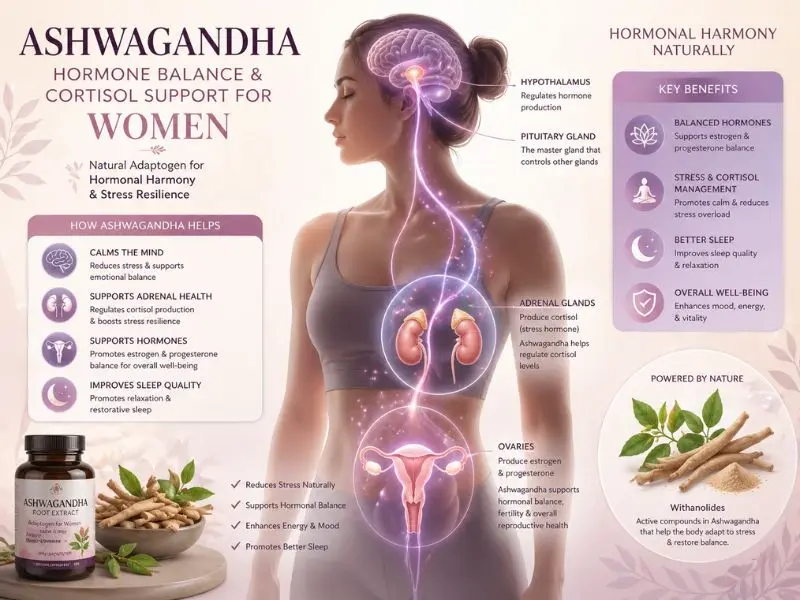
Ashwagandha’s primary mechanism — regulating the hypothalamic-pituitary-adrenal (HPA) axis — is particularly relevant for women because cortisol and reproductive hormones are deeply interconnected.
When cortisol is chronically elevated (from stress, poor sleep, overtraining, or PCOS), it disrupts the normal pulsatile release of GnRH (gonadotropin-releasing hormone), which in turn suppresses LH and FSH — the hormones that drive ovulation and menstrual regularity.
By lowering cortisol, ashwagandha can indirectly restore more normal reproductive hormone patterns. A 2024 meta-analysis specifically confirmed this mechanism in women with PCOS and stress-related hormonal disruption.
The Testosterone Question (What You Need to Know)
Most ashwagandha studies showing testosterone increases were conducted exclusively on men. A 2025 review in Phytotherapy Research noted that ashwagandha’s impact on androgen levels appears sex-specific — it does not appear to elevate testosterone in women the way it does in male study populations.
This is actually good news for women concerned about androgenic effects. Ashwagandha can lower DHEA-S (an androgen often elevated in PCOS) while supporting overall hormonal balance — without masculinizing hormone shifts.
Thyroid Considerations
A 2025 review confirmed that ashwagandha elevates thyroid hormones in hypothyroid contexts — meaning women with subclinical hypothyroidism may see thyroid improvement. However, women with hyperthyroidism or Graves’ disease should avoid ashwagandha, as it could further elevate already-high thyroid hormone levels.
The KSM-66 vs Sensoril vs Shoden Problem (Critical)
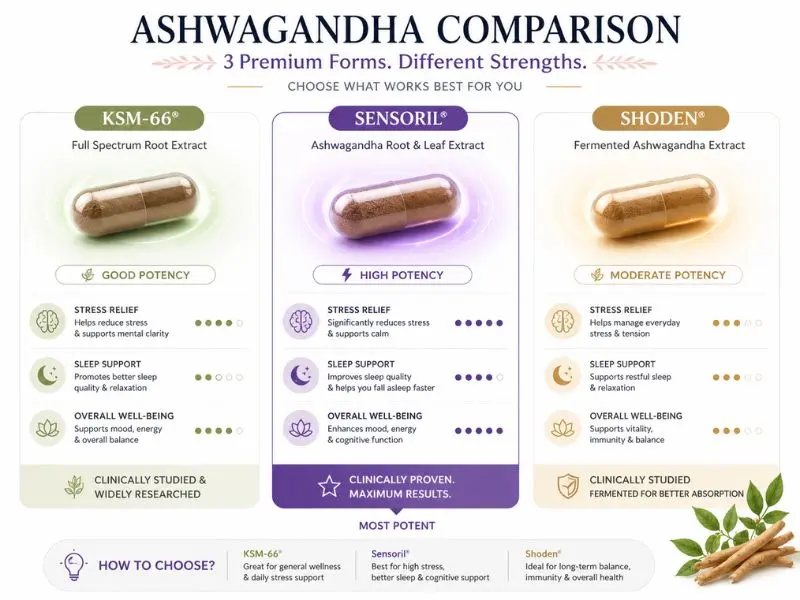
There are three major patented ashwagandha extracts on the market. Most articles don’t explain the difference. Here’s what you actually need to know:
| KSM-66 | Sensoril | Shoden | |
|---|---|---|---|
| Plant part | Root only | Root + leaves | Root only |
| Withanolide type | Free withanolides (5%) | Withanolide glycosides (10%) | Withanolide glycosides (35%) |
| Bioavailability | Standard | Higher than free withanolides | Highest currently available |
| Clinical trials | 24+ trials — most studied | 10+ trials | Fewer, but growing |
| Primary strengths | Stress, endurance, cognition | Stress, cortisol, weight management | Stress, sleep, cortisol at lower dose |
| Effective dose | 600mg/day | 125–250mg/day | 60–120mg/day |
| Best for women | General stress, hormones, PCOS | Cortisol + weight + sleep | Sleep-primary, high potency needs |
Key insight: A 2025 study found that withanolide glycosides (found in Sensoril and Shoden) are absorbed significantly better by the human body than free withanolides (found in KSM-66). However, KSM-66 has far more clinical backing for specific outcomes — including the most-cited cortisol and stress reduction trials.
For most women, KSM-66 at 600mg/day remains the best-evidenced starting point. Shoden is worth considering if you specifically prioritize sleep or want a lower-dose high-potency option.
How We Evaluated These Products
Every product in this guide was assessed on:
- Extract type — KSM-66, Sensoril, Shoden, or generic? Root-only or leaf blend?
- Withanolide standardization — disclosed % and type (free vs glycoside)?
- Dose — within the research-backed range of 300–600mg/day?
- Third-party testing — independent COA available?
- Women-specific formulation — any relevant additions (e.g., BioPerine for absorption, magnesium for sleep synergy)?
- Clean label — no unnecessary fillers, artificial ingredients, or proprietary blends?
- Price per serving — actual value
The 6 Best Ashwagandha Supplements for Women (2026)
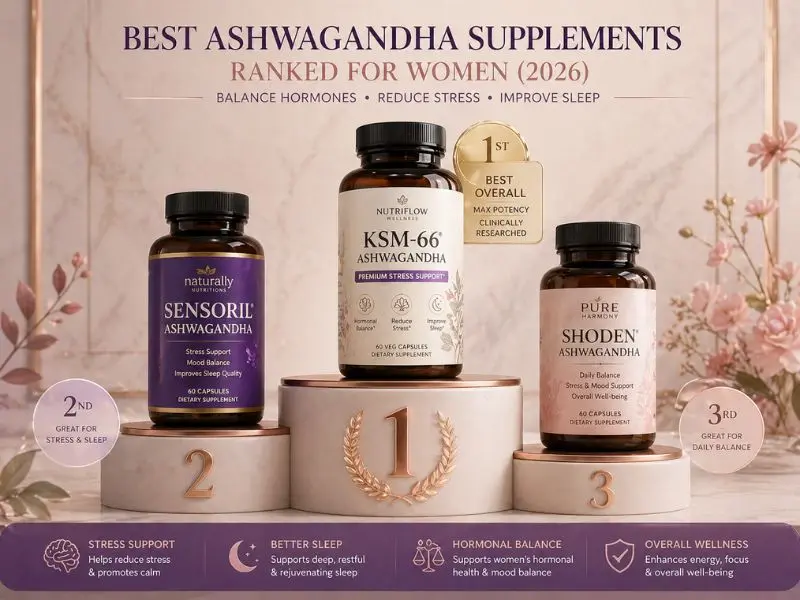
🥇 1. Transparent Labs KSM-66 Ashwagandha — Best Overall
Transparent Labs built their brand on one principle: full label disclosure. Their KSM-66 product delivers 600mg of root-only extract, standardized to 5% withanolides, with third-party testing results published on the product page. No proprietary blend. No hidden fillers. The dose matches the most-cited clinical trial protocols.
For women, this is the most straightforward, evidence-aligned daily ashwagandha. The 600mg dose is where the stress and cortisol reduction research is strongest — the Chandrasekhar (2012) trial showing 28% cortisol reduction and 44% perceived stress reduction used this exact dose and extract.
The addition of BioPerine (black pepper extract) at 5mg improves withanolide absorption by approximately 20%.
Who it’s for: Women who want a clean, well-dosed, transparently tested KSM-66 product for general stress management, hormonal balance support, and cognitive clarity.
| Detail | Specification |
|---|---|
| Extract | KSM-66 (root only) |
| Dose/serving | 600mg |
| Withanolides | 5% (standardized) |
| Added | BioPerine 5mg (absorption enhancer) |
| Third-party tested | ✅ COA on product page |
| Price/serving | ~$0.83 |
🥈 2. Nootropics Depot Shoden Ashwagandha — Best for Stress + Sleep
Shoden is the highest-standardized ashwagandha extract available — 35% withanolide glycosides vs. KSM-66’s 5% free withanolides. This means effective results at a much lower dose (60–120mg vs. 600mg), which is ideal for women sensitive to higher doses or those who experience digestive discomfort with standard ashwagandha.
Nootropics Depot’s version includes ISO-certified in-house lab testing on top of independent third-party verification — the most rigorous testing protocol of any brand on this list. COA accessible directly on the product page.
Why Shoden is particularly relevant for women: The withanolide glycoside form shows stronger activity in the GABAergic pathways associated with anxiety and sleep quality — both areas where women disproportionately seek support. Multiple studies using Shoden specifically show meaningful improvements in sleep onset and quality.
Who it’s for: Women prioritizing sleep quality and anxiety reduction, those sensitive to higher doses, or supplement-sophisticated buyers who want maximum compound precision.
| Detail | Specification |
|---|---|
| Extract | Shoden (root only) |
| Dose/serving | 60mg |
| Withanolides | 35% withanolide glycosides |
| Third-party tested | ✅ ISO-certified + independent |
| Price/serving | ~$0.50 |
🥉 3. NatureBell KSM-66 Ashwagandha — Best for PCOS Support
NatureBell delivers 1,300mg of KSM-66 root extract — the highest dose on this list — split across two capsules. This makes it relevant for women with PCOS who may benefit from the higher-end of the research-tested dose range.
The cortisol + DHEA-S reducing effects documented in PCOS-relevant research tend to be more pronounced at 600–900mg daily. A 2019 study in Medicine found that this dose range significantly reduced morning cortisol and DHEA-S levels in stressed adults — particularly relevant because DHEA-S is an androgen commonly elevated in PCOS.
Clean label, vegetarian capsules, widely available on Amazon with consistent reviews.
Who it’s for: Women with PCOS, hormonal imbalance, or high cortisol who want the strongest evidence-based dose from a KSM-66 product.
| Detail | Specification |
|---|---|
| Extract | KSM-66 (root only) |
| Dose/serving | 1,300mg (2 capsules) |
| Withanolides | 5% (standardized) |
| Third-party tested | ✅ Yes |
| Price/serving | ~$0.45 |
4. Life Extension Optimized Ashwagandha (Sensoril) — Best for Cortisol + Weight
Life Extension’s Optimized Ashwagandha uses Sensoril — the root-and-leaf extract standardized to 10% withanolide glycosides. The lower dose (125mg) is effective due to Sensoril’s higher bioavailability profile.
Life Extension is one of the most research-oriented supplement brands available, and their Sensoril formulation is positioned specifically around cortisol management and weight. For women experiencing stress-related weight gain or metabolic disruption, the Sensoril extract’s documented effects on cortisol and body composition are relevant.
A double-blind study using Sensoril at 125mg twice daily showed significant reductions in perceived stress and fatigue, improved hormonal markers, and better sleep quality at 12 weeks.
Who it’s for: Women experiencing stress-related weight gain, fatigue, or metabolic disruption alongside hormonal imbalance.
| Detail | Specification |
|---|---|
| Extract | Sensoril (root + leaves) |
| Dose/serving | 125mg |
| Withanolides | 10% withanolide glycosides |
| Third-party tested | ✅ Yes |
| Price/serving | ~$0.30 |
5. Goli Ashwagandha + Vitamin D Gummies — Best for Habit Consistency
Goli’s ashwagandha gummy uses KSM-66 extract alongside Vitamin D — a pairing that makes genuine sense for women, since Vitamin D deficiency is extremely common and directly affects mood, immune function, and hormonal balance.
The dose per gummy is lower than clinical trial doses (typically 2 gummies = ~300mg KSM-66), but for women who struggle to maintain supplement habits with capsules, the gummy format dramatically improves consistency — and consistent lower doses beat sporadic higher doses.
The addition of mixed berry flavor and a chewable format also eliminates the characteristic earthy taste of ashwagandha that some women find off-putting in powders.
Who it’s for: Women who prioritize habit consistency over maximum dose, or those starting ashwagandha for the first time and wanting an approachable format.
| Detail | Specification |
|---|---|
| Extract | KSM-66 |
| Dose per 2 gummies | ~300mg |
| Added | Vitamin D, L-Theanine, Maca |
| Third-party tested | ✅ Yes |
| Price/serving | ~$0.50 |
6. Nutricost KSM-66 600mg — Best Budget Pick
Nutricost delivers the exact KSM-66 dose used in the most-cited clinical trials (600mg) at roughly half the price of premium brands. GMP-certified facility, third-party tested, and one of the top-selling ashwagandha products on Amazon with 30,000+ orders per month.
No frills, no added ingredients — just 600mg of root-only KSM-66 in a vegetarian capsule. For buyers who want the evidence-aligned dose at an accessible price, this is the most honest budget option.
Who it’s for: Budget-conscious women who want the research-standard KSM-66 dose without overpaying for premium branding.
| Detail | Specification |
|---|---|
| Extract | KSM-66 (root only) |
| Dose/serving | 600mg |
| Withanolides | 5% |
| Third-party tested | ✅ Yes |
| Price/serving | ~$0.25 |
Full Comparison Table: All 6 Ashwagandha Picks for Women
| Brand | Extract | Dose | Withanolides | BioPerine | 3rd-Party | $/serving | Best For |
|---|---|---|---|---|---|---|---|
| Transparent Labs | KSM-66 | 600mg | 5% free | ✅ Yes | ✅ | ~$0.83 | 🥇 Best Overall |
| Nootropics Depot | Shoden | 60mg | 35% glycoside | ❌ | ✅ ISO | ~$0.50 | Sleep + Anxiety |
| NatureBell | KSM-66 | 1,300mg | 5% free | ❌ | ✅ | ~$0.45 | PCOS + High Cortisol |
| Life Extension | Sensoril | 125mg | 10% glycoside | ❌ | ✅ | ~$0.30 | Cortisol + Weight |
| Goli | KSM-66 | ~300mg | 5% free | ❌ | ✅ | ~$0.50 | Habit Consistency |
| Nutricost | KSM-66 | 600mg | 5% free | ❌ | ✅ | ~$0.25 | Best Budget |
What the Science Says for Women Specifically
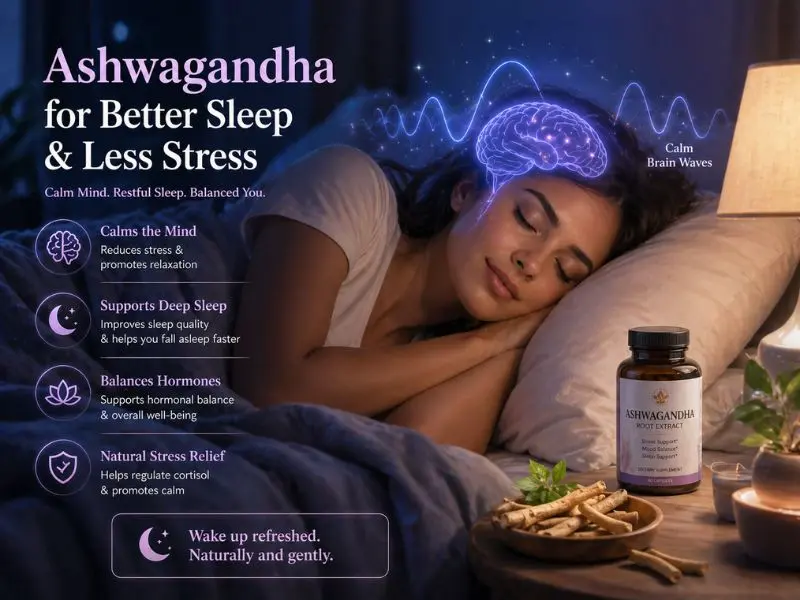
Stress and Cortisol (Strongest Evidence)
The landmark Chandrasekhar (2012) double-blind, placebo-controlled trial — 64 adults, 300mg KSM-66 twice daily (600mg total) for 60 days — showed:
- Perceived stress reduced by 44%
- Serum cortisol reduced by 27.9%
- Significant improvements in sleep quality, energy, and overall wellbeing
These results have been replicated across multiple trials. Cortisol reduction is ashwagandha’s most consistent and well-documented effect. [Source: Indian Journal of Psychological Medicine, 2012]
PCOS Specifically (2024–2026 Research)
A 2025 PubMed narrative review (Withania somnifera in Women’s Hormonal Modulation) concluded that ashwagandha is a “strong candidate for supportive treatment” for PCOS and PMS through combined hormonal, metabolic, and neuropsychiatric effects. Specifically:
- Reduces elevated cortisol (which worsens insulin resistance in PCOS)
- Lowers DHEA-S (an androgen elevated in many PCOS presentations)
- Does NOT elevate testosterone in women (unlike in men — sex-specific effect confirmed)
- May improve insulin sensitivity through Akt/PI3K signaling pathways
A 2024 meta-analysis confirmed improved insulin sensitivity and reduced stress-related hormonal disruption in women with PCOS. [Source: NCBI PMC12895992]
Sleep Quality
A 2020 trial (Langade et al.) found that 600mg of ashwagandha root extract daily for 8 weeks significantly improved:
- Sleep onset latency (time to fall asleep)
- Total sleep time
- Sleep efficiency
- Morning alertness
These benefits were more pronounced in participants with insomnia at baseline. The GABAergic mechanism — ashwagandha mimicking calming GABA neurotransmitters — helps explain why it supports sleep without sedation.
Sexual Health (Women)
A 2015 study found that women taking 300mg of ashwagandha twice daily (600mg total) for 8 weeks showed improved sexual functioning scores. A 2022 study confirmed similar findings at the same dose. Proposed mechanisms include reduced performance anxiety, improved energy, and hormonal balance effects. [Source: BioMed Research International, 2015]
Thyroid Function
A 2025 Phytotherapy Research review confirmed ashwagandha elevates thyroid hormones (T3 and T4) in hypothyroid contexts. This is potentially beneficial for women with subclinical hypothyroidism — but is a contraindication for women with hyperthyroidism or Graves’ disease.
Dosage Guide for Women
| Goal | Recommended Dose | Extract | Timing | Timeline |
|---|---|---|---|---|
| General stress management | 300–600mg/day | KSM-66 | Morning or evening | 6–8 weeks |
| Cortisol + hormonal balance | 600mg/day | KSM-66 or Sensoril | With food, AM or PM | 8–12 weeks |
| PCOS support | 600–900mg/day | KSM-66 | With meals, split doses | 12+ weeks |
| Sleep improvement | 300–600mg | KSM-66 or Shoden | 1–2 hours before bed | 4–8 weeks |
| Anxiety reduction | 60–120mg | Shoden | Morning or as needed | 4–6 weeks |
| Sexual health | 300mg twice daily | KSM-66 | With food | 8 weeks |
Key notes:
- Always take with food — reduces stomach discomfort and improves absorption
- Start at the lower end of your target dose for the first 2 weeks
- Effects are cumulative — consistency matters more than dose timing
- Most women notice sleep and mood improvements within 2–4 weeks; hormonal effects take 6–12 weeks
Who Should NOT Take Ashwagandha
Pregnant women: Ashwagandha has documented abortifacient properties in animal studies and is not recommended during pregnancy. This is a firm contraindication — not a precaution.
Breastfeeding women: Insufficient safety data. Avoid during breastfeeding.
Hyperthyroidism / Graves’ disease: Ashwagandha may elevate already-high thyroid hormones. Avoid or consult your endocrinologist.
Women on immunosuppressants: Ashwagandha modulates immune function and may interfere with immunosuppressant medications.
Women on thyroid medication: Ashwagandha can affect thyroid hormone levels — monitor with your doctor if you’re on levothyroxine or similar.
PCOS with specific medication protocols: If you’re on metformin, clomiphene, or other PCOS medications, check with your OBGYN before adding ashwagandha.
Frequently Asked Questions
Does ashwagandha raise testosterone in women?
No — and this is a common misconception from studies conducted on men. A 2025 review in Phytotherapy Research confirmed that ashwagandha’s androgenic effects appear sex-specific. In women, it tends to reduce DHEA-S (an androgen elevated in PCOS) rather than raise testosterone. If anything, this is beneficial for women with hormonal imbalances.
Can ashwagandha help with menopause symptoms?
The evidence for menopause is emerging but positive. A 2021 trial found that ashwagandha improved menopausal symptom scores (hot flashes, mood, sleep) in perimenopausal women. The cortisol-modulating effects are particularly relevant since stress and disrupted HPA axis function can worsen menopausal symptoms.
Is KSM-66 or Sensoril better for women?
For most women: KSM-66 at 600mg has more clinical evidence. For sleep-specific goals or if you want lower doses: Sensoril or Shoden. The withanolide glycoside forms (Sensoril, Shoden) have better bioavailability, but KSM-66 has more trials behind it at the 600mg dose.
How long until ashwagandha works for hormonal balance?
Stress and sleep effects typically appear within 2–4 weeks. Hormonal balance effects (especially cortisol and DHEA-S in PCOS) take 8–12 weeks of consistent daily use. Don’t evaluate based on the first month alone.
Can ashwagandha help with PCOS?
Evidence is promising but still evolving. Current research suggests ashwagandha may help reduce cortisol (which worsens insulin resistance in PCOS), lower DHEA-S levels, and support mood and sleep — all relevant PCOS concerns. It is not a replacement for medical treatment but may be a useful complementary tool. Always consult your OBGYN or endocrinologist before adding it to a PCOS protocol.
Can I take ashwagandha with birth control?
No direct negative interactions are documented. However, ashwagandha affects hormonal pathways and thyroid function — both relevant to birth control efficacy and side effects. Discuss with your gynecologist if you’re on hormonal contraceptives and want to add ashwagandha.
Will ashwagandha make me gain weight?
No — if anything, the evidence runs the opposite direction. Cortisol reduction can support healthier body composition by reducing stress-related cortisol-driven fat storage. Some Sensoril studies have shown modest improvements in body weight and waist circumference in stressed adults.
What’s the best ashwagandha for women over 40?
Women over 40 often experience perimenopause-related hormonal fluctuations alongside elevated cortisol. KSM-66 at 600mg addresses both stress and emerging hormonal disruption. Adding Reishi for sleep support creates a solid adaptogen base for this demographic.
Final Verdict
Ashwagandha is one of the most evidence-backed adaptogens available — and for women specifically, the cortisol-hormone connection makes it particularly relevant.
Most women should start with KSM-66 at 600mg/day. It has the most clinical trials, the most consistent results, and the most transparent brand options.
Our picks by goal:
- Best overall: Transparent Labs KSM-66 — clean, dosed correctly, fully transparent
- Best for sleep + anxiety: Nootropics Depot Shoden — highest-standardized, GABAergic effects
- Best for PCOS: NatureBell KSM-66 1,300mg — highest dose for cortisol + androgen management
- Best budget: Nutricost KSM-66 600mg — research dose at accessible price
Whatever you choose, look for:
- ✅ Root-only extract (not leaf or “whole plant”)
- ✅ Named extract (KSM-66, Sensoril, or Shoden)
- ✅ Withanolide % disclosed
- ✅ Third-party tested with COA accessible
Disclosure: This article contains affiliate links. We may earn a small commission at no extra cost to you. This never influences our rankings — we only recommend products we’ve genuinely evaluated. See our Affiliate Disclosure for details.
This content is for educational purposes only and is not medical advice. Women with PCOS, thyroid conditions, or who are pregnant/breastfeeding should consult a qualified healthcare provider before using ashwagandha.
Related Articles:
- Best Adaptogens for Anxiety — Science-Backed Picks
- Complete Guide to Adaptogens: Benefits, Types & How to Use (2026)
- Holy Basil vs Ashwagandha: Which Adaptogen Is Right for You?
- Best KSM-66 Ashwagandha Supplements of 2026
- Best Mushroom Complex Supplements of 2026: Tested & Ranked by a Supplement Researcher
- Rhodiola vs Ashwagandha for Stress: What Reddit Users Actually Say(2026)