
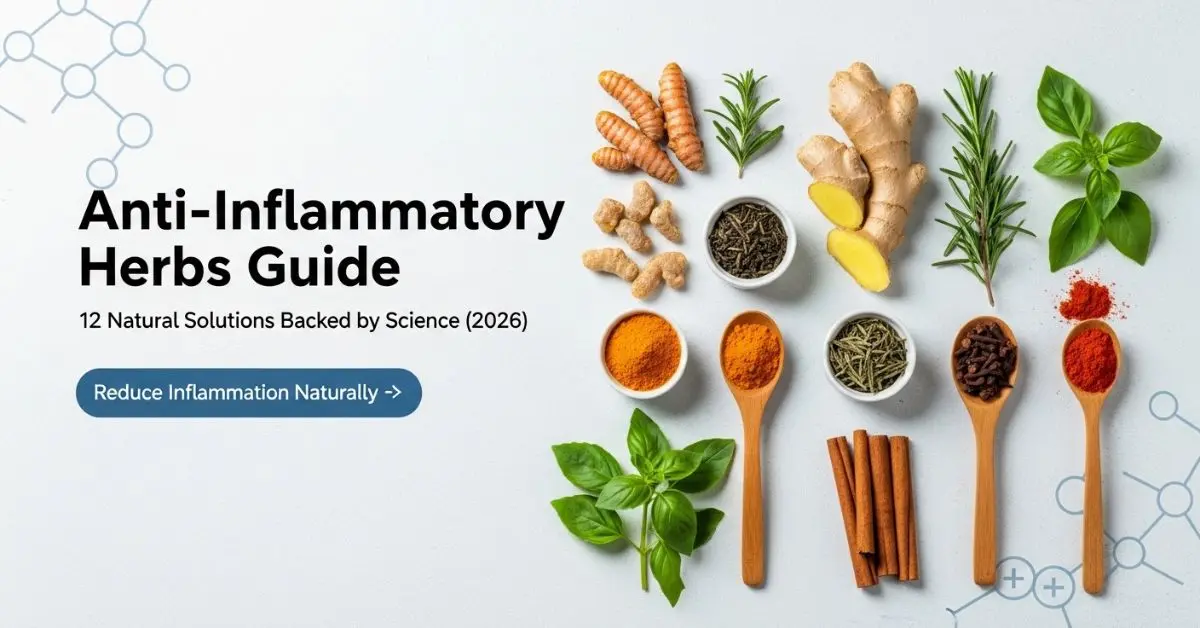
Anti inflammatory herbs offer powerful natural alternatives for managing chronic inflammation, a root cause of countless health conditions from arthritis to heart disease. Unlike NSAIDs that can cause digestive issues and other side effects, these herbs work gently with your body’s natural healing processes.
This comprehensive guide explores 12 scientifically-backed anti-inflammatory herbs, how they work, optimal dosages, and which conditions they treat most effectively. Whether you’re dealing with joint pain, gut inflammation, or simply want to reduce disease risk, these natural solutions provide evidence-based options.
Key Takeaway: The most powerful anti-inflammatory herbs include turmeric (curcumin), ginger, boswellia, and green tea, with clinical research showing effectiveness comparable to common anti-inflammatory medications but with better safety profiles.
Understanding Inflammation: Why These Herbs Work
The Two Types of Inflammation
Acute Inflammation (Beneficial):
- Short-term response to injury or infection
- Redness, swelling, heat, pain
- Essential for healing
- Resolves naturally within days/weeks
Chronic Inflammation (Problematic):
- Long-term, low-grade inflammation
- Often “silent” without obvious symptoms
- Damages tissues and organs over time
- Linked to major diseases
How Anti-Inflammatory Herbs Work

These herbs reduce inflammation through multiple mechanisms:
1. COX-2 Enzyme Inhibition (like NSAIDs, but safer)
- Blocks production of inflammatory prostaglandins
- Reduces pain and swelling
- Examples: Turmeric, ginger, boswellia
2. NF-κB Pathway Suppression
- Turns down inflammatory gene expression
- Reduces cytokine production
- Examples: Curcumin, resveratrol, quercetin
3. Antioxidant Activity
- Neutralizes free radicals that trigger inflammation
- Protects cells from oxidative damage
- Examples: Green tea, rosemary, turmeric
4. Immune Modulation
- Balances immune responses
- Reduces excessive immune activation
- Examples: Holy basil, ginger, turkey tail
Top 12 Anti-Inflammatory Herbs (Evidence-Based)
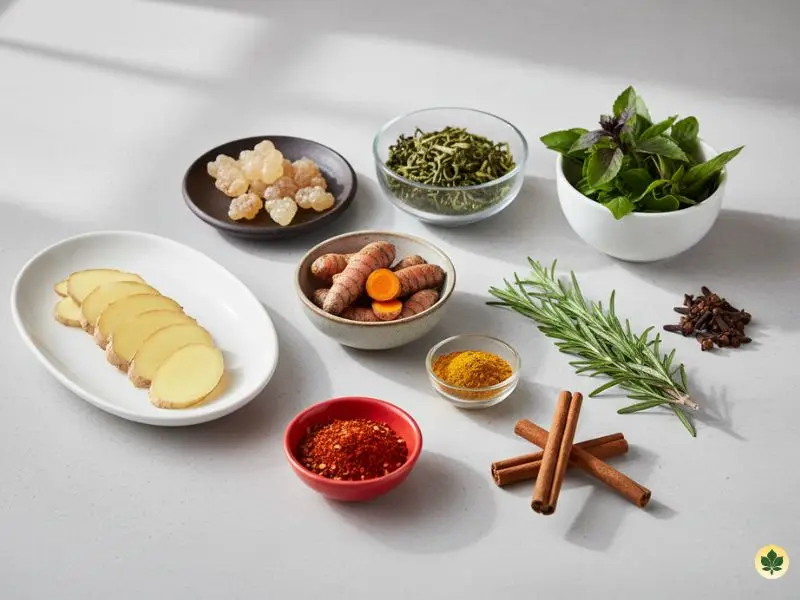
1. Turmeric (Curcumin) ⭐ MOST POWERFUL
Active Compound: Curcumin (3-5% of turmeric root)
Anti-Inflammatory Power: ⭐⭐⭐⭐⭐ (Excellent)
How It Works:
- Inhibits COX-2 and LOX enzymes
- Suppresses NF-κB inflammatory pathway
- Reduces inflammatory cytokines (TNF-α, IL-6)
- Powerful antioxidant (neutralizes free radicals)
Research Evidence:
- Over 13,000 published studies on curcumin
- Clinical trials show effectiveness for osteoarthritis comparable to ibuprofen (200mg)
- Reduces inflammatory markers by 20-40% in studies
- May reduce C-reactive protein (CRP) levels
Best For:
- Joint pain and arthritis
- Digestive inflammation (IBD, IBS)
- Post-exercise muscle soreness
- Metabolic inflammation
Dosage:
- Turmeric powder: 1-3 grams daily (low absorption)
- Curcumin extract: 500-2,000 mg daily (with black pepper/piperine)
- Standardized extract: Look for 95% curcuminoids
Bioavailability Tip: Curcumin alone is poorly absorbed. Take with:
- Black pepper (piperine increases absorption 2,000%)
- Fats/oils (curcumin is fat-soluble)
- Liposomal or phytosome formulations
Learn more: Turmeric Curcumin Benefits Complete Guide
2. Ginger (Zingiber officinale)
Active Compounds: Gingerols, shogaols, paradols
Anti-Inflammatory Power: ⭐⭐⭐⭐⭐ (Excellent)
How It Works:
- Inhibits COX-2 and LOX enzymes
- Reduces prostaglandin and leukotriene synthesis
- Suppresses inflammatory cytokines
- Blocks NF-κB activation
Research Evidence:
- Reduces muscle pain by 25% in studies
- Effective for osteoarthritis (comparable to diclofenac in some trials)
- May reduce inflammatory markers in 2-3 weeks
- Over 500 studies on anti-inflammatory effects
Best For:
- Muscle and joint pain
- Nausea and digestive inflammation
- Menstrual cramps
- Post-workout recovery
Dosage:
- Fresh ginger: 1-3 grams daily
- Dried powder: 1-2 grams daily
- Extract: 200-400 mg standardized extract daily
- Tea: 1-2 grams fresh or dried ginger steeped 10 minutes
Caution: May increase bleeding risk at very high doses (>5g daily)
3. Boswellia (Boswellia serrata) – Indian Frankincense
Active Compounds: Boswellic acids (especially AKBA)
Anti-Inflammatory Power: ⭐⭐⭐⭐⭐ (Excellent for joint health)
How It Works:
- Inhibits 5-LOX enzyme (blocks leukotriene synthesis)
- Unique mechanism different from NSAIDs
- Protects cartilage from degradation
- Reduces inflammatory cytokines
Research Evidence:
- Clinical trials show 50-70% improvement in arthritis symptoms
- May reduce pain and improve mobility in 4-8 weeks
- Studies show effectiveness for osteoarthritis, rheumatoid arthritis
- May help inflammatory bowel disease (Crohn’s, UC)
Best For:
- Osteoarthritis (especially knee, hip)
- Rheumatoid arthritis
- Inflammatory bowel disease
- Asthma (anti-inflammatory for airways)
Dosage:
- Standardized extract: 300-500 mg (65% boswellic acids) 2-3 times daily
- Total daily dose: 900-1,500 mg
- Clinical studies: Often use 1,000-1,200 mg daily
Important: Look for extracts standardized to AKBA (acetyl-11-keto-beta-boswellic acid)
4. Green Tea (Camellia sinensis)
Active Compound: EGCG (Epigallocatechin gallate)
Anti-Inflammatory Power: ⭐⭐⭐⭐ (Very Good)
How It Works:
- EGCG inhibits inflammatory pathways
- Powerful antioxidant (reduces oxidative stress)
- Modulates immune responses
- Blocks NF-κB and inflammatory gene expression
Research Evidence:
- Reduces inflammatory markers (CRP, IL-6) by 15-30%
- May slow cartilage breakdown in arthritis
- Protects against metabolic inflammation
- Over 1,000 studies on EGCG’s health benefits
Best For:
- Metabolic inflammation (obesity, diabetes)
- Cardiovascular inflammation
- Skin inflammation
- Brain inflammation (neuroprotection)
Dosage:
- Green tea: 3-5 cups daily (240-320 mg EGCG)
- Extract: 300-400 mg EGCG daily
- Standardized supplement: 500-1,000 mg green tea extract
Note: Contains caffeine (25-50mg per cup); decaf options available
5. Willow Bark (Salix alba) – Nature’s Aspirin
Active Compound: Salicin (converts to salicylic acid)
Anti-Inflammatory Power: ⭐⭐⭐⭐ (Very Good for pain)
How It Works:
- Salicin metabolizes to salicylic acid (like aspirin)
- Inhibits COX-2 enzyme
- Reduces prostaglandin production
- Analgesic (pain-relieving) properties
Research Evidence:
- Clinical trials show effectiveness for low back pain
- May reduce pain by 40-50% in 2-4 weeks
- Gentler on stomach than aspirin
- Used for over 2,000 years for pain relief
Best For:
- Back pain
- Osteoarthritis
- Headaches
- General pain relief
Dosage:
- Standardized extract: 120-240 mg salicin daily
- Typical dose: 240 mg salicin (equivalent to ~50 mg aspirin)
- For pain: Take 2-3 times daily with food
Caution:
- Avoid if allergic to aspirin
- May increase bleeding risk
- Not for children (Reye’s syndrome risk)
- Avoid before surgery
6. Cat’s Claw (Uncaria tomentosa)
Active Compounds: Oxindole alkaloids, polyphenols
Anti-Inflammatory Power: ⭐⭐⭐⭐ (Very Good)
How It Works:
- Inhibits TNF-α production
- Suppresses NF-κB pathway
- Immune modulation
- Antioxidant activity
Research Evidence:
- Studies show reduced arthritis pain and swelling
- May reduce inflammatory markers
- Traditional use in Amazon for inflammation and immune support
- Clinical trials show benefit for osteoarthritis and rheumatoid arthritis
Best For:
- Rheumatoid arthritis
- Osteoarthritis
- Immune system balance
- Gut inflammation
Dosage:
- Standardized extract: 20-60 mg daily (containing 1.3% pentacyclic oxindole alkaloids)
- Root bark: 1-3 grams daily
- Therapeutic dose: 100-300 mg standardized extract daily
7. Devil’s Claw (Harpagophytum procumbens)
Active Compounds: Iridoid glycosides (harpagoside)
Anti-Inflammatory Power: ⭐⭐⭐⭐ (Very Good for joint pain)
How It Works:
- Inhibits COX-2 and LOX pathways
- Reduces inflammatory cytokines
- Analgesic properties
- May protect cartilage
Research Evidence:
- European studies show effectiveness for osteoarthritis
- Reduces pain by 25-45% in clinical trials
- May reduce need for NSAIDs
- Used for decades in Europe for arthritis
Best For:
- Osteoarthritis
- Back pain
- Tendonitis
- General joint pain
Dosage:
- Standardized extract: 600-800 mg (containing 50-100mg harpagoside) daily
- Split dose: 2-3 times daily with meals
- Clinical dose: 50-100 mg harpagoside daily
Caution: Avoid if you have gallstones, ulcers, or taking blood thinners
8. Holy Basil/Tulsi (Ocimum sanctum)
Active Compounds: Eugenol, ursolic acid, rosmarinic acid
Anti-Inflammatory Power: ⭐⭐⭐⭐ (Very Good + Adaptogenic)
How It Works:
- COX-2 inhibition
- Reduces cortisol (stress-inflammation connection)
- Antioxidant activity
- Immune modulation
Research Evidence:
- Studies show reduced inflammatory markers
- Comparable to common NSAIDs in animal models
- Adaptogenic properties reduce stress-related inflammation
- Traditional Ayurvedic use for thousands of years
Best For:
- Stress-related inflammation
- Metabolic inflammation
- Respiratory inflammation
- Immune balance
Dosage:
- Extract: 300-600 mg twice daily
- Tea: 2-3 cups daily (1-2 grams dried leaves)
- Fresh leaves: 10-20 leaves daily (traditional use)
Learn more: Holy Basil vs Ashwagandha
9. Rosemary (Rosmarinus officinalis)
Active Compounds: Rosmarinic acid, carnosic acid, carnosol
Anti-Inflammatory Power: ⭐⭐⭐⭐ (Very Good)
How It Works:
- Inhibits inflammatory enzymes
- Powerful antioxidant
- Reduces NF-κB activation
- May improve circulation
Research Evidence:
- Studies show reduced inflammatory markers
- May help arthritis and muscle pain
- Neuroprotective effects (brain inflammation)
- Culinary use provides daily anti-inflammatory benefits
Best For:
- Muscle and joint pain (topical and internal)
- Digestive inflammation
- Cognitive function (brain inflammation)
- Circulation
Dosage:
- Extract: 200-400 mg daily
- Essential oil (topical): Diluted for joint/muscle pain
- Tea: 1-2 teaspoons dried rosemary, steep 10 minutes
- Culinary: Liberal use in cooking
10. Cayenne/Chili Pepper (Capsicum annuum)
Active Compound: Capsaicin
Anti-Inflammatory Power: ⭐⭐⭐⭐ (Very Good, especially topical)
How It Works:
- Depletes substance P (pain neurotransmitter)
- Reduces inflammatory mediators
- Improves blood flow
- Analgesic properties
Research Evidence:
- Topical capsaicin effective for arthritis pain (FDA-approved)
- May reduce pain by 50% with regular use
- Studies show benefit for neuropathic pain
- Internal use may support metabolic health
Best For:
- Arthritis (topical creams)
- Neuropathic pain
- Muscle pain
- Metabolic inflammation (internal use)
Dosage:
- Topical cream: 0.025-0.075% capsaicin applied 3-4 times daily
- Internal: 30-120 mg capsicum extract daily
- Food: Regular inclusion in diet
Warning: Causes burning sensation initially (subsides with continued use)
11. Cinnamon (Cinnamomum verum)
Active Compounds: Cinnamaldehyde, polyphenols
Anti-Inflammatory Power: ⭐⭐⭐ (Good + metabolic benefits)
How It Works:
- Reduces inflammatory markers
- Antioxidant activity
- Improves insulin sensitivity (reduces metabolic inflammation)
- May reduce CRP levels
Research Evidence:
- Studies show reduced inflammatory markers
- May help metabolic syndrome
- Antioxidant capacity comparable to some herbs
- Cardiovascular benefits
Best For:
- Metabolic inflammation (diabetes, obesity)
- Cardiovascular inflammation
- Blood sugar management
- General antioxidant support
Dosage:
- Powder: 1-6 grams daily
- Extract: 250-500 mg daily
- Culinary: 1/2 to 1 teaspoon daily in food/drinks
Note: Ceylon cinnamon preferred (lower coumarin content)
12. Clove (Syzygium aromaticum)
Active Compound: Eugenol
Anti-Inflammatory Power: ⭐⭐⭐ (Good, especially for oral/topical)
How It Works:
- COX-2 inhibition
- Strong antioxidant (highest ORAC among spices)
- Analgesic properties
- Antimicrobial activity
Research Evidence:
- Studies show anti-inflammatory effects
- Effective for dental pain (topical)
- May reduce inflammatory markers
- High antioxidant capacity
Best For:
- Dental inflammation and pain
- Digestive inflammation
- Topical pain relief
- Antioxidant support
Dosage:
- Powder: 1/4 to 1/2 teaspoon daily
- Oil (topical): Diluted for dental pain
- Extract: 200-400 mg daily
- Culinary: Regular use in cooking
Anti-Inflammatory Herbs Comparison Chart
| Herb | Strength | Best For | Onset | Safety | Cost |
|---|---|---|---|---|---|
| Turmeric | ⭐⭐⭐⭐⭐ | All inflammation | 4-8 weeks | Excellent | $$ |
| Ginger | ⭐⭐⭐⭐⭐ | Pain, nausea | 2-4 weeks | Excellent | $ |
| Boswellia | ⭐⭐⭐⭐⭐ | Joint pain | 4-8 weeks | Very Good | $$ |
| Green Tea | ⭐⭐⭐⭐ | Metabolic | 4-12 weeks | Excellent | $ |
| Willow Bark | ⭐⭐⭐⭐ | Pain relief | Days-2 weeks | Good* | $ |
| Cat’s Claw | ⭐⭐⭐⭐ | Arthritis | 4-8 weeks | Good | $$ |
| Devil’s Claw | ⭐⭐⭐⭐ | Back/joint pain | 2-4 weeks | Good* | $$ |
| Holy Basil | ⭐⭐⭐⭐ | Stress inflammation | 2-6 weeks | Excellent | $ |
| Rosemary | ⭐⭐⭐⭐ | Muscle pain | 2-4 weeks | Excellent | $ |
| Cayenne | ⭐⭐⭐⭐ | Topical pain | Days-2 weeks | Good | $ |
| Cinnamon | ⭐⭐⭐ | Metabolic | 4-12 weeks | Excellent | $ |
| Clove | ⭐⭐⭐ | Dental, topical | Days-1 week | Good | $ |
*Caution with bleeding risk or certain conditions
How to Use Anti-Inflammatory Herbs Effectively
Single Herb vs Combinations
Single Herb Approach:
- ✅ Best for identifying what works for you
- ✅ Easier to track results
- ✅ Less expensive
- ✅ Good for starting out
Start with: Turmeric or ginger (safest, most studied)
Combination Approach:
- ✅ Synergistic effects (herbs work together)
- ✅ Multiple inflammatory pathways targeted
- ✅ May be more effective for chronic conditions
- ✅ Common in traditional medicine
Popular combinations:
- Turmeric + Ginger + Black Pepper
- Boswellia + Turmeric (joint health)
- Green Tea + Ginger (metabolic health)
- Holy Basil + Ashwagandha (stress-related inflammation)
Forms and Preparation
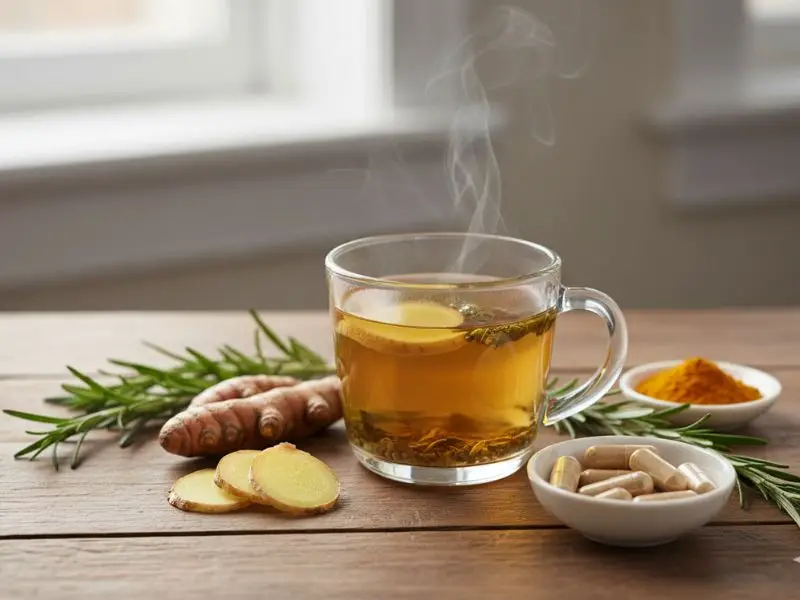
Capsules/Tablets:
- Most convenient
- Standardized dosing
- Best for consistent intake
- Choose extracts over powders for potency
Teas:
- Traditional preparation
- Gentle, enjoyable
- May require higher doses (lower concentration)
- Good for ginger, green tea, holy basil
Fresh/Dried Herbs:
- Culinary use (turmeric, ginger, rosemary, cinnamon)
- More affordable long-term
- Whole-food approach
- Variable potency
Topical:
- Direct application for localized pain
- Cayenne, rosemary, clove
- No systemic effects
- Fast-acting for pain
Timing and Duration
How long to see results:
- Acute pain (willow bark, cayenne): Days to 2 weeks
- General inflammation: 2-4 weeks
- Chronic conditions (arthritis): 4-12 weeks
- Maximum benefits: 8-16 weeks
How long to take:
- Acute conditions: Until resolved + 1 week
- Chronic inflammation: Long-term use (months to years)
- Prevention: Daily ongoing use safe for most herbs
- Cycling: Generally not necessary unless indicated
Conditions Helped by Anti-Inflammatory Herbs
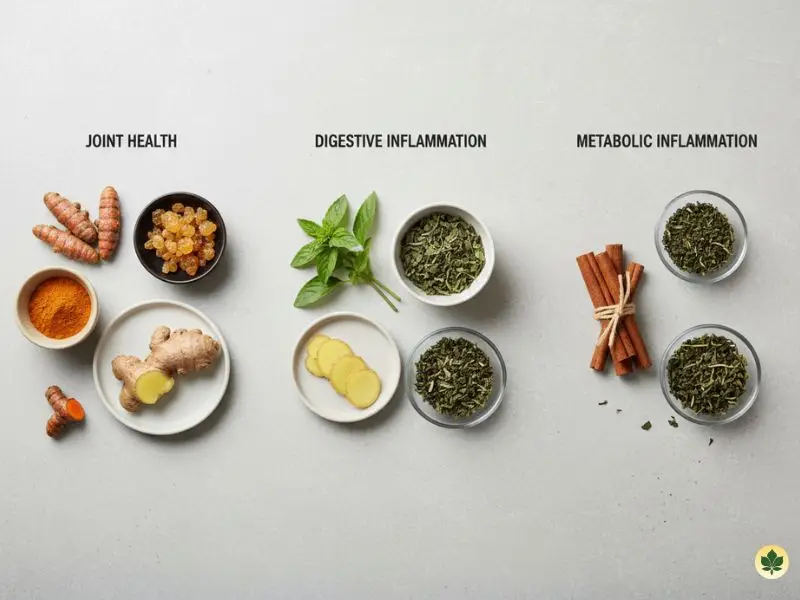
Arthritis and Joint Pain
Best herbs: Turmeric, boswellia, ginger, devil’s claw, willow bark Strategy: Combine 2-3 herbs, take consistently for 8+ weeks
Digestive Inflammation (IBS, IBD, Gastritis)
Best herbs: Turmeric, ginger, holy basil, turkey tail Strategy: Gentler herbs, take with meals, focus on gut-friendly options
Muscle Pain and Soreness
Best herbs: Ginger, rosemary, cayenne (topical), willow bark Strategy: Pre-workout prevention + post-workout recovery
Metabolic Inflammation (Obesity, Diabetes, Heart Disease)
Best herbs: Turmeric, green tea, cinnamon, ginger Strategy: Daily ongoing use, combine with diet/lifestyle changes
Autoimmune Conditions
Best herbs: Turmeric, holy basil, reishi mushroom, cat’s claw Strategy: Immune-modulating herbs, work with healthcare provider
Skin Inflammation (Acne, Eczema, Psoriasis)
Best herbs: Turmeric (internal), green tea (internal + topical), holy basil Strategy: Internal use + topical application, address gut health
Brain Inflammation (Cognitive Decline, Neuroinflammation)
Best herbs: Turmeric, green tea, rosemary, lions mane mushroom Strategy: Long-term use, combine with omega-3s
Safety, Side Effects, and Interactions

General Safety Profile
Most anti-inflammatory herbs are very safe when used appropriately, but considerations include:
Common Side Effects (Mild, Rare):
- Digestive upset (take with food)
- Allergic reactions (especially if allergic to plant families)
- Increased bleeding (willow bark, ginger at high doses)
Who Should Be Cautious
Before Surgery:
- Stop willow bark, ginger (high doses), turmeric 1-2 weeks prior
- Bleeding risk concerns
On Blood Thinners:
- Caution with willow bark, turmeric, ginger
- Monitor INR if on warfarin
- Consult healthcare provider
Pregnancy/Nursing:
- Most herbs not well-studied in pregnancy
- Avoid willow bark (aspirin-like)
- Ginger generally considered safe for nausea
- Always consult healthcare provider
Gallstones:
- Avoid devil’s claw, turmeric (high doses)
- May stimulate bile production
Stomach Ulcers:
- Use caution with cayenne, willow bark
- Take with food, start low
Drug Interactions
NSAIDs (Ibuprofen, Naproxen):
- May have additive effects (good for reducing NSAID dose)
- Monitor for side effects
- Herbs may allow NSAID reduction
Blood Thinners:
- Willow bark, turmeric, ginger may enhance effects
- Requires monitoring
Diabetes Medications:
- Cinnamon may lower blood sugar
- Monitor glucose levels
Immunosuppressants:
- Some herbs have immune-modulating effects
- Discuss with transplant team if applicable
Always inform healthcare providers about all herbs and supplements you take.
Frequently Asked Questions
-
What is the most powerful anti-inflammatory herb?
Turmeric (curcumin) has the most scientific evidence and shows effectiveness comparable to ibuprofen for many conditions. However, “most powerful” depends on the condition—boswellia excels for joints, ginger for digestive inflammation, and green tea for metabolic issues.
-
How long does it take for anti-inflammatory herbs to work?
Acute pain relief (willow bark, topical cayenne) may work within days. Most herbs require 2-4 weeks for noticeable effects and 8-12 weeks for maximum benefits in chronic conditions like arthritis. Consistency is key.
-
Can I take anti-inflammatory herbs with ibuprofen?
Generally yes, and herbs may allow you to reduce NSAID doses. However, combining willow bark with NSAIDs increases bleeding risk. Consult your healthcare provider, especially for long-term use.
-
Are anti-inflammatory herbs safe long-term?
Most herbs on this list (turmeric, ginger, green tea, holy basil, rosemary, cinnamon) are safe for years of daily use. Willow bark and devil’s claw should be used with more caution long-term. Work with a healthcare provider for chronic conditions.
-
Which herbs work fastest for pain?
Willow bark and topical cayenne can provide relief within days to 2 weeks. Ginger and turmeric typically take 2-4 weeks. For chronic pain, expect 4-8 weeks for significant improvement.
-
Can I combine multiple anti-inflammatory herbs?
Yes, combining herbs is common and often more effective due to synergistic effects. Popular combinations include turmeric + ginger + black pepper, or boswellia + turmeric for joint health. Start with one herb, then add others gradually.
-
Do anti-inflammatory herbs have side effects?
Side effects are generally mild and rare, mostly digestive upset. Serious side effects are uncommon. Bleeding risk is a concern with willow bark and high-dose ginger, especially if taking blood thinners. Always start with lower doses.
-
What’s better: herb powder or extract?
Extracts are more concentrated and consistent, requiring lower doses. Powders are more affordable and whole-food. For turmeric, extracts with enhanced bioavailability are significantly more effective. For culinary herbs (ginger, cinnamon), powder works well.
The Bottom Line on Anti-Inflammatory Herbs
Anti-inflammatory herbs provide powerful, evidence-based alternatives or complements to conventional medications for managing chronic inflammation. The strongest options—turmeric, ginger, boswellia, and green tea—have substantial clinical research supporting their effectiveness.
Key Takeaways:
- ✅ Turmeric (curcumin) is the most researched with the broadest applications
- ✅ Ginger excels for pain, nausea, and digestive inflammation
- ✅ Boswellia is specifically excellent for joint health
- ✅ Most herbs require 4-8 weeks of consistent use for full benefits
- ✅ Combining herbs often provides better results than single herbs
- ✅ Safety profile is generally excellent with minimal side effects
- ✅ Can reduce need for NSAIDs in many cases
Getting Started:
- Start with turmeric or ginger (safest, most versatile)
- Use standardized extracts for consistency
- Take with food to minimize digestive upset
- Give it 6-8 weeks before evaluating effectiveness
- Consider combining herbs for synergy
- Work with healthcare provider for chronic conditions
Ready to try anti-inflammatory herbs?
- Best Turmeric Curcumin Supplements
- Turmeric Benefits Complete Guide
- Ginger Root Benefits
- Boswellia Serrata Benefits
- Natural Remedies for Inflammation
Looking for other natural solutions?
- Anti-Inflammatory Herbs and Spices
- Top 12 Herbs for Hormone Balance: Natural Remedies for Hormonal Health
- 9 Herbs and Spices That Fight Inflammation
Medical Disclaimer: This article is for informational purposes only. Anti-inflammatory herbs should complement, not replace, medical care. Consult healthcare providers before starting herbs, especially if you have medical conditions, take medications, are pregnant/nursing, or before surgery.
Last Updated: January 2026

