
Turkey tail mushroom benefits have gained significant attention in natural health circles, particularly for immune system support. This distinctive fungus, scientifically known as Trametes versicolor, has been used in traditional Chinese medicine for centuries and is now backed by modern scientific research.
In this comprehensive guide, you’ll discover how turkey tail mushroom benefits your immune health, the science behind its effectiveness, proper dosage guidelines, and how to choose quality supplements.
What Is Turkey Tail Mushroom?
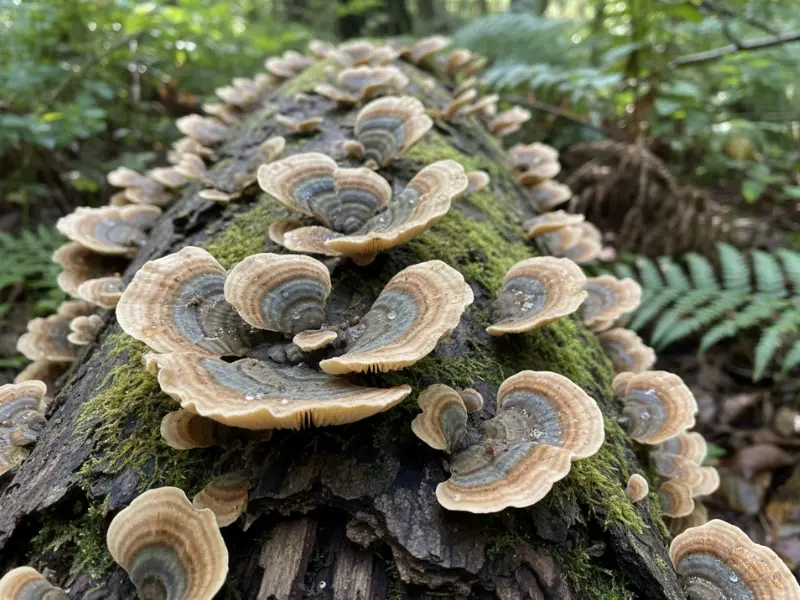
Turkey tail (Trametes versicolor) is a medicinal mushroom that grows on dead logs and tree stumps throughout North America, Europe, and Asia. Its name comes from its distinctive appearance—concentric circles of brown and tan that resemble the tail feathers of a wild turkey.
This mushroom has been used in Traditional Chinese Medicine (TCM) as “Yun Zhi” and Japanese Kampo medicine as “Kawaratake” for thousands of years to support vitality and longevity.
Key Active Compounds
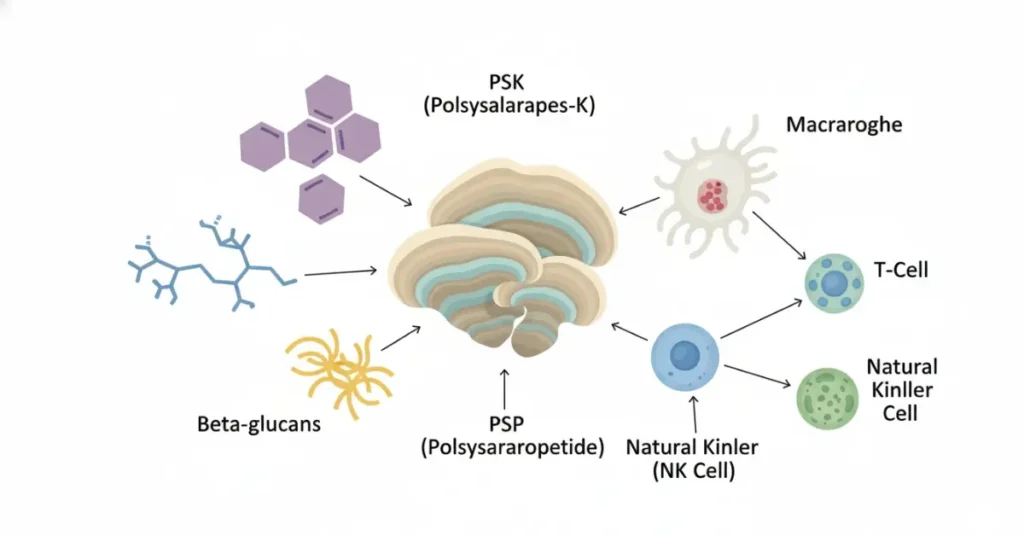
Turkey tail mushroom benefits stem from two primary polysaccharide compounds:
- PSK (Polysaccharide-K or Krestin): The most well-studied component, approved as a cancer treatment adjunct in Japan since 1977
- PSP (Polysaccharopeptide): Another powerful immune-modulating compound isolated from specific strains
- Beta-glucans: Complex sugars that activate immune cells
- Ergothioneine: A powerful antioxidant amino acid
Top 7 Turkey Tail Mushroom Benefits (Science-Backed)
1. Powerful Immune System Support
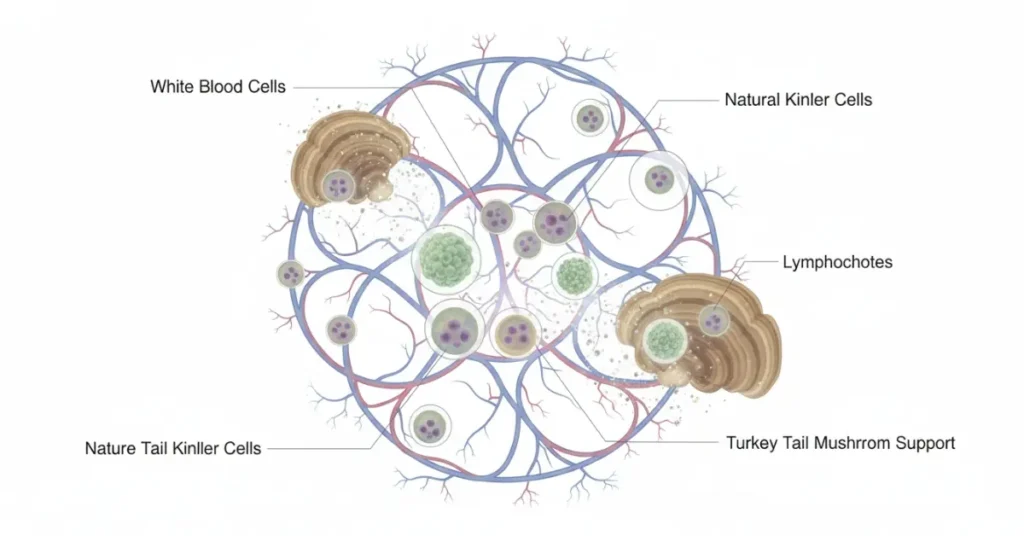
The most significant turkey tail mushroom benefits is its ability to enhance immune function. Research published in the International Journal of Medicinal Mushrooms shows that PSK and PSP stimulate immune cells including natural killer (NK) cells, T-cells, and macrophages.
A 2012 study at the University of Minnesota found that turkey tail extract significantly improved immune function in breast cancer patients undergoing radiation therapy. Participants showed increased NK cell activity and enhanced lymphocyte counts.
How it works: The beta-glucans in turkey tail bind to receptors on immune cells, triggering a cascade of immune responses that help your body identify and eliminate pathogens.
2. May Support Cancer Treatment (Adjunctive Therapy)
Turkey tail mushroom benefits extend to cancer support, though it’s important to note this should only be used alongside conventional treatment, not as a replacement.
Research from Memorial Sloan Kettering Cancer Center indicates that PSK may:
- Enhance the effectiveness of chemotherapy
- Reduce treatment side effects
- Improve quality of life during cancer treatment
- Support immune recovery post-treatment
A comprehensive review of 13 studies involving over 8,000 patients found that PSK significantly improved survival rates in colorectal, gastric, and breast cancer patients when combined with chemotherapy.
3. Gut Health and Microbiome Support
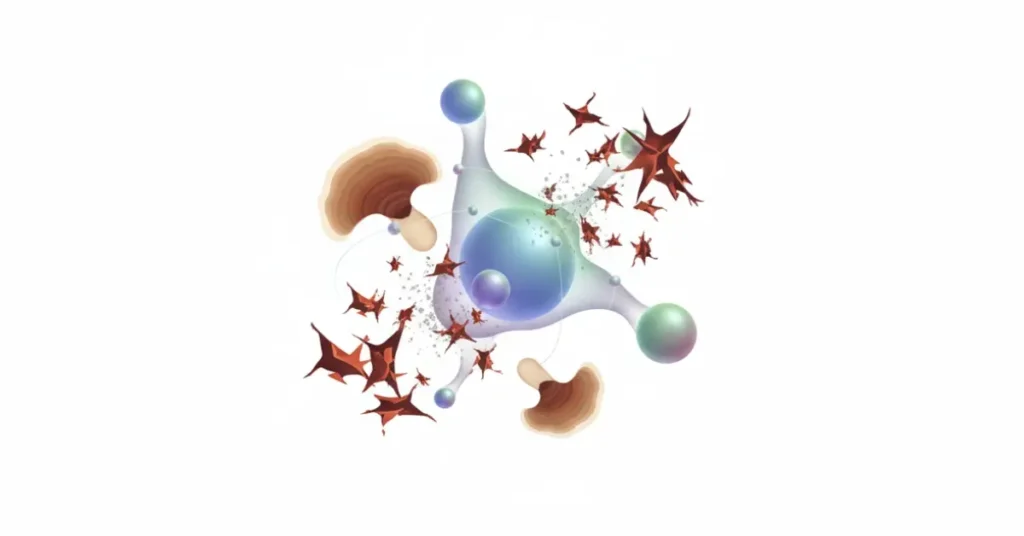
Your gut health directly impacts your immune system, and turkey tail mushroom benefits include prebiotic properties that feed beneficial gut bacteria.
A 2014 study published in PLOS ONE demonstrated that turkey tail acts as a prebiotic, increasing populations of beneficial bacteria like Bifidobacterium and Lactobacillus while reducing harmful bacteria.
Additional gut benefits:
- Reduces inflammation in the digestive tract
- May help with inflammatory bowel conditions
- Supports healthy digestion
- Enhances nutrient absorption
4. Antioxidant and Anti-Inflammatory Properties
Turkey tail contains over 35 different phenolic compounds that provide potent antioxidant protection. These compounds help neutralize free radicals that contribute to aging and chronic disease.
Research shows turkey tail mushroom benefits include:
- Reduced oxidative stress markers
- Lower levels of inflammatory cytokines
- Protection against cellular damage
- Support for healthy aging
5. May Improve Energy and Reduce Fatigue
Many users report increased energy levels when taking turkey tail regularly. While more research is needed, preliminary studies suggest this may be due to:
- Improved mitochondrial function
- Better oxygen utilization
- Reduced inflammation
- Enhanced cellular energy production
This makes it particularly valuable for those recovering from illness or dealing with chronic fatigue.
6. Respiratory Health Support
Traditional use of turkey tail for respiratory conditions is now supported by modern research. The immunomodulating turkey tail mushroom benefits may help:
- Support healthy lung function
- Reduce respiratory infections
- Enhance respiratory immunity
- Provide antiviral properties
A 2019 study found that turkey tail extract showed activity against several respiratory viruses by enhancing the immune system’s viral defense mechanisms.
7. May Support Liver Health
Emerging research suggests turkey tail mushroom benefits include hepatoprotective (liver-protecting) properties. Studies indicate it may:
- Support healthy liver enzyme levels
- Protect against liver damage
- Enhance liver detoxification processes
- Support liver regeneration
Turkey Tail Mushroom Dosage: How Much Should You Take?
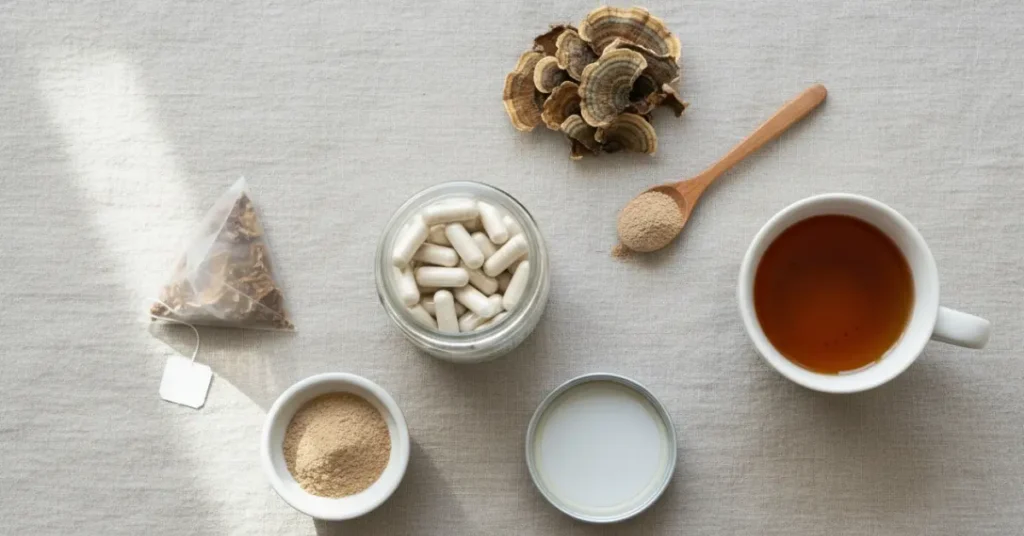
The optimal dosage depends on the form and concentration of turkey tail you’re using:
Extract Powder (Hot Water or Dual Extract)
- General immune support: 1,000-2,000 mg daily
- Intensive immune support: 3,000-5,000 mg daily
- Clinical settings (with healthcare provider): Up to 9,000 mg daily
Capsules/Tablets
- Follow manufacturer recommendations (typically 1,000-3,000 mg daily)
- Look for products standardized to at least 30% polysaccharides
Tea/Decoction
- 3-5 grams of dried mushroom simmered for 30-60 minutes
- Drink 1-2 cups daily
PSK or PSP Supplements
- Clinical dosages range from 1,000-3,000 mg daily
- Should be used under healthcare supervision
Best practices:
- Start with lower doses and gradually increase
- Take with food to enhance absorption
- Consider cycling (5 days on, 2 days off) for long-term use
- Consistency is key—benefits build over time
For more detailed dosage information specific to your needs, check our Turkey Tail Dosage Guide.
How to Choose Quality Turkey Tail Supplements
Not all turkey tail supplements are created equal. Here’s what to look for:
1. Fruiting Body vs Mycelium
- Best choice: 100% fruiting body extracts
- Why: Higher concentration of beneficial compounds (PSK, PSP, beta-glucans)
- Avoid: Mycelium on grain (often contains more grain starch than mushroom)
2. Extraction Method
- Hot water extraction: Extracts polysaccharides and beta-glucans
- Alcohol extraction: Extracts triterpenes and other compounds
- Dual extraction (best): Combines both methods for full spectrum benefits
3. Polysaccharide Content
- Look for at least 30% polysaccharides
- Higher percentages (40-50%) indicate stronger extracts
- Should be verified by third-party testing
4. Beta-Glucan Content
- Minimum 20% beta-glucans
- This is where the immune benefits come from
5. Third-Party Testing
- Verify purity and potency
- Check for heavy metals, pesticides
- Look for certifications (organic, GMP, NSF)
6. Origin and Cultivation
- Organically grown is preferable
- USA or carefully sourced Asian suppliers
- Avoid products that don’t disclose origin
Top-rated options: See our Best Turkey Tail Supplements review for detailed testing and comparisons.
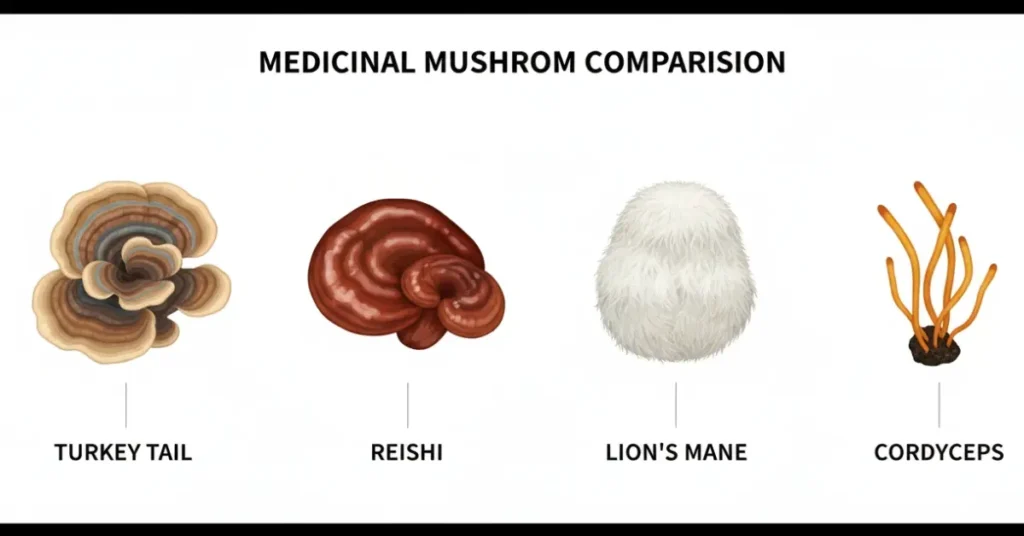
Turkey Tail vs Other Medicinal Mushrooms
Turkey Tail vs Reishi
- Turkey Tail: Stronger immune activation, more energizing
- Reishi: Better for stress/sleep, more calming
- Best for: Turkey tail for immune support, Reishi for relaxation
Learn more: Reishi vs Turkey Tail Comparison
Turkey Tail vs Lions Mane
- Turkey Tail: Immune-focused
- Lions Mane: Brain and cognitive health
- Best approach: Combine both for comprehensive benefits
Read more: Lions Mane Benefits Guide
Turkey Tail vs Cordyceps
- Turkey Tail: Immune system focus
- Cordyceps: Energy and athletic performance
- Synergy: Work well together in mushroom complexes
Potential Side Effects and Safety
Turkey tail mushroom is generally very safe with minimal side effects. However, some people may experience:
Mild Side Effects (Rare)
- Digestive upset (gas, bloating)
- Dark-colored stools
- Nausea (usually with very high doses)
Who Should Be Cautious
- Pregnant/nursing women: Insufficient safety data
- Autoimmune conditions: Consult healthcare provider (immune stimulation may affect condition)
- Before surgery: Stop 2 weeks prior (may affect blood clotting)
- On immunosuppressants: May counteract medication
Drug Interactions
Turkey tail may interact with:
- Immunosuppressive medications
- Blood thinners (theoretical risk)
- Chemotherapy drugs (consult oncologist—may be beneficial but needs supervision)
Always consult your healthcare provider before starting turkey tail, especially if you have existing health conditions or take medications.
How to Take Turkey Tail Mushroom
Supplement Form
- Take with meals for better absorption
- Split doses throughout the day (morning and afternoon)
- Stay consistent for best results
Tea/Decoction
- Add 3-5g dried turkey tail to 2 cups water
- Simmer (not boil) for 45-60 minutes
- Strain and drink
- You can simmer the same mushrooms 2-3 times
With Other Supplements
Turkey tail combines well with:
- Vitamin C (enhances immune benefits)
- Vitamin D (synergistic immune support)
- Other medicinal mushrooms (comprehensive benefits)
- Adaptogens like ashwagandha or rhodiola
Frequently Asked Questions
-
How long does it take to see turkey tail mushroom benefits?
Most people notice immune-related benefits within 2-4 weeks of consistent use. For more intensive support during illness recovery, benefits may be noticeable within 7-10 days.
-
Can I take turkey tail mushroom every day?
Yes, turkey tail is safe for daily use. Many people take it continuously for immune support, while others prefer cycling (5 days on, 2 days off) for long-term maintenance.
-
Is turkey tail mushroom safe for long-term use?
Research and traditional use suggest turkey tail is safe for extended periods. In clinical studies, it has been used continuously for months to years without significant adverse effects.
-
What’s the difference between PSK and PSP?
Both are polysaccharide compounds from turkey tail. PSK is extracted from specific Japanese strains and is approved as a cancer treatment adjunct in Japan. PSP is extracted from Chinese strains and has similar but slightly different properties. Both provide immune benefits.
-
Can turkey tail cure cancer?
No. Turkey tail should never be used as a sole cancer treatment. However, research shows PSK and PSP may support conventional cancer treatment by enhancing immune function and potentially improving outcomes. Always work with your oncologist.
-
Does turkey tail have caffeine?
No, turkey tail contains no caffeine or stimulants. Any energy-boosting effects come from immune support and improved cellular function.
-
Can I take turkey tail with coffee?
Yes, there are no interactions between turkey tail and coffee. Some companies even make mushroom coffee blends with turkey tail for immune support.
-
Is turkey tail mushroom the same as PSK?
PSK (Polysaccharide-K or Krestin) is a specific compound extracted from turkey tail mushroom. Whole turkey tail contains PSK plus many other beneficial compounds. PSK is the pharmaceutical-grade extract used in clinical settings.
The Bottom Line on Turkey Tail Mushroom Benefits
Turkey tail mushroom benefits are backed by substantial scientific research, particularly for immune system support. This powerful medicinal mushroom offers:
- Proven immune enhancement through PSK and PSP compounds
- Potential cancer treatment support (as an adjunct to conventional therapy)
- Gut health benefits through prebiotic action
- Antioxidant protection from 35+ phenolic compounds
- Excellent safety profile with minimal side effects
For best results, choose a high-quality extract from fruiting bodies, standardized to at least 30% polysaccharides. Start with 1,000-2,000 mg daily and be consistent—turkey tail’s benefits build over time.
Ready to experience turkey tail mushroom benefits? Check out our Best Turkey Tail Supplements guide for tested recommendations.
Looking for other immune-supporting mushrooms? Explore our complete Medicinal Mushrooms Guide to discover reishi, lions mane, cordyceps, and more.
References
This article references peer-reviewed studies from PubMed, NIH, and leading mycology journals. Key studies include research from Memorial Sloan Kettering Cancer Center, University of Minnesota, and Japanese clinical trials on PSK.
Disclaimer: This article is for informational purposes only and not intended as medical advice. Turkey tail mushroom benefits, particularly related to cancer, should be discussed with qualified healthcare providers. Do not use turkey tail as a replacement for conventional medical treatment.

