

Standing in the supplement aisle, staring at bottles of reishi and lion’s mane, wondering which one you actually need? You’re not alone. These two medicinal mushrooms are having a serious moment right now, but they work in completely different ways.
Here’s the deal: Lion’s mane is excellent for focus and mental clarity, while reishi is better for immune support and stress reduction. But that’s just scratching the surface.
In this comprehensive guide, we’ll break down everything you need to know about reishi vs lions mane—their benefits, differences, which one to choose based on your goals, and whether you should take them together. By the end, you’ll know exactly which mushroom (or combination) is right for you.
The Quick Comparison: Reishi vs Lions Mane
Before we dive deep, here’s the snapshot:
Lions Mane (Hericium erinaceus):
- Nickname: “The Smart Mushroom” or “Brain Booster”
- Primary Benefits: Cognitive function, memory, focus, nerve health
- Best For: Brain fog, concentration issues, neurodegenerative concerns
- When to Take: Morning or early afternoon
- Energy Effect: Mild energy boost, mental clarity
Reishi (Ganoderma lucidum):
- Nickname: “Mushroom of Immortality” or “Queen of Mushrooms”
- Primary Benefits: Immune support, stress relief, sleep quality
- Best For: Chronic stress, sleep issues, immune system support
- When to Take: Evening, 2-4 hours before bed
- Energy Effect: Calming, relaxing, promotes rest
The Bottom Line: If you want sharper thinking and better brain function, go with lion’s mane. If you need better sleep, stress relief, and immune support, choose reishi. Want both? They work beautifully together.
What Is Lions Mane?

Lion’s mane is a white fungus with long, shaggy spines that look like a lion’s mane. It grows naturally in North America, Europe, and Asia, typically on hardwood trees like oak and beech.
The Science Behind Lions Mane
What makes lion’s mane special is its unique compounds called hericenones and erinacines. These bioactive substances can cross the blood-brain barrier and stimulate the production of Nerve Growth Factor (NGF).
NGF is crucial because it:
- Supports the growth of new neurons
- Helps maintain existing brain cells
- Promotes neuroplasticity (your brain’s ability to adapt and change)
- Protects against neurodegenerative conditions
Think of lion’s mane as fertilizer for your brain cells. It literally helps grow and maintain your neural networks.
Top Lions Mane picks: → [Best Lions Mane Supplements: Top 8 Brands Reviewed (2026)]
Key Lions Mane Benefits
1. Cognitive Enhancement Lion’s mane shines when it comes to brain health. Research suggests it may improve:
- Memory and recall
- Focus and concentration
- Mental clarity and sharpness
- Learning ability
2. Mood Support Studies have found that lion’s mane may help with:
- Mild anxiety and depression
- Overall emotional balance
- Stress-induced mood changes
The mechanism? By supporting brain health and reducing inflammation, lion’s mane helps your brain regulate mood more effectively.
3. Nerve Health and Regeneration This is where lion’s mane really stands out. Research indicates it may:
- Support nerve regeneration
- Help with peripheral nerve damage
- Potentially slow cognitive decline
- Protect against neurodegenerative conditions
4. Digestive Health Lion’s mane contains beta-glucans and polysaccharides that stimulate the immune system and may boost intestinal immune cells. It’s been traditionally used for:
- Stomach ulcers
- IBS symptoms
- Overall gut health
- Reducing stomach inflammation
5. Immune System Support While not its primary claim to fame, lion’s mane does offer immune benefits through its polysaccharides and beta-glucans, which help activate key immune cells.
What Is Reishi?

Reishi is a naturally growing fungus known as the “queen of mushrooms,” used in traditional medicine to calm mind, body and soul. It has a distinctive kidney-shaped cap with a glossy, varnished surface, usually appearing in a striking red color.
The Science Behind Reishi
Reishi contains over 400 bioactive compounds, but the most important are:
- Triterpenes (ganoderic acids): Anti-inflammatory and stress-reducing
- Polysaccharides and beta-glucans: Immune-modulating
- Peptidoglycans: Support immune response
These compounds work together to make reishi one of the most powerful adaptogenic mushrooms available.
Key Reishi Benefits
1. Powerful Immune Support This is reishi’s superpower. Reishi mushrooms contain compounds that help activate immune cells like natural killer cells and T-lymphocytes.
Research shows reishi may:
- Enhance white blood cell function
- Boost immune cell activity
- Help fight infections more effectively
- Support overall immune resilience
2. Stress Relief and Anxiety Reduction Reishi is an active adaptogen rich in polysaccharides and peptidoglycans that has been shown to improve gut health, lower stress levels, improve sleep and enhance wellbeing.
Users consistently report:
- Reduced baseline anxiety
- Better stress management
- Improved resilience to daily stressors
- More emotional balance
3. Sleep Quality Enhancement Often called “the sleep mushroom,” reishi helps you:
- Fall asleep faster
- Stay asleep longer
- Get more deep sleep
- Wake up feeling refreshed
The key difference from sleeping pills? Reishi works with your body’s natural sleep-wake cycle rather than forcing sedation.
4. Heart Health Support Research suggests reishi may help:
- Support healthy cholesterol levels
- Maintain normal blood pressure
- Support cardiovascular function
- Reduce inflammation in blood vessels
5. Antioxidant Protection Reishi is packed with antioxidants that:
- Fight free radicals
- Protect cells from oxidative damage
- Support healthy aging
- Reduce inflammation throughout the body
6. Potential Cancer Support While not a cancer treatment, research shows cancer patients given reishi supplements alongside conventional treatment were more likely to respond favorably. It may help with:
- Treatment side effects
- Fatigue and nausea
- Overall quality of life during treatment
- Immune function during therapy
Reishi vs Lions Mane: Head-to-Head Comparison
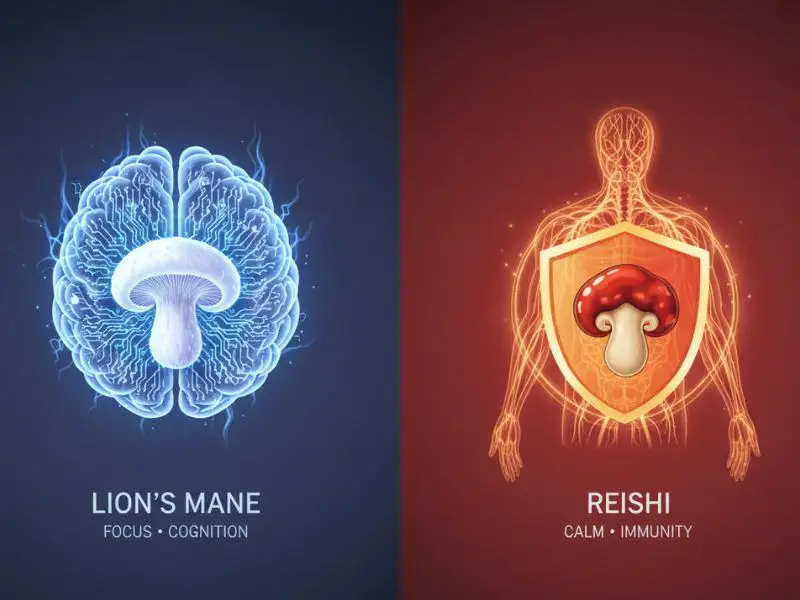
Let’s break down how these mushrooms compare across key categories:
Cognitive Function
Winner: Lions Mane 🦁
Lion’s mane has the most nootropic-like effects: increased concentration, improved memory and contribution to an overall balanced mood by supporting nerve growth factor production.
Reishi doesn’t directly target brain function the way lion’s mane does. While it can improve mental clarity by reducing stress and improving sleep, it’s not enhancing your brain’s cognitive machinery.
Use lions mane if: You want sharper focus, better memory, or support for brain health as you age.
Stress and Anxiety
Winner: Tie (Different Mechanisms) 🤝
Both mushrooms help with stress, but in different ways:
Lions Mane:
- Reduces anxiety through mood regulation
- Supports brain health and neuroplasticity
- Helps with stress-induced brain fog
- More about brain-based emotional balance
Reishi:
- Works as an adaptogen to regulate stress hormones
- Calms the nervous system directly
- Reduces cortisol levels
- More about whole-body stress response
The verdict: Lion’s mane supports mood regulation by promoting neuroplasticity, while reishi brings emotional support by calming the nervous system and lowering stress hormone levels.
Use lions mane if: Your anxiety manifests as racing thoughts, brain fog, or difficulty concentrating.
Use reishi if: You have physical stress symptoms (tension, poor sleep, feeling “wired and tired”).
Sleep Quality
Winner: Reishi 🌙
This isn’t even close. Studies suggest reishi promotes better sleep by reducing stress and helping muscles relax.
While lion’s mane can indirectly support sleep by reducing anxiety over time, reishi is specifically used as a sleep aid. Users report:
- Significantly better sleep quality
- More deep sleep
- Easier time falling asleep
- Waking up refreshed
Use reishi if: Sleep is your primary concern.
Immune System Support
Winner: Reishi 🛡️
Both mushrooms support immunity, but reishi is the heavyweight champion here.
Reishi’s immune benefits:
- Directly enhances immune cell function
- Increases white blood cell production
- Modulates immune response
- Long history of use for immune support
Lions mane’s immune benefits:
- Supports gut immunity
- Anti-inflammatory properties
- Secondary immune support through gut health
Use reishi if: Immune support is your top priority, especially during cold/flu season or if you have a compromised immune system.
Digestive Health
Winner: Lions Mane 🦁
Lion’s mane is the heavy lifter when it comes to gut health, with studies suggesting it can support the gut lining and minimize irritation in the digestive tract.
Lion’s mane has specific benefits for:
- Stomach ulcers
- IBS symptoms
- Gut lining protection
- Digestive inflammation
Reishi does offer prebiotic effects, but lion’s mane has more direct gut-protective properties.
Use lions mane if: You have digestive issues, especially ulcers or IBS.
Energy Levels
Winner: Different Types ⚡
This is interesting because they provide different kinds of energy:
Lions Mane:
- Mental energy and clarity
- Sustained focus
- “Calm alertness”
- Better cognitive endurance
Reishi:
- Physical restoration
- Reduced fatigue (by improving sleep)
- Recovery energy
- “Recharged” feeling
The verdict: Lion’s mane increases energy through normalized blood sugar levels and cognitive support, while reishi provides energy through better sleep and stress reduction.
Antioxidant Power
Winner: Tie 🤝
Both mushrooms are antioxidant powerhouses, but with different compounds:
Lions Mane:
- Hericenones
- Beta-glucans
- Polysaccharides
Reishi:
- Triterpenes
- Ganoderic acids
- Over 400 bioactive compounds
Both protect against oxidative stress and support healthy aging.
When to Take Each Mushroom

Lions Mane Timing
Best Time: Morning or early afternoon
Why:
- Provides mental clarity for the day ahead
- Supports focus during work/study
- Builds up benefits over time for brain health
- Doesn’t interfere with sleep
Typical Schedule:
- Morning: 500-1,000 mg with breakfast
- Or split dose: 500 mg morning + 500 mg lunch
Reishi Timing
Best Time: Evening, 2-4 hours before bed
Why:
- Promotes relaxation and better sleep
- Supports overnight recovery and immune function
- Works with your body’s natural cortisol rhythm
- Allows stress-reducing effects to build
Typical Schedule:
- Evening: 1-2 grams with dinner or 2 hours before bed
- Some take it earlier (afternoon) for all-day calm
Can You Take Reishi and Lions Mane Together?
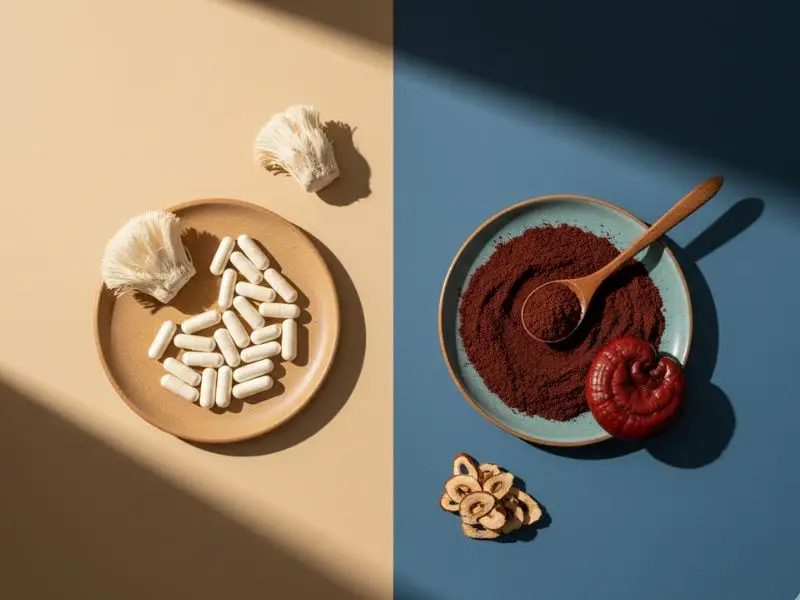
Short answer: Yes, absolutely!
Lion’s Mane focuses on brain function and mood support, while Reishi supports immunity and stress relief, and together they may be even better.
Benefits of Combining Them
1. Comprehensive Wellness Support When combined or “stacked,” mushrooms work collaboratively on your body and mind, with combinations like Lion’s Mane and Reishi offering comprehensive support.
2. Synergistic Effects Taking them together may provide:
- Enhanced cognitive function + stress resilience
- Better sleep + sharper daytime focus
- Immune support + brain health
- Overall mind-body balance
3. Day-Night Rhythm Many users structure them ritualistically—Lion’s Mane in the morning for focus, Reishi at night for recovery—mirroring how people organize caffeine or sleep supplements.
This creates a natural wellness rhythm:
- Morning: Lions mane for mental clarity and focus
- Evening: Reishi for stress relief and sleep
How to Take Them Together
Option 1: Time-Based Stacking
- Morning (with breakfast): 500-1,000 mg lions mane
- Evening (2-4 hours before bed): 1-2 grams reishi
This is the most popular method and mimics your body’s natural rhythms.
Option 2: Combined Supplement Some brands offer blends containing both mushrooms. These typically provide:
- 500-750 mg of each mushroom per serving
- Convenient single-dose format
- Balanced ratio designed for synergy
Option 3: Split Dosing
- Morning: Lions mane (1,000 mg) + Reishi (500 mg)
- Evening: Reishi (1,000 mg)
This gives you all-day stress support plus maximum sleep benefits.
Dosage When Taking Both
For Reishi, start with 1.5-2 grams daily and potentially increase to 9 grams, while Lion’s Mane can begin at 500mg to 1 gram, with some safely taking up to 3 grams.
Recommended starting doses:
- Lions mane: 500-1,000 mg daily
- Reishi: 1.5-2 grams daily
- Combined: Don’t exceed 3-4 grams total initially
Start lower and increase gradually over 2-4 weeks.
Safety Considerations
In most cases, taking Lion’s Mane and Reishi together is safe, as both mushrooms complement each other. However:
- Start with lower doses of each
- Monitor for any digestive upset
- Consult your doctor if you’re on medications
- Watch for allergic reactions (rare but possible)
- Don’t take before surgery (both can affect blood clotting slightly)
Which Should You Choose? Decision Guide
Choose Lions Mane If:
- ✅ You struggle with brain fog or poor concentration
- ✅ You want to improve memory and cognitive function
- ✅ You’re studying, working in a mentally demanding job, or aging
- ✅ You have digestive issues like IBS or ulcers
- ✅ Your primary concern is brain health and mental performance
- ✅ You want morning energy and mental clarity
Perfect for: Students, knowledge workers, aging adults concerned about cognitive decline, anyone dealing with stress-induced brain fog
Choose Reishi If:
- ✅ You’re dealing with chronic stress or anxiety
- ✅ Sleep quality is a major concern
- ✅ You want to boost your immune system
- ✅ You need help managing stress response
- ✅ You’re recovering from illness or dealing with health challenges
- ✅ You want evening relaxation and better recovery
Perfect for: Chronically stressed individuals, people with sleep issues, those with weakened immunity, anyone in high-stress careers or life situations
Choose Both If:
- ✅ You want comprehensive wellness support
- ✅ You need both mental clarity AND stress relief
- ✅ You want to optimize both day and night
- ✅ You’re serious about preventive health
- ✅ Your budget allows for both ($40-80/month)
- ✅ You want to maximize the synergistic benefits
Perfect for: Biohackers, wellness enthusiasts, people committed to optimal health, those who can commit to a consistent routine
Dosage Guidelines
Lions Mane Dosage
Standard Extract:
- Beginner: 500 mg daily
- Standard: 750-1,000 mg daily
- Therapeutic: 1,500-3,000 mg daily
Powder (less concentrated):
- 1-3 grams daily
Forms:
- Capsules (most convenient)
- Powder (versatile, add to coffee/smoothies)
- Tincture (fast absorption)
Reishi Dosage
Standard Extract:
- Beginner: 1-1.5 grams daily
- Standard: 1.5-3 grams daily
- Therapeutic: 3-9 grams daily
Powder:
- 2-4 grams daily
Forms:
- Capsules (measured doses)
- Powder (traditional, mix with warm drinks)
- Tincture (quick effects)
Important Dosage Notes
- Start low: Begin at the lower end and increase gradually
- Extract ratio matters: Look for 10:1 or higher extract ratios
- Consistency is key: Take daily for at least 4-8 weeks
- Timing matters: Lions mane morning, reishi evening
- With or without food: Take with food if you have a sensitive stomach
Side Effects and Safety
Lions Mane Side Effects
Generally very safe, but some people experience:
- Mild digestive upset (especially on empty stomach)
- Skin rash (if allergic to mushrooms)
- Rare: Difficulty breathing (allergic reaction)
Contraindications:
- Mushroom allergies
- Bleeding disorders
- Upcoming surgery (stop 2 weeks before)
Interactions:
- May interact with diabetes medications
- Could affect blood clotting (mild effect)
Reishi Side Effects
Research has found individuals taking reishi for four months were twice as likely to experience minor adverse effects as those taking placebo, but effects were minimal and consisted of digestive distress or nausea.
Common mild effects:
- Digestive upset
- Dry mouth
- Dizziness
- Drowsiness (if too much or wrong timing)
Contraindications:
- Bleeding disorders or very low platelets
- Extremely low or high blood pressure
- Pregnancy or breastfeeding
- Upcoming surgery
- Liver conditions
Interactions:
- Blood thinners (warfarin, aspirin)
- Immunosuppressants
- Blood pressure medications
- Diabetes medications
- Chemotherapy (discuss with oncologist)
Safety When Taking Both
When combining lion’s mane and reishi:
- Both can affect blood clotting (mild effect)
- Start with half doses of each
- Monitor for digestive issues
- Don’t exceed recommended combined doses
- Consult doctor if on any medications
How to Choose Quality Supplements

Not all mushroom supplements are created equal. Here’s what to look for:
1. Fruiting Body vs Mycelium
Always choose fruiting body extracts:
- Contains actual mushroom compounds
- Much higher active compound concentration
- What traditional medicine actually used
Avoid mycelium on grain:
- Mostly grain starches
- Lower active compounds
- Often labeled deceptively
2. Extract Ratio
Look for at least 8:1 or 10:1 ratio:
- Means 8-10 pounds of mushroom → 1 pound extract
- Higher concentration = more potent
- Better value for your money
3. Standardization
Quality supplements list:
For Lions Mane:
- Beta-glucans: At least 20-25%
- Polysaccharides: 30%+
For Reishi:
- Polysaccharides: At least 30%
- Triterpenes/Ganoderic acids: 2%+
- Beta-glucans: 20%+
4. Third-Party Testing
Must-haves:
- Heavy metal testing
- Contamination screening
- Actual mushroom content verification
- COA (Certificate of Analysis) available
5. Brand Reputation
Trusted brands for quality:
- Real Mushrooms (highly rated for purity)
- Host Defense by Paul Stamets
- Nootropics Depot (rigorous testing)
- Om Mushroom Superfood
- Four Sigmatic (coffee blends)
Red Flags to Avoid
- ❌ No mention of fruiting body vs mycelium
- ❌ No standardization information
- ❌ Suspiciously cheap prices
- ❌ No third-party testing
- ❌ Vague “proprietary blend” without amounts
- ❌ Made in facilities without quality certifications
Best brands for both:
- → RReal Mushrooms 5 Defenders Lions Mane + Reishi [Amazon Link]
- → Host Defense Stack [Amazon Link]
- → 10 in 1 High Strength Mushroom Supplement [Amazon Link]
Real User Experiences: What People Say
Lions Mane Users Report:
Positive Effects (most common):
- “Noticeably sharper thinking within 2-3 weeks”
- “Brain fog completely lifted after a month”
- “Better word recall and memory”
- “More sustained focus throughout work day”
- “Mood improvements, less anxious”
Timeline:
- Week 1-2: Subtle improvements, mostly placebo
- Week 3-4: Real cognitive improvements noticed
- Month 2-3: Significant benefits, feels essential
Reishi Users Report:
Positive Effects (most common):
- “Sleep quality dramatically improved”
- “Feel calmer and less reactive to stress”
- “Actually get sick less often”
- “Wake up refreshed instead of groggy”
- “Anxiety baseline lowered significantly”
Timeline:
- Week 1: Sleep improvements often noticed
- Week 2-3: Stress resilience improves
- Month 2+: Immune benefits become apparent
Combined Stack Users Report:
“Taking lion’s mane in the morning and reishi at night has been game-changing. Sharp and focused during the day, calm and restful at night. It’s like I finally have both my brain and nervous system working properly.”
“I was skeptical about mushrooms, but after 2 months of this stack, I’m a believer. Better sleep, better focus, less sick—what more could you want?”
The Bottom Line: Which Is Right for You?
After analyzing all the research and user experiences, here’s my honest recommendation:
If You’re New to Medicinal Mushrooms:
Start with ONE based on your primary goal:
- Primary goal is brain health/focus: Start with lions mane
- Primary goal is sleep/stress/immunity: Start with reishi
- Not sure: Start with reishi (broader benefits for most people)
Take it consistently for 4-8 weeks, then assess. If it helps, consider adding the other one.
If You’re Experienced with Supplements:
Go with the stack:
- Lions mane in morning (1,000 mg)
- Reishi in evening (2 grams)
- Commit to 2-3 months for full effects
- Track your results
Budget Considerations:
Tight budget ($30-40/month):
- Choose ONE based on priority
- Get high-quality extract
- Consistency > quantity
Moderate budget ($50-70/month):
- Get both, standard doses
- Time them appropriately
- Quality brands
Unlimited budget:
- Premium extracts of both
- Consider mushroom blends with additional varieties
- Add other adaptogens as needed
Frequently Asked Questions
Can I take lions mane and reishi at the same time of day?
Yes, but it’s not optimal. Lion’s mane works best in the morning for mental clarity, while reishi is better in the evening for sleep and recovery. However, if you prefer taking all supplements at once, morning with reishi at a lower dose (500mg) is fine.
How long does it take to see results from each?
Lions mane typically shows cognitive effects within 2-4 weeks, while reishi’s sleep benefits may appear within 1-2 weeks. Immune and long-term benefits from both take 1-3 months of consistent use.
Are these mushrooms psychedelic?
No. Lion’s Mane and Reishi mushrooms are not psychedelic, and while they may be called “magic mushrooms,” the term’s literal meaning does not apply to them. They’re medicinal/functional mushrooms with health benefits, not mind-altering substances.
Can I take these if I’m on antidepressants or anti-anxiety medication?
Possibly, but consult your doctor first. Lion’s mane affects neurotransmitters and reishi has calming effects, so there could be interactions. Many people do take them alongside SSRIs without issues, but medical supervision is important.
Will I build tolerance to these mushrooms?
No. Unlike caffeine or some other supplements, you don’t typically build tolerance to medicinal mushrooms. In fact, benefits often increase over time as the adaptogenic effects accumulate.
Can I take these during pregnancy or breastfeeding?
Not recommended. There isn’t enough safety data for pregnant or breastfeeding women. Wait until after nursing to incorporate these supplements.
Do I need to cycle these mushrooms?
Most users take them continuously without cycling. Some prefer a 5 days on, 2 days off pattern, but it’s not necessary. Listen to your body and take occasional breaks (1 week every 3 months) if desired.
Can children take lions mane or reishi?
Generally not recommended for children under 18 without medical supervision. There’s limited safety data for pediatric use. If considering it, consult a pediatrician first.
How much do quality supplements cost?
Expect to pay:
Lions mane: $25-40/month for quality extract
Reishi: $30-50/month for quality extract
Both combined: $50-80/month Cheaper products are usually lower quality or contain mostly fillers.
Ready to Choose Your Mushroom?
Whether you go with lion’s mane for brain power, reishi for stress relief and sleep, or stack them both for comprehensive wellness support, you’re making a smart choice. These mushrooms have thousands of years of traditional use backing them up, plus modern research validating their benefits.
Remember the key points:
- Lions mane = Brain health, focus, memory, gut support
- Reishi = Sleep, stress relief, immune support, longevity
- Both together = Comprehensive mind-body wellness
- Consistency is everything—give it 4-8 weeks
- Quality matters—don’t cheap out on supplements
Have you tried either of these mushrooms? Which one worked better for you? Drop a comment below and share your experience!
Medical Disclaimer: This article is for informational purposes only and is not medical advice. Always consult with a qualified healthcare provider before starting any new supplement, especially if you have medical conditions or take medications. Both mushrooms can interact with certain drugs and may not be appropriate for everyone.
Related Articles:
- Reishi Mushroom Benefits: Complete Guide
- Best Time to Take Reishi: Morning or Night?
- Lions Mane Benefits for Brain Health
- Best Time to Take Lions Mane
- Best Lions Mane Supplements
- Complete Guide to Medicinal Mushrooms
Sources:
- Longevity Botanicals – Lion’s Mane vs Reishi Mushroom Comparison
- Rritual Superfoods – Reishi vs Lion’s Mane Differences
- Grape Tree UK – Lion’s Mane vs Reishi Benefits Study
- Dutchy Labs – Lion’s Mane or Reishi Comparison (July 2025)
- Everyday Dose – Lion’s Mane vs Reishi Guide (April 2025)
- Natures Rise – Reishi Vs Lion’s Mane Analysis
- Tamim Teas – Medicinal Mushroom Comparison Study
- Vice – Functional Mushrooms Research (December 2025)
- Naturealm – Mushroom Stacking Guide
- Natura Mushrooms – Taking Lion’s Mane and Reishi Together
- Multiple supplement manufacturer guidelines and user review databases

